
Quartz vs Quartzite: The $1,200 Kitchen Question
You’ve narrowed your countertop search down to two names that sound almost identical and that’s exactly the problem. Quartz and quartzite get mixed up constantly, but they’re not the same material. They don’t cost the same, and they don’t behave the same once a hot pan or a glass of red wine hits them.
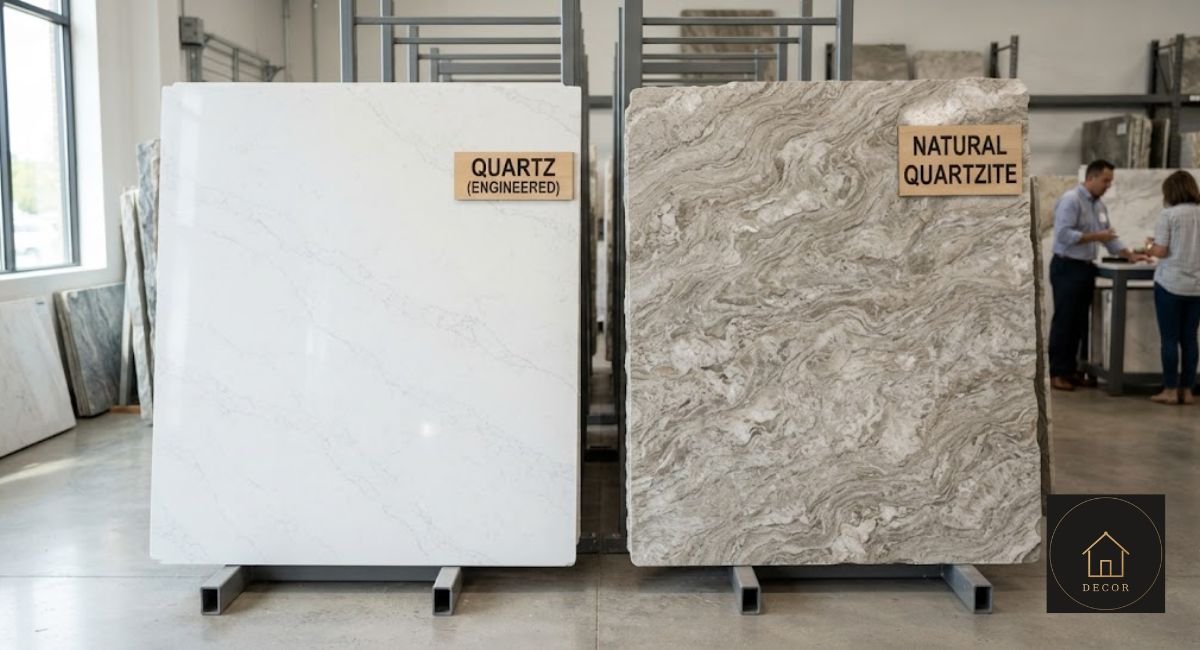
Quick answer: Quartz is engineered stone crushed quartz crystal mixed with resin and pigment while quartzite is a natural stone formed deep underground from sandstone under extreme heat and pressure.
Quartz is more consistent and easier to maintain; quartzite is harder, more heat-resistant, and needs periodic sealing. Quartzite typically costs more, running about $1,200 higher for an average kitchen than a comparable quartz install.
What Quartz and Quartzite Actually Are
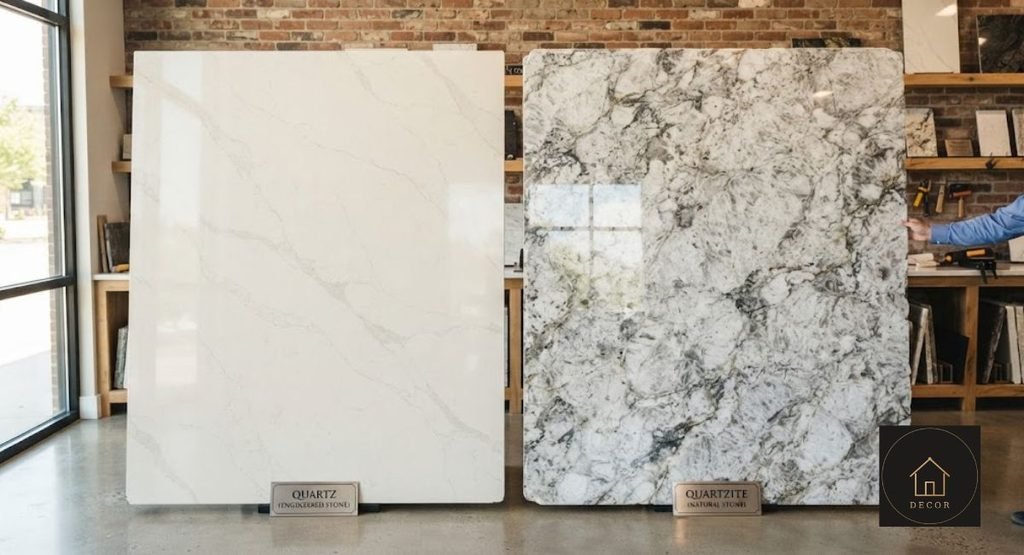
Fabricators manufacture quartz countertops by taking crushed natural quartz usually 90–93% of the mix and binding it with resins and pigments, then curing it into slabs. That’s why quartz comes in almost any color, including solid whites and blacks that don’t exist in nature.
Quartzite is the opposite. It starts as sandstone. Over millions of years, heat and pressure deep in the earth fuse it into a dense, glassy stone more than 90% natural quartz mineral. No two slabs look alike.
That’s exactly why quartzite gets compared to marble so often the veining is real, not printed. I’ve stood in a stone yard comparing quartzite slabs side by side, and the difference from quartz is obvious within seconds: quartzite has depth and movement in the veining that no two pieces repeat, while the quartz slabs next to it looked identical in batches of five or six.
Durability: Scratches, Chips, and Everyday Wear
Quartzite is genuinely harder. It scores 7–8 on the Mohs hardness scale, ahead of granite (6–6.5) and well ahead of marble (3–4). That makes it extremely scratch-resistant, though the edges can still chip if they’re not sealed properly, especially at corners that get bumped a lot.
Quartz sits a bit softer, but it’s still built for daily kitchen abuse. It resists most scratches from knives and pots, and because the pattern is engineered to be uniform, a scratch tends to stand out more visibly than it would on quartzite’s naturally busy surface.
Real talk: neither one is scratch-proof. If you’re cutting directly on the counter instead of using a board, both materials will eventually show it quartzite just hides it better.
Heat Resistance: Where Quartzite Wins Outright
This is the biggest functional gap between the two, and it’s the one most comparison pages either skip or explain badly.
Quartz contains resin, and resin has a heat limit. Sources differ on the exact number: some put sustained heat damage starting around 150°F, while others say the resin doesn’t scorch until above 300°F.
Treat any specific number as approximate until you check with your fabricator. What’s consistent across every source: a hot pan straight off the stove can leave a permanent cloudy or yellow burn mark on quartz that can’t be buffed out.
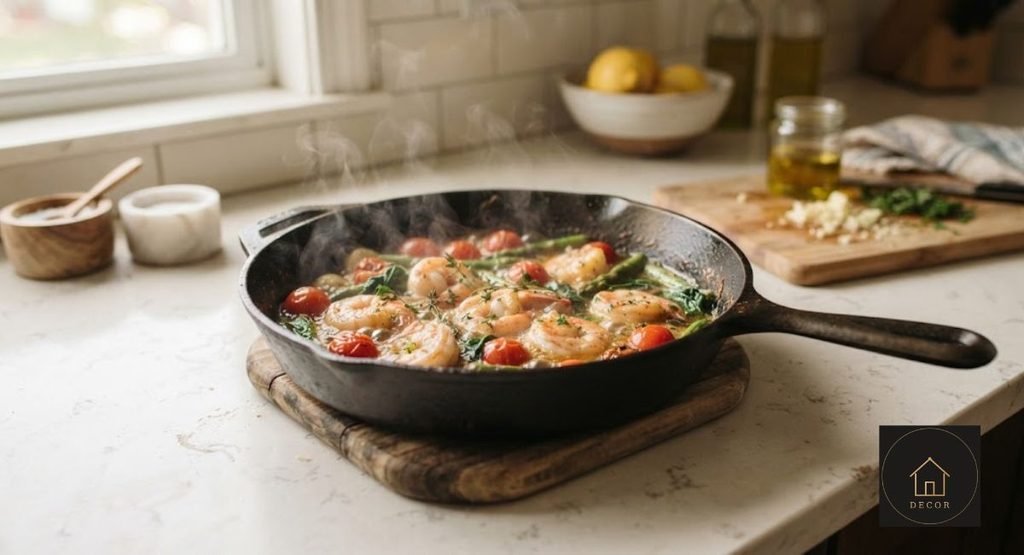
Quartzite doesn’t have that problem. Because it was formed under real geological heat and pressure, a hot pan sitting directly on quartzite for a few minutes generally won’t damage it.
Fabricators still recommend a trivet out of habit, but quartzite is the one material on this list you could genuinely get away with skipping that step. If your kitchen sees a lot of stovetop-to-counter traffic cast iron, baking sheets straight from the oven that alone might settle the decision in quartzite’s favor.
Maintenance and Sealing: What Ongoing Care Actually Looks Like
Quartz is non-porous, so it never needs sealing. Wipe it with mild soap and water and you’re done. That’s the single biggest reason quartz dominates the market for busy households there’s no maintenance schedule to remember.
Quartzite is porous in its raw state, which means it needs a sealant (typically polyurethane, wax, or acrylic-based) applied when installed, then resealed periodically. Most fabricators recommend checking it once a year.
Skip that, and quartzite can absorb wine, oil, or coffee spills and stain. I’ve run my hand across both a freshly sealed quartzite sample and an unsealed one in a showroom. The difference in how quickly a water droplet beads versus soaks in is noticeable within seconds it’s a good way to actually test a slab before you buy it.
Cost Breakdown: What You’ll Really Pay in 2026
Pricing varies a fair amount by source, region, and slab grade, but the pattern is consistent: quartzite costs more.
| Options | Quartz | Quartzite |
| Installed cost per sq ft (2026) | $50–$200 | $65–$220 |
| Material only, per sq ft | $15–$50 | $40–$130 |
| Typical full kitchen project | $5,000–$20,000 | $4,000–$8,800+ |
| Maintenance | None (non-porous) | Annual resealing |
| Approx. lifespan | 20–60 years | 50–100 years |
One pricing guide put the real-world gap at roughly $1,200 more for quartzite on a comparable kitchen about a 35% premium over quartz. That lines up with quartzite’s higher raw material cost and longer fabrication time.
Get a firm quote from a local fabricator before you budget prices shift by region and slab grade.
Look and Style: Which One Matches Your Kitchen
Quartz gives you control. If you’re matching an exact white with grey veining for a specific design, or need multiple slabs to look identical across a large kitchen, quartz’s manufactured consistency makes that easy.
Engineered brands like Cambria, Caesarstone, and Silestone all sell marble-look quartz patterns designed to mimic natural stone without the inconsistency. Quartzite gives you the real thing.
Every slab is genuinely one-of-a-kind, which is a selling point until you need a second slab to match the first. Large kitchens or islands sometimes require careful slab selection at the yard to keep veining consistent across seams.
Real Brands and Where to Compare
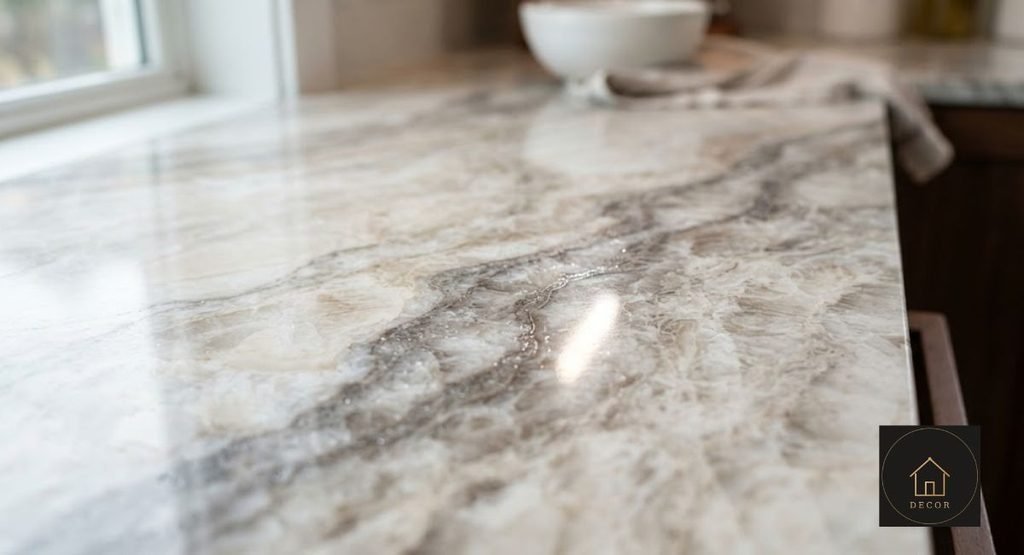
If you want to see engineered quartz in person, Cambria, Caesarstone, and MSI’s Q Series are three of the largest, most widely distributed brands in the US, with dealer showrooms in most metro areas.
Popular quartzite varieties worth asking a fabricator about by name include Taj Mahal and Super White both frequently mentioned by pricing guides as mid-to-premium options with strong availability.
Which One Should You Actually Choose?
- Pick quartz if: you want zero maintenance, a consistent look across a big kitchen, and a lower ceiling on total project cost.
- Pick quartzite if: heat resistance matters to how you actually cook, you want a natural stone look with more durability than marble, and you’re fine with an annual reseal.
Honest trade-off: quartzite isn’t the right pick if you want to install it and never think about it again the sealing schedule is a real, recurring task, even if it’s a light one. If that sounds like a hassle, quartz’s zero-maintenance profile will make you happier long-term, even at a similar price point in some regions.
FAQs
A: Usually, yes. Quartzite typically runs $65–$220 per sq ft installed versus $50–$200 for quartz, with one pricing analysis putting the average kitchen premium at around $1,200.
A: Not recommended. Quartz contains resin that can scorch or discolor from sustained direct heat always use a trivet.
A: Yes. Quartzite is porous in its raw state and needs sealing at installation, then resealing roughly once a year to resist stains.
A: Yes. Quartzite rates 7–8 on the Mohs hardness scale, making it more scratch-resistant than quartz.
A: Quartzite generally has a longer potential lifespan (50–100 years with maintenance) compared to quartz (20–60 years), largely because it’s natural stone rather than a resin-bound composite.
A: Yes. Brands like Cambria and Caesarstone manufacture quartz lines specifically designed to mimic quartzite’s and marble’s veining patterns.
A: Often, yes its natural heat resistance makes it a common choice for fireplace surrounds specifically, more so than quartz.
Conclusion
Quartz and quartzite sound almost the same but land in different categories entirely one’s engineered for consistency and zero maintenance, the other’s a natural stone that costs more but shrugs off heat like nothing else on this list. If your kitchen runs hot and busy, quartzite earns its premium. If you want to install it and forget about it, quartz still wins on convenience.
Either way, get a quote on the exact slab you’re considering before you commit pricing swings enough by region that this guide is a starting point, not a final number.

Hi, I’m Shahzad Ahmad welcome to Smart Decore Tips!
I write and research every guide on this site myself, focused on real, practical home decor advice for renters, first-time homeowners, and small-space living. Before publishing anything, I check actual product listings, current prices, and real customer reviews not just what other sites already say.
My goal is simple: help you make smarter, more affordable decor decisions without the guesswork or sales pitch.

10 Comments