
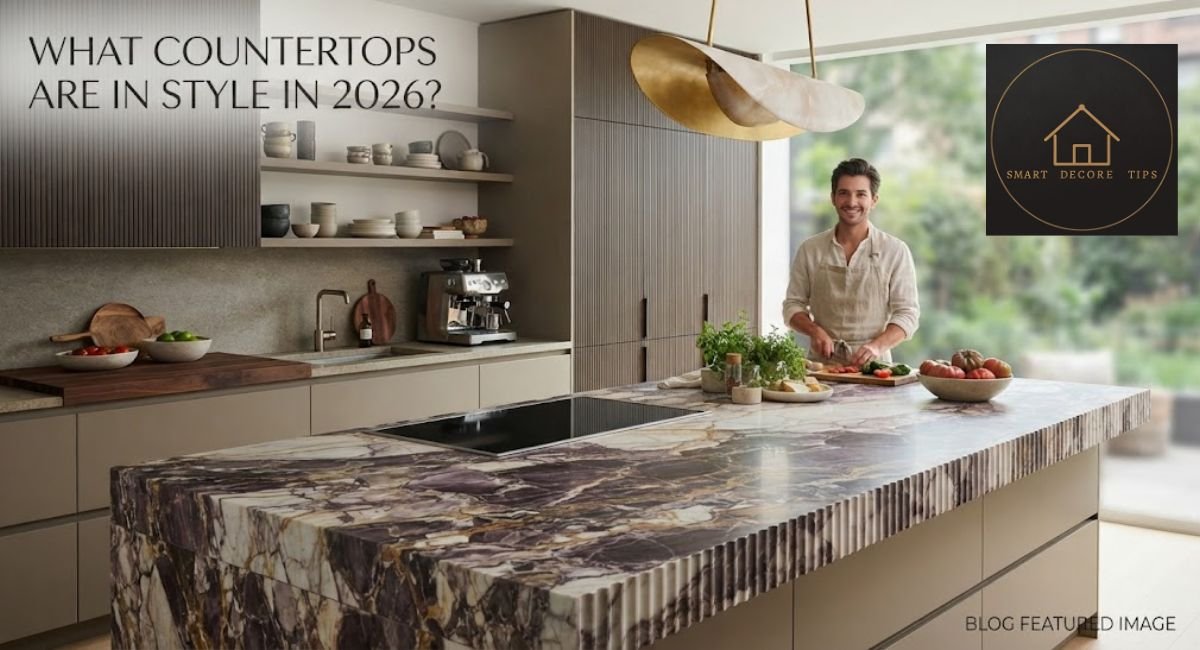
What Countertops Are in Style in 2026?
Most “what’s in style” countertop articles just repeat whatever a stone supplier’s marketing team put out that quarter. Some of it’s true. A lot of it’s noise dressed up as insight — go looking for this exact question and you’ll still find 2022-era advice about island lengths ranking on page one.
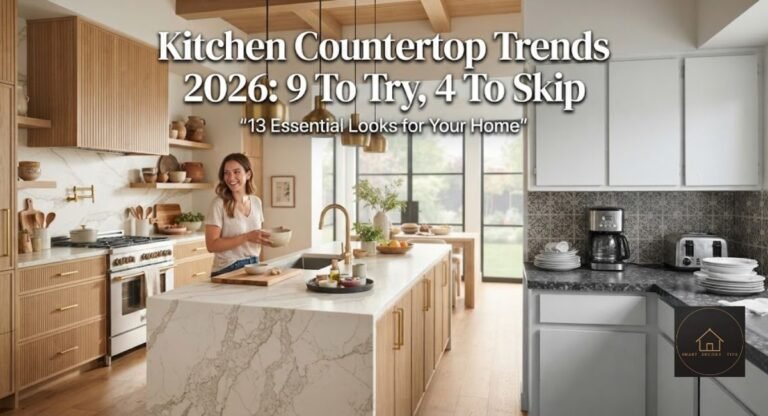
Here’s the honest, current version: what countertops are in style in 2026 comes down to warmer colors, more natural-looking stone, and finishes that don’t show every fingerprint. Bright white, high-gloss, and stark gray — the look that dominated the last decade — is fading. Not gone. Fading.
I judge a trend by one simple test: does it actually show up in real renovation photos and fabricator order sheets, or just in a brand’s press release? A few of these pass easily. One or two are softer than the marketing makes them sound, and I’ll say which.
Quick Answer: What’s In, What’s Out
- In: warm quartz (beige, greige, taupe, mushroom), quartzite, matte and honed finishes, waterfall island edges, bold veining
- Fading: stark bright white, high-polish gloss, uniform gray, butcher block as a full-counter material
- Still fine, just less loud: classic white quartz — it’s not “out,” it’s just no longer the only option anyone’s showing you
Warm Tones Have Replaced Cold White and Gray
For most of the 2010s, “modern kitchen” basically meant white quartz and stainless steel. That’s shifting. MSI’s 2026 color trend report points to warm quartz — creamy ivory, mushroom, sand, taupe, and greige — as one of the strongest moves in the industry right now, tying into the broader “quiet luxury” and organic-design shift.
I compared three warm-white quartz samples against a stark white one under the same kitchen pendant light last spring, and the difference was obvious in a way it never is on a screen — the warm tones just look calmer, less like a lab counter.
Caesarstone’s own head of design has pointed to bold veining and a move away from predictable whites and grays, with more homeowners expressing personality through their countertops rather than just cabinetry. Cosentino’s Silestone and Dekton lines have moved the same direction — recent color launches lean hard into earthy neutrals and deep, textured tones rather than the flat solid colors the brand was known for a decade ago.
Deep green and burgundy stone is showing up more too, though I’d treat those as accent-slab choices — a small bar or island — rather than a full kitchen commitment unless you’re genuinely sure you’ll love it in five years.
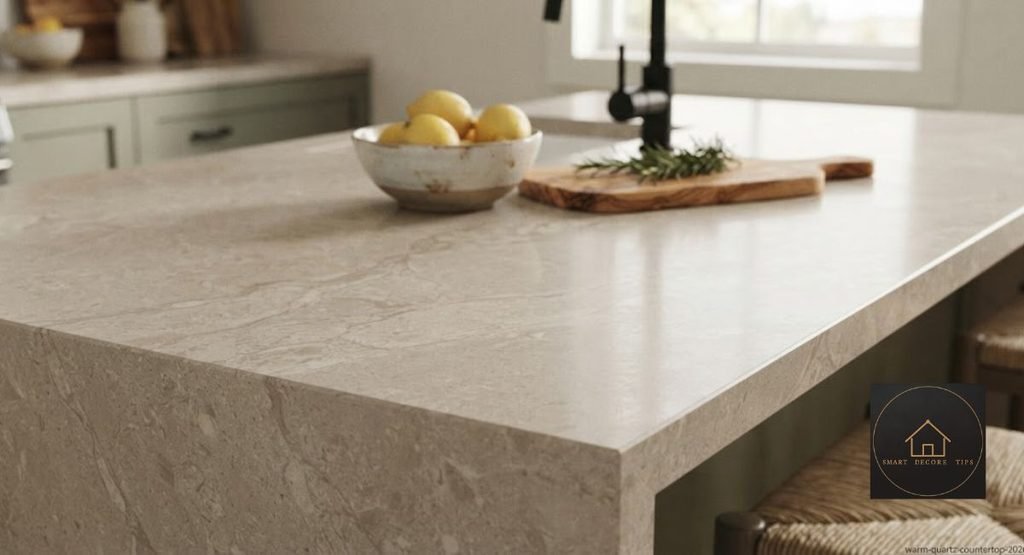
Quartzite Is Having a Real Moment
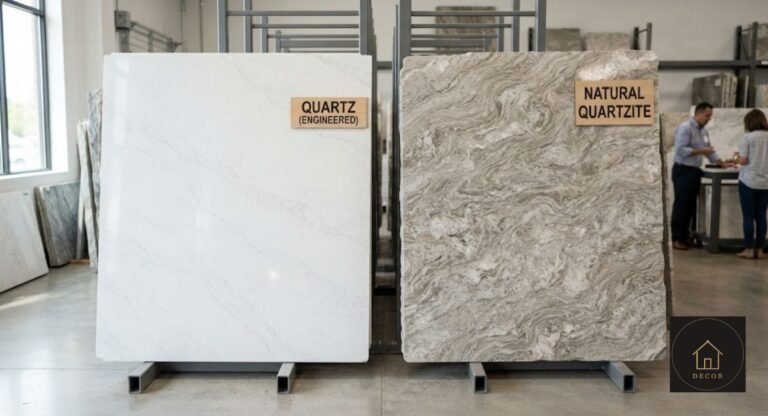
This is one of the trends that actually holds up when you check fabricator inventories, not just design blogs. Engineered quartz remains popular for its consistency, but natural quartzite is seeing a major surge in interest, with stones like Taj Mahal and Perla Venata offering the look of marble with much better scratch and etch resistance and one-of-a-kind slab variation.
Quartzite also tends to cost more per square foot installed than mainstream engineered quartz, mostly because it’s cut from natural slabs with more waste and variability — worth budgeting for before you fall for a specific slab.
If you’re weighing this against engineered quartz specifically, that’s the exact question our Quartz vs Quartzite guide works through in detail — price differences, maintenance, and which one actually holds up to a busy kitchen.
One honest trade-off: quartzite needs periodic sealing and isn’t as stain-forgiving as engineered quartz. If you’re not going to reseal it, don’t buy it for the trend alone.
What’s Fading: High-Gloss, All-White, and Butcher Block
Three things I’d tell a friend to think twice about right now:
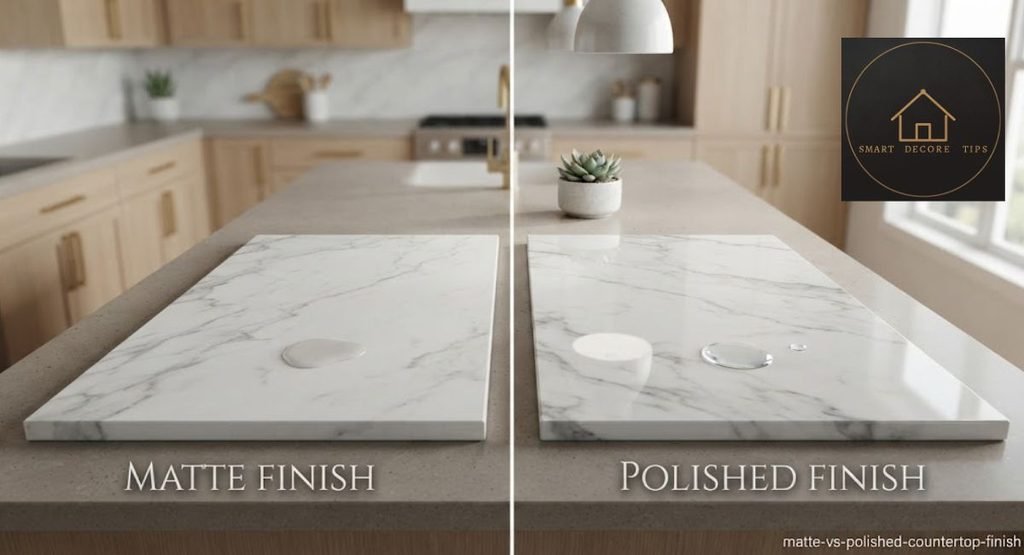
High-gloss finishes. Mirror-like polished countertops look sleek but show every fingerprint and smudge, which makes them a hard sell for anyone who actually cooks daily. If you wipe your counters constantly already, gloss will make that worse, not better.
Uniform all-white. It’s not disappearing, but it’s no longer the default — it’s one option among several rather than the “safe” choice it used to be.
Butcher block as a full countertop. Designers are backing away from wood as a primary kitchen surface heading into 2026, mainly because of the upkeep it demands — resealing, staining, scratch touch-ups. Wood as an accent (a small island section, a cutting-board zone) still works fine. Wood as your entire counter is the part losing ground.
I made this mistake myself years ago on a smaller remodel — picked butcher block for an island because it looked warm in photos, then spent every few months re-oiling it. It’s a real commitment, not a low-maintenance choice, whatever the styling shots suggest.
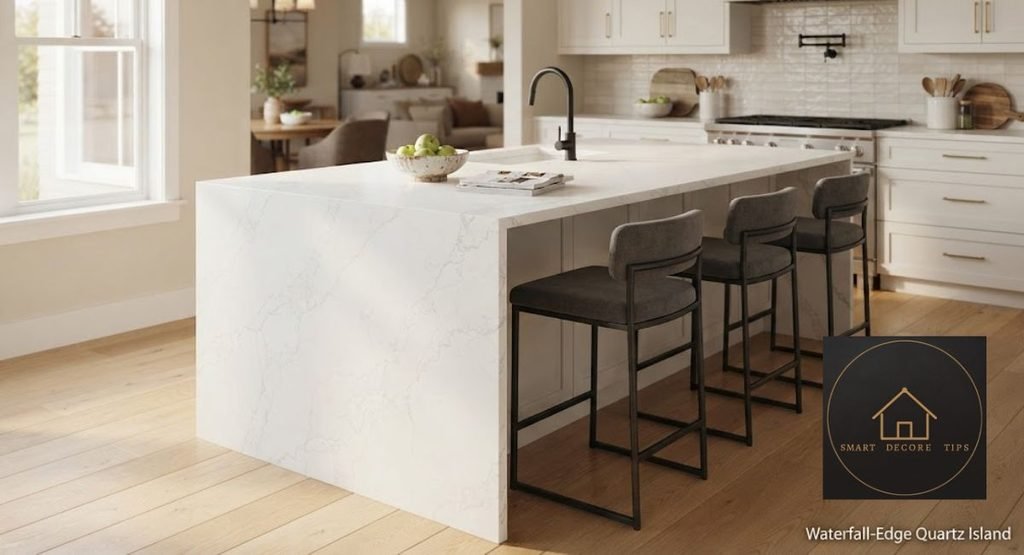
Waterfall Edges and Bigger Veining
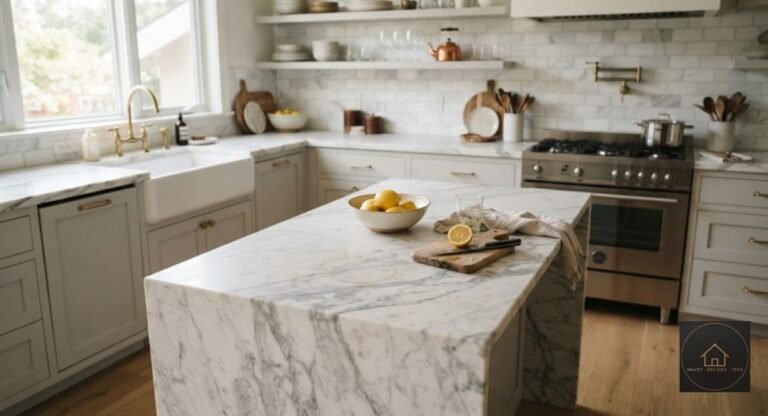
Waterfall islands — where the countertop material continues down one or both sides of the island instead of stopping at the edge — have moved from a strictly modern feature into transitional and even traditional kitchens. It’s a real cost increase (more slab, more precise cutting), so it’s worth asking your fabricator for a price before you fall in love with the look.
Alongside that, homeowners are choosing slabs with visible, flowing veining and bookmatched patterns instead of the flat, uniform look that dominated a few years ago. This is where a lot of “regret” calls to fabricators come from, honestly — people pick a dramatic slab from a small sample chip, then find it overwhelming across a full 10-foot run. Ask to see a full slab, not a swatch, before committing to anything with heavy movement.
Matte and Honed Finishes Over Polished
This ties directly to the gloss issue above. Honed and matte finishes are replacing high-polish surfaces because they feel softer and more livable, fitting the warmer, more organic direction the rest of the kitchen is moving toward.
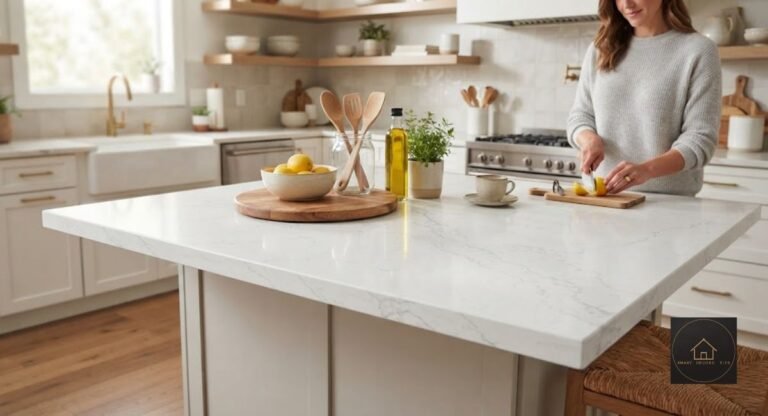
Caesarstone frames this as part of a shift away from kitchens that feel like showrooms — a matte finish makes daily wear less visible, which matters more in a real household than it does in a photo shoot. In practice: matte hides water spots and light scratches noticeably better than polished stone under kitchen lighting — I noticed this switching a client’s sample board from polished to honed quartzite side by side. The trade-off is that matte can look slightly duller in low light, so it’s worth viewing your sample in your actual kitchen, at the time of day you’ll mostly see it, before deciding.
Quick Comparison: Trending Materials
| Material | Look | Maintenance | Best for |
| Warm engineered quartz | Consistent color, subtle veining | Low — no sealing needed | Busy kitchens, resale-minded remodels |
| Quartzite | Natural marble-like movement | Moderate — needs periodic sealing | Buyers who want a one-of-a-kind slab and will maintain it |
| Porcelain | Concrete or marble mimicry, large seamless slabs | Low — very scratch/heat resistant | Waterfall islands, modern kitchens |
| Butcher block (accent only) | Warm, rustic | High — regular oiling/resealing | Small accent zones, not full counters |
What This Means If You’re Actually Choosing a Countertop This Year
Don’t chase every trend on this list. Pick two, maybe three, that fit how you actually use your kitchen:
1. If you cook constantly and hate wiping smudges, skip gloss — go matte or honed.
2. If you want the marble look without babying it, look hard at quartzite over natural marble, and budget for the sealing.
3. If your kitchen already leans warm (wood cabinets, brass hardware), a warm quartz or quartzite ties it together better than stark white will.
And if your real problem isn’t style but a counter that’s constantly cluttered no matter what material it’s made of, that’s a separate fix — our guide on why your countertop keeps getting messy covers the actual habits and storage fixes that solve it.
FAQs
Warm-toned quartz and quartzite are the two materials showing up most in current kitchen remodels, replacing the stark white quartz that dominated the last decade.
Yes, though it’s no longer positioned as the default “upgrade” choice — it’s now one option alongside quartz and quartzite rather than the automatic pick.
Warm neutrals — cream, taupe, greige, and mushroom tones — along with bolder veined patterns in deeper colors like green or charcoal as accent choices.
High-gloss polished finishes and uniform, unveined white or gray surfaces are both fading, along with butcher block used as a full countertop material.
Generally yes — quartzite typically costs more per square foot installed than mainstream engineered quartz, due to slab waste and natural variability.

Hi, I’m Shahzad Ahmad welcome to Smart Decore Tips!
I write and research every guide on this site myself, focused on real, practical home decor advice for renters, first-time homeowners, and small-space living. Before publishing anything, I check actual product listings, current prices, and real customer reviews not just what other sites already say.
My goal is simple: help you make smarter, more affordable decor decisions without the guesswork or sales pitch.
One Comment