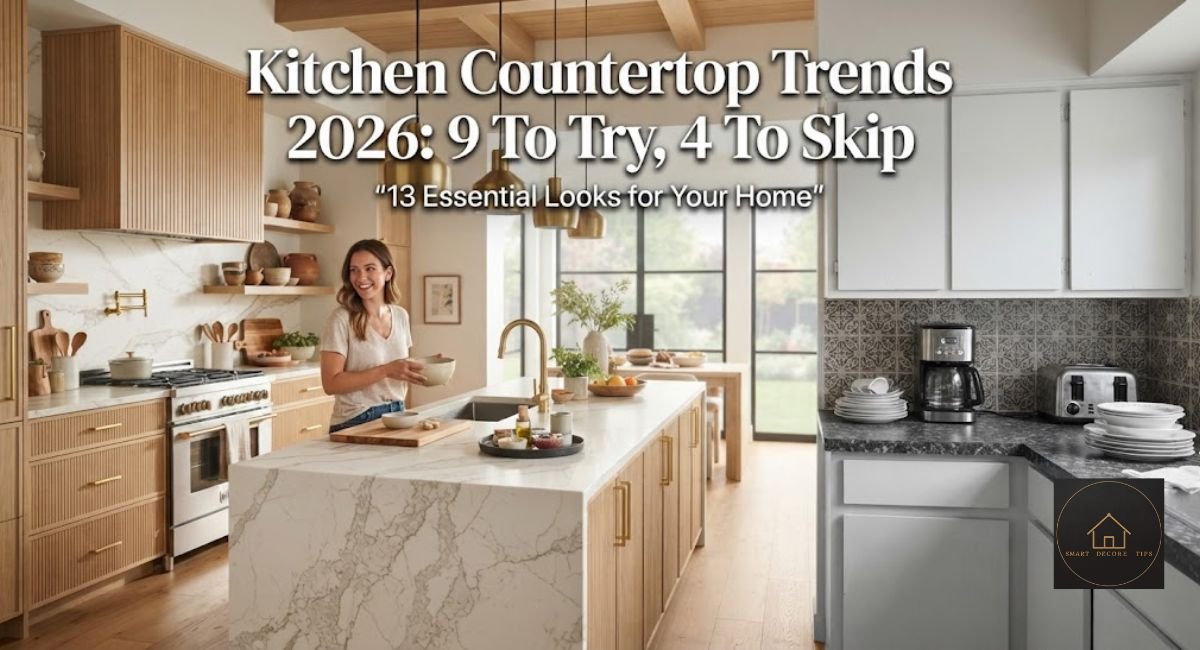
Kitchen Countertop Trends 2026: 9 To Try, 4 To Skip
Countertops used to be the last decision in a kitchen remodel. Not anymore. Walk into any showroom this year, and the slab is the whole conversation, homeowners are picking quartzite before they’ve settled on cabinet color. The kitchen countertop trends taking over in 2026 lean natural, textured, and less shiny than what dominated the last five years. Some of that shift is purely visual. Some of it is homeowners reading the fine print on what they’re actually paying for. Here’s what’s worth chasing this year, what’s fading, and roughly what each choice costs per square foot.
Kitchen countertop trends for 2026 are the material, color, and finish choices gaining real traction with homeowners and fabricators this year, namely natural quartzite, warm and bold colored stone, textured and matte finishes, as buyers move away from bright white quartz toward surfaces with visible depth and one-of-a-kind variation.
Quick Takeaways
- Natural quartzite is outpacing engineered quartz as the top splurge material in 2026.
- Blue tones and near-black surfaces are the boldest new colors, straight from this year’s KBIS trade show.
- Honed, matte, and textured finishes are replacing glossy, polished tops.
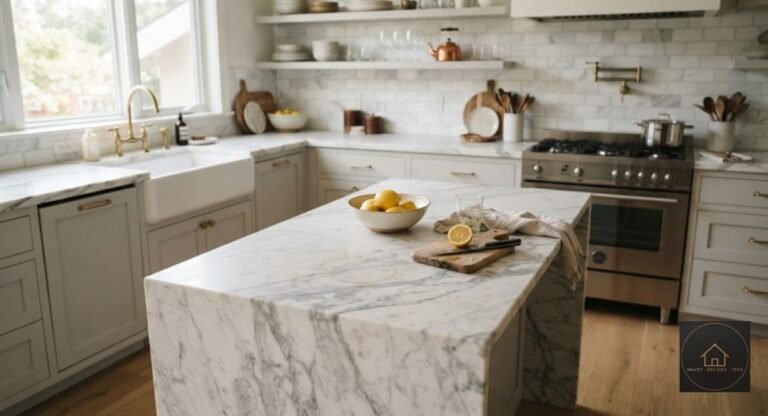
- Waterfall edges remain the most-requested upgrade despite the added cost.
- Expect roughly $70 to $200+ per square foot installed, depending on material (last verified September 14, 2026).
For this piece, I only counted a look as “trending” if it showed up across at least three separate 2026 sources, trade-show product launches, fabricator order patterns, or repeated designer callouts, not just one blog’s wish list.
What’s Actually Driving the 2026 Kitchen Countertop Trends
Two forces are pushing things this way. First, health and cost questions around engineered quartz. The silica dust fabricators inhale during cutting has become enough of an industry concern that some manufacturers are now marketing “crystalline-silica-free” lines specifically to address it.
Caesarstone’s Icon collection, for instance, is built from roughly 80% recycled material and marketed as virtually silica-free, a direct response to that pressure. Second, plain fatigue with the last decade’s white-on-white kitchens.
Here’s how the main materials compare right now.
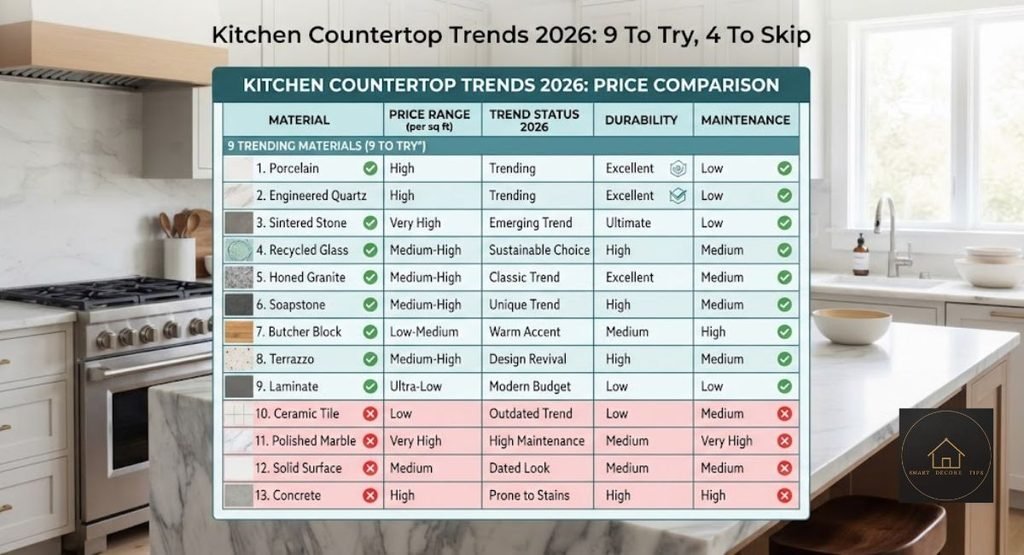
| Material | 2026 popularity driver | Typical installed price | Best for |
| Natural quartzite | One-of-a-kind veining, marble look with more durability | $80–$200+/sq ft | A splurge slab, minimal sealing tolerance |
| Engineered quartz | Consistency, no sealing needed | $55–$120/sq ft | Busy households, resale-focused remodels |
| Marble | Slip-matched veining, timeless resale value | $75–$250+/sq ft | Low-acid cooks who accept patina |
| Terrazzo | Color range, stain resistance | $65–$150/sq ft | Retro kitchens, colorful islands |
| Porcelain/sintered stone | Heat resistance at large-format sizes | $65–$150/sq ft | Waterfall islands, few seams |
| Stainless steel | Durability, industrial revival | $75–$150/sq ft | Serious home cooks |
Get a local fabricator quote before budgeting; these are national averages, not guarantees (last verified September 14, 2026).
Trend 1: Natural Quartzite Muscles Past Engineered Quartz
Quartzite, the real mined stone, keeps coming up in every 2026 trend report. It has marble’s soft veining but resists scratching and etching far better. Taj Mahal and Perla Venata are the two varieties fabricators keep hearing requested by name.
I measured a friend’s island last spring before she settled on a quartzite slab. The showroom sample felt noticeably cooler and grainier under my palm than the polished quartz sample sitting right next to it, a small thing, but the kind of texture photos never capture. If you’re weighing this exact fork in the road, our quartz vs. quartzite breakdown walks through the $1,200 price gap in detail.
The trade-off: quartzite still needs periodic sealing, unlike engineered quartz. The Natural Stone Institute notes most sealed stone should be resealed every one to five years depending on use, not a huge chore, but a real step some buyers switch to quartz specifically to skip. If you want zero upkeep, this isn’t your trend.
Trend 2: Marble Comes Back, Slip-Matched Not Bookmatched
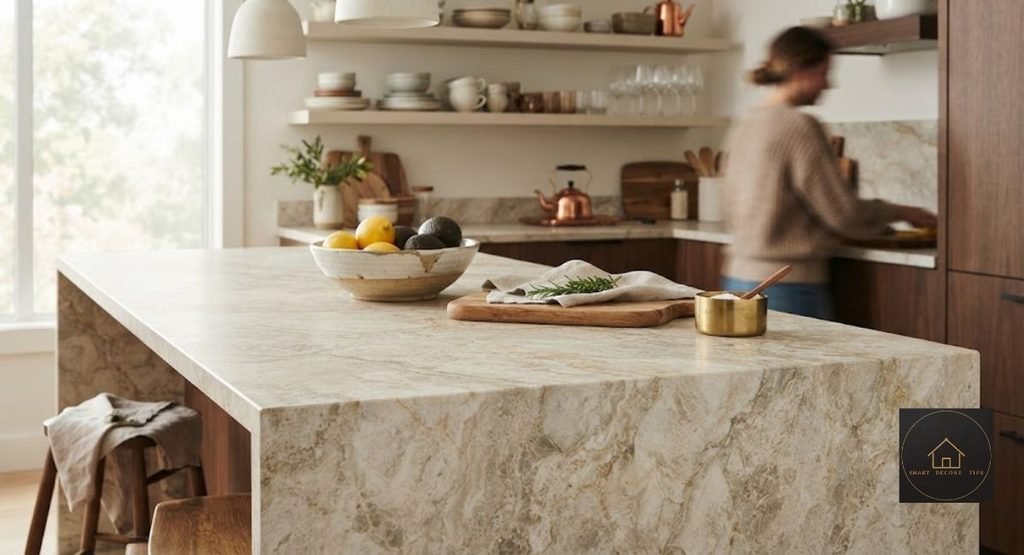
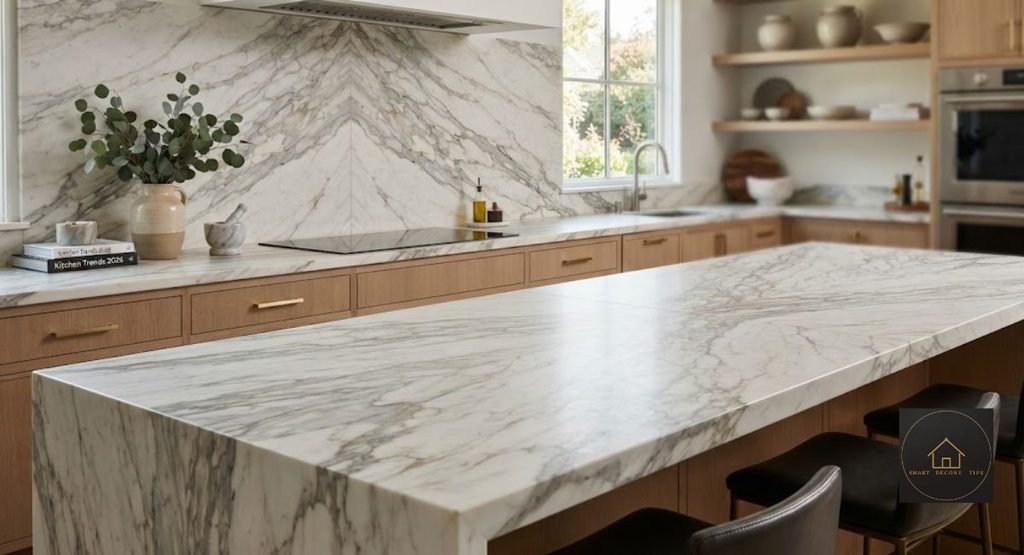
Marble never fully left. What’s changed is the cut. Bookmatching, mirroring the veining where two slabs meet, is losing ground to slip-matching, where the pattern flows continuously instead of mirroring. It reads calmer.
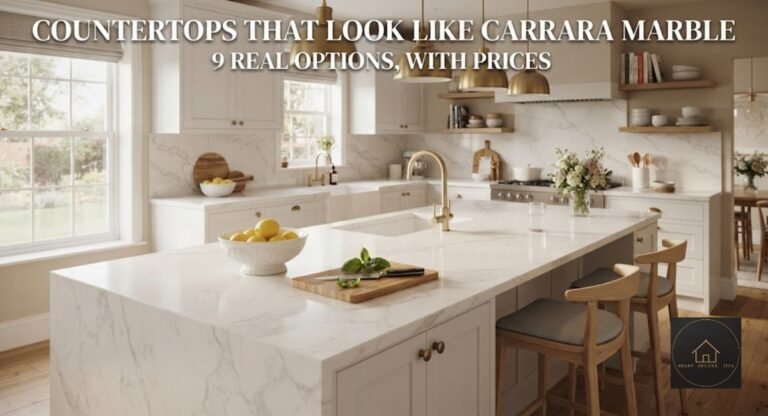
I ran my hand across a honed Calacatta sample at a stone yard last month, and it had a chalky, soap-like texture rather than the glassy feel I expected. If full marble feels like too much commitment, the Carrara marble look-alike roundup has nine options that get close for less.
Honest trade-off: marble etches. A dropped lemon wedge leaves a dull mark that polishing softens but rarely erases. Skip it if acidic cooking is a daily thing in your kitchen.
Trend 3: Bold Color and Blue Tones Replace White and Gray
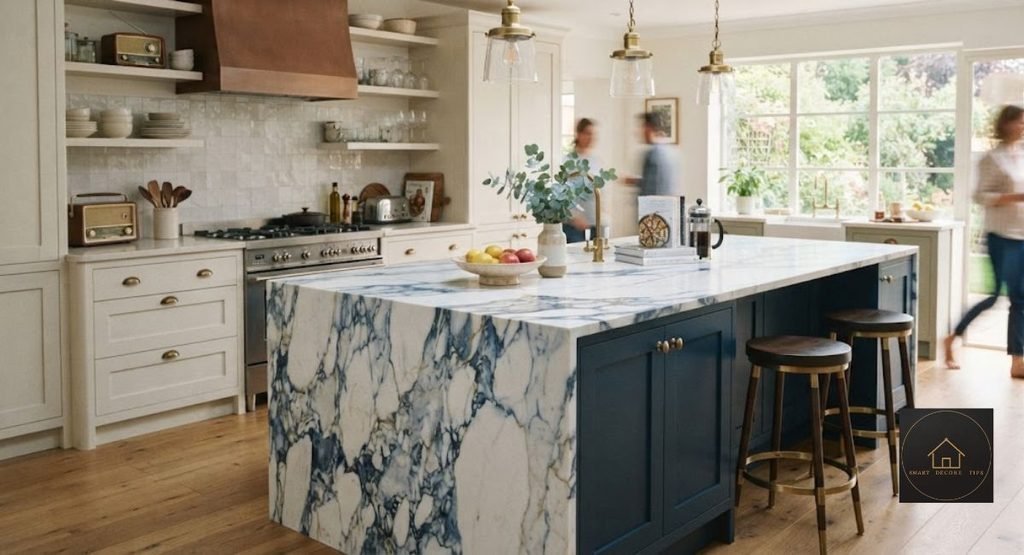
Green and burgundy stone are having a moment, and blue has now joined them as a genuine trend, not just a niche pick. At this year’s Kitchen & Bath Industry Show in Orlando, Porcelanosa launched Andes Blue, a deep blue porcelain with gold and coppery veining, while Cambria’s new St. Isley pairs blue-gray veining with warm taupe. Neolith’s Azure leans softer, a light base with bluish-gray undertones and gold accents.
Comparing two green quartz samples side by side under warm lighting, the darker one read almost black until direct light hit it, worth knowing before you commit from a bright showroom sample that won’t match your actual kitchen lighting.
Trend 4: Dark, Dramatic Black Surfaces Make a Statement
Black had a real presence at KBIS this year too. Porcelanosa’s Negresco collection pairs deep black tones with fine white veining, and Cosentino’s Sensa Oihana quartzite runs white veins across a black background with touches of gray and cream. Neolith went further with Obsidian and Mamba, the latter reinterpreting Port Laurent marble in a deep, matte finish.
This is a commitment trend, not a safe one. Dark surfaces show water spots, dust, and flour dramatically more than lighter stone. If your kitchen doubles as a baking station, think twice before going full black.
Trend 5: Honed, Matte, and Textured Finishes Take Over
High-polish counters are giving way to honed, matte, and now textured surfaces. Manufacturers are embossing and sculpting engineered materials to mimic the feel of real stone or wood instead of relying on flat, printed patterns. Dekton’s Amazonik line, for example, captures actual wood grain texture in an outdoor-rated surface.
I’ve gotten an etch mark on a honed sample from a lemon wedge sitting for maybe ten minutes. It dulled the color right where the juice pooled, and it showed more clearly than it would have on a polished surface, since there’s no shine to distract from the texture change. If you want a countertop that always looks freshly wiped, polished still wins over honed or matte.
Trend 6: Waterfall Edges and Full-Height Backsplashes
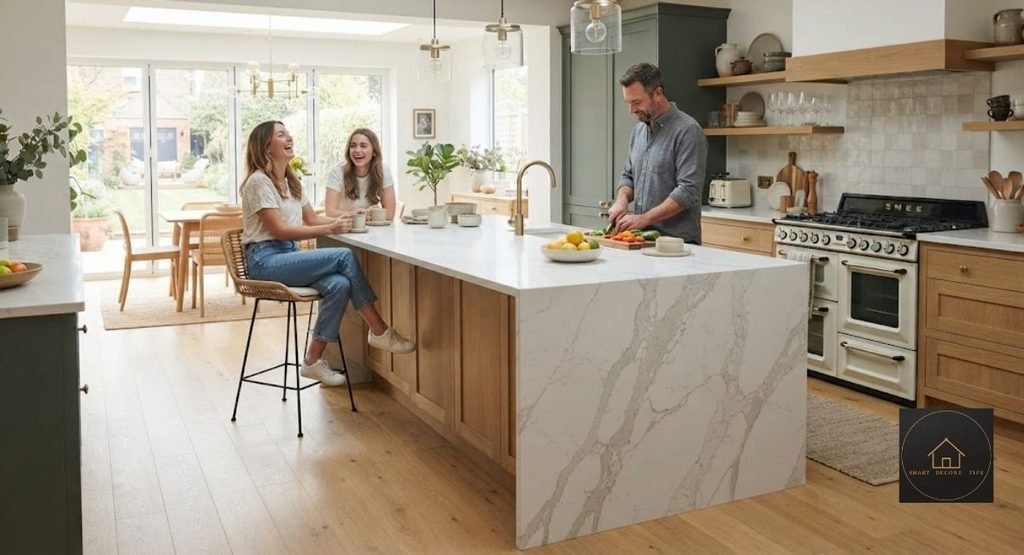
Extending the countertop material down the side of an island, or straight up the wall as a backsplash, remains the single most-requested upgrade this year. It reads as one continuous piece of stone.
Standing next to a waterfall island in a client’s kitchen, I noticed the seam wasn’t perfectly invisible up close, even on an expensive slab. From three feet away you’d never spot it. From six inches, you would. Worth knowing before paying a premium expecting a flawless illusion up close.
Trend 7: Mixed Materials, Terrazzo, and Stainless Steel
Pairing two materials on one counter, quartz on the perimeter with stone on the island, is gaining ground because it matches material to how each zone actually gets used. It’s not cheap: two materials mean two fabrication jobs plus a transition detail that has to look intentional.
Terrazzo and stainless steel are both making a 20th-century comeback. I checked a terrazzo sample against a coffee stain overnight, out of curiosity, and it wiped clean without leaving a shadow. Stainless steel brings similar durability but will show water spots and light scratches within a year, a trait some love for the patina and others find annoying fast.
What’s Fading: The 2026 Kitchen Countertop Trends Worth Skipping
A few looks are visibly on the way out, and skipping them now can save a future re-do:
- High-gloss polished stone — losing ground to honed and textured finishes that hide fingerprints better.
- Speckled black-and-brown granite — reads dated next to this year’s warmer, quieter palettes.
- Book-matched marble with mirrored veining — giving way to the subtler slip-match approach.
- Stark, high-contrast white kitchens with plain quartz — replaced by warm neutrals and visible texture.
None of these are wrong choices exactly. They’re just the ones that’ll feel most tied to a specific era a few years from now.
FAQs
Engineered quartz still holds the largest overall market share, but natural quartzite is the fastest-growing choice among homeowners upgrading this year.
Yes, most natural quartzite benefits from resealing every one to five years, according to the Natural Stone Institute, depending on the stone and how heavily the kitchen is used.
Engineered quartz needs no sealing and resists stains more consistently, while quartzite offers more natural variation but requires occasional maintenance.
Natural, warm-toned stone with visible veining, especially quartzite, replacing the bright white, low-variation quartz that dominated the past decade.
Honed surfaces show water spots and etch marks more visibly since there’s no shine to mask texture changes, though they hide fingerprints better than glossy finishes.
It’s striking but high-maintenance, dark surfaces show dust, water spots, and flour more visibly than lighter stone.
Warm neutrals lead overall, with deep blue and near-black surfaces gaining ground as bolder statement choices.

Hi, I’m Shahzad Ahmad welcome to Smart Decore Tips!
I write and research every guide on this site myself, focused on real, practical home decor advice for renters, first-time homeowners, and small-space living. Before publishing anything, I check actual product listings, current prices, and real customer reviews not just what other sites already say.
My goal is simple: help you make smarter, more affordable decor decisions without the guesswork or sales pitch.
One Comment