Countertop Design Ideas for 2026: 9 Trends Worth Copying (and 3 to Skip)
Stark white kitchens had a good run. For 2026, the countertop trends that keep showing up across designer interviews, trade-show floors, and real renovations all point somewhere warmer, more textured, and a little less afraid of color.
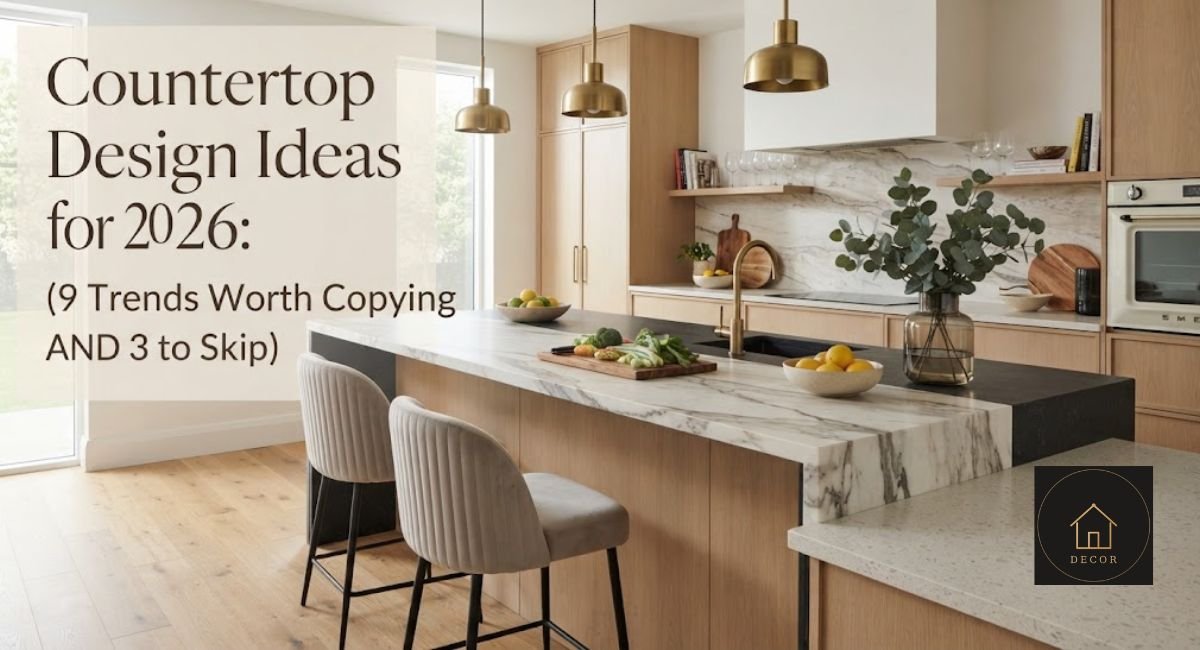
Countertop design ideas for 2026 lean into warm veined stone, sharper edge details, and mixed materials instead of one flawless slab doing all the work. Quartz stays the practical default, but even quartz has shifted toward softer, alabaster-toned colors. Waterfall edges are still around, just with crisper corners than the rounded look from a few years back.
Quick takeaways
- Warm, veined “natural stone” looks (real or engineered) have replaced stark white as the default 2026 color story.
- Waterfall edges aren’t going away, but sharp 90-degree cuts are edging out the softened, rounded look.
- Honed and leathered finishes are outpacing high-gloss polish because they hide daily fingerprints better.
- Mixing two materials on one counter, stone with wood or metal, is now more common than a single material wall to wall.
- Quartz remains the practical default, but the color story inside quartz has warmed up considerably this year.
What’s the Biggest Countertop Design Trend for 2026?
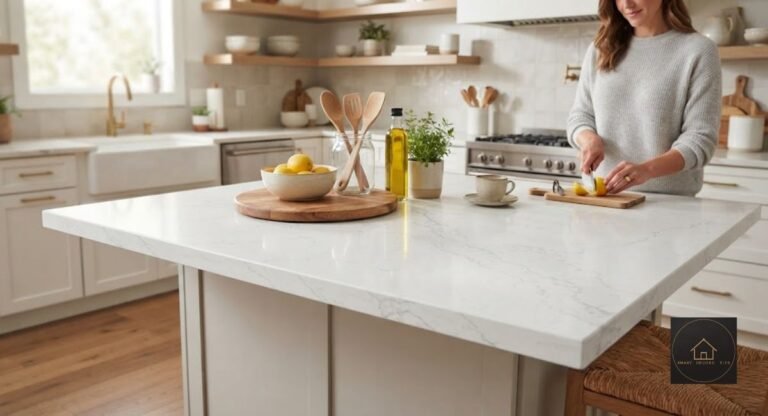
The single biggest shift is away from cold, high-contrast stone and toward warm neutrals with visible movement. At this year’s Kitchen & Bath Industry Show, manufacturers leaned hard into creamy off-white backgrounds layered with taupe, sand, and soft gold veining, alongside quartzite-inspired patterns and a few genuinely dark, moody surfaces for contrast.
This isn’t just a color swap. It’s part of a longer arc our future countertop trends guide, built on NKBA’s own 2030 forecast data, already tracks: countertops are moving from “matches the cabinets” to “the room’s main character.” Cambria’s own 2026 collection makes the point well.
The brand introduced Quintessa, St. Loxley, Merivale, and Wyncrest this year, all leaning into alabaster, sage, and champagne veining instead of the stark white-and-black contrast that dominated the last decade. You can browse the current lineup directly on Cambria’s site.
If you’re choosing a color right now, test samples under your actual kitchen lighting before you commit. Warm neutrals shift more under 2700K bulbs than showroom fluorescents ever show you.
Bold Veining and Dark, Moody Slabs Are Replacing All-White Kitchens
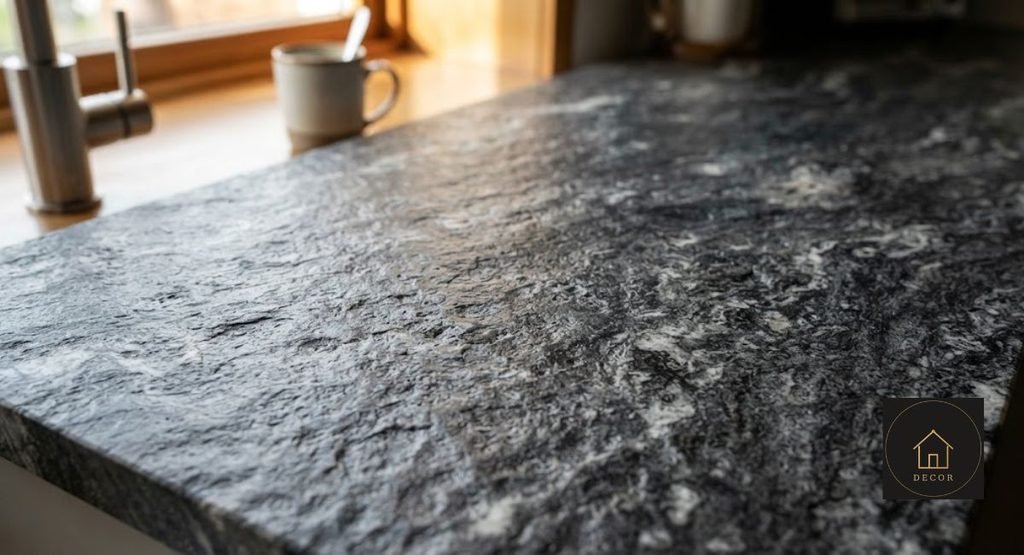
Designers are done apologizing for color. Several 2026 roundups point to burgundy, deep gray, and near-black stone showing up on islands especially, paired with a lighter perimeter counter so the kitchen doesn’t feel like a cave.
Dark stone photographs beautifully, but it’s genuinely harder to live with day to day. Matte or honed black hides fingerprints better than a polished finish, though you’ll still wipe it down constantly if you want it looking sharp for guests.
That’s not a scare tactic, just a maintenance reality worth knowing before you sign a slab order. Neolith’s Architectural collection is a good real-world example of this trend done well.
Its Obsidian finish uses a fluted, volcanic-rock-inspired texture in deep black that adds grip and shadow instead of a flat mirror surface, and Cosentino’s Silestone and Éclos lines have leaned into similarly dark, subtly veined surfaces this year too.
Waterfall Edges Are Still Everywhere, but the Details Changed
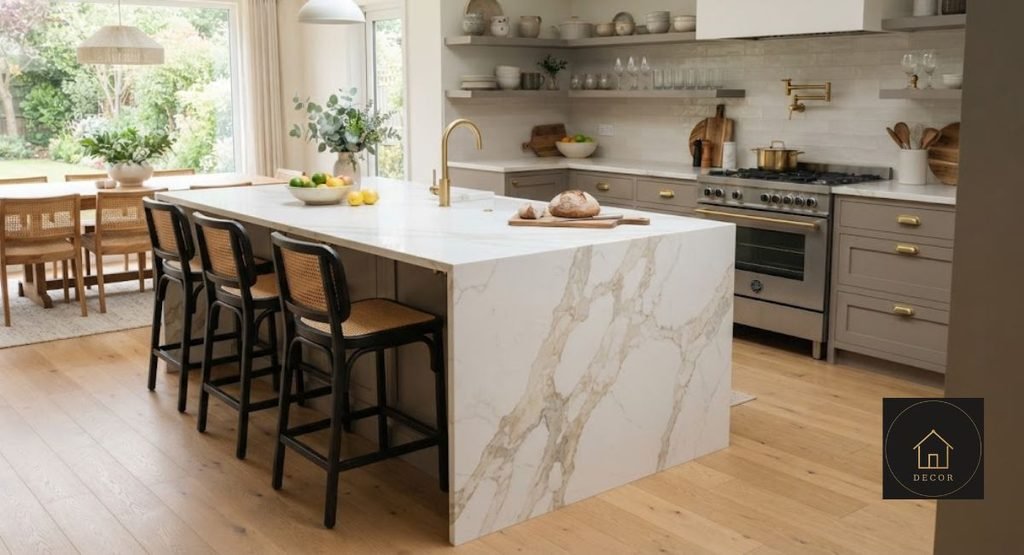
Waterfall edges, where the countertop material wraps down the side of an island instead of stopping at a square edge, remain one of the most requested design ideas going into 2026. What’s changed is the corner itself. The softened, rounded edge that dominated a few years ago is giving way to sharp, precise 45- or 90-degree cuts that make the slab look thicker and more substantial.
I once sketched a waterfall seam an eighth of an inch off on a mockup for my own kitchen, and the fabricator caught it before cutting. That’s why I always ask to see the exact seam placement on paper before anyone touches a saw.
It’s a small thing, but a misaligned waterfall seam is the kind of mistake you look at every single day. Waterfall edges also come with a real cost jump, since the same slab has to wrap down the cabinet side instead of covering just the top.
If pricing is the deciding factor for you, our quartz vs. quartzite cost breakdown walks through exactly where that extra material cost lands on a typical island.
Textured Finishes and Statement Edge Profiles
High-gloss polish is fading in favor of honed, leathered, and matte finishes. These textures hide smudges and water spots better, and they read as quieter and more tactile in photos than a mirror-shine surface does.
When I ran my hand across a honed quartzite sample next to a polished one at a local slab yard, the honed piece felt almost chalky, close to new drywall, while the polished one felt like glass. That difference in feel matters more in person than any photo can show you.
Edge profiles are getting the same attention this year. Simple square edges are being swapped for ogee, fluted, and triple bullnose profiles, especially in kitchens leaning traditional. It’s a small, relatively affordable upgrade that changes how the whole counter reads, even if the material underneath doesn’t change at all.
Mixing Materials: Stone, Wood, Metal, and Terrazzo Together
Instead of one material doing everything, more 2026 kitchens pair two: stone on the perimeter with a butcher-block island, or a quartz counter with a raw brass or steel accent strip. It’s a practical trend as much as an aesthetic one, since it lets you put a durable, low-maintenance surface where you actually cook and save a softer, warmer material for a spot that sees less daily abuse.
I set a Cambria sample and a Neolith porcelain sample side by side under our own kitchen’s LED strip lighting once, and the porcelain read a full shade cooler than the quartz, even though both were labeled a similar “warm white” on the box. Lighting temperature changes how a material reads more than the material’s own name does.
Terrazzo is having a real comeback too, especially in colorful, playful formats that suit an eclectic or mid-century kitchen. It’s stain-resistant, handles heat well, and hides daily wear better than a plain polished stone would.
Countertop Material Comparison Table for 2026
Prices and collections current as of September 2026. Always confirm current pricing with a local fabricator, since it varies by region and slab availability.
| Material | Typical installed cost | Maintenance | Heat resistance | Best for |
| Quartz | $40–$125/sq ft, brand-dependent | Low — no sealing needed | Good, but avoid direct hot pans | Busy family kitchens |
| Granite | $50–$100/sq ft | Periodic sealing | Very good | Heavy daily cooking |
| Marble | $80–$120+/sq ft | Frequent sealing, etches easily | Good, but stains easily | Low-traffic accent areas |
| Quartzite | See our full quartz vs. quartzite cost guide | Needs sealing | Excellent | Homeowners who want real stone durability |
| Porcelain | $80–$120+/sq ft | Very low | Excellent, UV resistant | Modern, minimalist kitchens |
| Butcher block | $40–$60/sq ft | Regular oiling | Poor — not heat resistant | Islands, warm accent zones |
Comparing a granite sample against a quartz sample under the same overhead light, the granite’s mineral flecks caught glare in a way the quartz never did. That mattered more to me in the showroom than either brand’s marketing photos suggested it would.
Which Countertop Design Ideas Fit Your Kitchen Style?
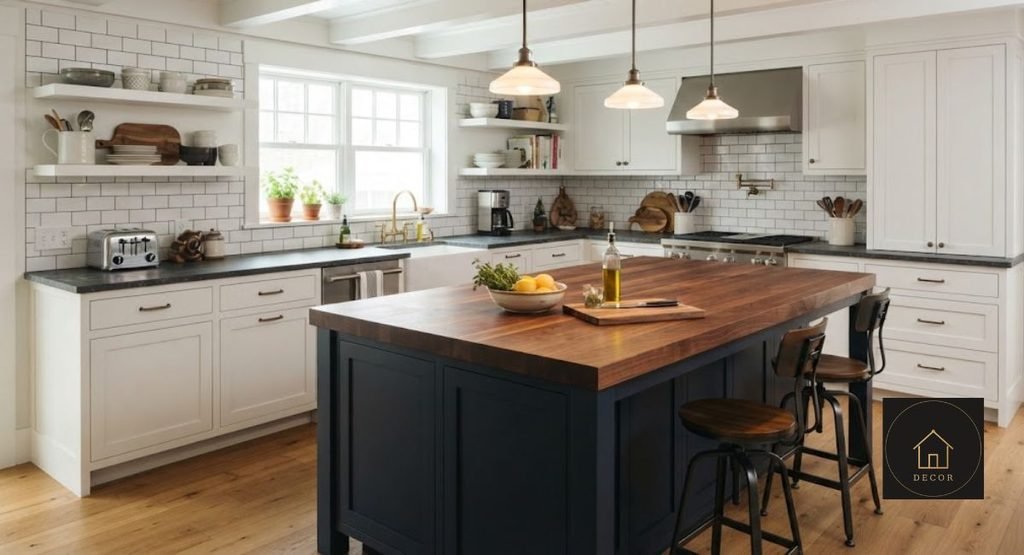
Not every trend belongs in every kitchen. A modern, minimalist space suits quartz or porcelain with a waterfall edge and almost no backsplash break, letting the counter be the star. Traditional kitchens lean better toward granite or marble with an ogee or bullnose edge, paired with warmer wood cabinetry.
Farmhouse and rustic kitchens are where butcher block genuinely shines, paired with a matte or honed stone counter elsewhere in the room. A friend’s leathered granite island looked stunning in every photo, but flour dust settled right into the texture within a week of her first holiday baking spree, and she didn’t notice until we visited for Thanksgiving.
Texture is gorgeous until you’re the one cleaning it. Industrial and urban kitchens are leaning into concrete, steel, and glass-flecked composites, paired with exposed metal accents and bold, simple lines.
What Countertop Trends Are Fading Out for 2026?
A few looks that dominated the last decade are losing ground. Speckled black-and-white “salt and pepper” granite, the kind that filled builder-grade kitchens through the 2000s, now reads as visually busy next to today’s quieter, more subtle veining.
High-gloss polished surfaces are also losing favor for the fingerprint reasons already covered above, and bulky, thick-edged countertops are giving way to thinner profiles paired with large-scale backsplashes. None of these are “wrong” if you already have them. But if you’re renovating from scratch in 2026, designers are steering clients away from all three.
How to Choose a Countertop Design for 2026 (and Two Honest Trade-Offs)
For this guide, I judged each trend against three things: whether it’s actually sold by US fabricators and slab yards right now, how it holds up to daily kitchen abuse like heat and spills, and whether more than one independent 2026 source pointed to it, instead of just one design blog chasing pageviews.
Here’s the honest part most trend roundups skip. Honed and leathered finishes hide fingerprints well, but on real marble they also show etching and water spots faster than a polished surface does. If you’ve got hard water and pick a honed marble counter anyway, you’ll likely regret it within a season.
Waterfall edges look dramatic, but they roughly double the slab you need to buy, since the same material has to wrap down the side. If you’re planning to sell your home within a couple of years, that extra cost rarely comes back to you dollar for dollar at resale.
I measured our own nine-foot island run last spring before we swapped old laminate for quartz, and the extra three-eighths of an inch in overhang changed how the waterfall edge lined up with the cabinet toe kick, something none of the online cost calculators ever mentioned.
Measure your own space before you fall in love with a photo. Your best move is to pick one or two trends that fit how you actually cook and clean, not every trend at once. A kitchen with five competing statement materials rarely photographs, or lives, as well as one with a clear point of view.
FAQs
Warm, veined neutral stone (real or engineered) has replaced stark white as the dominant countertop color story for 2026.
Yes, waterfall edges remain popular in 2026, though sharp 90-degree corners are replacing the softened, rounded look from a few years ago.
Quartz, porcelain, and well-sealed granite are the most durable options, resisting stains, heat, and scratches better than softer natural stone.
Budget materials run roughly $40–$60 per square foot installed, while premium granite, marble, or porcelain typically cost $80–$120 or more per square foot.
Quartz needs no sealing and offers more consistent color, while granite offers natural variation and slightly better heat resistance but needs periodic sealing.
Honed and leathered matte finishes hide fingerprints and smudges noticeably better than high-gloss polished surfaces.
Yes, pairing stone on the perimeter with a butcher-block island, or adding a metal accent strip, is one of the most common 2026 countertop design ideas.
Speckled “salt and pepper” granite, high-gloss polished finishes, and bulky, thick-edged countertops are all losing popularity in 2026.

Hi, I’m Shahzad Ahmad welcome to Smart Decore Tips!
I write and research every guide on this site myself, focused on real, practical home decor advice for renters, first-time homeowners, and small-space living. Before publishing anything, I check actual product listings, current prices, and real customer reviews not just what other sites already say.
My goal is simple: help you make smarter, more affordable decor decisions without the guesswork or sales pitch.
One Comment