
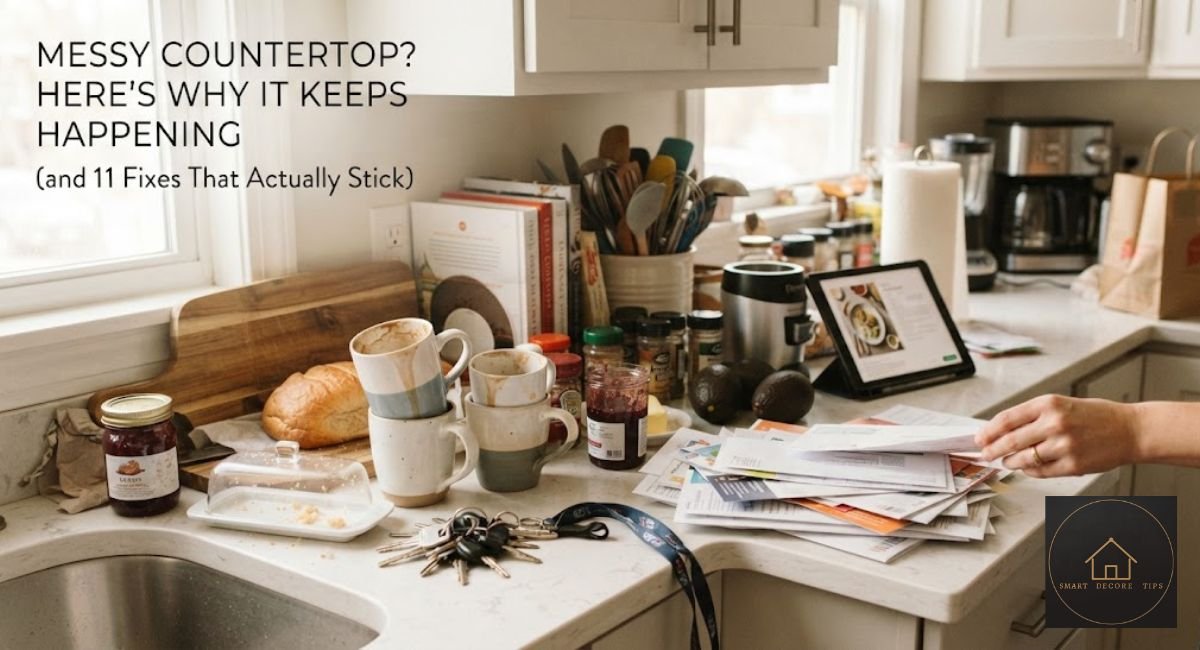
Messy Countertop? Here’s Why It Keeps Happening (and 11 Fixes That Actually Stick)
You wipe it down. Twelve hours later, it’s covered again. If your countertop turns into a dumping ground no matter how many times you clear it, the problem usually isn’t effort. It’s that nothing on your counter has an actual home.
A messy countertop happens when everyday items — mail, small appliances, dishes, snacks — don’t have a designated storage spot, so the flat, open surface becomes the default catch-all. Fix the “no home” problem first, and the clutter mostly stops coming back.
Quick Takeaways
- Clutter isn’t a discipline problem — it’s usually a missing-storage problem
- The sink and stove zones get messy first; fix those two areas and the rest follows
- A daily 2-minute reset beats a monthly deep clean
- Quartz and sealed granite hide daily mess better than butcher block or unsealed stone (last verified September 2026)
- Not everything out is clutter — an item you use today or tomorrow earns its spot
What’s Actually Making Your Countertop Look Messy
Three things, almost always. Not enough cabinet or drawer space, so things migrate to the counter by default. Too many “maybe I’ll use this” items left out just in case. And no evening reset habit, so small messes stack into a bigger one by the weekend.
I’ve walked into kitchens with gorgeous quartz counters that still looked chaotic, and it was never the material’s fault. It was three coffee mugs, a half-open mail pile, and a toaster that hadn’t moved in months.
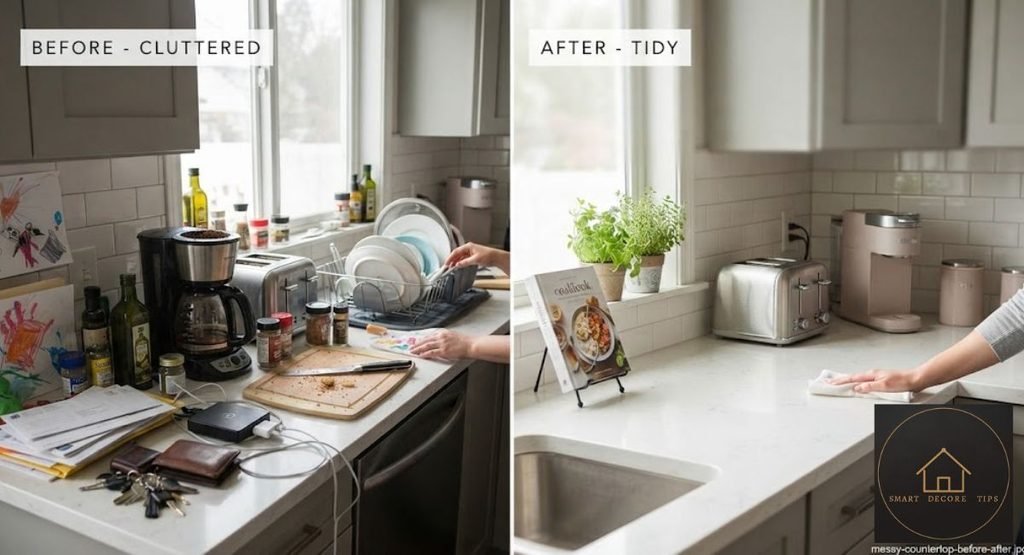
Start Here: The 60-Second Sink Zone Fix
The sink and the stove are where mess forms first — sponges, dish soap, oils, cutting boards. Clear a two-foot radius around the sink completely, then add back only what you touch daily. Everything else moves under the sink or into a drawer. This single change does more visible work than reorganizing the whole kitchen.
I tried this on my own sink zone last month: sponge caddy, dish soap, and a stray measuring cup, all gone within two minutes. The rest of the counter hadn’t changed at all, and the kitchen still looked noticeably calmer.
11 Fixes That Actually Hold Up
1. Pull everything off, then earn its spot back. Clear the entire counter. Handle each item once: keep it out, put it away, or donate it. Anything you haven’t touched in a month probably belongs in a cabinet, not on display.
2. Corral loose items in one tray. Oils, salt, pepper, hand soap — group them on a single tray or wood board instead of scattering. It sounds too simple, but containing five loose bottles into one object instantly reads as tidy, even though nothing actually left the counter.
3. Get bulky appliances into a cabinet if you can. A stand mixer or air fryer used weekly earns counter space. One used monthly doesn’t. An OXO pull-out organizer or a simple appliance garage solves this without a full renovation.
4. Move the knife block off the counter. Switch to a magnetic wall strip or an in-drawer knife tray. Knife blocks are one of the bulkiest single items most kitchens keep out, and they rarely need to be.
5. Keep food out of sight, mostly. Bread and cereal boxes read as clutter fast. A closed pantry bin fixes this in seconds. A fruit bowl is fine — a cereal box collection isn’t.
6. Add one floating shelf. Vertical space is free real estate most kitchens ignore. A single shelf can hold cookbooks or a coffee setup that used to eat counter space.
7. Build a paper drop zone somewhere else. Mail is the single biggest non-kitchen item that piles up on kitchen counters. A basket by the door, not on the counter, stops the pile before it starts.
8. Use drawer organizers instead of counter jars. Utensil crocks look decorative in photos and messy in real life within a week. Rev-A-Shelf and similar drawer inserts do the same job invisibly.
9. Do a two-minute nightly reset. Wash and put away, wipe the surface, done. This is the habit that actually prevents clutter from returning — not a one-time deep clean.
10. Make the sink area a no-storage zone. No dish soap bottle in plain sight, no sponge caddy overflowing. One small covered caddy under the sink handles it.
11. Organize by “zone,” not just by item. Keep knives near the cutting board, dishwashing supplies near the sink, coffee gear near the outlet you actually use. Grouping items by where you use them — not just where they fit — cuts down on the back-and-forth that causes stuff to get abandoned mid-task on whatever surface is closest.
Renting or Working With a Tiny Counter?
Most decluttering advice assumes you can drill into walls and free up a whole cabinet. If you’re renting, or your kitchen has three feet of counter total, half of that advice doesn’t apply — and that’s not you failing at organizing, it’s a layout problem.
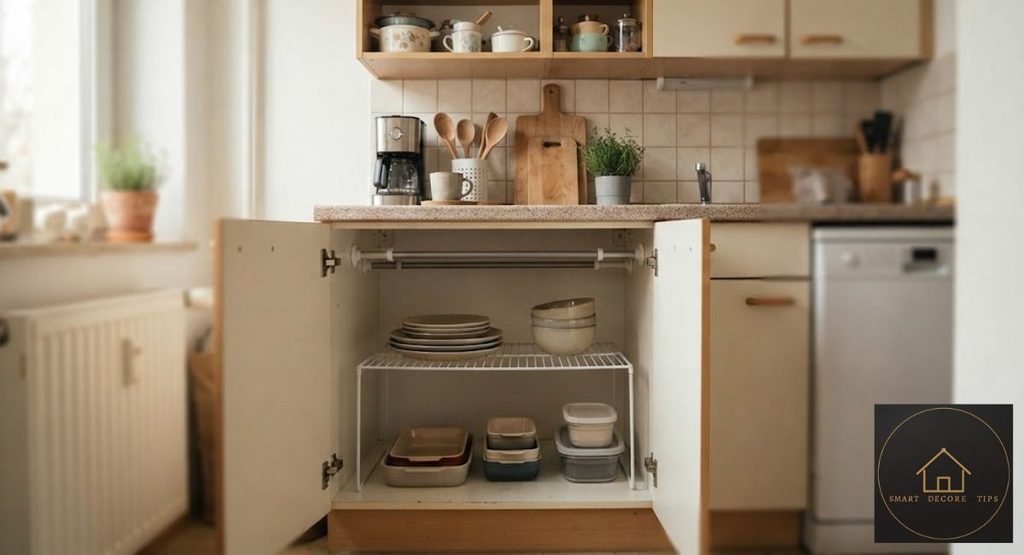
Command-strip hooks do almost everything a drilled hook does, just with weight limits you need to respect (check the rating before hanging a cast-iron pan). Tension rods wedged inside a cabinet create an instant extra shelf for lids or cutting boards without a single screw. And if wall space is truly zero, a small rolling cart tucked beside the fridge holds what a cabinet would, and rolls out of the way when you need the floor space back.
I walked a friend through this exact problem in her studio-apartment kitchen last year — one 18-inch stretch of counter, no pantry, landlord who’d take the deposit for a nail hole. We solved it with a tension-rod shelf inside the one under-sink cabinet and a single command hook for her dish towel. It wasn’t a full transformation. It was two changes, and her counter still looked twice as clear.
The honest version: in a genuinely tiny kitchen, you won’t get a magazine-clear counter, and that’s fine. The goal there is fewer things fighting for the same six inches, not zero things
Does Your Countertop Material Make Mess Worse?
Here’s the part most decluttering guides skip entirely: the surface itself changes how “messy” your kitchen feels day to day.
Butcher block and unsealed natural stone show every water ring and oil splash, which makes even a tidy counter look lived-in and cluttered. Quartz and sealed granite wipe clean in one pass and don’t stain from coffee rings or tomato sauce, so the same amount of stuff on top reads as less chaotic. Stainless steel hides smudges fine but shows every water spot under kitchen light.
If you’re mid-renovation and choosing a surface with a messy household in mind, that’s worth weighing alongside price — we break down exactly how quartz and quartzite perform under daily use in our Quartz vs Quartzite guide.
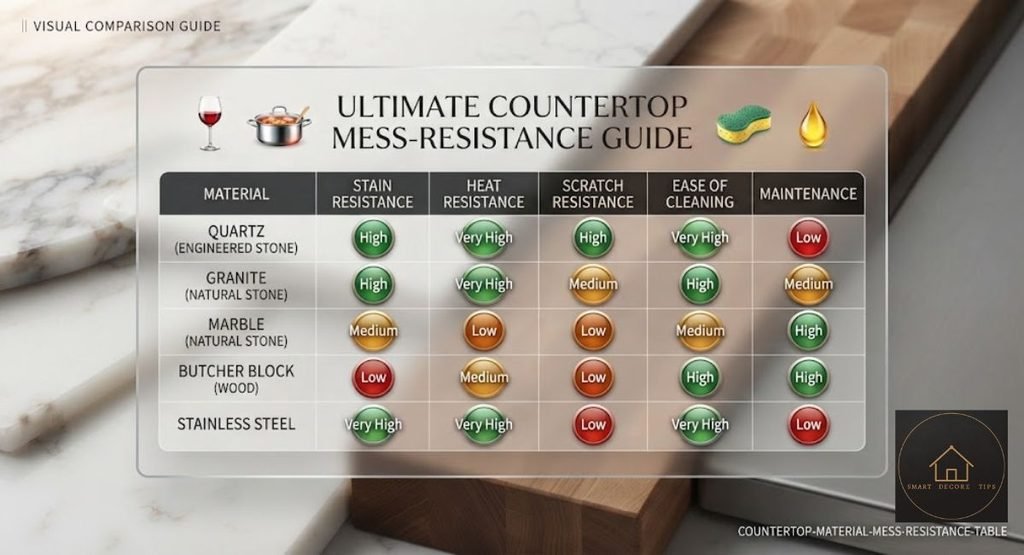
| Material | Mess-resistance | Daily upkeep |
| Quartz | High — non-porous, stain-resistant | Wipe with soap and water |
| Sealed granite | High, if resealed yearly | Wipe daily, reseal annually |
| Butcher block | Low — shows stains fast | Oil monthly, wipe immediately after spills |
| Stainless steel | Medium — hides stains, shows water spots | Wipe with microfiber to avoid streaking |
What’s Actually Fine to Leave Out
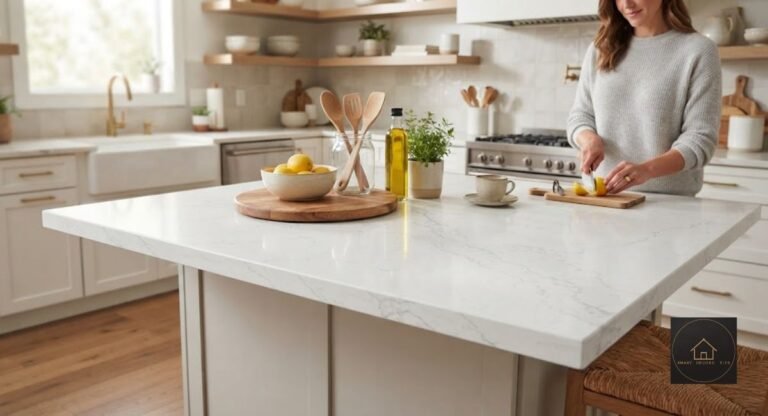
Not everything on your counter is clutter. A cutting board out because you use it daily, a fruit bowl, your everyday coffee mug — these aren’t the problem. I left my own cutting board out on purpose for a week to test this, and it never read as messy, because it had an obvious reason to be there. What makes a counter look chaotic isn’t object count, it’s objects with no visible purpose: three spatulas when you use one, a gadget from a recipe you made twice last year, mail you’re “getting to.”
I judge it with one test now: does this item earn its spot by being used today or tomorrow? If yes, it stays, no matter how it looks in a styled photo. If it’s there because putting it away felt like effort three weeks ago, it goes.
The Honest Trade-Offs
Trays and zones genuinely help, but they can slow down a heavy-use kitchen. If you cook daily and constantly reach for the same five things, corralling them into one small tray means digging through a cluster mid-recipe instead of grabbing straight off an open counter. Keep your true daily tools loose; corral the occasional-use stuff instead.
The other trade-off: moving appliances into cabinets only works if the cabinet space actually exists. In genuinely small kitchens, some of these fixes aren’t realistic no matter how disciplined you are — which is exactly why the rental section above leans on walls and vertical space instead of cabinets you don’t have.
For containing what you do keep out, our guide on decorative countertop storage that’s actually safe for stone covers trays and bins that won’t scratch or etch your surface.
FAQs
Cleaning removes the mess temporarily, but if the items causing clutter don’t have a real storage spot, they come right back within a day.
Mail, rarely-used appliances, and loose food packaging are the biggest offenders — they have no functional reason to sit out.
Quartz, because it’s non-porous and resists both staining and etching without regular sealing.
A two-minute nightly wipe-down prevents most buildup; a full clear-off and reset once a month catches anything that slipped through.
Not inherently, but it’s the first thing that makes a sink area look cluttered — a small covered caddy keeps it out of view without losing convenience.
Yes, when limited to one or two intentional pieces — a fruit bowl or a plant reads as styled, while five small objects reads as clutter.
Command-strip hooks and tension rods create extra storage without a single screw, and both come down cleanly at move-out.

Hi, I’m Shahzad Ahmad welcome to Smart Decore Tips!
I write and research every guide on this site myself, focused on real, practical home decor advice for renters, first-time homeowners, and small-space living. Before publishing anything, I check actual product listings, current prices, and real customer reviews not just what other sites already say.
My goal is simple: help you make smarter, more affordable decor decisions without the guesswork or sales pitch.





One Comment