
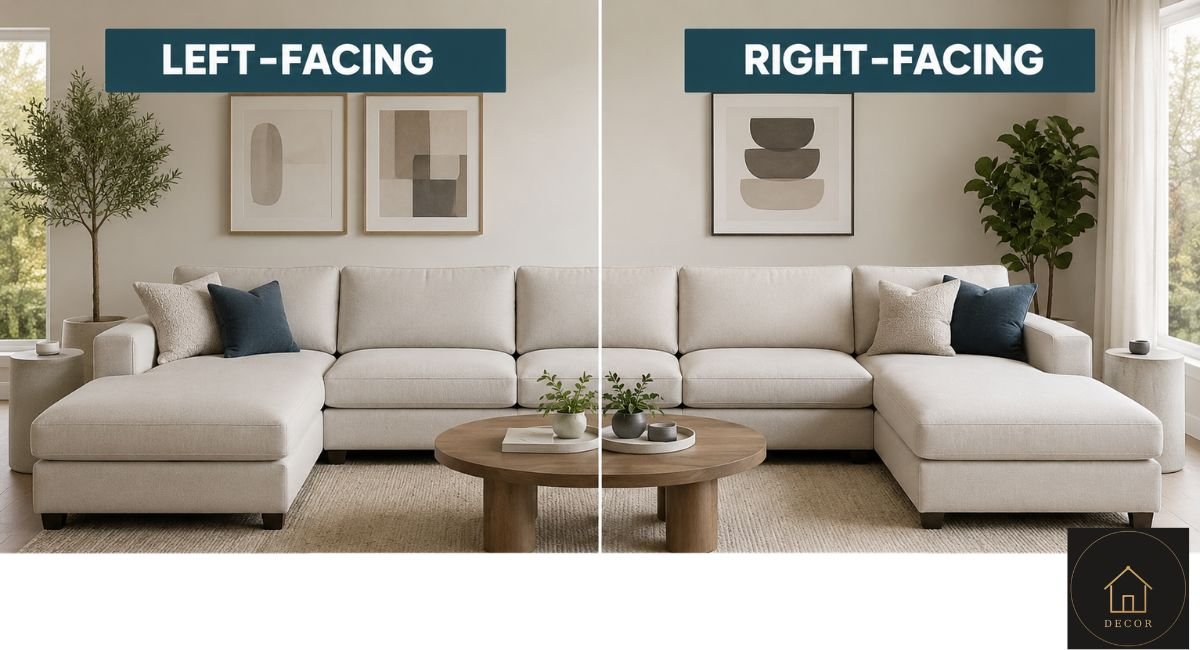
Left-Facing vs Right-Facing Sectional: How to Tell
Sit down on a left-facing sectional and the chaise is on your right.
The sofa didn’t change. You just stopped looking at it from the front, and the front view is the only one retailers use when they label a left-facing vs right-facing sectional. Judge it from the seat and you order the mirror image of the layout you planned.
Is a sectional sofa left-facing or right-facing?
A left-facing sectional has its chaise or longer side on your left when you stand in front of the sofa and face the seats. A right-facing sectional has it on your right. Retailers label from that standing view, so a left-facing chaise sits on your right once you sit down.
Any sectional with a chaise or an extended side is one or the other. Fully symmetrical sectionals have neither. Willis Furniture’s guide says the same of some corner-driven designs.
| Where you are | Left-facing chaise | Right-facing chaise |
| Standing in front, facing the seats | On your left (LAF) | On your right (RAF) |
| Sitting on the sofa | On your right | On your left |
The standing row is the one on every product page. The sitting row is why people get it backwards.
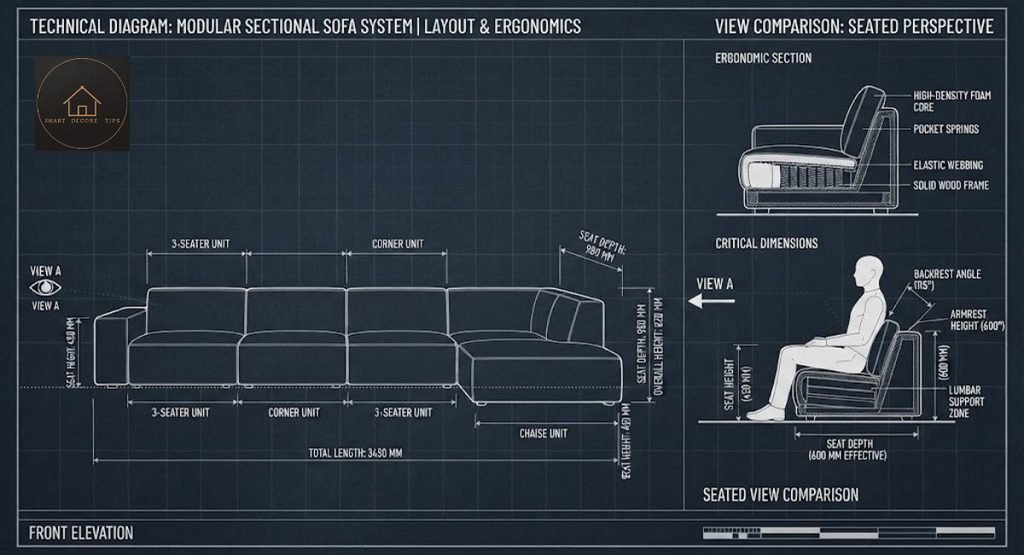
How do you tell if you need a left or right facing sectional?
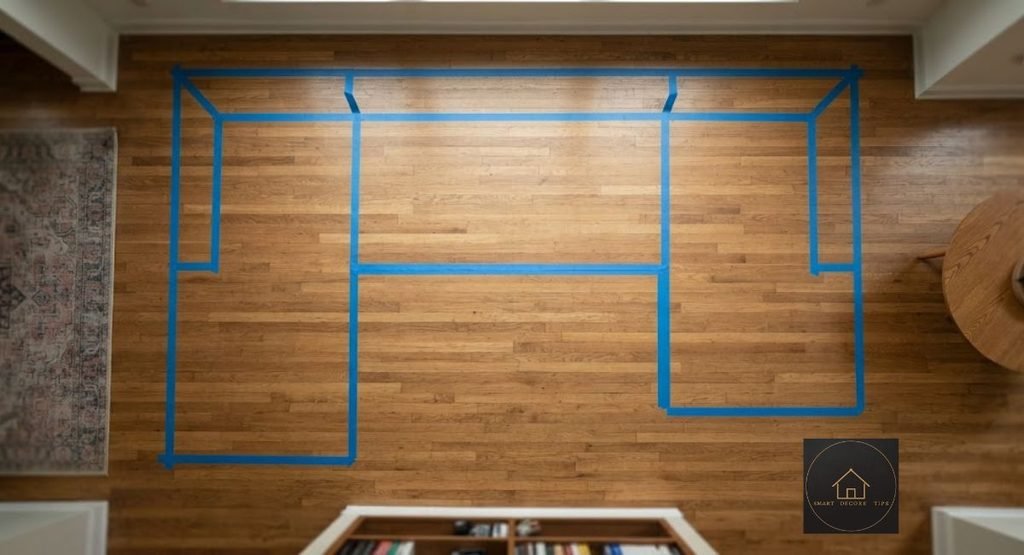
Pick the side that keeps your main walking route open, then check that the chaise doesn’t pull the seating away from the TV. Test both sides on the floor with tape before you order.
- Stand at the door you use most and trace the route you walk to the kitchen, the hallway or the balcony.
- Picture yourself in front of the planned sofa. If that route runs along the sofa’s right side, try a left-facing chaise. If it runs along the left side, try a right-facing one.
- Tape the full footprint on the floor: the overall width plus the depth of the chaise.
- Tape the mirror image too. Open every door and drawer that sits near either end, and check outlets and vents.
- Put a chair where the chaise would go, then at the far seat, and look at the TV from both.
We taped our own floor before buying a sectional, and it was the one test that removed the guesswork. A floor plan sketch never told us how it would feel to walk past the chaise.
| Room situation (viewed from in front of the sofa) | Try this first | Check before ordering |
| Main route runs along the sofa’s right side | Left-facing chaise | Door swing at the left end |
| Main route runs along the sofa’s left side | Right-facing chaise | Door swing at the right end |
| Doors or storage open beside both ends | Tape both, doors fully open | Whether a shorter chaise clears both |
| Sofa floats in the middle of an open room | Tape both | Access behind the sofa and around each end |
For clearances, 30 to 36 inches on the main walkway and 14 to 18 inches between sofa and coffee table are the standard numbers. Our guide on how to arrange furniture in a small living room shows them in a floor plan.
Left-Facing vs Right-Facing Sectional: What LAF and RAF Mean on the Order Page
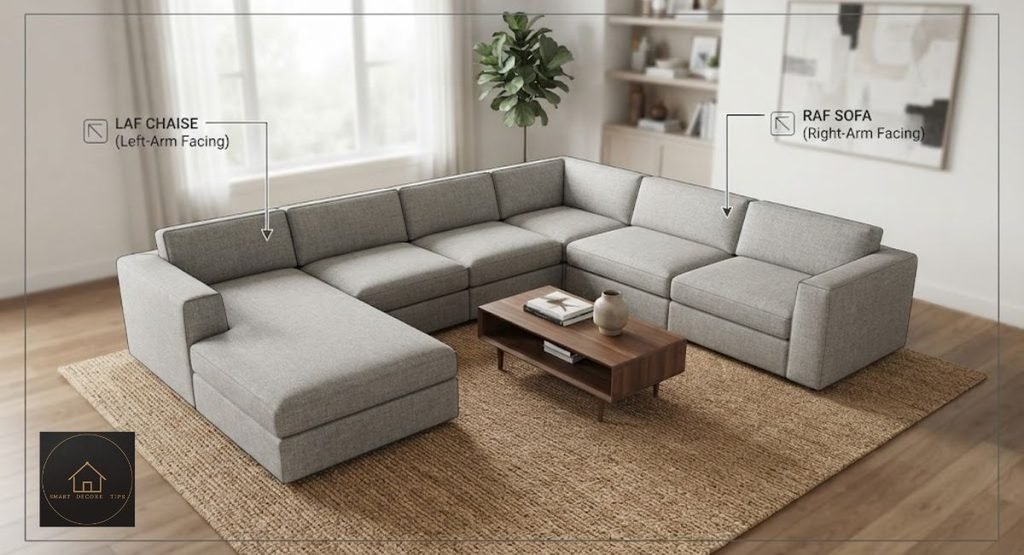
LAF means left arm facing and RAF means right arm facing. Each label describes one piece, not the whole sectional, and that is where orders go wrong.
A sectional with its chaise on the left is often sold as a LAF chaise plus an RAF sofa. Their open sides meet in the middle, so each piece keeps its arm on an outside end. The “RAF sofa” in your cart is the other half of a left-chaise layout.
I read the component names before I look at the photo. A lifestyle shot taken at an angle can hide which end the chaise is on, and the layout diagram can’t.
Some sellers write LHF and RHF instead of LAF and RAF, and Koala warns that terms vary between retailers. When two listings disagree, trust the diagram for the exact configuration you picked.
Reversibility works the same way, one SKU at a time. Crate & Barrel sells the Barrett II 91-inch in fabric with a chaise cushion and storage ottoman that switch sides, and it sells the leather Barrett II 91-inch sleeper as separate Left-Arm and Right-Arm versions. Same model name, different rules.
Can you switch a sectional from left-facing to right-facing?
Only if the model is built to be reversible or modular. A fixed sectional stays in the orientation it was made in.
| Model | How the side changes | Size | List price |
| Article Sanders 85.5″ Reversible Sectional | Move the ottoman and the chaise cushion to the other end | 85.5″ W x 61″ D; chaise seat depth 46″ | $1,499 to $1,649 by fabric |
| Crate & Barrel Barrett II 91″ Reversible Storage Chaise (fabric) | The chaise-like cushion and storage ottoman switch sides | 91″ W x 63.25″ D | $2,399; some colors on clearance |
| IKEA SÖDERHAMN 4-seat with chaise | The chaise is its own section; place it left or right and change it whenever you like | Modular; size depends on the combination | Varies by combination |
Prices and dimensions last verified October 1, 2026.
There are two mechanisms here. Article and Crate & Barrel use a loose cushion and ottoman that swap ends. IKEA and Koala’s modular sofas treat the chaise as a section you reposition. The first is quicker to flip. The second gives you more layouts.
Before I trust the word “reversible”, I open the full spec or assembly document, because a title doesn’t say how the chaise moves.
Who reversible is not for. If you want one clean, built-in chaise and your room won’t change, buy the fixed version on the correct side. Reversible designs swap a built-in chaise for a loose cushion, and owners notice: one Crate & Barrel reviewer wrote that the chaise cushion never sat snug against its base, and an IKEA reviewer reported sections that did not line up after assembly. Willis Furniture also describes reversible sectionals as usually less tailored in shape.
Size check before you pick a side
What is the 2/3 rule for sofas?
The 2/3 rule says a sofa should run about two-thirds the length of the wall it sits against. Designers quoted by Apartment Therapy apply the same ratio to the rug under it.
By that ratio, the 85.5-inch Sanders suits a wall about 128 inches long, and the 91-inch Barrett II suits one near 137 inches. Treat the result as a starting point. The chaise also reaches 61 to 63 inches into the room, so measure the wall it extends along as well.
What is the 2 2 1 rule for sofas?
No standard design rule goes by that name. The one definition I found, from furniture seller Sofaluz, describes two main seating units, two secondary seats and one central anchor such as a coffee table. It says nothing about which side the chaise goes on.
Check the box, not just the sofa
The sofa reaches your living room as a box. Article lists the Sanders carton at 21″ H x 44″ W x 103″ L. IKEA lists the SÖDERHAMN 3-seat frame package at 38″ wide, 13″ high and 75¾” long, and it weighs 99 lb 14 oz. Measure the front door, the hallway turns, the stairs and any elevator against the largest carton. Our 5-number couch measuring checklist covers the route.
Left-Facing vs Right-Facing Sectional in Open Plans and Small Rooms
In an open-plan space, treat the chaise as a soft divider. Point the open end toward the zone you want to stay connected, such as the kitchen, and let the back of the sofa mark the edge of the living area. Willis Furniture and Dweva both describe the sectional as a divider that keeps the chaise out of the lane people use to cross the room.
In a small room the problem is chaise length. Dweva puts typical chaise lengths at about 60 to 72 inches, and Chita Living suggests testing a shorter chaise if either side blocks a door. Our small space sectional layouts show seven footprints that fit.
Four ways people order the wrong side
- Judging from the seat. The chaise flips sides in your head, and the order flips with it.
- Reading the name, not the diagram. Match the picture of the full configuration to the component names in the cart.
- Carrying “reversible” from one version to another. Check the exact SKU, fabric and leather included.
- Measuring the room but not the route in. Doorways, stairs and the largest carton decide whether the sofa gets there at all.
Before you order
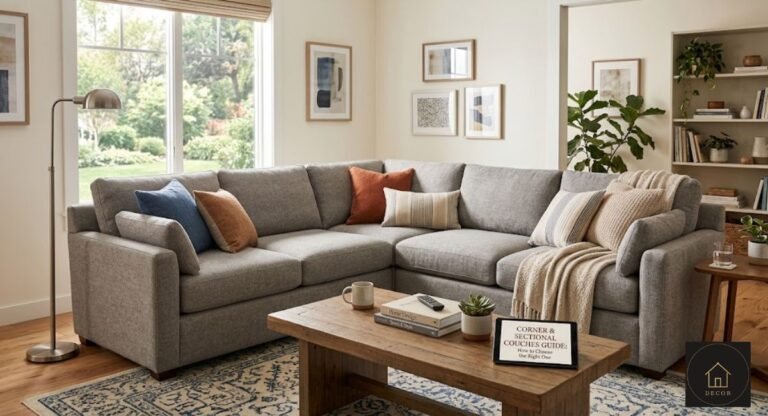
A left-facing vs right-facing sectional comes down to one view and one test. Read the label from the front, tape both outlines, and choose the side that leaves your route clear. Then match the component names to the diagram, and confirm “reversible” on the exact version in your cart. If you are still choosing a shape, our corner and sectional couches guide compares them.
FAQs
LAF means left arm facing and RAF means right arm facing, and each label describes one piece of the sectional as seen from the front, so a left-chaise order often pairs a LAF chaise with an RAF sofa.
No, left-facing is read from the front of the sofa while you stand, so a left-facing chaise sits on your right once you are seated.
The 2/3 rule says a sofa should be about two-thirds the length of the wall it sits against, which makes an 85.5-inch sectional a fit for a wall of roughly 128 inches.
No single standard rule carries that name, and the one retailer guide that defines it describes two main seating units, two secondary seats and one central anchor such as a coffee table.
Only reversible or modular models can switch sides: Article’s Sanders and the fabric Crate & Barrel Barrett II move a chaise cushion and ottoman, while IKEA’s SÖDERHAMN chaise is a separate section placed on either side.
No, symmetrical sectionals and some corner-driven designs have no left or right designation, while L-shaped chaise sectionals do.
Leave 14 to 18 inches between the front edge of the sofa and the coffee table, and keep 30 to 36 inches clear along the main walkway.

Hi, I’m Shahzad Ahmad welcome to Smart Decore Tips!
I write and research every guide on this site myself, focused on real, practical home decor advice for renters, first-time homeowners, and small-space living. Before publishing anything, I check actual product listings, current prices, and real customer reviews not just what other sites already say.
My goal is simple: help you make smarter, more affordable decor decisions without the guesswork or sales pitch.
One Comment