Sectional Couch Brackets: Types, Installation & Fixes
Have you ever sat down on your sectional sofa only to notice that one piece has slowly moved away from the other?
A small gap appears between the cushions. The corners no longer line up. Every time someone sits down, the sections seem to slide further apart.
This is one of the most common problems with sectional sofas.
The good news is that you usually do not need a new couch. Sectional couch brackets are a simple and affordable solution that helps lock sofa sections together and prevent unwanted movement.
Most sectional connectors cost between $8 and $30, and many can be installed in less than 15 minutes.
The important part is choosing the right type.
Some sectionals work best with metal locking brackets, while others need flexible straps or clamp-style connectors.
This guide explains everything you need to know about sectional couch brackets, including types, installation, costs, common problems, and how to choose the best option for your sofa.
Quick Answer: What Are Sectional Couch Brackets?
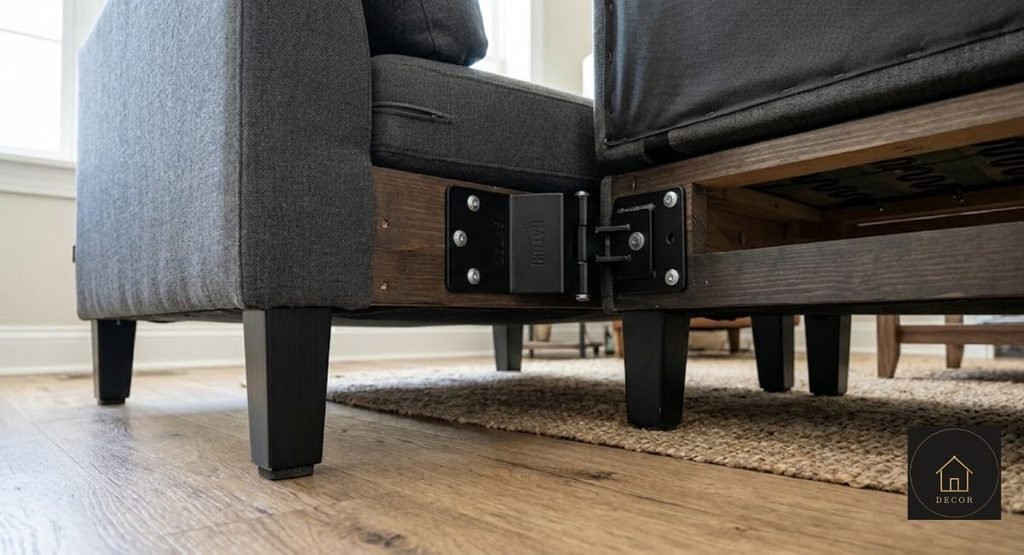
Sectional couch brackets are small hardware pieces installed underneath sofa sections to connect two pieces of a sectional together.
They prevent individual sections from:
- Sliding apart
- Creating gaps
- Moving during daily use
- Shifting on hard floors
Most sectional brackets use an interlocking design where one piece attaches to one sofa section and the matching piece attaches to the other.
When the sections are pushed together, the connectors lock into place.
Many sectionals already include connectors from the manufacturer, but they can become loose, break, or may not be included on lower-cost models.
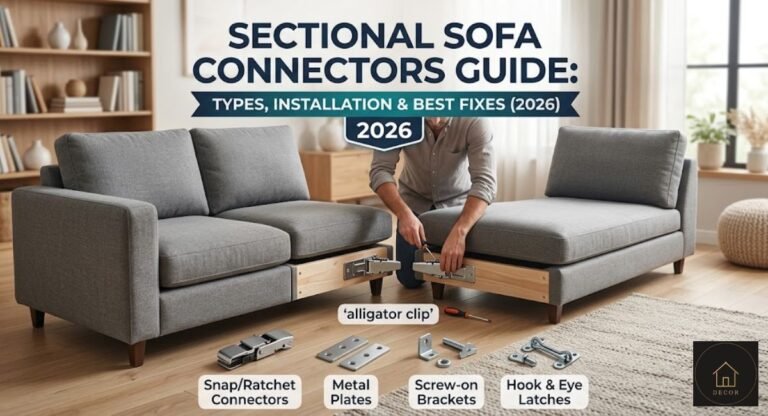
If you want to understand different ways sectional pieces connect, our Sectional Sofa Connectors Guide explains connector types, installation methods, and common fixes.
Why Does My Sectional Sofa Keep Separating?
A sectional sofa moves because the individual pieces are often only resting beside each other without a strong physical connection.
Normal daily activities can slowly push sections apart:
- Sitting down
- Standing up
- Moving cushions
- Children playing
- Pets jumping on the sofa
The problem is usually worse on smooth flooring.
Common Reasons Sectionals Slide Apart
1. Hard Floors Reduce Friction
Wood, tile, and laminate floors allow sofa legs to move more easily compared with carpet.
2. Missing or Broken Connectors
Some sofas:
- Do not include brackets
- Have damaged hardware
- Have connectors that are no longer aligned
3. Uneven Sofa Legs
If one section sits higher or lower than another, the connectors may not line up correctly.
4. Heavy Daily Use
Large families, pets, or frequent movement can put more stress on sectional joints.
Do You Need Sectional Couch Brackets?
Not every sectional requires additional brackets.
You may need them if:
✅ Your sofa pieces constantly separate
✅ You have children or pets
✅ Your sectional sits on hardwood or tile
✅ You move sections frequently
✅ The original connectors are missing or damaged
You may not need them if:
- Your sectional already stays firmly connected
- It has built-in locking hardware
- It rarely moves
Sectional Couch Bracket Types Compared
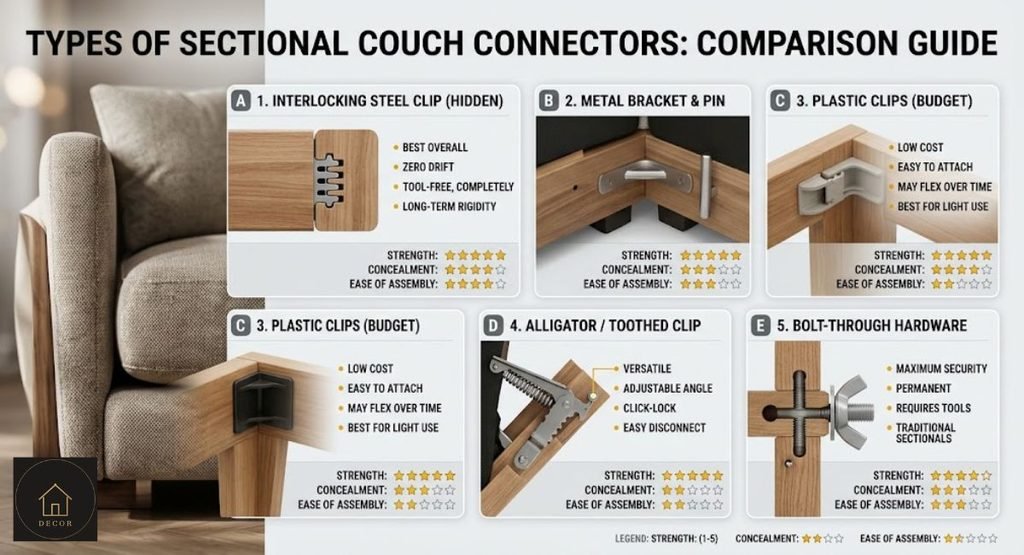
There are several connector styles available. The best option depends on your sofa design and how permanent you want the solution to be.
| Bracket Type | Price Range | Best For | Installation |
| Interlocking metal brackets | $10–$25 | Heavy daily use | Screws required |
| Fork-and-prong connectors | $12–$28 | Compatible sectional frames | Screws required |
| Rubber connector straps | $8–$18 | Renters and quick fixes | No drilling |
| Clamp-style connectors | $15–$30 | Unusual sofa designs | Usually easy |
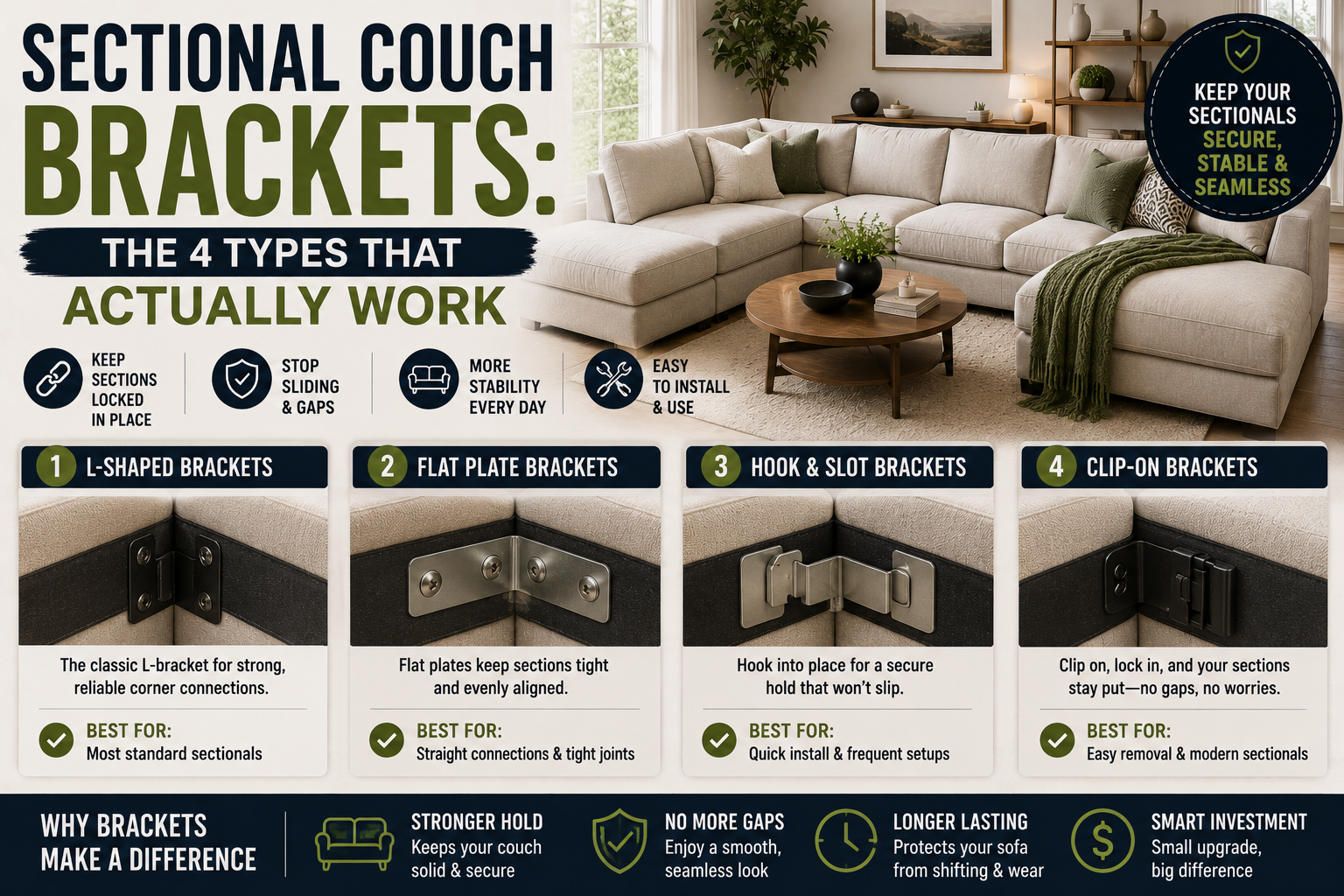
1. Interlocking Metal Sectional Brackets
Metal brackets are usually the strongest option.
They work by using two matching pieces:
- One side has a hook or raised section
- The other side has a slot or receiver
When connected, the pieces hold the sofa sections together.
Best for:
- Large sectionals
- Family rooms
- Daily heavy use
Advantages:
✅ Strong connection
✅ Long-lasting
✅ Less movement
Disadvantages:
❌ Requires screws
❌ Not ideal for renters
2. Fork-and-Prong Sectional Connectors
These connectors are common on many manufactured sofas.
One side has a fork-shaped piece, while the other side has a matching bar.
They are useful when replacing existing hardware.
3. Rubber Sectional Connector Straps
Rubber straps are the easiest option for many homeowners.
They usually attach around:
- Sofa legs
- Supporting frames
without drilling holes.
Best for:
- Renters
- Temporary solutions
- Sofas without suitable frame space
Advantages:
✅ No tools required
✅ Easy installation
✅ Removable
Disadvantage:
They may stretch over time with heavy use.
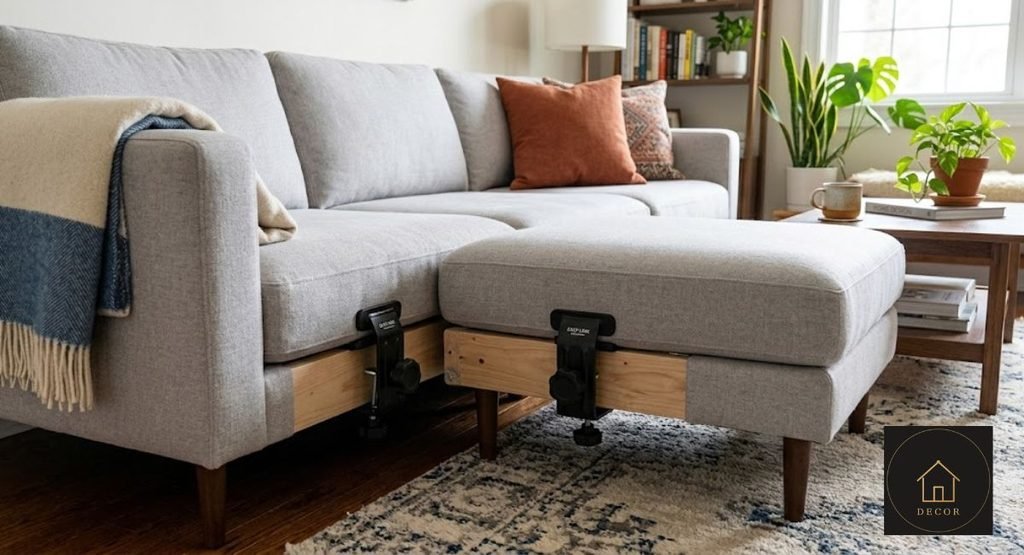
4. Clamp-Style Sectional Connectors
Clamp connectors attach around the sofa frame or legs.
They are useful when:
- The sofa shape is unusual
- Standard brackets do not fit
- You do not want to drill
How Do You Install Sectional Couch Brackets?
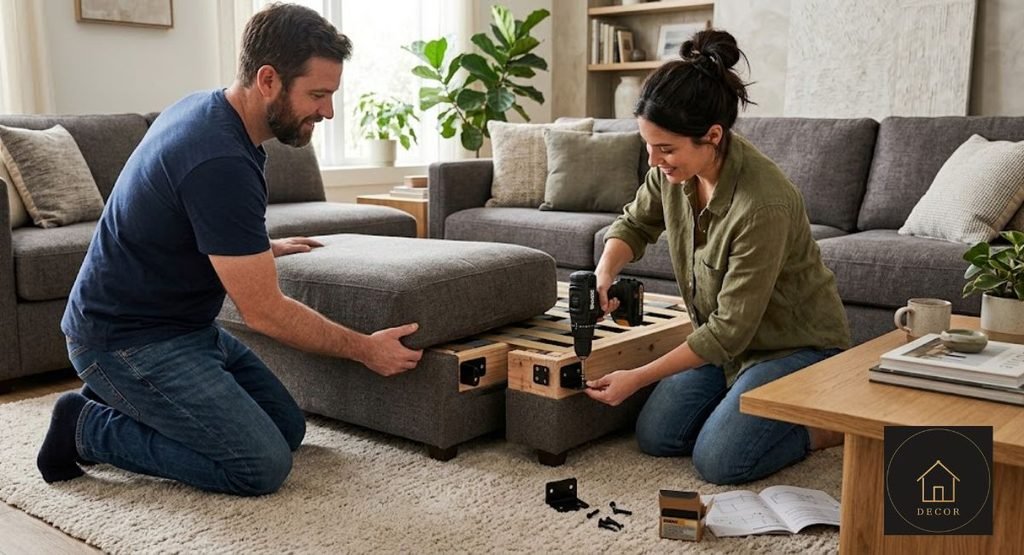
Installing sectional couch brackets is usually a simple DIY project. Most homeowners can complete the job with basic tools, especially if the sofa already has suitable mounting points.
The exact process depends on the connector type, but screw-in brackets generally follow the same steps.
Tools You May Need
Before starting, prepare:
- Screwdriver
- Drill (optional)
- Measuring tape
- Pencil
- Helper for moving sofa sections
A second person can make the process easier because sectional pieces can be heavy and difficult to align alone.
Step-by-Step Installation Guide
Step 1: Separate the Sofa Sections
Move the sectional pieces apart so you can access the bottom frame.
Identify:
- Where the sections meet
- Existing hardware
- Available frame space
Step 2: Check the Sofa Frame
Before drilling, make sure you are attaching the bracket to a strong part of the frame.
Avoid attaching connectors only to:
- Thin fabric panels
- Weak upholstery areas
- Unsupported sections
The bracket needs a solid surface to hold the sofa pieces together.
Step 3: Align the Bracket Positions
Place the two bracket pieces where both sofa sections will meet.
Make sure:
- The pieces line up correctly
- The connector can lock easily
- The sofa sections sit evenly
Poor alignment can cause the sectional to separate even after installation.
Step 4: Attach the Brackets
For screw-in connectors:
- Mark the screw holes
- Create small starter holes if needed
- Attach each bracket piece securely
- Tighten screws firmly
Do not overtighten, because excessive pressure can damage the sofa frame.
Step 5: Connect the Sofa Sections
Move the sectional pieces together.
The brackets should:
- Slide into position
- Lock together securely
- Keep the sections aligned
Test the connection by gently moving the sofa before regular use.
How Many Sectional Couch Brackets Do You Need?
The number of brackets depends on your sectional size and how much movement it experiences.
General guideline:
| Sectional Size | Minimum Recommendation |
| 2-piece sectional | 1 connector set |
| 3-piece sectional | 2 connector sets |
| Large sectional | 2–4 connector sets |
For heavy daily use, adding extra support at important joints can reduce movement.
How to Choose the Right Sectional Couch Bracket
Not every connector works for every sofa.
Before buying, check these factors:
1. Sofa Frame Design
Look underneath your sectional.
Check whether you have:
- Exposed wooden frame
- Metal frame
- Existing mounting points
- Limited installation space
Some sofas work better with straps or clamps instead of drilled brackets.
2. How Often the Sofa Moves
Choose based on usage:
Heavy Daily Use
Best choice:
- Metal interlocking brackets
Good for:
- Families
- Pets
- Large sectionals
Occasional Use
Best choice:
- Rubber straps
- Clamp connectors
Good for:
- Guest rooms
- Apartments
- Temporary setups
3. Flooring Type
Your floor affects how much your sectional moves.
| Floor Type | Movement Risk |
| Hardwood | High |
| Tile | High |
| Laminate | Medium-high |
| Carpet | Lower |
If your sectional sits on smooth flooring, stronger connectors are usually more helpful.
Sectional Couch Brackets vs Sectional Sofa Connectors
These terms are often used interchangeably, but there can be a small difference.
Sectional couch brackets usually refer to the physical hardware pieces that attach under the sofa.
Sectional sofa connectors is a broader term that includes:
- Metal brackets
- Straps
- Clamps
- Other joining systems
Both serve the same main purpose:
Keeping sectional pieces together and preventing unwanted movement.
What If Your Sectional Does Not Have Space for Brackets?
Some sofas do not have enough exposed frame space for traditional screw-in connectors.
In this situation, consider:
Rubber Connector Straps
Best when:
- You cannot drill holes
- You rent your home
- The sofa frame is difficult to access
Clamp-Style Connectors
Useful when:
- The sofa has unusual construction
- The frame shape does not support standard brackets
Non-Slip Furniture Pads
These do not connect sofa sections, but they can reduce movement by increasing friction between:
- Sofa legs
- Floor surface
They work best as an additional solution rather than a replacement for connectors.
Why Is My Sectional Still Separating After Installing Brackets?
If your sectional sofa is still moving after installing connectors, the problem is usually not the brackets themselves. In most cases, it comes down to incorrect installation, poor alignment, or the wrong connector type.
Before replacing the brackets, check these common issues.
1. Only One Connector Was Installed
A single connector may not provide enough stability for larger sectionals.
This is especially true for:
- Large L-shaped sectionals
- Heavy sofas
- Homes with children or pets
Adding another connector at the same joint can distribute pressure more evenly.
2. The Brackets Are Not Properly Aligned
Even a good-quality connector will not work correctly if the two sides do not line up.
Check:
- Are both sofa sections level?
- Are the brackets directly facing each other?
- Are screws tight?
- Is one section sitting higher than the other?
Small alignment problems can prevent the locking mechanism from working properly.
3. The Sofa Legs Are Uneven
Uneven legs can create extra movement between sections.
Check if:
- One corner sits higher
- One section rocks slightly
- The frame is not sitting flat
Adjustable furniture feet or furniture shims can sometimes solve this issue.
4. The Floor Surface Is Too Slippery
Even connected sectionals can move slightly on smooth floors.
This happens often with:
- Hardwood
- Tile
- Polished laminate
Adding non-slip pads under sofa legs can improve stability.
Common Mistakes When Installing Sectional Couch Brackets
Many installation problems happen because of small mistakes.
Mistake 1: Attaching Brackets to Weak Material
The connector should attach to the sofa frame, not just fabric-covered areas.
Weak attachment points can:
- Pull out screws
- Damage the sofa
- Create more movement
Mistake 2: Buying the Wrong Connector Size
Universal connectors are common, but they are not always suitable for every sofa.
Before buying, check:
- Bracket dimensions
- Screw requirements
- Frame thickness
- Connector style
Mistake 3: Ignoring the Original Hardware
Some sofas already include manufacturer-installed connectors.
Before replacing anything, check underneath the sofa.
You may only need to:
- Reconnect existing brackets
- Tighten loose screws
- Realign sections
Mistake 4: Choosing Convenience Over Stability
No-drill straps are useful, but they may not provide the same strength as metal brackets for large, heavy sectionals.
Choose based on your actual use.
Best Sectional Couch Bracket Choice by Situation
| Situation | Best Option |
| Large family sectional | Metal interlocking brackets |
| Heavy daily use | Strong screw-in connectors |
| Rental apartment | Rubber straps |
| No drilling allowed | Clamp connectors |
| Budget sofa repair | Universal replacement brackets |
| Temporary fix | Connector straps |
Can You Replace Broken Sectional Couch Brackets?
Yes, in most cases you can replace damaged connectors.
Replacement is usually needed when:
- A hook is bent
- Screws have come loose
- Plastic parts have cracked
- The connector no longer locks
Before buying replacements:
- Remove the damaged hardware
- Measure the existing connector
- Compare the mounting holes
- Choose a compatible replacement
How Much Do Sectional Couch Brackets Cost?
Most replacement connectors are affordable.
Typical prices:
| Connector Type | Average Cost |
| Metal brackets | $10–$25 |
| Rubber straps | $8–$18 |
| Clamp connectors | $15–$30 |
| Replacement hardware sets | $10–$40 |
Compared with replacing a sofa, repairing the connection is usually much cheaper.
Are Sectional Couch Brackets Worth Buying?
For most sectional owners, yes.
A small investment in the right connector can improve:
- Sofa stability
- Room appearance
- Daily comfort
- Safety around children and pets
However, brackets are not a solution for every sofa problem.
If your sectional has:
- Damaged frame
- Broken legs
- Structural issues
the problem may require a larger repair.
For a normal sectional that simply slides apart, connectors are one of the easiest fixes.
Final Buying Checklist for Sectional Couch Brackets
Before purchasing, check:
✅ Identify why your sectional is moving
✅ Measure the existing connector area
✅ Choose metal for heavy use
✅ Choose straps for rental-friendly solutions
✅ Check sofa frame strength
✅ Confirm return policy
✅ Read customer reviews
✅ Install correctly before judging performance
If you are still deciding which sectional style is right for your home, our Corner & Sectional Couches Guide covers sizes, layouts, and common buying mistakes.
FAQs
No. Some sectionals stay together without additional connectors, but brackets help prevent movement, especially on smooth floors or with frequent use.
Many are designed to fit common sectional sofas, but compatibility depends on the sofa frame, connector style, and mounting location.
The best solution is installing sectional connectors or brackets. Non-slip pads under the legs can also reduce movement.
Yes. Most screw-in brackets require only basic tools, while strap and clamp connectors can often be installed without drilling.
You usually need one connector set for each joint. Larger or heavily used sectionals may benefit from additional support.
Yes, but choose removable options such as rubber straps or clamp-style connectors if you do not want to make permanent changes.
Sectional brackets usually refer to hardware pieces that lock sofa sections together. Connectors is a broader term that includes brackets, straps, and clamps.
Related More Guidelines about Sofas
Conclusion
Sectional couch brackets are a small upgrade that can solve one of the most frustrating problems with sectional sofas: pieces that constantly move apart.
Instead of replacing your sofa or adjusting the sections every day, the right connector can keep everything aligned and make your sectional feel like one complete piece.
The best option depends on your situation:
- Choose metal interlocking brackets for strong, long-term stability.
- Choose rubber straps if you need a renter-friendly solution.
- Choose clamp-style connectors if drilling is not possible.
- Choose replacement brackets when existing hardware is damaged.
Before buying, check your sofa frame, measure the connection area, and choose a connector designed for your type of sectional. A $10–$30 hardware upgrade can make a noticeable difference in comfort, appearance, and everyday use.

Hi, I’m Shahzad Ahmad welcome to Smart Decore Tips!
I write and research every guide on this site myself, focused on real, practical home decor advice for renters, first-time homeowners, and small-space living. Before publishing anything, I check actual product listings, current prices, and real customer reviews not just what other sites already say.
My goal is simple: help you make smarter, more affordable decor decisions without the guesswork or sales pitch.