
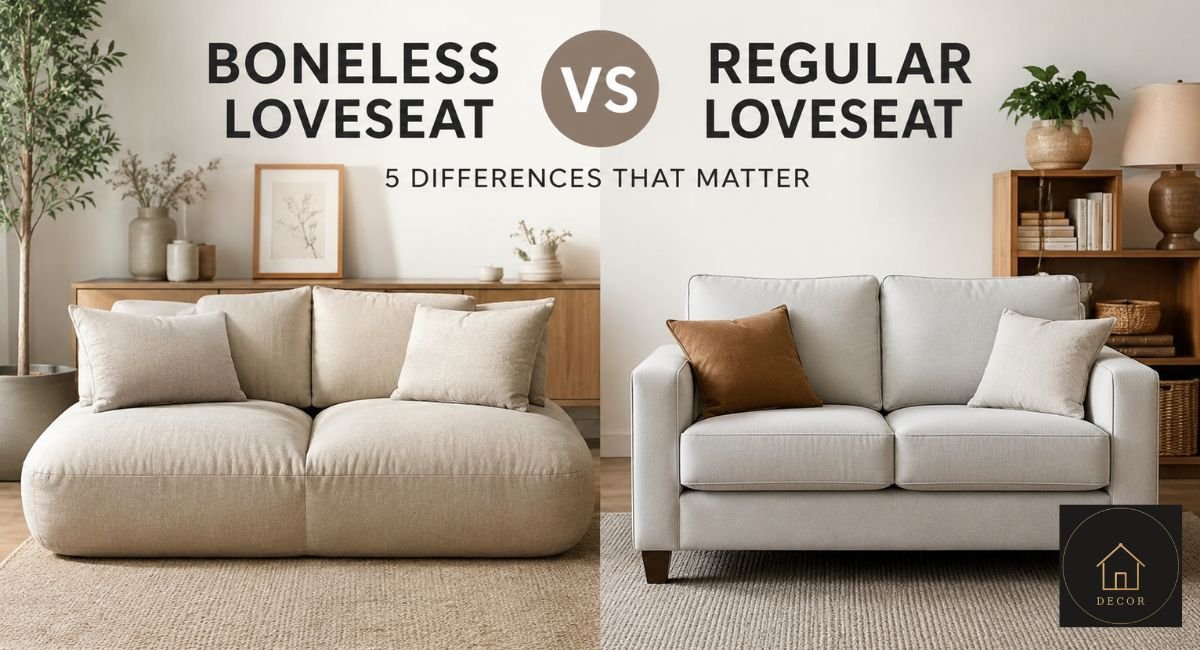
Boneless Loveseat vs Regular Loveseat: 5 Differences That Matter
Shopping for a loveseat and keep landing on “boneless” listings that look nothing like the couch you grew up with? You’re not imagining it boneless loveseats are a genuinely different build, not just a marketing name.
Before you compare prices, it helps to know what’s actually different underneath the fabric, because that’s what decides how the thing feels five years from now, not just five minutes after unboxing.
This guide breaks down comfort, support, price, and lifespan so you can pick the right one for your space. It pairs well with our modular loveseat with ottoman guide if you’re weighing a loveseat-plus-ottoman setup instead of a standalone piece.
Quick Takeaways
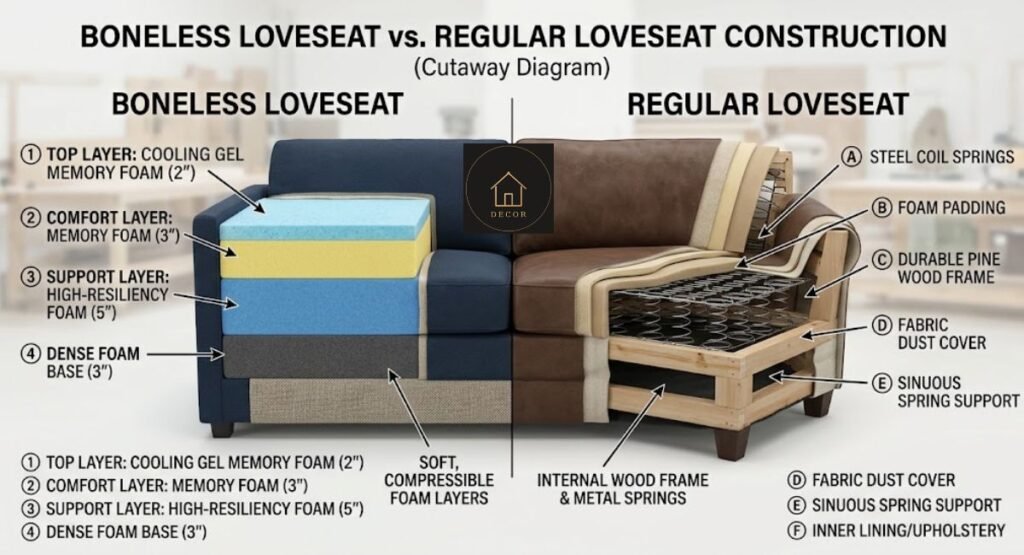
- A boneless loveseat replaces the wood frame and coil springs with a single block of high-density foam and fiber fill.
- Foam density (measured in lb/ft³) predicts sag risk far better than price does look for 1.8 lb/ft³ or higher.
- Regular loveseats generally outlast boneless ones for upright, everyday sitting; boneless loveseats win on lounging comfort and setup speed.
- Budget boneless loveseats run $150–$350; higher-density, better-fabric options run $400–$750.
What is a boneless loveseat?
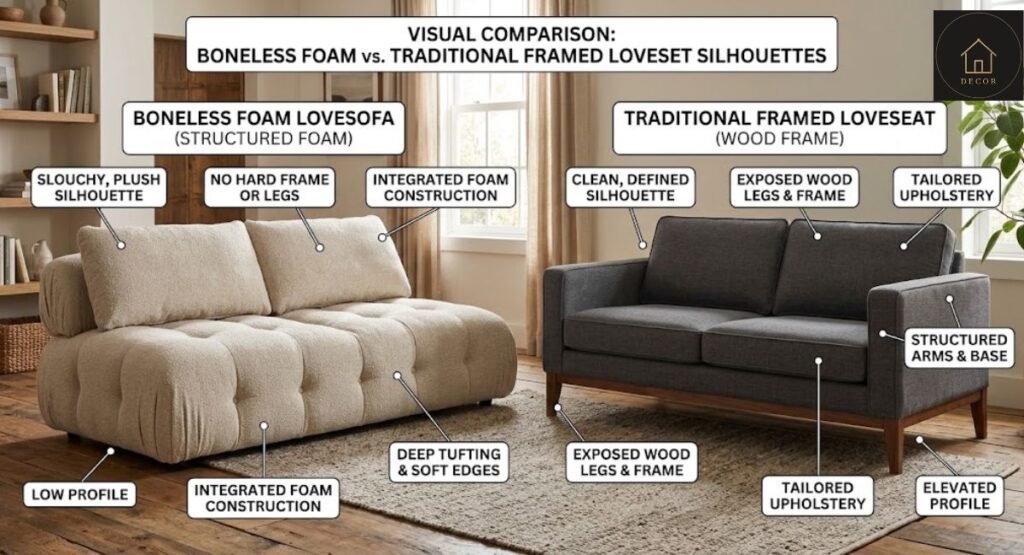
A boneless loveseat is a two-seater sofa built entirely from high-density foam and fiber fill instead of a rigid wood or metal frame.
Without an internal skeleton, it has a softer, more sculpted shape and a deeper “sink-in” feel than a traditional loveseat. It usually ships vacuum-compressed in one box and needs no tools to set up.
Boneless vs regular loveseat: the side-by-side
| Feature | Regular loveseat | Boneless loveseat |
| Internal support | Hardwood/plywood frame + coil springs | Continuous foam + fiber core, no frame |
| Seat feel | Firmer, more upright | Deeper sink-in, softer |
| Setup | Delivered assembled or bolt-together | Unbox and fluff, ready in 24–72 hrs |
| Typical weight | Heavier, harder to move | Lighter, easier to reposition |
| Everyday sitting (desk work, dining) | Better back support | Can feel too soft for long upright sitting |
| Sagging risk | Lower, frame holds shape | Higher on low-density foam, lower on high-density |
| Typical lifespan | 7–15 years | 3–10+ years depending on foam quality |
| Starting price | $300–$900+ | $150–$750 |
Comfort and feel: sink-in vs structured
This is the difference people notice first. A regular loveseat’s coil springs push back against your body, so you sit on it your posture stays more upright, and it’s easier to get back out of. A boneless loveseat’s foam core lets you sink into it, closer to a memory-foam-mattress feel, with a slightly reclined backrest angle instead of a near-vertical one.
Here’s what people get wrong: they assume “softer” automatically means “more comfortable” for every use. If the loveseat is mostly for Netflix and naps, boneless wins easily. If it’s also where you sit to eat dinner off a tray table or work on a laptop for an hour, the lack of firm back support can get tiring faster than a framed piece would.
Support and weight capacity: will it sag?
Sag risk comes down to one number most shoppers never ask about: foam density, measured in pounds per cubic foot (lb/ft³).
- Budget foam (under 1.5 lb/ft³): compresses well for shipping, but visible sagging in the most-used seat is common within 12–18 months of daily use.
- Mid-range foam (1.8–2.5 lb/ft³): the sweet spot for daily household use; holds shape with gradual, even softening rather than a collapsed sit.
- Premium foam (2.8–3.2+ lb/ft³): best for pets, kids, or heavy daily lounging.
Regular loveseats sag differently springs lose tension and frames can loosen at the joints, but that process is usually slower and more repairable (re-tightening screws, replacing a spring) than a foam core is.
On a boneless piece, once the foam breaks down, there’s no fixing it short of a new cushion insert.
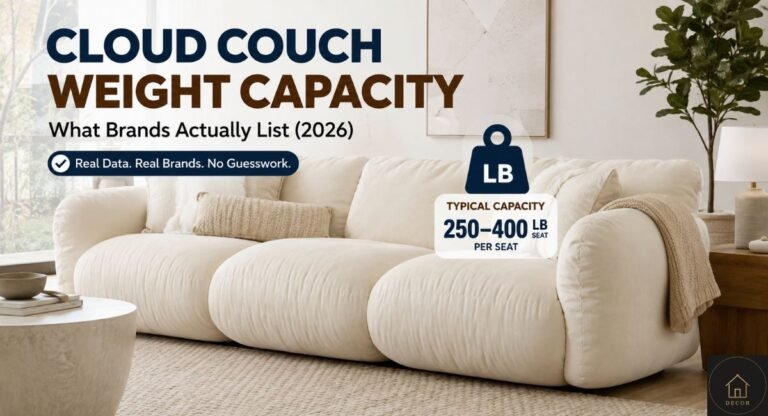
Real-world weight tip: most boneless loveseats are rated for 250–300 lbs per seater when built on higher-density foam comparable to a mid-range framed sofa. Cheaper listings rarely publish this number, which is itself a signal to look elsewhere.
“who want the technical definition of foam density ratings”
Setup, delivery, and no-assembly convenience
This is where boneless loveseats clearly win. Most arrive vacuum-compressed in a single box light enough for one person to carry, with no tools and no assembly you unbox it, let it expand for 24 to 72 hours, and fluff the cushions back into shape.
Regular loveseats usually arrive fully built (heavy, awkward for stairs and elevators) or require partial assembly with a hex key and a spare hour. If you move often apartment to apartment, dorm to dorm that difference in delivery and portability matters more than most buying guides admit.
Lifespan: how long does each one actually last?
This is the most disputed number in loveseat shopping, and the honest answer is “it depends on the foam, not the label.” Independent reviews and teardown comparisons put the range at:
- Budget-tier boneless loveseats: noticeable sagging and uneven cushion height by 1–2 years of daily use.
- Mid-to-high density boneless loveseats: 5–8+ years with normal use and occasional fluffing/rotating.
- Regular framed loveseats: commonly cited at 7–15 years, since a solid frame and springs degrade slower than foam under constant compression.
I’ve seen this play out firsthand with a cheap boneless accent chair I bought as a “just for now” piece it looked great for about ten months, then the seat cushion started staying compressed even after fluffing.
A denser-foam piece from a brand that publishes its foam specs wouldn’t have had that problem nearly as fast.
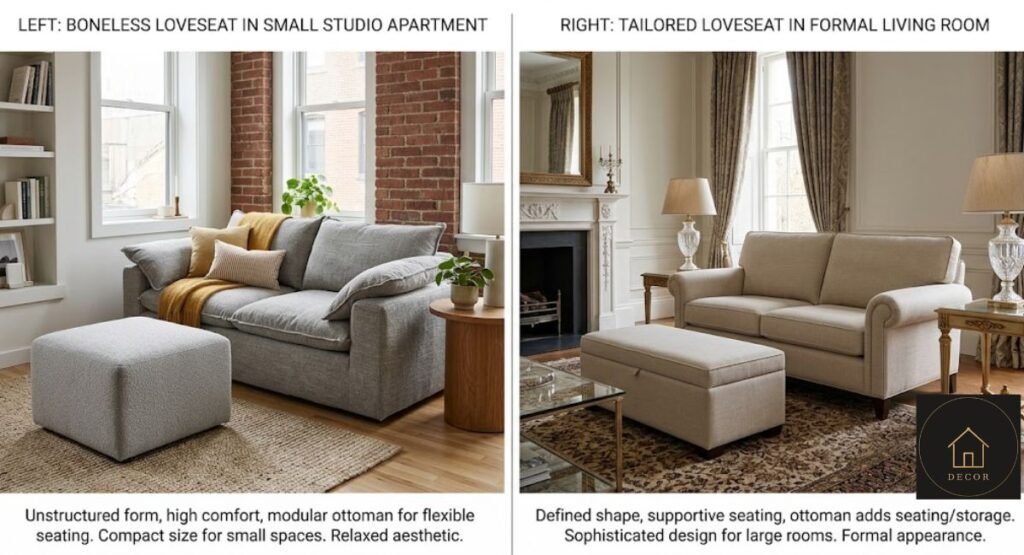
Honest trade-off: a regular loveseat is the safer long-term investment if you want one piece of furniture for a decade-plus formal living room. A well-made boneless loveseat is the better call for a casual room, a renter’s timeline, or a household that reconfigures furniture often.
Style and small-space fit
Boneless loveseats lean into a rounded, cloud-like silhouette that reads casual and modern great for a cozy corner, a bedroom sitting nook, or a studio apartment where you want the furniture to look relaxed rather than formal.
Regular loveseats come in far more silhouettes, including tailored, tight-back styles that suit a more traditional or formal room. If you’re building out a full modular setup rather than a single loveseat, our modular loveseat with ottoman guide covers how an ottoman piece changes the footprint and configuration options.
And if the room also has (or might get) a sectional, our left-facing vs right-facing sectional breakdown walks through the orientation trick that trips up most first-time buyers.
Real brands and price ranges to expect
Generic “boneless loveseat” listings are everywhere, but a few brands consistently publish real specs instead of vague marketing copy:
- The Boneless Couch their Cordé Loveseat ($489–$550) is a good example of mid-tier corduroy construction with a published foam type.
- Ovios sells no-assembly boneless sofas and loveseats sized from 59 to 134 inches, with density and fabric options listed per model.
- Sdorens Home their Signature Classic Loveseat line runs around $450 and is explicit about cotton-linen blends and rounded, kid-safe edges.
At the budget end, marketplace listings (Walmart, Amazon) in the $150–$330 range are common, but foam density is rarely disclosed treat the absence of that number as a red flag, not an oversight.
Cleaning and care: the 5-minute weekly habit
A boneless loveseat needs more upkeep than a framed one, but it’s quick if you stay consistent:
- Vacuum the surface weekly with an upholstery attachment to lift dust before it settles into the foam.
- Fluff and reshape each cushion by hand, pushing the foam back toward its original contour.
- Rotate cushions front-to-back (or swap sides on modular pieces) every few weeks to spread compression evenly.
- Spot clean spills immediately with mild detergent and cold water, blotting rather than rubbing.
- Remove and machine-wash the cover only as often as the care label allows over-washing stresses seams faster than the foam wears out.
- Air dry covers fully before reattaching; heat drying can shrink fabric and throw off the fit.
Which one should you buy?
- Choose boneless if: you rent, move often, want a casual lounge feel, or need furniture that ships and sets up fast.
- Choose regular if: the loveseat is your main everyday seat for upright sitting, you want a decade-plus lifespan, or the room has a more formal style.
- Split the difference: buy a boneless loveseat from a brand that publishes foam density (1.8 lb/ft³ or higher) you get the comfort and convenience without gambling on a mystery-foam listing.
FAQs
A: For lounging, yes. For long stretches of upright sitting, a regular loveseat’s spring-and-frame construction generally gives more consistent back support.
A: Depends on foam density. Budget foam under 1.5 lb/ft³ sags within 12–18 months; foam at 1.8 lb/ft³ or higher holds up comparably to a mid-range framed sofa for years.
A: Typically 3–10+ years, with higher-density foam and light rotation/fluffing landing at the top of that range. Regular loveseats commonly last 7–15 years.
A: No. Most arrive vacuum-compressed in one box and need no tools just unbox and let the foam expand over 24–72 hours.
A: Higher-density foam (2.8–3.2+ lb/ft³) handles that use case reasonably well. Budget foam under that range will sag faster under extra jumping and weight.
Conclusion
Neither style is objectively “better” a boneless loveseat wins on comfort, setup speed, and price at the low end, while a regular loveseat wins on long-term support and lifespan.
If you’re still choosing between a boneless loveseat and a regular one, let your room’s actual daily use decide it: casual lounging favors boneless, everyday upright sitting favors a framed piece. Either way, check the foam density or frame quality before you buy that one spec predicts more about how happy you’ll be in a year than the price tag does.

Hi, I’m Shahzad Ahmad welcome to Smart Decore Tips!
I write and research every guide on this site myself, focused on real, practical home decor advice for renters, first-time homeowners, and small-space living. Before publishing anything, I check actual product listings, current prices, and real customer reviews not just what other sites already say.
My goal is simple: help you make smarter, more affordable decor decisions without the guesswork or sales pitch.



One Comment