
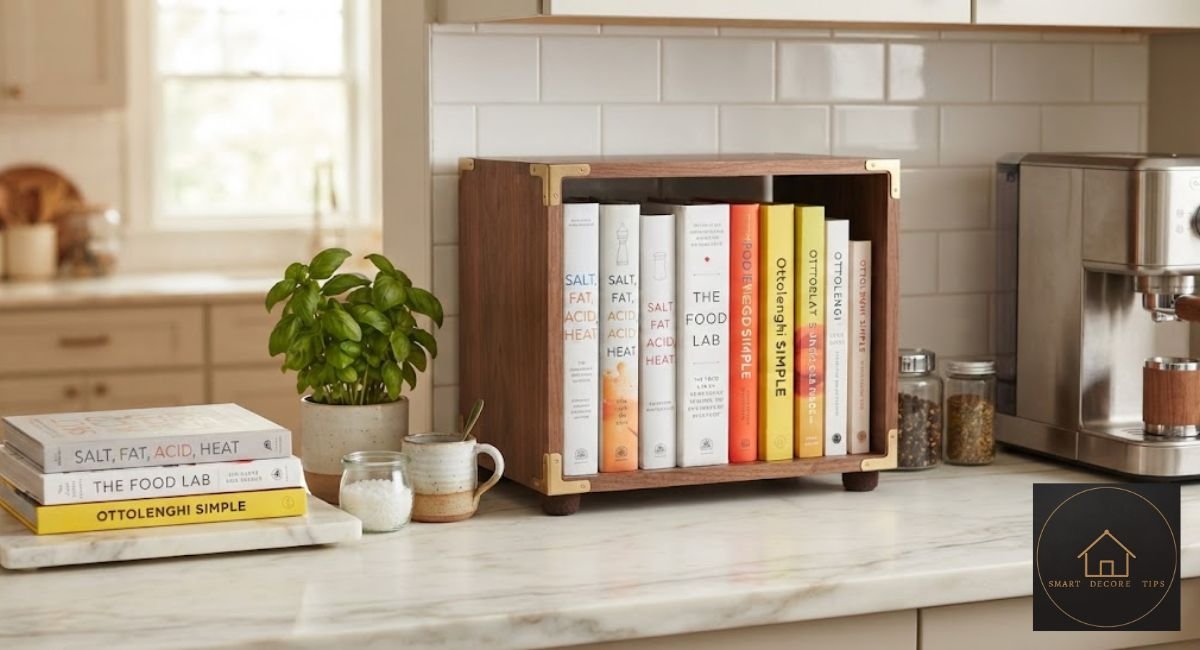
Kitchen Counter Bookshelf: 6 Stone-Safe Setups That Fit
Cookbooks are big and heavy. Your counter is small and pricey. So where does a kitchen counter bookshelf go without eating your prep space?
Pick by footprint first, then weight. Looks come last. Then protect the stone underneath, because Cambria says even cutting can mark its plainer colors, and a dragged shelf isn’t much kinder. Below you’ll find six setups, real prices, and the counter-protection rules most cookbook-storage guides skip.
What Is a Kitchen Counter Bookshelf?
A kitchen counter bookshelf is any small shelf, stand, or slim bookcase that sits on or against your countertop to hold cookbooks and recipe cards. It keeps books off the work surface and within reach. Houzz says an end-of-island bookshelf adds under a foot of depth for normal-size books.
Quick Takeaways
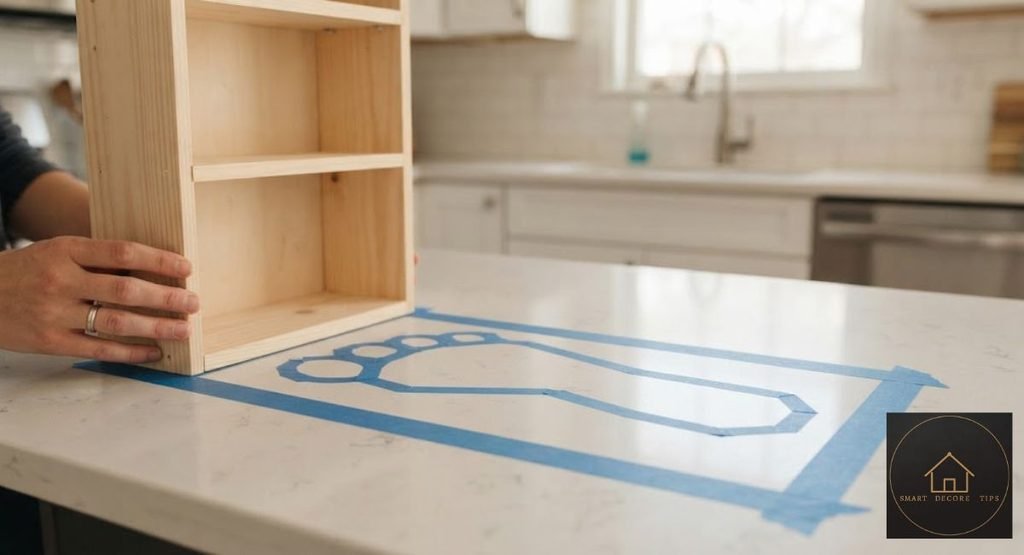
- Tape the footprint on your counter first. If it blocks your cutting-board spot, it’s too big.
- Prices run from $8.95 for a basic wood stand to $99 for a pricier one, based on Parade’s June 2026 roundup.
- Keep books away from the stove and sink, because heat and grease wreck pages.
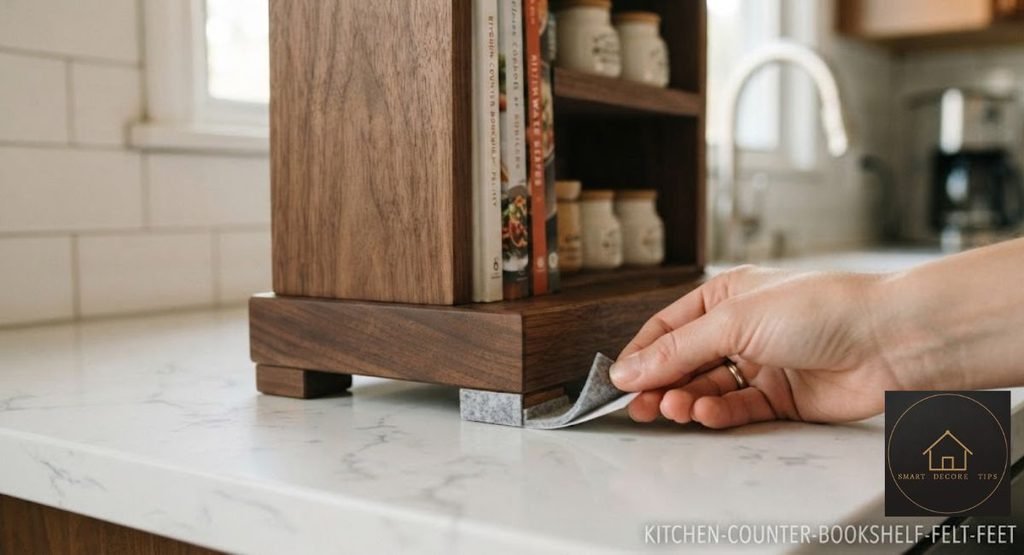
- Use felt feet on quartz and quartzite, and lift the shelf instead of dragging it.
- Cook mostly from a tablet? Skip the shelf and buy a tablet stand.
You’ll run into four shapes. Stands hold one open book, while trays and baskets corral a small pile. Tiered shelves stack books next to jars, and slim bookcases or wall ledges carry a real collection.
How Much Counter Do You Actually Give Up?
You give up only the shelf’s own footprint, so tape it out and measure before you buy.
I tape the footprint on the counter and live with it for a couple of days. It kills more bad ideas than any product review. Do that before you shop.
This guide judges every setup with three checks:
- Footprint: Does it leave your main cutting-board spot alone?
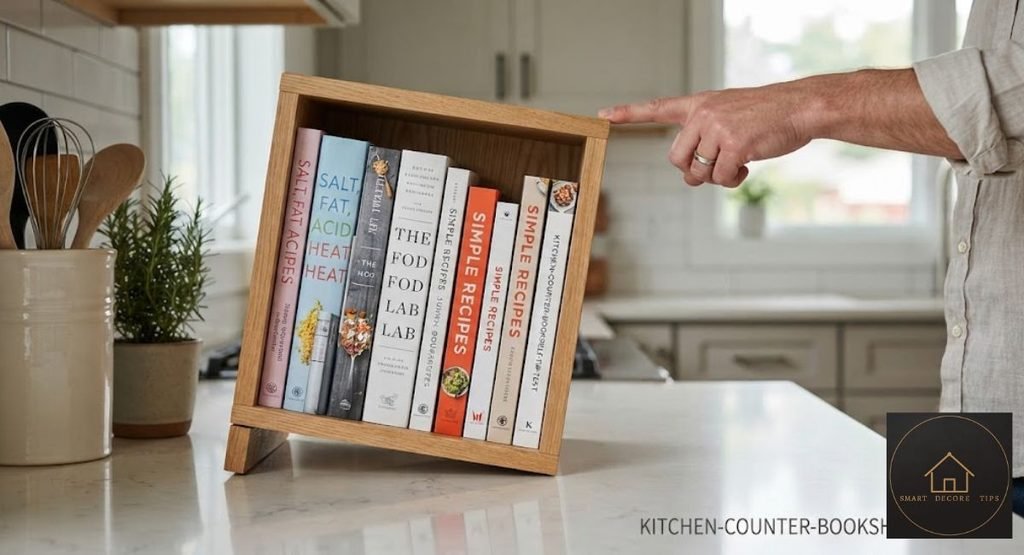
- Tip test: Load your heaviest cookbook, then press the top corner with one finger. If it rocks, it fails.
- Stone test: Does it have soft feet, and can it sit away from heat and water?
Real numbers help here. Houzz says a kitchen niche 12 inches high and 10 inches wide holds plenty of reference books. Amazon’s countertop bookcase filters sort depth into bands, starting under 6 inches and climbing past 18. For a counter, the smaller bands are the ones worth shopping.
Measure height as well. A stand or tiered shelf that scrapes the underside of your upper cabinets gets old fast, so check the gap from counter to cabinet bottom and stay a few inches under it.
Weight matters too. The same filters list weight-capacity bands from 20 lb to over 80 lb. One Wayfair desktop shelf also advertises two anti-tip devices and adjustable foot pads on a metal frame. Those are smart features to hunt for, even on a small shelf.
So weigh your books. A bathroom scale works fine. I do it before picking any shelf, because guessing is how shelves end up bowing.
Small-Footprint Setups: Stands, Trays, and Baskets
1. Slotted or angled cookbook stand
Best for cooking from one book at a time. The stand props the book open and lifts it out of the flour.
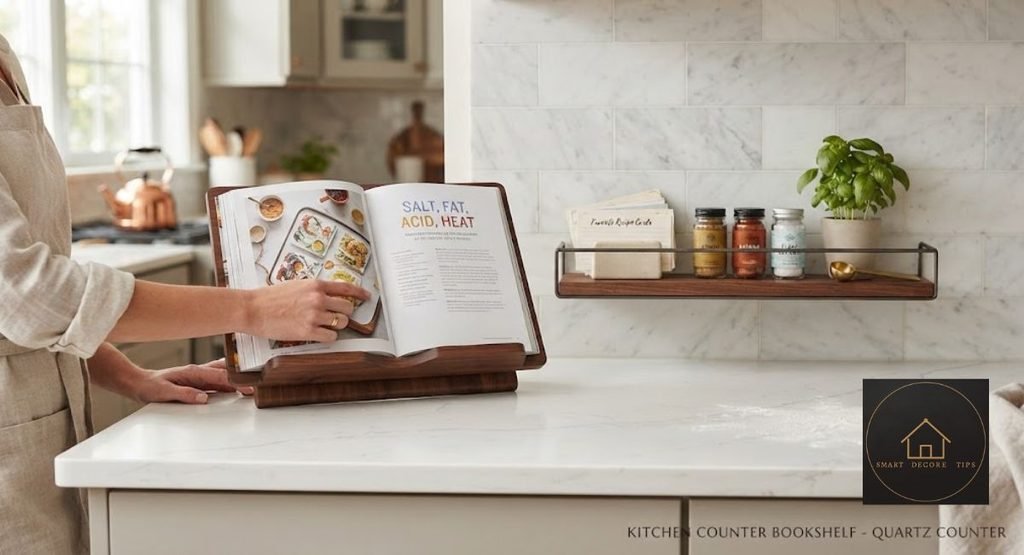
Prices swing a lot. Parade’s June 2026 roundup lists the DEBETOOL wooden holder at $8.95 on Amazon and the Hold Everything Collapsible Stand at $69.95 at Williams Sonoma. That’s nearly eight times the price for the same basic job. What you’re buying is better wood and fold-flat storage.
Tight counters call for a slim model. One chef on Parade’s panel picked the Yamazaki cookbook stand, $28.50 at West Elm, for its small footprint. Fry a lot? The same panel likes acrylic because it wipes clean fast, and Brightroom’s version runs $12 at Target.
I load my heaviest book before I trust any stand. A light stand plus a big cookbook tips the first time you reach across it.
2. Tray plus bookends
Trays give a few loose books one clear home. Cottage Market’s guide calls them one of the easiest ways to make a small collection look intentional, and says a tray works on a counter, an island, or an open shelf. Lift the whole thing when you need workspace. It’s also friendly to renters, since nothing gets mounted.
3. Basket or crate
Baskets suit a small collection. Hausmatter lists a woven scalloped basket at $20.99 and a metal storage basket at $49 (both from a January 2025 post, so expect some drift). Cottage Market suggests a wooden crate pushed against the backsplash and filled only with your most-used books. It lifts out easily on baking days.
Bigger Setups: Tiered Shelves, Slim Bookcases, and Ledges
4. Tiered counter shelf
Amazon’s kitchen counter shelf category is packed with stackable and expandable shelves in metal, wood, and engineered materials. Etsy sells two-tier bamboo ones too. Many are sold as spice racks or coffee-bar risers, so check the load rating before stacking cookbooks on them. Put the heaviest book on the lowest tier. Top-heavy is how they tip.
5. Slim bookcase at the counter’s end
This one holds a real collection. Homes & Gardens quotes professional organizer Amélie Saint-Jacques, who bought two narrow bookcases for her kitchen and advises keeping only the most-used cookbooks there if space is tight. Houzz says two or three shelves cover most people’s favorites. Decoist suggests a small shelving unit set against the side of a counter or island as a cheap stand-in for a built-in.
The catch: it needs floor space and blocks the end of the counter. Measure your walkway first.
6. Picture ledge above the counter
Books lean against the wall with their covers facing out. Homes & Gardens editor Millie Hurst calls picture shelving a smart way to use wall space you already have, and the piece lists wooden picture shelves at $47.99 on Amazon. Cottage Market says to keep a ledge off the wall directly over the stove or sink. Hang it at eye level, not up near the ceiling.
| Setup | Best for | Watch out for | Price signal |
| Cookbook stand | Cooking from one open book | Tipping with heavy books | $8.95 to $99 (Parade, June 2026) |
| Tray plus bookends | A few daily books | Still uses counter space | Free if you own a tray |
| Basket or crate | A small collection | Grease near the stove | $20.99 to $49 (Hausmatter, Jan 2025) |
| Tiered shelf | Books plus jars | Low load ratings | Varies by listing |
| Slim bookcase | A large collection | Needs floor space | Varies; Hausmatter shows one designer piece at $316 |
| Picture ledge | Showing covers in small kitchens | Placement near stove or sink | $42.99 to $47.99 (Hausmatter, Homes & Gardens) |
Will a Kitchen Counter Bookshelf Damage Quartz or Quartzite?
Not by itself. A shelf with soft feet that stays clear of heat and standing water rarely harms quartz or quartzite, and the real risk comes from what sits around the books.
Start with heat. Cambria’s care page recommends a closed-weave hot pad or solid trivet under pots, air fryers, slow cookers, and similar appliances. So don’t park a stand where hot gear usually lands.
Then scratches. Cambria notes that cutting on its quartz can leave marks on plainer designs. A stand isn’t a knife, but a bare or rough base can still mark a solid-color slab. I slide any new stand an inch on the counter before I trust its feet. Felt pads fix most of it. After that, lift the stand instead of dragging it.
Quartzite plays by different rules. It’s natural stone, and it can soak up water. MSI says most quartzite needs sealing every 6 to 12 months, while Artistic Stone puts granite and quartzite at one to two years. Those numbers disagree, so test your own slab. Drop a quarter-sized puddle of water in a low-traffic corner and leave it for 15 to 30 minutes, as Dynamic Stone Tools suggests. If it doesn’t bead up, Artistic Stone says it’s time to reseal.
Not sure which stone you have? Our quartz vs quartzite breakdown (link once published) explains how to tell. Then keep wet planters and damp cloths off the shelf base. A ring stain on unsealed stone is the regret people don’t see coming.
Is It Safe to Keep Cookbooks Near the Stove?
No. Keep cookbooks a comfortable distance from the stove, because heat, steam, and grease damage covers and pages over time. Cottage Market’s guide gives the same warning about sink splashes.
So where does the stand go? I hold the book where I actually stir, then check whether I can read the page without leaning. If I have to lean, I move it a foot and try again.
The flattest spot between stove and sink is usually the wettest. It looks perfect. Then it wrecks the cover.
You can also fight splatter with the material. Parade’s chef panel points to acrylic for easy wipe-downs. One panelist, Food & Wine’s Breana Killeen, prefers wood and likes seeing splatters on a well-used book. I land with her for everyday favorites. For a signed or heirloom copy, use acrylic or keep it off the counter entirely.
Here’s the trade-off. Nothing fully protects a book beside a pan of hot oil. If you fry daily, shelve your books on a wall ledge a few feet away.
How Do I Keep a Cookbook Display From Looking Cluttered?
Show fewer books and give them a clear edge. Cottage Market recommends a smaller group of books, a tray, basket, crate, or bookends as a boundary, and a little open space around the display.
Fewer books is the hard part. Amélie Saint-Jacques, quoted by Homes & Gardens, advises keeping only your most-used cookbooks in the kitchen if space is tight, and rotating the rest in and out by season. Try it: pull the six books you cooked from last month and shelve the rest in the living room.
Color helps too. Match the stand’s wood tone to your counter instead of fighting it. Pale ash sits well on cool white quartz, and walnut warms up a gray or beige slab. If you’re still choosing a counter color, our roundup of designers’ favorite countertop colors (link once published) covers what designers are picking for 2026.
Last, edit often. Hausmatter’s designer says a few simple stacks on a hard-to-reach shelf are plenty, with no styling needed. That’s fair for a high shelf. A counter display is different, so I re-check mine every week or two. If a book hasn’t moved, it goes back to the shelf.
Who Should Skip This Idea Entirely?
Skip the shelf if your counter is already tight. A stand that lives out all day eats prep space, and you’ll end up stacking it in a cabinet at night. Then it’s just clutter with extra steps. Try a picture ledge instead, or a retractable holder under an upper cabinet, which Cottage Market says nearly disappears when folded.
Cook mostly from a phone or tablet? Then you need a tablet stand, not a shelf. Parade’s tablet pick, the Crate and Barrel olivewood stand, costs $79.95 and holds cookbooks too.
Daily fryers with paper-cover favorites should shelve those books on a wall instead. Grease is patient.
One more regret to avoid. If your natural stone is unsealed, fix that before you put anything wet on it, because a basket or planter on a porous slab is a stain waiting to happen.
Here’s my pick for most kitchens. Use one small stand for the book you’re cooking from, and put the rest on a slim shelf or picture ledge off the counter. That keeps your kitchen counter bookshelf small and safe for the stone, and the recipe stays in reach.
FAQs
The best place is a dry, reachable spot away from heat, steam, and splashes, such as a pantry shelf, a glass-front cabinet, or a protected end of the counter.
Use vertical space: a picture ledge, a wall-mounted plate rack, or one small pantry shelf can hold several books without touching your prep area.
No, because steam and grease damage covers and pages over time, so keep them a comfortable distance from the stove.
Choose fewer books, add a tray or bookends as a boundary, and leave a little open space around them.
It can if the base is bare or rough, since Cambria notes that even cutting can mark its plainer colors, so add felt pads and lift the stand instead of dragging it.
Often yes, but it varies by slab, so drop a quarter-sized puddle of water on a low-traffic corner for 15 to 30 minutes and reseal if it doesn’t bead up.
Weigh your heaviest cookbook on a bathroom scale and choose a shelf rated well above that, since Amazon’s weight-capacity filters start at the 20 to 39 lb band.
Keep the books you use often or that hold special meaning, and scan or copy the few recipes you like from the rest before donating them.

Hi, I’m Shahzad Ahmad welcome to Smart Decore Tips!
I write and research every guide on this site myself, focused on real, practical home decor advice for renters, first-time homeowners, and small-space living. Before publishing anything, I check actual product listings, current prices, and real customer reviews not just what other sites already say.
My goal is simple: help you make smarter, more affordable decor decisions without the guesswork or sales pitch.




One Comment