
Corner & Sectional Couches Guide: How to Choose the Right One
A corner sectional couch can completely change how a living room works. It can turn an unused corner into a comfortable seating area, create a dedicated TV space, and provide more room for family and guests than a traditional sofa.
But buying one is not as simple as choosing the biggest couch that fits your room.
Many buyers make mistakes with:
- Wrong chaise direction
- Poor measurements
- Incorrect fabric choice
- Choosing a sectional that cannot fit through doors or hallways
A corner or sectional couch is a multi-piece sofa designed to create an L-shape, U-shape, or modular seating arrangement. A corner sofa is usually a fixed 90-degree L-shaped design, while a sectional is the broader category that includes modular pieces, chaise layouts, and larger configurations.
The best sectional depends on your room size, lifestyle, budget, and how much flexibility you need in the future.
Quick Answer: Are Corner Sectional Couches Worth It?
Yes, corner sectional couches are worth considering if you:
- Need seating for more than three people
- Have an unused corner
- Want a comfortable lounging area
- Have an open-plan living space
However, they may not be the best option if you:
- Move frequently
- Rearrange furniture often
- Have a very narrow room
A sectional is a larger commitment than a standard sofa, so measuring your room and choosing the right configuration matters before buying.
Quick Takeaways
- A corner sofa is one type of sectional, but sectional is the larger category that includes L-shapes, U-shapes, and modular systems.
- Budget sectional couches usually start around $1,000–$1,500, while premium modular designs can reach several thousand dollars.
- Measure doorways, hallways, and stairways before buying because delivery access can be just as important as room size.
- Removable and washable covers are often more practical than simply choosing a popular fabric name for homes with kids or pets.
- Left-facing and right-facing chaise options depend on the viewer’s position facing the couch, not sitting on it.
What Is a Corner Sectional Couch?
A corner sectional couch is a sofa made from multiple connected sections that create a corner seating arrangement.
Unlike a traditional straight sofa, a sectional uses its shape to maximize seating without requiring multiple separate furniture pieces.
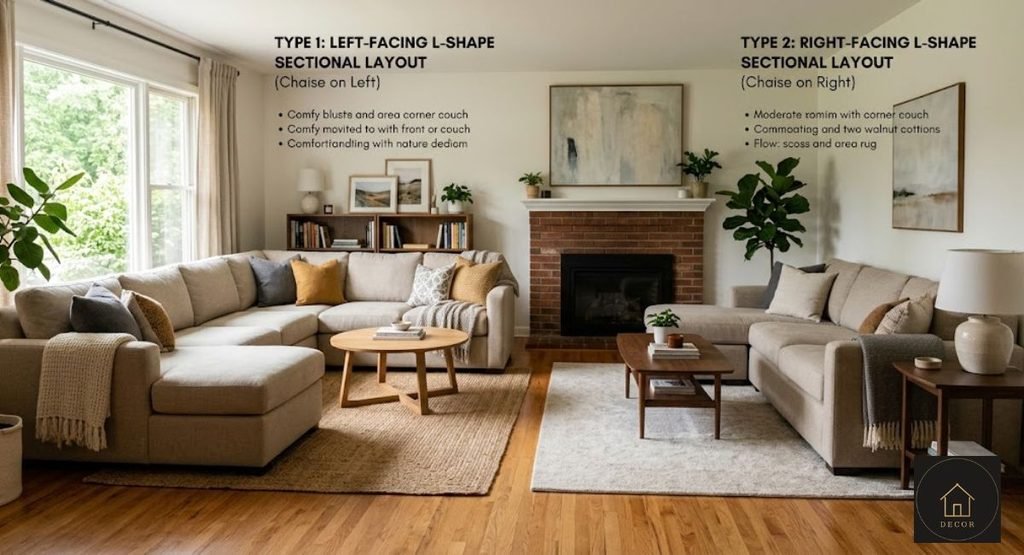
Common sectional layouts include:
L-Shaped Sectional
The most popular option.
Best for:
- Apartments
- Medium-size living rooms
- TV areas
- Corner placement
It usually includes:
- One longer sofa section
- One shorter chaise or return section
U-Shaped Sectional
A larger design with seating on three sides.
Best for:
- Large families
- Open living rooms
- Entertainment spaces
It provides maximum seating but requires significantly more floor space.
Modular Sectional
A flexible design made from separate pieces.
Benefits:
- Rearrange sections later
- Add additional seats
- Adjust layouts after moving
Modular sectionals are especially useful for renters or people who expect their living situation to change.
Corner Sofa vs Sectional Couch: What Is the Difference?
Many people use these terms interchangeably, but there is a small difference.
| Feature | Corner Sofa | Sectional Couch |
| Shape | Usually fixed L-shape | L, U, chaise, or modular designs |
| Flexibility | Limited | More flexible |
| Pieces | Often connected | Can include multiple separate sections |
| Best For | Permanent layouts | Changing spaces |
A corner sofa is technically a sectional, but not every sectional is a corner sofa.
The difference becomes important when choosing furniture for apartments, rentals, or rooms where layouts may change.
“Smaller spaces often need a more compact design. Our 2×2 corner couch guide explains how smaller sectional layouts work in apartments and limited spaces.”
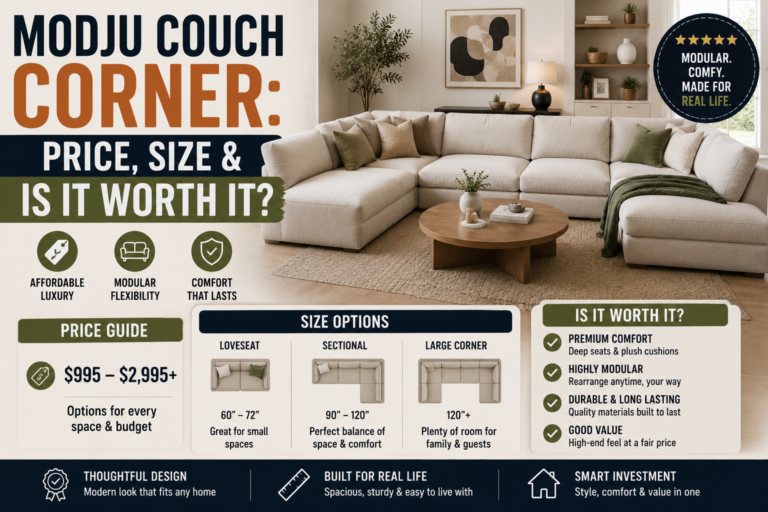
How Much Do Corner Sectional Couches Cost?
The price of a corner sectional couch depends on the size, construction quality, upholstery material, and whether the design is fixed or modular.
A basic sectional may cost around $1,000–$1,500, while premium modular sectionals with better materials, larger configurations, and luxury fabrics can cost several thousand dollars.
A practical price breakdown:
| Price Range | What You Usually Get | Best For |
| $1,000–$1,500 | Basic fabric sectional, smaller layouts | Apartments and budget buyers |
| $1,500–$3,000 | Better cushions, stronger frames, performance fabrics | Most families |
| $3,000+ | Premium modular designs, luxury materials | Long-term investment |
What Actually Makes a Sectional More Expensive?
The price difference usually comes from four areas:
1. Frame Construction
The frame is the foundation of the couch.
Better materials include:
- Solid hardwood
- Kiln-dried wood
- Reinforced corner joints
Cheaper frames may use lower-cost materials that can affect long-term durability.
A sectional with a strong frame may cost more initially but usually provides better value over time.
2. Cushion Quality
The cushions determine how the sofa feels every day.
Common options:
Foam Cushions
Benefits:
- Keep their shape
- Require little maintenance
- Good for daily use
Down or Down-Blend Cushions
Benefits:
- Softer feel
- More luxurious comfort
However:
- Need more maintenance
- Require fluffing
For most households, a high-quality foam or foam-and-down combination provides a good balance between comfort and durability.
Your cushion material has a major impact on comfort and lifespan. See our foam filled sofa guide for a detailed comparison of cushion types.
3. Upholstery Fabric
Fabric affects both appearance and maintenance.
Popular sectional materials:
Performance Fabric
Best for:
- Kids
- Pets
- Heavy daily use
Advantages:
- Easier cleaning
- Better stain resistance
- Durable texture
Velvet
Best for:
- Luxury interiors
- Statement furniture
Advantages:
- Rich appearance
- Soft texture
Downside:
- Shows dust and marks more easily
Linen Blend
Best for:
- Relaxed interiors
- Natural design styles
Downside:
- Requires more care
4. Size and Configuration
A small L-shaped sectional and a large modular sectional are completely different investments.
Prices increase with:
- More seating sections
- Larger chaise
- Additional modules
- Premium customization
How Do You Know If a Sectional Will Fit Your Room?
The biggest mistake buyers make is measuring only the wall.
A sectional needs space around it to function properly.
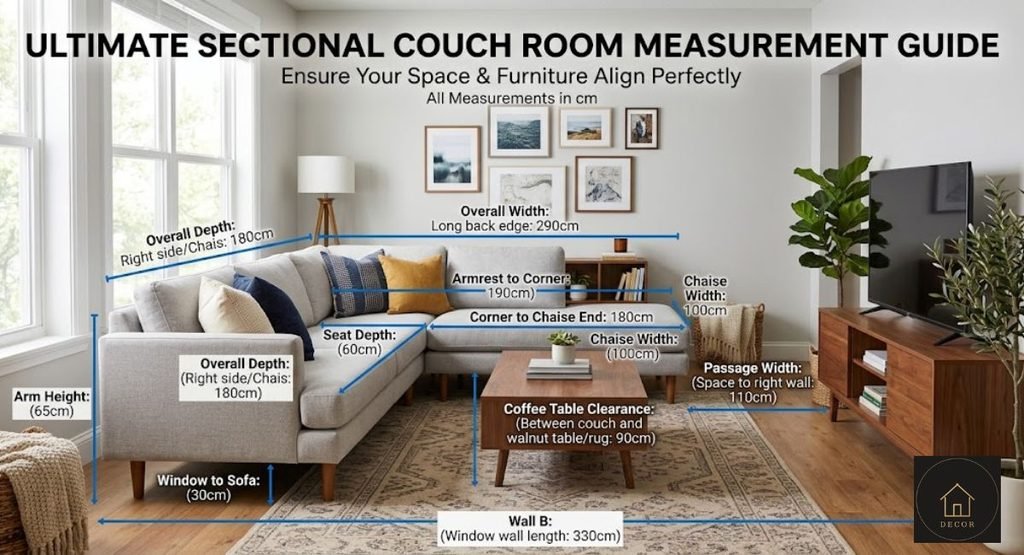
Before buying, measure:
✅ Wall length
✅ Room width
✅ Doorways
✅ Hallways
✅ Elevator or staircase access
✅ Coffee table clearance
Recommended Space Around a Sectional
For comfortable movement:
- Leave around 30 inches of walking space around open sides
- Keep enough room between the sofa and coffee table
- Avoid blocking doors or main pathways
A large sectional can technically fit in a room but still make the space feel crowded if circulation is poor.
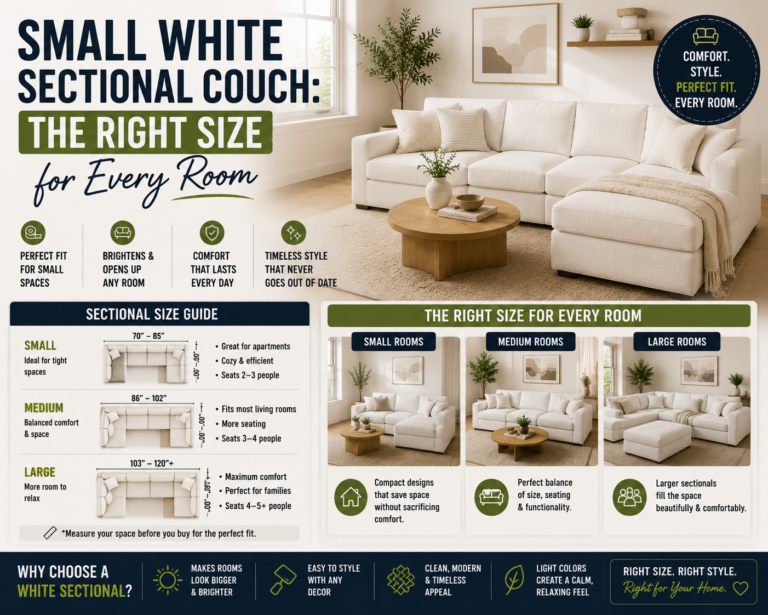
What Room Size Do You Need for a Sectional Couch?
There is no single perfect room size because sectional designs vary.
General guide:
| Room Size | Recommended Sectional |
| Small apartment | Compact L-shaped or 2×2 sectional |
| Medium living room | Standard L-shaped sectional |
| Large open room | U-shaped or modular sectional |
For smaller rooms, choosing a compact sectional with a reversible chaise can provide flexibility without overwhelming the space.
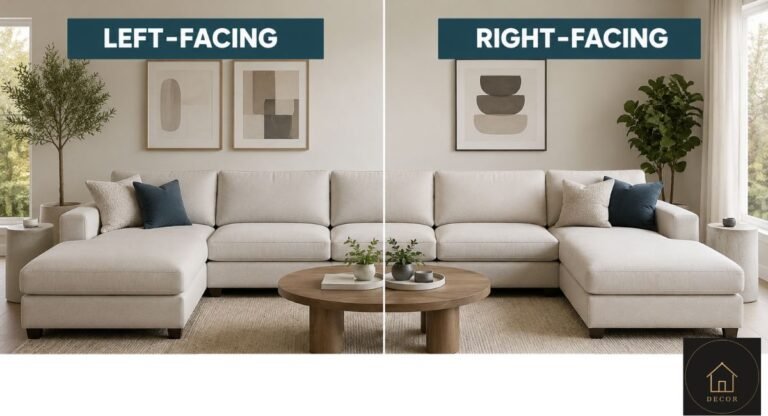
Left-Facing vs Right-Facing Sectional: Which One Should You Buy?
This is one of the most confusing parts of buying a sectional.
The direction is determined while standing in front of the couch looking at it, not while sitting on it.
Left-Facing Sectional
The chaise extends to the left side when you face the sofa.
Best if:
- Your room layout requires the chaise on the left
- The open area is on that side
Right-Facing Sectional
The chaise extends to the right side when you face the sofa.
Best if:
- Your room layout opens on the right
- Furniture placement requires that orientation
Tip Before Ordering
Always imagine yourself standing in front of the sofa.
Many buyers accidentally order the wrong configuration because they judge the direction while sitting.
Are Corner Sectional Couches Good for Small Apartments?
Yes, but only when the size matches the room.
A sectional can actually save space because it combines:
- Sofa seating
- Lounge area
- Corner utilization
Instead of buying:
- Sofa
- Separate chair
- Ottoman
one sectional can provide everything in one piece.
However, avoid oversized sectionals in small apartments because they can reduce walking space and make the room feel smaller.
Best Features for Apartment Sectionals
Look for:
✅ Reversible chaise
✅ Modular pieces
✅ Removable covers
✅ Slim arms
✅ Raised legs
These features make the sofa easier to move and adapt if you relocate.
Internal link placement:
“Small apartments often need compact designs. Our [2×2 corner couch guide] explains which sectional sizes work best in limited spaces.”
Common Mistakes People Make When Buying a Sectional Couch
A sectional couch can be one of the best furniture purchases for a living room, but choosing the wrong one can create years of frustration.
Most mistakes happen because buyers focus on appearance first and ignore practical details like measurements, fabric, and room layout.
Here are the mistakes to avoid:
1. Buying the Largest Sectional That Fits
Many people assume a bigger sectional automatically means better comfort.
However, an oversized sectional can:
- Block walking paths
- Make a room feel smaller
- Leave little space for other furniture
The goal is not to buy the biggest sofa possible.
The goal is to choose the largest sectional that still allows comfortable movement around the room.
2. Ignoring Delivery Access
A sectional may fit perfectly inside your living room but fail before it even reaches the room.
Always measure:
- Front door width
- Hallway width
- Staircase turns
- Elevator dimensions
Many modern sectionals arrive in separate pieces, which makes delivery easier, but access should still be checked before ordering.
3. Choosing Fabric Based Only on Appearance
A fabric that looks beautiful in a showroom may not match your lifestyle.
For example:
Homes With Pets
Better choices:
- Performance fabric
- Leather
- Tightly woven materials
Homes With Kids
Better choices:
- Removable covers
- Stain-resistant fabrics
- Durable upholstery
Low-Traffic Homes
More delicate fabrics can work because they experience less daily wear.
4. Forgetting About Future Moves
A sectional that works perfectly in one home may not fit the next one.
If you rent or move often, consider:
- Modular sectionals
- Reversible chaise designs
- Smaller connected pieces
These options provide more flexibility when your layout changes.
5. Choosing the Wrong Color
The color of your sectional affects the entire room.
Before choosing a color, consider:
- Wall color
- Flooring
- Natural light
- Existing furniture
Neutral colors like beige, cream, and gray are easier to redesign around.
Bold colors like teal can create a strong focal point when styled correctly.
“Bold sofa colors can completely change a living room. See our teal sofa guide for ideas on shades, pricing, and styling.”
Sectional Couch vs Regular Sofa: Which Is Better?
The right choice depends on your lifestyle and room size.
| Feature | Sectional Couch | Regular Sofa |
| Seating | More people | Fewer people |
| Space | Requires more room | Works in smaller rooms |
| Comfort | Better for lounging | Better flexibility |
| Layout | Less flexible unless modular | Easier to move |
| Best For | Families and relaxation | Smaller homes |
Choose a Sectional If:
A sectional is a good choice if you:
✅ Have a larger living room
✅ Watch movies often
✅ Need extra seating
✅ Like stretching out while relaxing
Choose a Regular Sofa If:
A traditional sofa may be better if you:
✅ Live in a small apartment
✅ Move frequently
✅ Change layouts often
✅ Prefer adding separate chairs later
Best Sectional Materials for Families and Pets
A sectional is a long-term purchase, so choosing the right material matters.
Best Overall: Performance Fabric
Performance fabric is often the most practical choice because it balances:
- Comfort
- Durability
- Easy maintenance
It works well for:
- Families
- Pets
- Everyday living rooms
Best for Luxury: Velvet
Velvet provides:
- Rich appearance
- Soft texture
- Elegant style
Best for:
- Formal spaces
- Statement furniture
However, it needs more maintenance compared with performance fabrics.
Best for Durability: Leather
Leather is popular because:
- Spills are easier to clean
- It develops character over time
- It handles frequent use
The downside:
- Higher cost
- Different feel compared with fabric
Are Modular Sectional Couches Worth It?
For many buyers, yes.
Modular sectionals provide flexibility because individual pieces can often be rearranged.
Benefits include:
- Easier moving
- More layout options
- Ability to add sections later
- Better apartment compatibility
They are especially useful for people who do not expect their living situation to stay the same forever.
Frequently Asked Questions
The right sectional size depends on your room dimensions, walking space, and furniture layout. Measure the available area and leave enough space for movement before buying.
A sectional is better for families and people who want more lounging space. A regular sofa is better for smaller rooms and flexible layouts.
Leave around 30 inches of walking space around open areas of the sectional so the room remains comfortable and functional.
Yes, if you choose a compact design. Smaller L-shaped sectionals or reversible chaise models can maximize seating without overwhelming the room.
Performance fabric is one of the most practical choices because it offers durability and easier cleaning compared with many traditional upholstery materials.
Choose based on your room layout. The chaise direction is determined while standing in front of the sofa, facing it, not while sitting on it.
A quality sectional can last many years depending on frame construction, cushion quality, fabric durability, and how frequently it is used.
Are modular sectionals better than fixed sectionals? Modular sectionals offer more flexibility, while fixed sectionals may provide a simpler setup. The better choice depends on whether you expect your room layout to change.
Conclusion
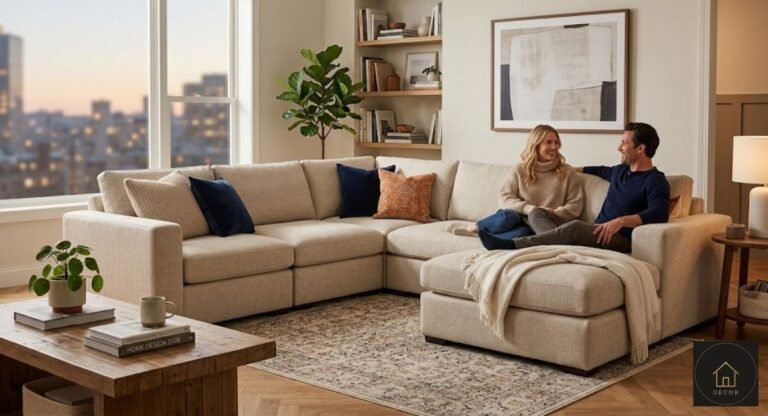
A corner sectional couch can be one of the smartest furniture choices when you need more seating, better use of space, and a comfortable place for everyday relaxing.
However, the best sectional is not always the biggest one. The right choice depends on your room size, layout, lifestyle, and how much flexibility you need in the future.
Before buying, focus on:
- Accurate room measurements
- Door and hallway access
- Cushion quality
- Durable upholstery
- Correct chaise direction
For small spaces, a compact L-shaped or modular sectional can provide comfort without overwhelming the room. For larger homes, a bigger sectional can create a natural gathering area for family and guests.
Take your time choosing the configuration and materials, because a well-selected sectional couch can become the centerpiece of your living room for many years.

Hi, I’m Shahzad Ahmad welcome to Smart Decore Tips!
I write and research every guide on this site myself, focused on real, practical home decor advice for renters, first-time homeowners, and small-space living. Before publishing anything, I check actual product listings, current prices, and real customer reviews not just what other sites already say.
My goal is simple: help you make smarter, more affordable decor decisions without the guesswork or sales pitch.
2 Comments