
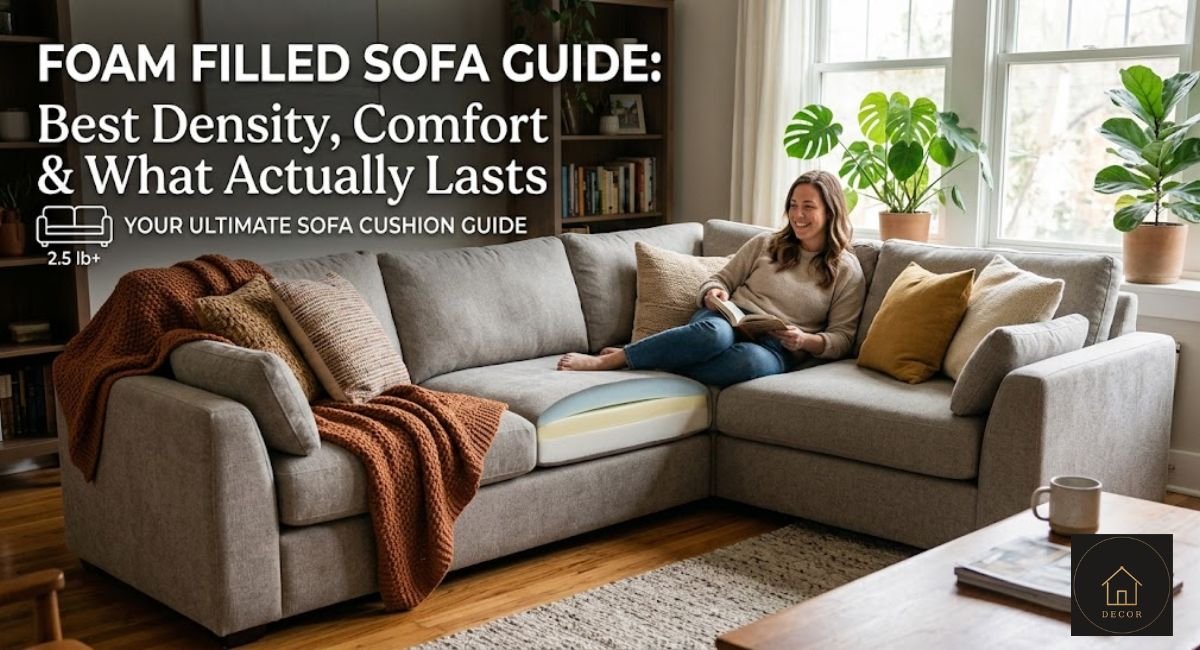
Foam Filled Sofa Guide: Best Density, Comfort & What Actually Lasts
A sofa that felt great in the showroom and turned mushy eight months later isn’t unusual — it’s actually the most common complaint people have after buying “foam filled” furniture. The label doesn’t tell you much on its own. Two couches can carry the same tag and still perform completely differently, because the real difference sits inside the cushion, not on the spec sheet.
Quick answer: A foam filled sofa uses polyurethane foam blocks inside the seat and back cushions instead of feathers or loose fiber fill. The number that actually matters is foam density — how much material is packed into each cubic foot. For a household that uses the sofa daily, aim for 1.8 lb density or higher; if you’ve got kids, pets, or guests parking themselves there every night, push toward 2.0–2.5 lb.
What Foam Density Actually Means
Density is measured in pounds per cubic foot (lb/ft³), and it’s the single biggest factor in how long a cushion holds its shape. Note that density isn’t the same as firmness — a dense foam can still feel soft; it just resists compression and rebounds better over years of use.
| Foam Density | Typical Use | What to Expect |
|---|---|---|
| Under 1.5 lb | Guest rooms, occasional seating | Feels soft out of the box, sags within 1–3 years |
| 1.8–2.0 lb | Everyday living room use | Solid balance of comfort and shape retention, 5–10 years |
| 2.0–2.5 lb | Families, pets, heavy daily use | Resists dents and flattening, 7–15 years with care |
| 2.5 lb+ | High-end or custom builds | Firmer feel, longest lifespan |
Store listings rarely print this number. If a description just says “premium foam” or “high-density comfort foam” without a lb/ft³ figure, that’s marketing language, not a spec — ask the retailer directly, or check the tag underneath the cushion if you’re buying in person.
Foam vs. Down: Which Actually Fits Your House
This isn’t really a “better vs. worse” question — it’s a maintenance-vs-feel tradeoff.
Foam holds up better under real use. It keeps its shape without fluffing, costs less on average, and recovers quickly after someone gets up. The tradeoff is firmness — foam can feel more structured than a down cushion, especially in the first few weeks before it breaks in.
Down feels more luxurious. That deep “sink-in” sit people love comes from loose feather fill, but it also means fluffing cushions every few days, a shorter lifespan, and usually a higher price tag. For a full breakdown of what down cushions cost and how they wear over time, see our down sofas guide.
| Options | Foam | Down |
|---|---|---|
| Daily maintenance | Almost none | Needs regular fluffing |
| Shape retention | Strong | Fades over months |
| Feel | Supportive, structured | Soft, plush |
| Best for | Daily use, busy households | Occasional lounging, formal rooms |
A lot of mid-range and premium sofas now split the difference with a hybrid cushion — a foam core wrapped in a thin down or fiber layer. You get the support of foam underneath with a softer top layer, which is why hybrid construction shows up so often in cloud-style and modular sectionals. Our cloud couch sectionals guide covers how that combination plays out in oversized, deep-seat designs specifically.
Does It Hold Up With Kids and Pets?
Generally, yes — foam is the more forgiving choice for a household that actually lives on its couch. Cushions bounce back faster after someone jumps off them, spills wipe off easier when paired with a performance fabric, and you’re not re-fluffing pillows every time company comes over.
Two things matter more than the foam itself here:
- Density — stay at 2.0–2.5 lb if the sofa is taking daily abuse from kids or pets.
- Fabric — a dense cushion under a fabric that stains easily still leaves you with a sofa you’re afraid to sit on. Performance weaves and removable covers matter just as much as what’s inside.
A strong cushion inside a weak frame doesn’t solve anything either — check joinery and suspension before you check foam.
If the Sofa Feels Too Firm
New foam is stiffer than it will be in six months — it softens with regular use as the cell structure relaxes. If you don’t want to wait it out:
- A thin memory-foam or down-alternative topper adds softness without replacing the whole cushion.
- Extra back pillows change your sitting angle more than people expect — worth trying before you blame the foam.
- A textured throw won’t change the density, but it changes how the surface feels against skin, which is most of what people actually notice.
How to Check Foam Before You Buy
Skip the vague listing copy and do this instead:
- Ask the specific question: “What’s the foam density in pounds per cubic foot?” Salespeople who know their product will have an answer ready.
- Sit for longer than a few seconds. Lean back, shift your weight, sit near the edge — showroom posture hides a lot.
- Press the cushion and watch the recovery. Slow to bounce back usually means lower resilience, even if it’s brand new.
- Check the frame separately. Kiln-dried hardwood and a solid suspension system matter as much as the cushion sitting on top of it.
How Long Foam Sofas Actually Last
With normal household use and a reasonably built frame, expect 7–10 years from a sofa in the 1.8–2.0 lb range, and up to 15 years from denser foam (2.0 lb+) paired with a solid frame. Sofas under 1.5 lb density tend to show visible sag within 1–3 years regardless of frame quality — the foam simply gives out first.
Replacing Foam Instead of Replacing the Sofa
If the frame is solid and the fabric still looks fine, reupholstering the cushions is usually cheaper than a full replacement. Signs it’s worth doing:
- Cushions stay flattened after you stand up
- You can feel the frame through the seat
- Permanent dents in the usual sitting spots
Most upholstery shops can cut and fit new foam inserts to your existing cushion covers in a few days.
New Sofa Smell
New foam can off-gas a faint smell for the first week or two — that’s typically low levels of VOCs releasing during the break-in period, not a sign of poor quality. Ventilate the room, unwrap the sofa as soon as it arrives, and avoid draping it with plastic covers. If off-gassing is a real concern for you, look specifically for CertiPUR-US certified foam, which caps VOC emissions and flame retardant chemicals.
FAQ
What foam density should I actually buy?
1.8–2.0 lb covers most households well. Go to 2.0–2.5 lb if kids, pets, or daily heavy use are part of the picture.
Foam or springs — which lasts longer?
Foam wins on low maintenance and consistent support. Spring-and-foam combos add more bounce and a different sit feel, but need more upkeep long-term. It comes down to which feel you actually prefer sitting in every day.
How do I know my foam has worn out?
Press the cushion — if it doesn’t spring back within a few seconds, or you can feel the seat frame underneath, it’s time to consider replacement foam.
Is memory foam good for a whole sofa cushion?
It’s usually layered on top of firmer support foam rather than used alone — pure memory foam compresses too much for a full-time seat cushion.
Bottom Line
“Foam filled” on a tag tells you almost nothing by itself. The number that predicts how the sofa will actually feel in year three is foam density — ask for it in lb/ft³ before you buy, not after. For most living rooms, 1.8–2.0 lb strikes the right balance; for a house that sees daily traffic from kids or pets, the extra cost of 2.0–2.5 lb foam pays for itself in years of use you don’t have to replace.

Hi, I’m Shahzad Ahmad welcome to Smart Decore Tips!
I write and research every guide on this site myself, focused on real, practical home decor advice for renters, first-time homeowners, and small-space living. Before publishing anything, I check actual product listings, current prices, and real customer reviews not just what other sites already say.
My goal is simple: help you make smarter, more affordable decor decisions without the guesswork or sales pitch.





8 Comments