Custom vs. General Couches: What They Really Cost in 2026
So you’re stuck between two paths: order a couch built exactly for your space, or grab something off the floor — or off a website — that’s close enough. If you’ve shopped for even a week, you’ve noticed “custom couches” and “general couches” get used like they mean the same thing. They don’t, and the price tags prove it.
A general couch is a ready-made sofa built in standard sizes and sold as-is. A custom couch is made to order — you pick the size, fabric, and configuration before it’s built. General couches ship faster and cost less. Custom couches take longer but fit your space and style more exactly.
Quick Takeaways
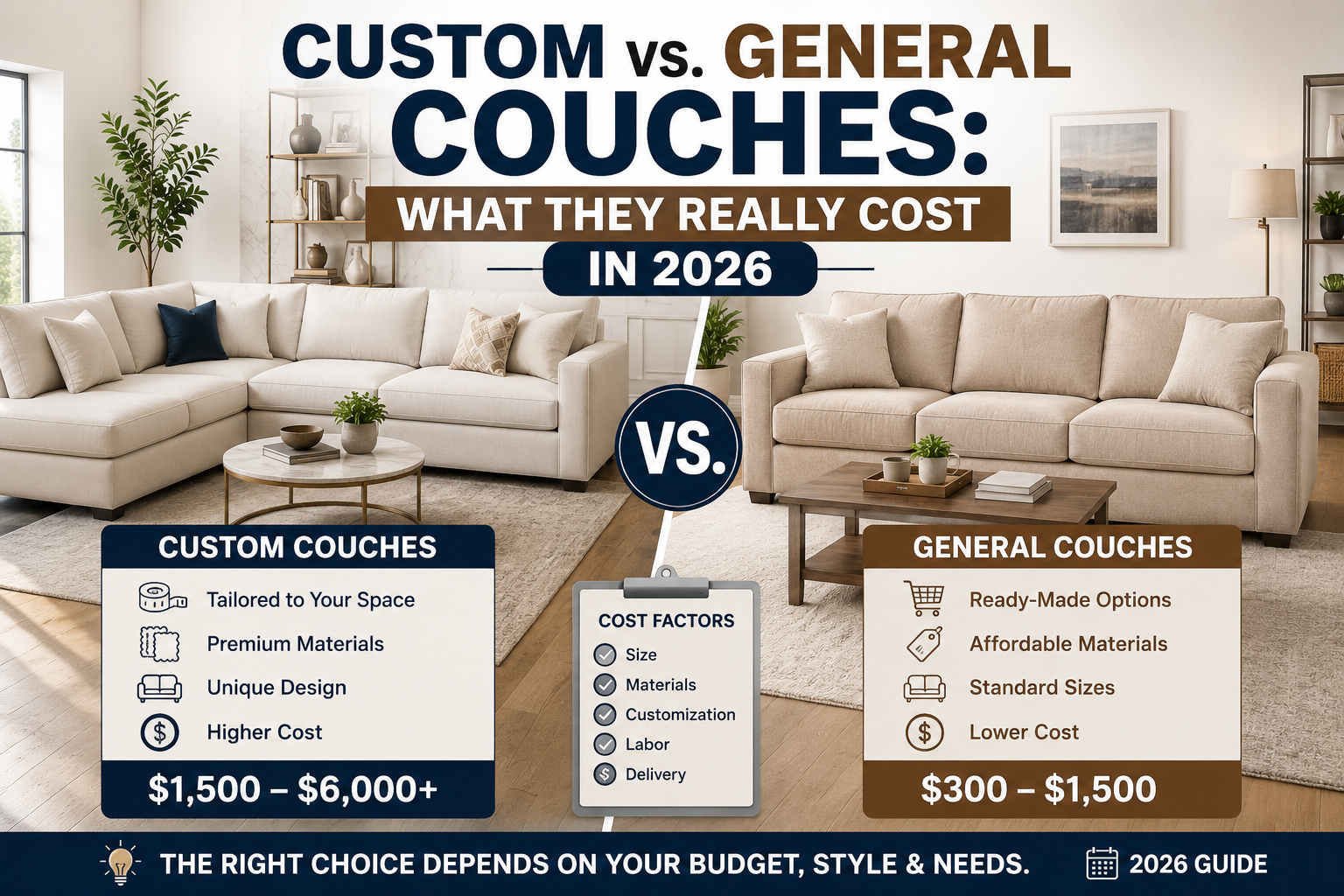
- General (ready-made) couches typically run $400–$2,500 and ship in days to a few weeks.
- Custom couches typically run $2,000–$10,000+, and most brands need several weeks to a few months to build and deliver — confirm exact timing with the brand, since it varies by season and fabric.
- “Semi-custom” (pick a size and fabric from presets, like Joybird or Interior Define’s configurators) sits in between: more choice than a floor model, less flexibility than a fully bespoke build.
- Renters usually do better with general couches unless they’re staying put for several years.
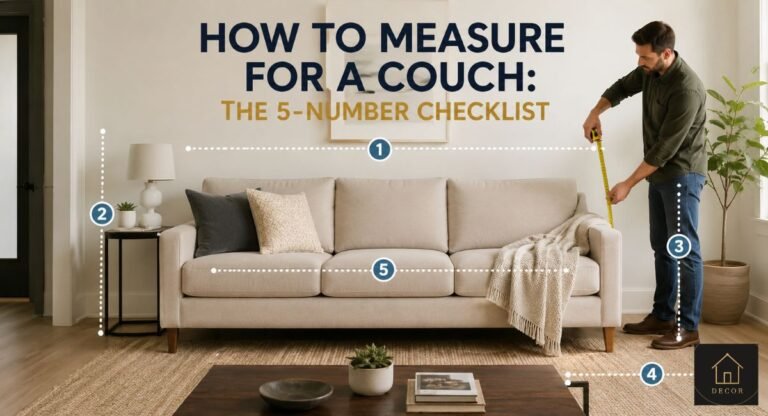
- The biggest regret buyers report isn’t price — it’s ordering the wrong size for their doorway or room.
What’s the Difference Between Custom and General Couches?
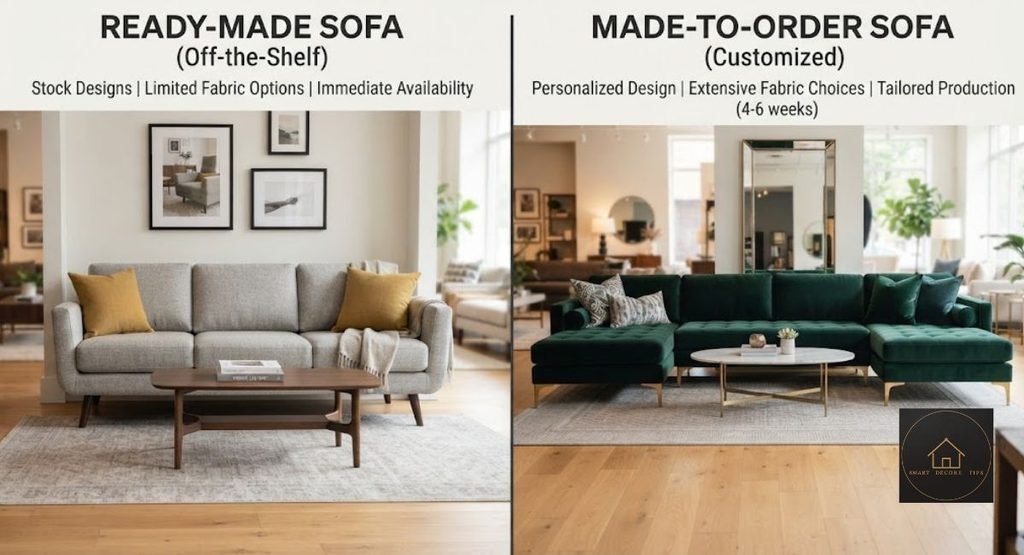
A general couch is built in a factory in fixed sizes and colors, then sold as-is — what you see is what you get. A custom couch is built after you order it, based on choices you make for size, arm style, fabric, and legs.
I’ve bought both kinds over the years, and the difference shows up the moment it arrives. My general couch from a big-box store showed up in three days, in a box I could carry myself. A semi-custom sectional I ordered later took nine weeks and arrived on a freight truck. Neither is “better” — they solve different problems. General couches solve “I need seating now.” Custom couches solve “nothing off the shelf fits my weird living room.”
How Much Do Custom and General Couches Cost in 2026?
General couches usually run $400 to $2,500. Custom couches usually run $2,000 to $10,000 or more, depending on fabric, size, and who builds it. The gap comes down to labor — a custom couch is hand-built to your order instead of mass-produced ahead of time.
On the general side, IKEA’s KIVIK series is a good real-world anchor: it’s a mainstream ready-made line with a 10-year limited warranty, and past pricing has ranged from a few hundred dollars for a loveseat up to around $2,000 for a full sectional, depending on size and fabric (check current pricing directly, since IKEA adjusts it by market). Ashley is another common budget-to-mid range stop.
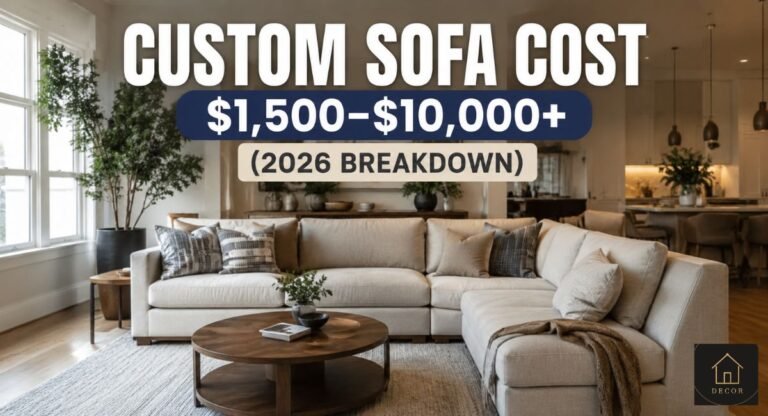
On the custom side, Joybird’s Briar sofa — one of its best-selling made-to-order pieces — runs about $2,105 at full price, based on recent reporting from Apartment Therapy’s in-store testing. Interior Define runs a similar configurator model: you pick frame, fabric, and legs, which is “custom” in the build-to-order sense, not fully bespoke. For a step up in materials, Adorn Croft — a custom-sofa manufacturer — prices most of its builds between $3,000 and $8,000, with sculptural or European-style designs reaching $10,000+.
For a full cost breakdown by sofa type, frame, and fabric grade, see our custom sofa cost guide.
The True Cost Over Time: A Simple Formula
Sticker price alone hides the real comparison. Divide the price by how many years you realistically expect the couch to last, and you get a cost-per-year number you can compare directly:
Price ÷ expected years of use = cost per year
A $1,200 general couch you replace every 5 years costs $240 a year. A $5,000 custom couch built to last 15 years costs about $333 a year — more per year, but you’re not moving a couch out to the curb three separate times. Run your own numbers before deciding; a well-built general couch that lasts a decade can easily beat a custom couch that gets outgrown or left behind in a move.
Sofa, Sectional, or Loveseat: Which Layout Fits Your Room?
The right layout depends on your room’s shape, not your budget. A loveseat fits tight apartments and small living rooms. A standard sofa works for most rectangular rooms. A sectional is best for open floor plans or families who want more seating.
Measure your doorways and stairwells before you fall in love with a sectional — it’s the single most common return reason at furniture retailers. If you’re renting, look for modular pieces that separate into smaller sections, since they’re easier to move out later. If a sectional is on your shortlist, our corner and sectional couches guide breaks down sizing in more depth.
What Fabric Should You Pick for Your Couch?
Performance fabric is the best all-around choice for most households because it resists stains and holds up to daily use, while leather and velvet look premium but need more careful care. Linen is breathable and budget-friendly but wrinkles and stains more easily.
If you have kids, pets, or you just eat on the couch, performance fabric or a tightly-woven synthetic blend will save you headaches. Custom brands usually let you order a fabric swatch first — always request one, since fabric looks different under your home’s lighting than it does on a screen. I’ve made this mistake once: a fabric that looked warm gray online showed up looking almost lavender under my living room’s bulbs.

What’s Inside Matters: Frame, Foam, and Cushion Quality
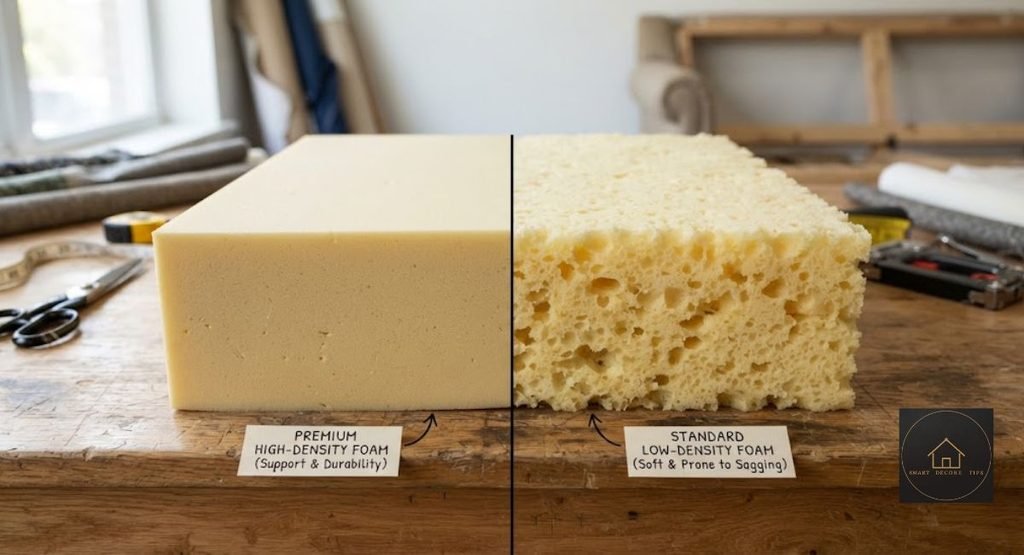
A kiln-dried hardwood frame with high-density foam, or a foam-and-down blend, will outlast a particleboard frame with basic polyfoam by years, not months. This is where the real cost difference between cheap and premium couches actually lives — not in the fabric you see.
Foam density is a fact you can actually check before buying: Adorn Croft, for example, builds its custom sofas with a foam density of 2.81 lbs/ft³, notably higher than what most ready-made sofas use at a comparable price point. Higher density holds its shape longer under daily use. Ask any retailer — or read the product description closely — for frame material and foam density before buying. I’ve pressed a thumb into showroom cushions from both a budget sectional and a custom one side by side, and the difference in how fast they bounced back was obvious within seconds.
Is a Custom Couch Worth It for Renters?
Custom couches are usually not worth it for renters unless you’re staying put for several years — the higher cost and longer build time don’t pay off if you move often. A general couch, or a modular set you can break apart and resell, makes more financial sense for shorter leases.
That said, some renters still go custom for one honest reason: fit. If your apartment has an odd nook or a narrow hallway, a made-to-measure piece can be the only thing that actually gets through the door and works in the space.
Where to Buy Custom and General Couches
For general couches, IKEA, Ashley, Target, and HomeGoods cover the budget-to-mid range, while Amazon and Wayfair are good for comparison shopping from home.
For custom couches, Interior Define, Joybird, Adorn Croft, and Arhaus each offer different levels of customization at different price points. Don’t skip thrift stores and Facebook Marketplace either — a solid-frame secondhand couch reupholstered by a local shop can land you a near-custom result for far less than ordering new.
7 Mistakes People Make When Buying a Couch
- Not measuring doorways, hallways, and stairwells before ordering — see our guide on how to measure for a couch (link once published)
- Choosing fabric from a screen instead of requesting a swatch
- Assuming “custom” always means better quality — check the frame and foam density either way
- Ignoring lead times and ordering a custom couch right before moving
- Skipping the return policy fine print on final-sale custom orders
- Buying a sectional too big for the actual seating you need
- Forgetting to check cushion fill type, which affects comfort more than fabric does
Couch Trends to Watch in 2026
Modular, reconfigurable sectionals keep growing in popularity because they adapt to different room shapes and moves. More general-couch brands are now offering limited customization — like swappable fabric covers — to compete with true custom builders. Rounded “cloud-style” silhouettes remain popular, but boxier, structured shapes are gaining ground again this year.
Custom vs. General Couches: Quick Decision Table
| Factor | General Couch | Custom Couch |
| Typical cost | $400–$2,500 | $2,000–$10,000+ |
| Wait time | Days to a few weeks | Several weeks to a few months |
| Best for | Renters, quick furnishing, tight budgets | Odd room shapes, long-term homes, specific fabric/size needs |
| Return flexibility | Usually easy | Often final sale |
| Fit accuracy | Standard sizes only | Built to your exact space |
Choose general if you need seating soon, you’re renting, or your room is a standard shape and size. Choose custom if you’re staying long-term, your space is unusual, or you have specific fabric and comfort needs a floor model can’t meet. Custom couches aren’t worth it, honestly, if you’re likely to move within two or three years — you’ll rarely recover that upfront cost.
FAQs
It’s worth it if your room has an odd shape, you plan to stay for years, or you need a specific fabric for allergies or pets. For a standard living room, a general couch often gives you most of the comfort for a fraction of the cost.
Most custom couches take several weeks to a few months from order to delivery, depending on the brand and fabric availability. Confirm the current estimate directly with the brand before ordering, since it shifts by season.
Usually no — most custom orders are final sale once production starts, so request a fabric swatch and confirm your measurements before ordering. Always check the specific brand’s return policy first.
Buy a secondhand couch with a solid hardwood frame and have it reupholstered locally in the fabric you want. This often costs less than ordering new custom and gives a similar personalized result.
It depends on frame and foam quality, not on whether the couch is custom or general. A well-built general couch can outlast a poorly-made custom one.
IKEA is a general couch brand, though some of its modular lines, like KIVIK, let you mix and match pieces for limited semi-custom flexibility.
A loveseat or a compact two-seat sofa under about 65 inches wide usually fits small apartment living rooms best, especially paired with an accent chair for extra seating.
Conclusion
The “custom vs. general” question comes down to your timeline, your room, and how long you’re staying put. If you need seating this week and your living room is a normal shape, a general couch will serve you well. If your space is unusual or you’re settling in for years, a custom couch is worth the wait and the extra cost. Either way: measure twice, request a fabric swatch, and check what’s actually inside the cushions before you commit.

Hi, I’m Shahzad Ahmad welcome to Smart Decore Tips!
I write and research every guide on this site myself, focused on real, practical home decor advice for renters, first-time homeowners, and small-space living. Before publishing anything, I check actual product listings, current prices, and real customer reviews not just what other sites already say.
My goal is simple: help you make smarter, more affordable decor decisions without the guesswork or sales pitch.