Future Countertop Trends: What NKBA’s 2030 Data Shows
Most “countertop trends” roundups are just 2026 color moodboards. This one leans on real numbers. It uses a National Kitchen & Bath Association survey of working designers. It also uses market-growth data through 2030, and the specific materials manufacturers are shipping right now.
Future countertop trends center on three shifts through 2030: quartz and quartzite keep their market lead among designers, porcelain and sintered stone grow the fastest of any category, and “smart” surfaces like wireless charging move from novelty features into real, purchasable options for U.S. kitchens.
Warm neutral tones and natural-stone veining stay popular. But material performance is the bigger story for the next five years.
Quick Takeaways
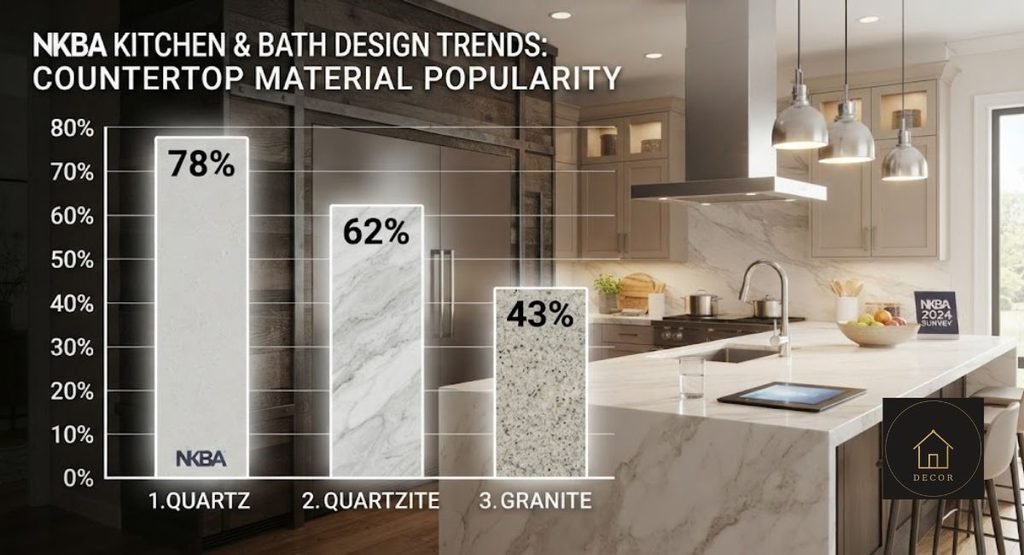
- Quartz stays the top pick through 2030. In a recent NKBA survey, 78% of designers named it a material they expect to remain popular for the next three years.
- Granite’s designer favorability has fallen to 43%. That’s well behind quartz and quartzite.
- The U.S. countertop market should grow from $28.65 billion in 2024 to $32.44 billion by 2030. That’s a 2.10% annual growth rate.
- Porcelain and sintered stone are the fastest-growing countertop categories. Thinner profiles and better durability are driving that growth.
- Wireless-charging and antimicrobial countertop technology already exist in production products, not just prototypes.
Which Countertop Material Will Be Most Popular Through 2030?
Quartz isn’t going anywhere. The NKBA’s 2026 Kitchen Design Trends report surveyed designers, remodelers, and dealers. 78% of them expect quartz to stay popular for the next three years.
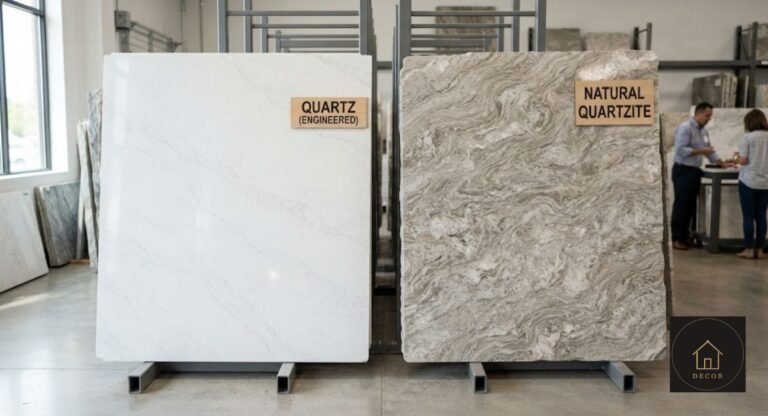
Natural quartzite came in close behind, at 62%. Granite trails at just 43%. Materials like butcher block, concrete, tile, and Corian each landed between 10% and 16%. That’s a clear signal: stone and engineered stone still dominate, even as colors and finishes shift underneath them.
I’ve watched this play out in real showrooms. Fabricators keep expanding their quartz color libraries every season. Meanwhile, granite slab yards are quietly shrinking their inventory in favor of quartzite. That’s not a coincidence.
Suppliers are reading the same data homeowners should read before committing to a material for the next 15 years.
| Material | Designers expecting it to stay popular (next 3 years) | Best for | Watch-out |
| Quartz | 78% | Busy kitchens, consistent color | Can look uniform, less “natural” |
| Quartzite (natural) | 62% | Marble look with more durability | Needs sealing; slab-to-slab variation |
| Granite | 43% | Budget-friendly natural stone | Falling out of designer favor |
| Porcelain / sintered stone | Fastest-growing category overall | Outdoor kitchens, heat resistance | Newer to the U.S. market; fewer fabricators |
| Butcher block, concrete, tile, Corian | 10–16% | Accent surfaces, budget zones | Not projected to lead any kitchen |
Data: National Kitchen & Bath Association 2026 Kitchen Design Trends survey, reported via Southern Living.
Is the Countertop Market Actually Growing, and Why Does That Matter to You?
Yes. And the direction of that growth tells you where selection and pricing are headed. Arizton’s U.S. countertop market research puts the market at $28.65 billion in 2024. It’s projected to reach $32.44 billion by 2030 a 2.10% compound annual growth rate. Remodeling activity is driving that growth. So is demand for outdoor kitchens, and a documented shift toward sintered stone and high-performance porcelain.
For a homeowner, steady growth usually means more material options, not fewer. It also means the categories gaining share now porcelain, sintered stone, recycled-content quartz will likely have the widest color and finish selection five years from now. That’s simply where manufacturers are putting their R&D dollars. Slower-moving categories, like standard granite, tend to see the opposite: shrinking color runs and fewer new patterns each year, as fabricators shift shelf space toward what’s actually selling.
Porcelain and Sintered Stone: The Fastest-Growing Countertop Category
They’re real, though adoption is still early. Wireless-charging countertops are already shipping in some kitchen product lines. These embedded pads charge a phone or tablet right through the slab, with no visible outlet. Some manufacturers are also developing photocatalytic surfaces. These use titanium dioxide reactions to help break down bacteria and odors under ordinary indoor lighting. Temperature-controlled zones are further out but in active development.
Think a warm spot for your coffee cup, or a cool section for pastry work, usually run through a smartphone app. None of this is standard in most American kitchens yet. It’s a premium, early-adopter category similar to where induction cooktops sat about a decade ago. If you’re renovating on a normal budget, this is a “watch, don’t wait for” trend.
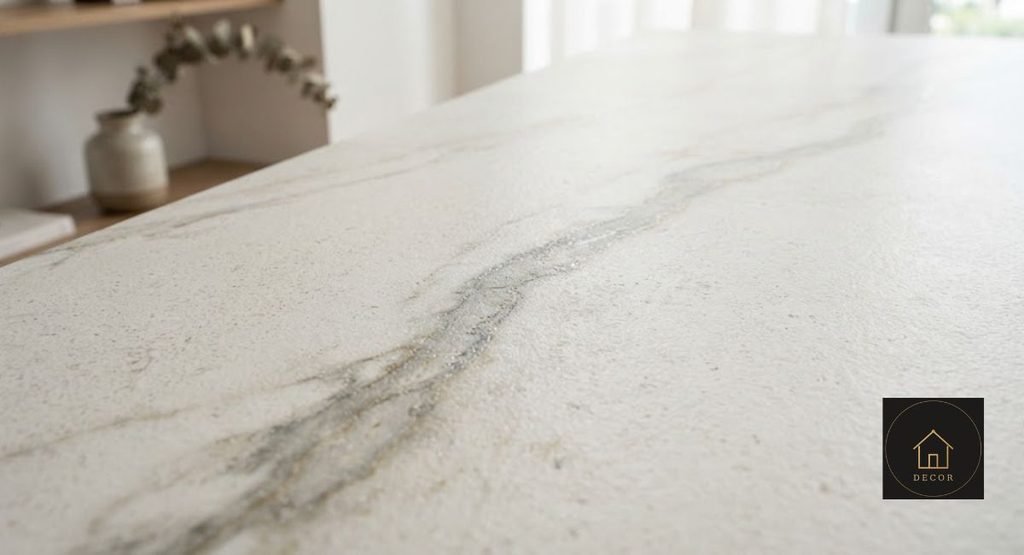
Are Smart Countertops Actually Available Yet, or Just a Concept?
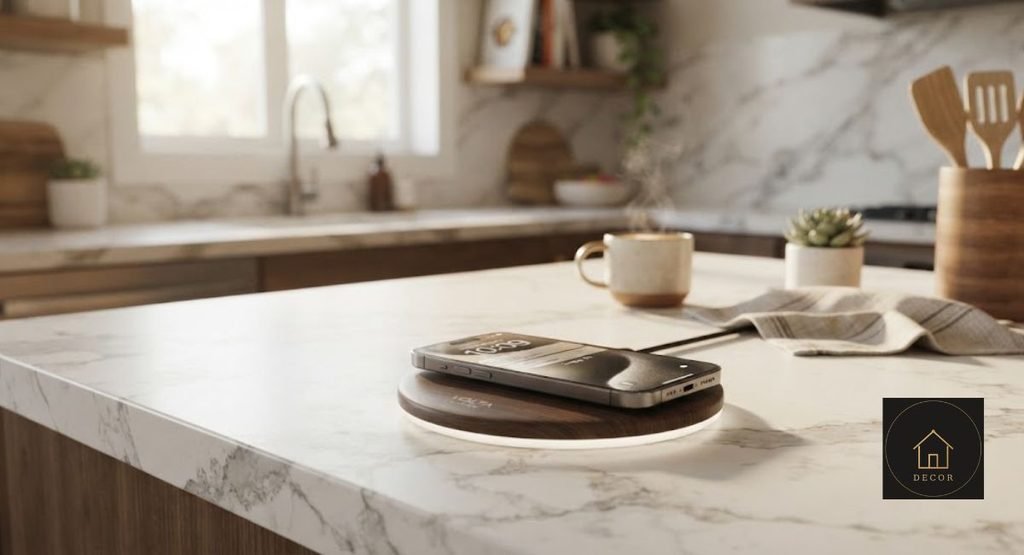
They’re real, though adoption is still early. Wireless-charging countertops are already shipping in some kitchen product lines. These embedded pads charge a phone or tablet right through the slab, with no visible outlet. Some manufacturers are also developing photocatalytic surfaces.
These use titanium dioxide reactions to help break down bacteria and odors under ordinary indoor lighting. Temperature-controlled zones are further out but in active development. Think a warm spot for your coffee cup, or a cool section for pastry work, usually run through a smartphone app.
None of this is standard in most American kitchens yet. It’s a premium, early-adopter category similar to where induction cooktops sat about a decade ago. If you’re renovating on a normal budget, this is a “watch, don’t wait for” trend.
Sustainable and Recycled Countertop Materials Are Gaining Ground
Sustainability is showing up less as a marketing label now, and more as an actual material category. Recycled-content quartz is a good example. LX Hausys’s VIATERA line pairs quartz with what the company calls NeoQ technology, to work in more recycled material. It’s now a mainstream option, not a niche one. Recycled glass countertops made from glass fragments suspended in resin or cement are showing up more often too, usually as a feature island rather than a whole-kitchen surface.
So are concrete countertops formulated with recycled aggregates. This matters for the “future” framing specifically. Engineered-stone manufacturing has faced real scrutiny over fabricator health risks and production impact. That’s part of what’s pushing the natural-stone comeback (quartzite, marble) and the recycled-content quartz push, at the same time. Those two trends look contradictory on the surface. But they’re actually the same underlying homeowner concern, showing up in two different material choices.
What About Renters? Future Countertop Trends You Can Actually Use
Most future countertop trends coverage assumes you’re funding a permanent renovation. That leaves out a big chunk of the audience: renters who can’t rip out a landlord’s laminate. The relevant near-future trend here isn’t a material at all. It’s temporary surface solutions maturing enough to look genuinely good, instead of obviously fake.
Peel-and-stick countertop film has improved a lot in the last few years. It now has better heat resistance and more realistic stone-pattern printing than older vinyl versions. Countertop overlay kits are also becoming more common in rental-friendly renovation guides.
These are thin engineered panels installed over an existing surface, without adhesive or permanent modification, so they can usually be removed at move-out. Neither replaces a real quartz or porcelain install. But both track the same shift toward natural-looking, low-maintenance surfaces driving the owned-home market renters just get there through removable products instead of a full fabrication job.
If you’re renting, check your lease for what counts as a “modification” first. Even a no-adhesive overlay is worth clearing, so you don’t end up arguing about your security deposit later.
Which Colors and Finishes Are Shaping the Near Future?
Material performance is the bigger long-term story. But color and finish still shape how a kitchen feels day to day. Warm neutrals creamy whites, soft beige, taupe, and greige are replacing the stark cool-gray palette that dominated the last decade. Matte and honed finishes are gaining ground over high-gloss too, for their fingerprint resistance and softer look.
More homeowners are also choosing bolder veining or deeper colors, like green and burgundy, as a deliberate focal point instead of a safe white default. If you’re weighing two natural stones with similar performance, that deeper comparison belongs in its own breakdown. See our full quartz vs. quartzite comparison for the $1,200 price question that decision usually comes down to.
How to Choose a Countertop That Won’t Look Dated in Five Years
Chasing this year’s color is how kitchens end up looking dated by year three. A more durable approach: pick your material first, based on how you actually use your kitchen heat exposure, sealing tolerance, budget. Then choose a neutral-enough color within that material, so the kitchen ages with your cabinetry and flooring instead of against them.
I’ve sat with clients comparing quartz samples against granite slabs, side by side, under kitchen-temperature lighting. The material decision almost always mattered more than the exact shade. A slightly “wrong” warm-white quartz still looks intentional in five years.
A trendy bold color in a material you regret installing does not. Budget for the material’s long-term maintenance, not just its upfront price. Porous stone that needs annual sealing costs real time and money that a lower-maintenance engineered surface doesn’t.
One honest trade-off: if you want the lowest possible long-term maintenance, natural stone isn’t it not even trend-forward quartzite. Quartz and porcelain still win on that specific metric, even though quartzite is having a design moment.
Where Countertops Are Actually Headed
The next few years look less like a color refresh and more like a real material shakeout. Granite keeps losing designer favor, porcelain and sintered stone keep gaining fabrication ground, and smart features are moving from trade-show novelty toward something you can actually buy today. If you’re planning a kitchen you’ll live with for a decade or more, weigh the material and its maintenance reality first, and treat color as the last decision, not the first.
FAQs
No, but it’s declining. Only 43% of designers surveyed by the NKBA expect granite to stay popular over the next three years, well behind quartz (78%) and quartzite (62%).
Quartz and natural quartzite are the two materials most designers expect to gain the share granite is losing, according to NKBA survey data.
Yes. Wireless-charging countertop technology is already shipping in some production kitchen lines, though it remains a premium, early-adopter feature rather than a standard option.
It’s growing steadily. Arizton projects the U.S. countertop market to grow from $28.65 billion in 2024 to $32.44 billion by 2030, a 2.10% compound annual growth rate.
Porcelain and sintered stone are the fastest-growing categories, driven by thinner profiles, heat resistance, and durability advantages over granite.
They’re a real, growing material category. Recycled-content quartz lines, and recycled-glass or concrete countertops, are increasingly used as mainstream options, not just marketing claims.
Designers expect warm neutrals creamy whites, beige, taupe, and greige to keep replacing cool grays through at least 2026, as part of a broader shift toward natural-looking materials.
Material performance first. A durable, appropriately low-maintenance material in a neutral-enough color tends to age better than a trending color in the wrong material for your kitchen.
Color and finish trends shift roughly every three to five years. Material trends move much slower quartz has led the U.S. market for over a decade, and NKBA survey data suggests that lead holds through at least 2029.

Hi, I’m Shahzad Ahmad welcome to Smart Decore Tips!
I write and research every guide on this site myself, focused on real, practical home decor advice for renters, first-time homeowners, and small-space living. Before publishing anything, I check actual product listings, current prices, and real customer reviews not just what other sites already say.
My goal is simple: help you make smarter, more affordable decor decisions without the guesswork or sales pitch.
One Comment