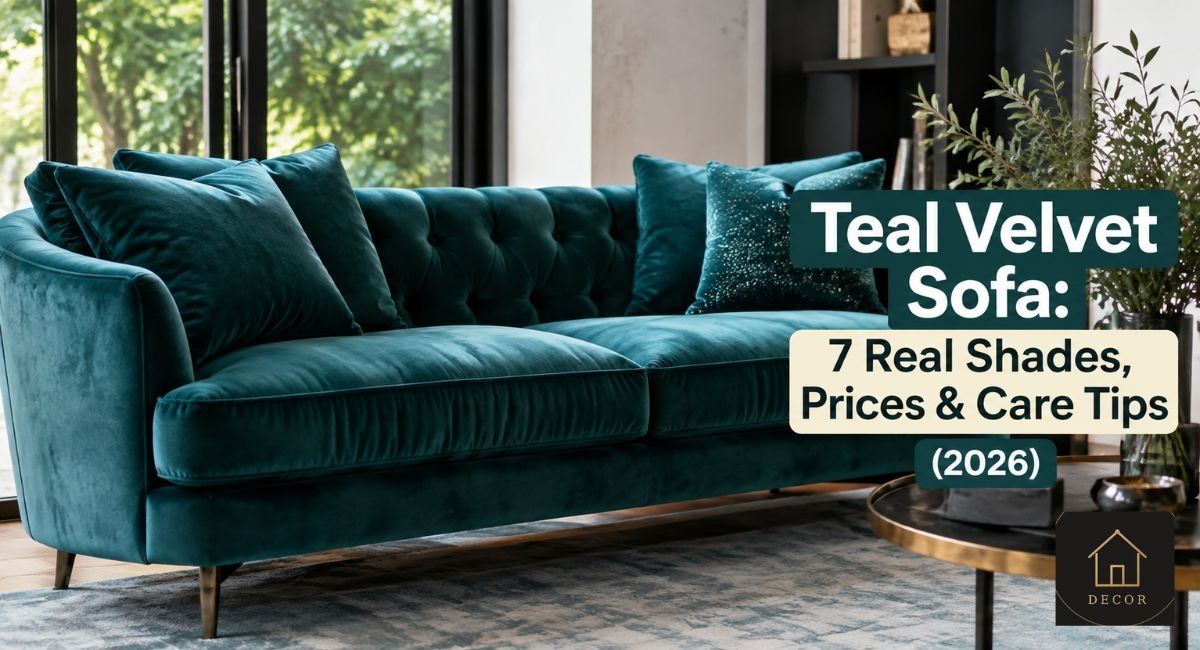
Teal Velvet Sofa: 7 Real Shades, Prices & Care Tips (2026)
A teal velvet sofa is one of those pieces that either becomes the best thing in your living room or the thing you quietly regret in a year. The color is gorgeous. The fabric is the part people don’t ask enough questions about and that’s usually where buyer’s remorse starts.
Quick takeaways:
- A teal velvet sofa typically costs $400–$700 at budget retailers, $1,000–$3,000 at mid-range brands like Article or Joybird, and $3,000+ for custom or designer pieces.
- Performance (polyester-blend) velvet resists fading and crushing far better than natural cotton velvet worth paying extra for if you have sunlight or pets.
- Direct sunlight is the #1 cause of uneven teal fading, not cleaning mistakes.
- Weekly vacuuming with a soft brush attachment, done in the direction of the nap, prevents most long-term wear.
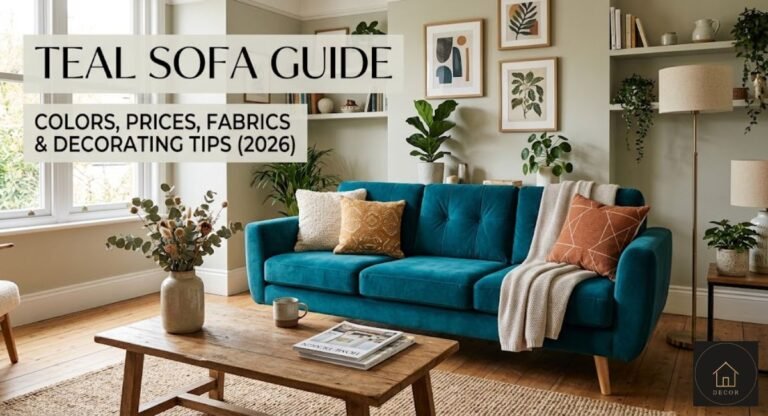
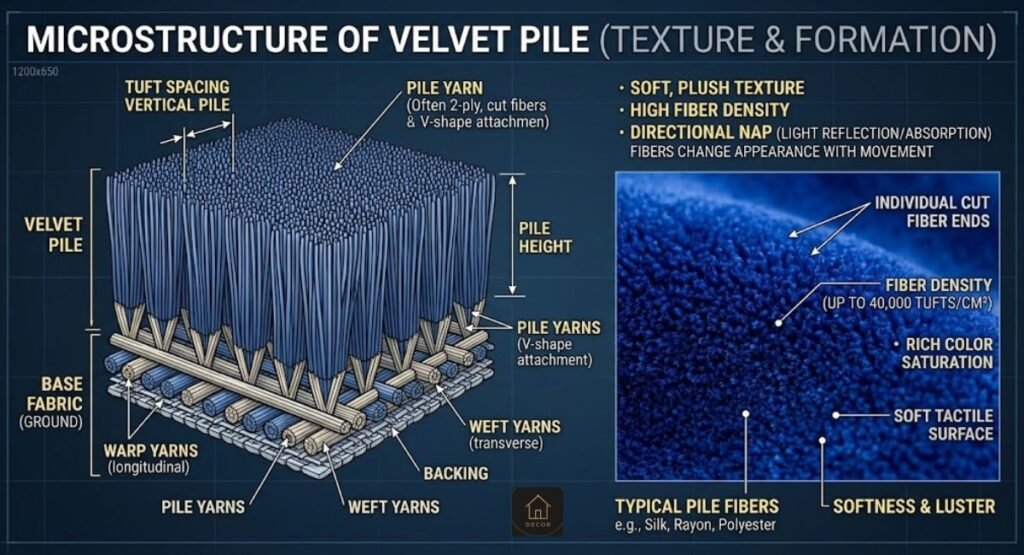
A teal velvet sofa is a couch upholstered in velvet fabric dyed a blue-green “teal” shade, ranging from soft seafoam to deep peacock. The velvet pile gives it a plush, light-catching texture that reads as more formal and saturated than flat-weave fabric in the same color.
How Much Does a Teal Velvet Sofa Cost in 2026?
Prices split into three real tiers, and the difference usually comes down to fabric grade and frame construction, not just brand name.
Budget tier ($400–$700): Retailers like Walmart and Amazon carry teal velvet loveseats and small sofas from brands like Modway, often in polyester velvet over a basic wood frame. Fine for light use, apartments, or a first place.
Mid-range tier ($800–$1,800): Ashcroft’s teal velvet sectionals (sold through Walmart) sit around $800–$1,400. Article and Joybird land closer to $1,000–$1,800 for a proper 3-seater, usually in a more durable performance velvet blend with better spring support.
High-end tier ($2,000–$3,000+): West Elm’s custom velvet program and designer/vintage pieces push into this range, often with 8-way hand-tied springs and solid hardwood frames that hold up decades longer than budget builds. If you want the full color-by-color price breakdown across white, teal, down, and foam sofas, the Couch Color & Material Guide covers that comparison in depth this article focuses specifically on the teal velvet build.
Cotton vs. Polyester vs. Performance Velvet: Which Holds Up Best?
This is the decision that matters more than the shade of teal you pick. Here’s how the three main velvet types actually compare for a sofa that gets used daily.
| Velvet Type | Feel | Fading Risk | Best For |
| Cotton velvet | Richest, softest sheen | High fades and water-spots easily | Low-sunlight rooms, formal/rarely-used spaces |
| Polyester velvet | Slightly stiffer sheen | Low holds color well | Budget buys, sunny rooms, first apartments |
| Performance velvet | Similar to polyester, engineered blend | Lowest built to resist UV and stains | Pets, kids, high-traffic living rooms |
Cotton velvet is what most people picture when they imagine a “real” velvet sofa but it’s also the version most likely to water-spot from a spilled drink or fade unevenly near a window. Performance velvet costs a bit more but is the safer bet if your teal velvet sofa is going in a room that actually gets used.
Will a Teal Velvet Sofa Fade or Crush?
Yes but sunlight, not the color itself, is the real cause. Deep, saturated colors like teal show uneven fading more visibly than neutrals, since a faded patch stands out against the rest of the deep pile. Here’s what actually happens over time, and what prevents it.
Direct UV exposure breaks down dye molecules unevenly, so a sofa near a south-facing window can visibly lighten in one spot within a year while the rest stays rich and saturated. The fix isn’t avoiding teal it’s positioning. Keep the sofa out of direct afternoon sun, or add sheer curtains or UV window film if repositioning isn’t an option.
Crushing is separate from fading. Velvet pile flattens wherever you sit most, which is why the seat cushion often looks different from the arms after six months. This isn’t damage a handheld steamer held a few inches away restores the pile in minutes. Rotating cushions every few weeks also spreads out wear so no single spot flattens faster than the rest.

How to Clean a Teal Velvet Sofa (Without Ruining It)
Velvet has a reputation for being high-maintenance, but a teal velvet sofa is genuinely easy to keep looking new if you follow the fabric’s care code (check the tag: W means water-based cleaner, S means solvent only, WS means either, X means vacuum only no liquid).
- Vacuum weekly using the soft brush attachment, never the hard upholstery tool.
- Brush in the direction of the nap to lift dust without flattening the pile.
- Blot spills immediately with a dry, clean cloth never rub.
- Check the care tag before using any liquid cleaner.
- Mix a mild dish soap and water solution for W or WS-rated fabric, and dab lightly.
- Rinse the spot with a barely damp cloth to remove soap residue.
- Air dry fully before sitting on the spot again.
- Steam flattened areas monthly on the lowest setting, holding the steamer a few inches away, then brush.
Skip the ironing-board fix people sometimes try direct heat on velvet crushes the pile permanently and there’s no undoing it.
Best Colors and Walls to Pair With a Teal Velvet Sofa
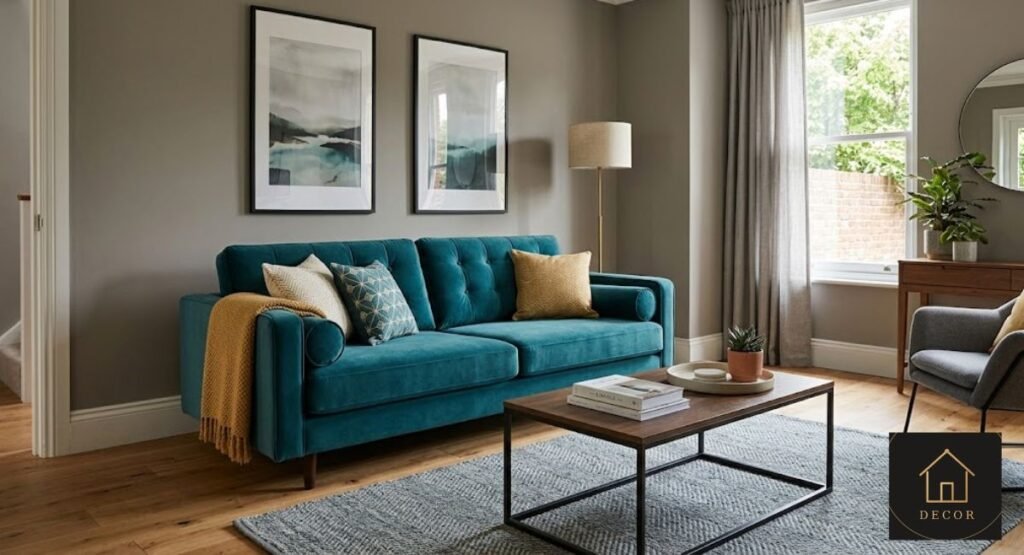
Teal is a genuinely flexible neutral once you treat it like one. Warm grey or greige walls give the sofa more presence than stark white, since a cool white can flatten the depth of the velvet. Dark walls charcoal, deep slate, or forest green pull out the jewel-tone quality even more and make a teal velvet sofa read as the intentional focal point of the room rather than an accident of color.
For accents, mustard yellow, burnt orange, and brass hardware all read as classic teal pairings without looking dated. If your space skews Scandi or minimal, keep the rest of the room light and let the sofa carry all the color that combination works in small rooms too, since the issue with small spaces is usually too many dark textiles stacked around the sofa, not the sofa color itself.
Teal Velvet Sofa for Small Apartments and Renters
A teal velvet sofa works in a small space more often than people expect, but two things matter more here than in a bigger living room: scale and light.
In an apartment, a loveseat-sized teal velvet piece (around 60–70 inches) keeps the color from overwhelming the room, while a full 84-inch sofa in the same deep shade can visually shrink a small space. Renters should also weigh fabric type more carefully since you can’t always control window treatments or room orientation in a rental, polyester or performance velvet is the safer bet over cotton velvet, simply because you have less control over sunlight exposure.
One thing renters ask about often: velvet does show vacuum-track lines and light dust more visibly than flat-weave fabric, so it needs slightly more upkeep in a smaller, more lived-in space nothing that a weekly five-minute vacuum pass doesn’t handle.
Teal Velvet Sofa vs. White Sectional Sofa: Which Fits Your Room?
These two sit at opposite ends of the color-and-maintenance spectrum, so the right pick usually comes down to how much color commitment and cleaning tolerance you actually want. A teal velvet sofa brings color and texture as the room’s focal point, but needs sunlight management and fabric-specific cleaning.
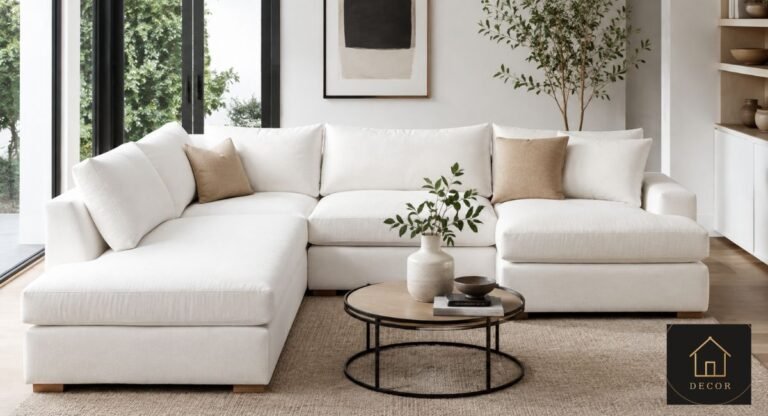
A white sectional brings size and flexibility for bigger rooms and open layouts, but shows stains more visibly day-to-day and needs more frequent cleaning overall. If you want color that hides everyday wear, teal velvet wins. If you want a lighter, larger-feeling room and don’t mind more frequent upkeep, a white sectional is the better fit our White Sectional Sofa guide breaks down exactly what that maintenance looks like.
Common Teal Velvet Sofa Mistakes to Avoid
The same few mistakes show up over and over with first-time velvet buyers, and most are easy to avoid once you know what to look for. Buying cotton velvet for a sunny room is the biggest one gorgeous in the showroom, faded unevenly within a year.
Skipping the care tag is another: cleaning an “S” (solvent-only) fabric with a water-based solution can permanently water-spot it. And sizing a full 84-inch sofa into a small apartment living room, rather than a loveseat, is the styling mistake that makes an otherwise great color choice feel like too much.
FAQs
A: Yes, especially cotton velvet. Direct UV exposure fades dye unevenly over time. Performance or polyester velvet resists this far better, and keeping the sofa out of direct afternoon sun prevents most fading.
A: Not really. Weekly vacuuming with a soft brush attachment and immediate blotting of spills handles most upkeep. Always check the care tag (W/S/WS/X) before using any liquid cleaner.
A: Budget options run $400–$700, mid-range brands like Article or Joybird land around $1,000–$1,800, and custom or designer pieces can run $2,000–$3,000 or more.
A: Warm grey or greige walls, dark charcoal or forest-green walls, and accent colors like mustard yellow, burnt orange, and brass all pair well with teal.
A: Polyester and performance velvet resist fading, staining, and crushing better than cotton velvet, making them the safer choice for high-traffic rooms, pets, or sunny spaces. Cotton velvet has a richer sheen but needs more careful placement and care.
Conclusion
A teal velvet sofa can be one of the best pieces you buy for a room, but the fabric choice matters more than the exact shade of teal. Go performance or polyester velvet if your room gets real sunlight or daily use, keep it out of direct sun either way, and give it a five-minute vacuum pass once a week. Do that, and a teal velvet sofa easily holds its color and shape for years instead of fading into an expensive mistake.

Hi, I’m Shahzad Ahmad welcome to Smart Decore Tips!
I write and research every guide on this site myself, focused on real, practical home decor advice for renters, first-time homeowners, and small-space living. Before publishing anything, I check actual product listings, current prices, and real customer reviews not just what other sites already say.
My goal is simple: help you make smarter, more affordable decor decisions without the guesswork or sales pitch.