
DIY Home Accessories: 25 Creative Ideas to Make Your Home Unique
DIY home accessories are handmade decorative or functional items that help personalize a home. You can make them using materials such as fabric, wood, rope, clay, paper and recycled containers. Popular options include decorative trays, handmade cushion covers, wall hangings, storage baskets and painted vases.
The best projects complement existing furniture, serve a useful purpose and suit the time and skills available. For broader room-by-room inspiration, see 75 DIY home decor ideas for every room.
1. How to Choose DIY Home Accessories That Suit Your Space
Before starting a project, consider where the finished accessory will go and how you intend to use it. An item that looks attractive on a craft table might not work as well on a frequently used kitchen counter or a small apartment shelf.
- Available space: Measure the display area. Avoid oversized pieces for narrow shelves or small tables.
- Existing colors: Look at walls, furniture, curtains and flooring. Choose materials that complement those colors.
- Skill level: Select projects that match your experience. Painted jars and fabric coasters are simpler starting points than detailed macrame or woodworking.
- Intended use: Decide whether the item is decorative, functional or both. A display-only tray has different requirements from one used to carry drinks.
Decorative versus functional accessories
| Decorative accessories | Functional accessories |
| Handmade wall art | Fabric storage baskets |
| Decorative vases | Coasters |
| Clay ornaments | Desk organizers |
| Macrame hangings | Decorative trays |
| Paper flower displays | Cushion covers |
Some projects fit both categories. A woven basket, for example, can hold blankets while adding texture to a living room.
A practical starting point: Choose one small area, such as a coffee table, bedside table or entryway shelf. Make two or three coordinated accessories rather than creating unrelated objects for the entire house.
2. Easy DIY Home Accessories for Beginners
You do not need advanced crafting skills to make useful accessories. Several beginner-friendly projects use everyday materials and straightforward techniques.
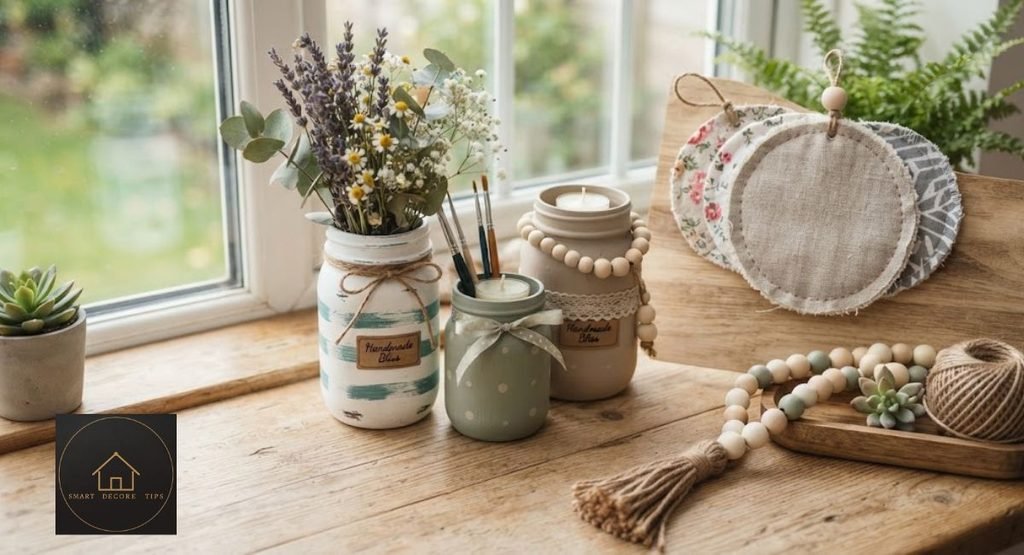
1. Painted decorative jars
Materials: Clean glass jars, paint suitable for glass or the jar’s surface, a paintbrush, painter’s tape and optional ribbon.
- Wash the jars and remove their labels.
- Dry the glass completely.
- Apply the paint according to the manufacturer’s instructions.
- Allow each coat to dry before adding another.
- Add simple stripes, dots or geometric details if desired.
Use finished jars to hold artificial flowers, craft supplies or decorative objects. Avoid using painted jars for food storage unless the coating is specifically approved for food contact.
2. Handmade fabric coasters
Fabric coasters can help protect table surfaces from cup marks and provide a way to reuse leftover fabric.
Materials: Cotton fabric, fabric scissors, matching thread, a sewing machine or needle, and suitable interfacing.
- Cut matching fabric squares.
- Place the pieces together with their finished sides facing inward.
- Sew around the edges, leaving a small opening.
- Turn the coaster right side out.
- Close the opening and press the edges flat.
Choose washable fabric and check its care requirements before regular use.
3. Decorative serving trays
A decorative tray creates a defined area for displaying candles, small vases and other tabletop accessories.
Materials: A suitable wooden tray blank, sandpaper, paint or wood finish, a brush and optional handles.
- Check the tray for rough edges or splinters.
- Prepare the surface according to the finish manufacturer’s instructions.
- Apply paint or an appropriate wood finish.
- Allow the finish to dry and cure as directed.
- Add handles if the tray is designed to support them.
A decorative tray is not automatically suitable for carrying heavy objects. Check its construction and handle attachments before using it for serving.
4. Simple fabric storage baskets
Fabric baskets provide convenient storage for remote controls, craft supplies and small accessories.
Use sturdy cotton canvas or another suitable fabric. Add interfacing if the material needs extra structure. Cut two matching fabric panels, sew the sides and base, finish the top edge and fold the rim outward.
For renters, these baskets offer storage without requiring wall fixtures or permanent changes to the property.
5. Wooden bead decorations
Wooden beads can be arranged into decorative garlands for shelves, bowls and tabletop displays.
Thread unfinished wooden beads onto suitable cord, alternate bead sizes if desired, and secure the ends. Leave the wood natural or apply a suitable finish. Keep small beads away from young children and pets because they can present a choking hazard.
3. DIY Home Accessories Ideas for Living Rooms
Living rooms often benefit from accessories that add texture, provide storage or organize everyday surfaces. Choose projects that work with your seating, coffee table and available floor space.
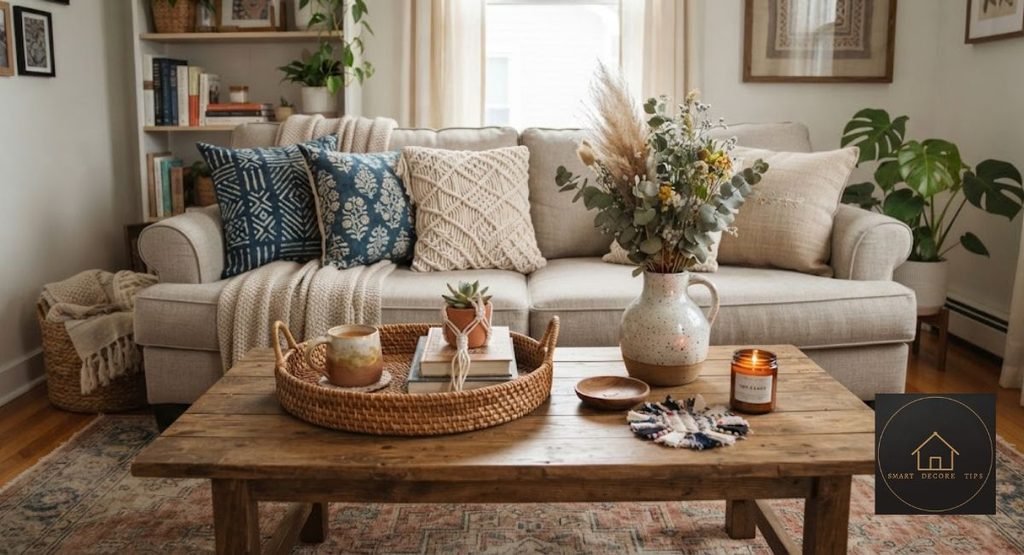
6. Handmade cushion covers
Cushion covers introduce new colors and textures without replacing existing pillows.
Materials: Linen or cotton fabric, matching thread, scissors, measuring tape and a zipper or suitable closure.
- Measure an existing cushion insert.
- Choose fabric that complements the sofa.
- Cut fabric panels with suitable seam allowance.
- Sew the panels together, adding a zipper or envelope closure.
- Insert the cushion and adjust the corners.
Design idea: Combine one plain cushion with a textured or patterned cover. This adds variation without making the sofa look too busy.
7. Decorative coffee table arrangements
Create a coordinated coffee table arrangement using a tray, a small vase and a few selected objects. Leave enough open space for drinks, books and everyday use.
A simple arrangement can include one decorative tray, one small vase, one candle in a suitable holder, and one or two books. Keep candles away from flammable decorations and never leave a burning candle unattended.
8. Handmade decorative vases
Give an ordinary vase a different appearance with a suitable decorative coating or surface treatment.
- Clean and dry the vase.
- Check whether the surface is suitable for the chosen coating.
- Apply the material in a controlled, even layer.
- Allow it to dry according to product instructions.
- Add a compatible protective finish if needed.
Use treated vases for decorative displays unless the materials and finish are confirmed suitable for holding water.
9. Macrame plant hangers
Macrame is a decorative knotting technique used to create patterns with cord or rope. A simple plant hanger can be made using cotton cord, basic knots and a secure hanging arrangement.
- Cut several equal lengths of cord.
- Gather and secure the cords at the top.
- Divide them into groups.
- Create repeated knots along each group.
- Join the groups near the bottom to form a basket for the planter.
Choose a suitable hanging anchor and check its load capacity. Consider the combined weight of the planter, soil and water. For renters, a freestanding plant stand may be preferable if drilling is not permitted.
10. Handmade decorative plant holders
A small wooden plant holder can give an ordinary plant pot a finished appearance. Use suitable wood pieces, compatible fasteners and a protective finish appropriate for the location.
Before assembling the holder, make sure the base is stable and wide enough for the pot. Keep untreated wood away from standing water, and use a suitable waterproof tray beneath the plant.
4. DIY Wall Accessories and Handmade Decorations
Wall accessories can fill empty areas without requiring expensive artwork. Choose a project that fits the available wall space and can be installed safely.

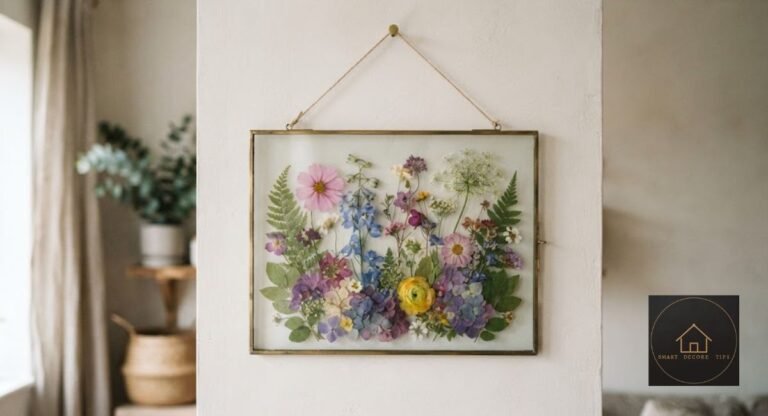
11. Paper flower arrangements
Paper flowers are lightweight decorations for wall displays, framed compositions or table arrangements.
Materials: Colored craft paper, scissors, pencil, craft glue and optional floral wire.
- Draw or select simple petal shapes.
- Cut several pieces from the chosen paper.
- Shape the petals gently.
- Layer them using craft glue.
- Assemble the petals into flowers.
- Arrange the finished pieces into a display.
Use removable mounting strips when appropriate, following their weight and surface requirements. Keep paper decorations away from moisture and open flames.
12. Handmade framed wall art
Create original wall art using canvas, paper, fabric or other suitable craft materials. Try a simple abstract composition with two or three colors already present in the room.
- Keep the main colors consistent with the furniture.
- Choose a frame that suits the artwork.
- Leave negative space around the design.
- Avoid crowding a small wall with too many unrelated frames.
13. Decorative mirror frames
A plain mirror can become a decorative feature with a suitable frame or compatible embellishments. Consider wooden beads, lightweight decorative trim or a pre-made frame.
Before adding anything, check the mirror’s backing and attachment system. Do not cover mounting hardware or use heavy materials that could make the mirror unsafe to hang.
14. Fabric wall hangings
Fabric wall hangings offer a softer alternative to framed artwork. Use leftover cotton, linen or another suitable fabric and attach it to a lightweight wooden dowel.
Possible details include simple geometric patterns, decorative stitching, layered fabric shapes, fringe, tassels or subtle embroidery. This project can suit bedrooms and reading corners where textile texture complements the furnishings.
15. Personalized picture displays
Create a simple picture display using a wooden board, suitable cord and small clips. Arrange family photographs, travel memories or printed artwork along the cord.
Use a secure mounting method and avoid placing the display where direct sunlight could damage photographs. A freestanding photo board is another option for rental homes.
5. DIY Home Accessories Using Paper and Recycled Materials
Paper and reused household materials can work well for inexpensive decorative projects. The material should suit the finished object’s purpose.

16. Paper flower centerpieces
Create a paper flower centerpiece using crepe paper or other suitable craft paper. Cut individual petals, shape their edges and attach them around a central stem. Arrange several flowers in a decorative vase.
Paper flowers suit dining tables, entryway displays and occasional arrangements. They are not suitable for areas exposed to moisture, open flames or excessive heat.
17. Recycled cardboard organizers
Turn sturdy cardboard boxes into organizers for stationery, small accessories or craft supplies.
Materials: Clean cardboard, ruler, scissors or craft knife, suitable adhesive and decorative paper.
- Plan compartments according to the objects to be stored.
- Cut cardboard pieces to the required shapes.
- Assemble the base and dividers.
- Secure the joints.
- Cover the outside with decorative paper or fabric.
Do not use ordinary cardboard organizers for wet items or heavy objects that could weaken the structure.
18. Decorative storage containers
Reuse suitable containers by covering their exterior with jute rope, fabric or decorative paper. Clean the container, remove sharp edges and check that it is structurally sound before decorating.
These containers can hold pens, artificial flowers or lightweight craft materials. Covering a container does not make it food-safe or suitable for storing liquids.
19. Handmade paper lanterns
Paper lanterns can create a soft decorative effect for shelves or special occasions. Use craft paper, a suitable template and adhesive to form a simple lantern shape.
For illumination, choose a battery-operated LED light suitable for the arrangement. Never put an open flame inside a paper lantern.
20. Recycled bottle decorations
Glass bottles can become decorative displays when cleaned and finished with suitable materials.
- Wash the bottle thoroughly.
- Remove labels and adhesive residue.
- Dry the surface.
- Apply a compatible decorative coating.
- Add ribbon, cord or other lightweight details.
Use bottles with intact glass. Avoid cutting or modifying them unless you have appropriate equipment and experience.
6. DIY Home Accessories for Adults: More Creative Projects
Some projects involve more detailed techniques, additional preparation or specialized materials. They suit people who want to develop their crafting skills beyond basic painting and assembly.

21. Air-dry clay accessories
Air-dry clay can be shaped into small decorative objects without a pottery kiln. Popular projects include trinket dishes, small decorative bowls, jewelry holders and ornaments.
How to make a simple trinket dish:
- Knead the clay according to its instructions.
- Roll it into an even sheet.
- Cut a rounded shape.
- Gently lift the edges to form a shallow dish.
- Allow it to dry as directed.
- Sand or finish only as permitted by the product instructions.
Air-dry clay is not automatically waterproof or food-safe. Treat finished pieces as decorative accessories unless the manufacturer specifically confirms otherwise.
22. Macrame decorative hangings
If you understand basic macrame knots, try creating a larger decorative wall hanging. Combine different knot patterns, cord lengths and fringe arrangements to produce a more detailed design.
Sketch the layout before starting to help keep the composition balanced. Larger macrame projects offer more design flexibility but require more cord, time and workspace than small plant hangers.
23. Handmade wooden trays
A wooden tray can be a more involved project if built from separate boards rather than decorated from a ready-made blank.
You will need suitable wood, measuring tools, compatible fasteners, woodworking tools and an appropriate finish. Plan the base, sides and handle attachments before assembly.
If woodworking experience is limited, start with a ready-made tray blank. Building one from scratch offers more customization but requires additional tools, construction knowledge and attention to structural strength.
24. Decorative rope baskets
Rope baskets combine storage with a handmade appearance. A coiled rope basket is created by wrapping rope into a spiral and securing each new section to the previous one with an appropriate stitching method.
Materials: Cotton rope, strong thread, suitable needle and scissors.
You can experiment with round or oval shapes, contrasting thread, different rope thicknesses, decorative handles and two-tone patterns. Choose a suitable rope and construction method for the intended load. A small decorative basket should not automatically be treated as heavy-duty storage.
25. Textured decorative artwork
Textured artwork uses raised materials and surface patterns to create depth on a canvas or suitable backing. Use a compatible texture medium and canvas, then create simple shapes with a palette knife or suitable applicator.
- Select a small canvas.
- Sketch a simple abstract composition.
- Apply the texture medium according to its instructions.
- Create gentle raised patterns.
- Let the piece dry completely.
- Apply a compatible finish if required.
Avoid applying heavy materials to lightweight canvas without checking whether the backing can support them.
7. Materials and Tools You Need for DIY Home Accessories
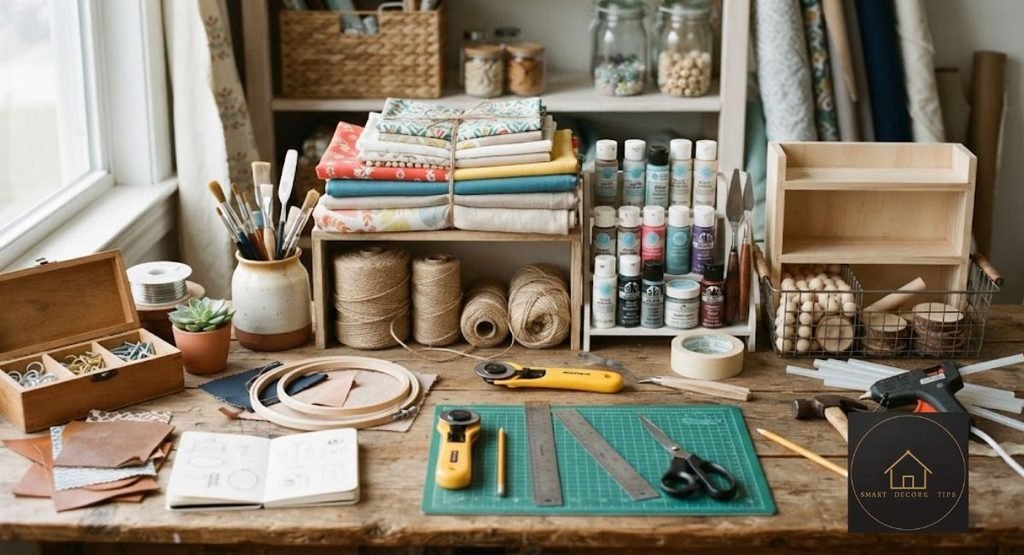
The materials you choose affect the appearance, durability and maintenance of the finished accessory. Before purchasing supplies, consider how the item will be used and where it will be displayed.
Common DIY materials and their uses
| Material | Suitable projects | Important consideration |
| Cotton fabric | Cushions, coasters, baskets | Check shrinkage and washing instructions |
| Wood | Trays, frames, plant holders | Protect from moisture where appropriate |
| Air-dry clay | Trinket dishes, ornaments | Usually decorative rather than food-safe |
| Jute rope | Baskets, decorative wraps | Can absorb moisture and collect dust |
| Glass | Vases, jars and displays | Check for chips and use suitable coatings |
| Paper | Flowers, lanterns, artwork | Keep away from moisture and flames |
| Cardboard | Organizers and storage | Not suitable for wet or heavy items |
| Paint | Jars, wood and decorative pieces | Check surface compatibility and curing instructions |
Basic tools for a home crafting area
You do not need a fully equipped workshop for most small accessories. A few basic tools can handle many beginner projects.
- Measuring tape or ruler.
- Craft scissors.
- Pencil and paper.
- Suitable adhesive.
- Paintbrushes.
- Needle and thread.
- Sandpaper for appropriate projects.
- Protective work surface.
- Storage containers for small supplies.
Safety considerations before starting
- Read the instructions and safety information for paints, adhesives and finishes.
- Work in an appropriately ventilated area when product instructions require ventilation.
- Keep sharp tools and small craft components away from children and pets.
- Allow finishes and adhesives to dry or cure as directed.
- Do not mix chemicals or cleaning products.
- Use protective equipment when product instructions require it.
Special consideration for older US homes: If a project involves sanding, scraping or disturbing existing painted surfaces in a home built before 1978, lead-based paint may be present. The US Environmental Protection Agency says pre-1978 homes may contain lead-based paint and recommends lead-safe practices for renovation work.
EPA recommends homeowners hire a lead-safe certified contractor for renovation, repair or painting projects that may disturb lead-based paint. See EPA’s Lead-Safe Renovations for DIYers before disturbing older paint. The rules for paid contractors and homeowners doing work in their own homes are not identical.
8. How to Style Handmade Accessories Without Making a Room Look Cluttered
Making attractive accessories is only part of the process. Their placement, size, color and relationship with existing furniture also matter.

Coordinate colors with existing furniture
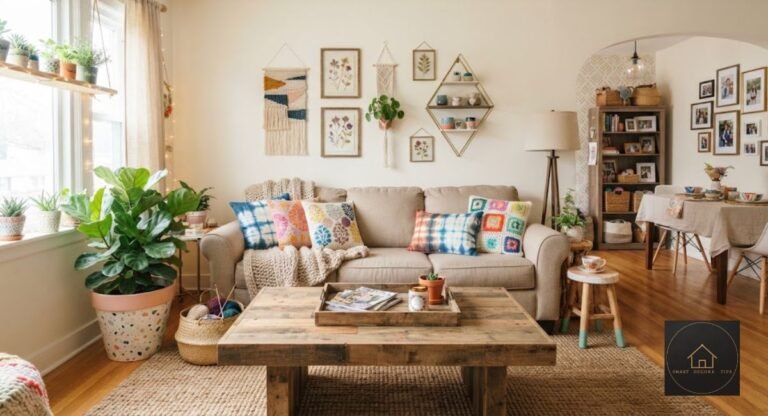
Start with the colors already present in the room. If a living room has a beige sofa, natural wood furniture and cream curtains, accessories in muted green, warm brown or soft white may complement the existing palette.
The accessories do not need to match exactly. A few related colors can create a coordinated appearance.
Combine different textures
Texture adds visual interest even with a limited color palette. Consider combining smooth ceramic-style surfaces, woven baskets, soft cotton fabrics, natural wood and textured artwork.
Avoid placing several visually heavy accessories together. A woven basket, textured artwork and large decorative vase may compete for attention if displayed in a small area.
Pay attention to proportions
A small accessory can disappear on a large coffee table, while an oversized decoration can overwhelm a narrow shelf. Use the surrounding furniture as a reference when selecting the size of handmade pieces.
A small trinket dish may suit a bedside table, while a larger decorative tray may work better on a spacious coffee table.
Group accessories with a clear purpose
Instead of spreading small decorations randomly around a room, group related items together. A coffee table arrangement might include a wooden tray, a small vase and a decorative object. Leave open space for everyday activities.
Consider the decorating style
| Interior style | Suitable DIY accessories |
| Minimalist | Simple ceramic-style vases and geometric artwork |
| Rustic | Wooden trays, rope baskets and natural fabrics |
| Bohemian | Macrame hangings and woven decorations |
| Modern | Clean-lined organizers and abstract artwork |
| Traditional | Decorative frames and fabric accessories |
| Coastal | Light-colored rope details and subtle blue accents |
The best results usually come from selecting a few accessories that suit the room rather than trying to introduce every decorating style at once.
Frequently Asked Questions
1. What are easy DIY home accessories?
Easy DIY home accessories include painted jars, fabric coasters, decorative trays, wooden bead garlands and simple storage baskets. These projects generally require basic materials and straightforward crafting techniques.
2. What are DIY home projects for adults?
DIY home projects for adults can include macrame wall hangings, air-dry clay dishes, handmade wooden trays, rope baskets and textured canvas artwork. More detailed projects may require specialized tools or additional preparation.
3. How can I make home accessories without spending much money?
Start by checking what you already have at home. Reuse suitable glass jars, leftover fabric, cardboard boxes, wooden pieces and containers. Purchase only the additional materials needed to complete your project.
4. Which DIY accessories are best for small apartments?
Fabric baskets, compact organizers, handmade coasters, small decorative trays and lightweight wall art are useful choices. They provide decorative or practical value without taking up much floor space.
5. How do I make handmade home accessories look professionally finished?
Pay attention to clean edges, consistent colors, suitable materials and careful assembly. Remove excess adhesive, check for rough surfaces and allow finishes to cure properly. A simple, well-finished accessory often looks better than an elaborate project with uneven details.
How This Guide Was Made
This guide was prepared for Smart Decor Tips using a review of the supplied DIY home decor resources, including Home Depot, HGTV, Allison Marie Alexander and Brooklyn Haberdashery.
The research also included US Environmental Protection Agency guidance on lead-safe DIY renovation practices, checked November 1, 2026.
Recommendations were assessed according to suitability for beginner and experienced DIY decorators, practical uses in American homes and rental properties, material suitability and maintenance considerations, the difference between decorative and functional accessories, and project complexity and basic safety considerations.
The projects are editorial recommendations, not personally tested products or documented experiments. Material requirements, finishes and care instructions should always be checked against the relevant manufacturer’s guidance.

Hi, I’m Shahzad Ahmad welcome to Smart Decore Tips!
I write and research every guide on this site myself, focused on real, practical home decor advice for renters, first-time homeowners, and small-space living. Before publishing anything, I check actual product listings, current prices, and real customer reviews not just what other sites already say.
My goal is simple: help you make smarter, more affordable decor decisions without the guesswork or sales pitch.
2 Comments