Caterpillar Sofa vs Bean Bag: The Real Difference
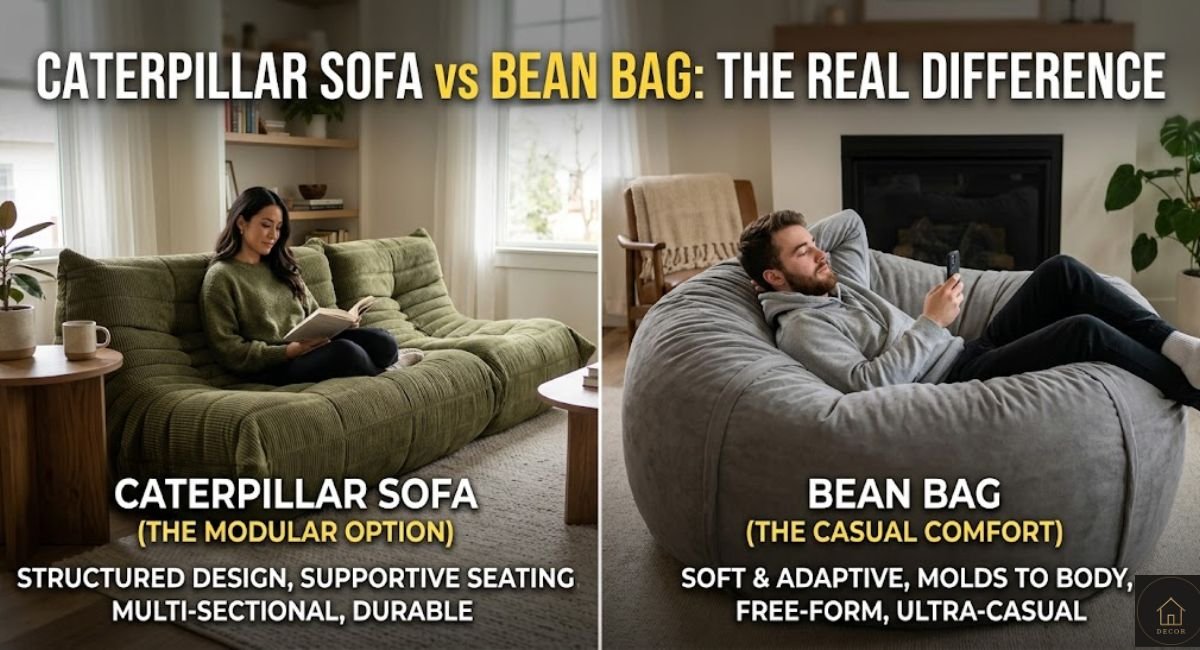
They sit low. They’re squishy. They both photograph like a giant marshmallow in a Pinterest living room. So when people go shopping, they genuinely can’t tell a caterpillar sofa from a bean bag chair until they’ve sat on both.
Here’s the short version: a caterpillar sofa vs bean bag comparison comes down to what’s stuffed inside them. One holds its shape.
The other doesn’t. That single difference changes everything else price, how long it lasts, and whether it’ll still look good in your living room a year from now. If you’re deciding between the two for a small space, we already broke down whether a single caterpillar sofa is worth $200 to $900 this article is the head-to-head version for people cross-shopping bean bags too.
What’s the Difference Between a Caterpillar Sofa and a Bean Bag?
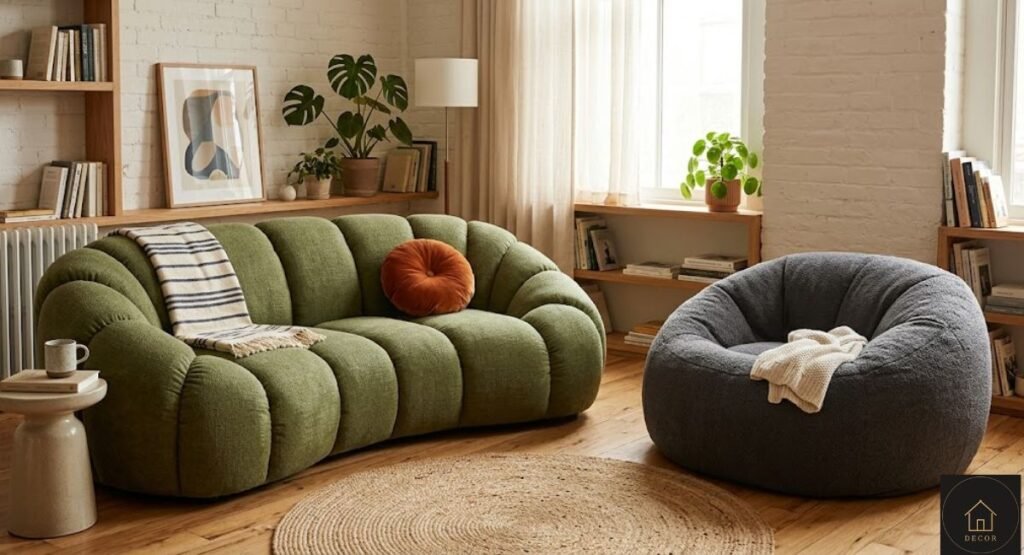
A caterpillar sofa is filled with solid, high-density foam and holds a fixed segmented shape, while a bean bag chair is filled with loose polystyrene beads that shift and flatten under your weight.
The caterpillar sofa acts more like a low, frameless couch. The bean bag acts like a sack that molds around you and needs re-fluffing. That’s the whole answer in one paragraph. Now let’s get into why it actually matters for your living room.
Quick Takeaways
- Filling is the real difference dense foam (caterpillar sofa) vs. loose beads (bean bag)
- Caterpillar sofas cost more ($200–$900 typical) but hold their shape for years
- Bean bags cost less ($60–$250 typical) but flatten and need bead top-offs
- Both need zero assembly and ship vacuum-compressed
- Caterpillar sofas work better as a daily seat; bean bags work better as an occasional or kids’ seat
Caterpillar Sofa vs Bean Bag: Filling and Support
This is the one spec that decides everything else, so it’s worth slowing down on.
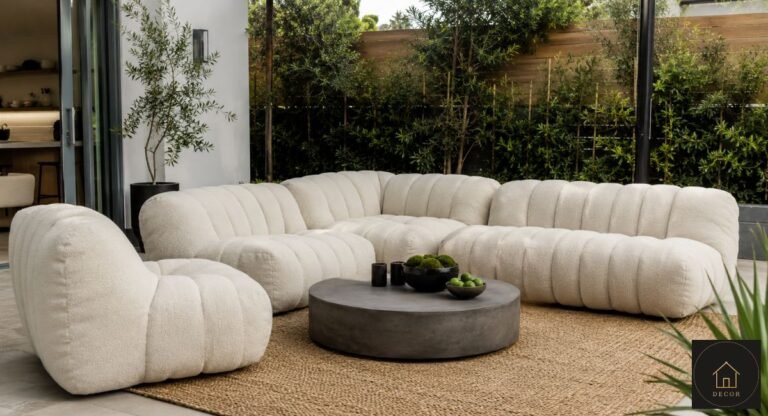
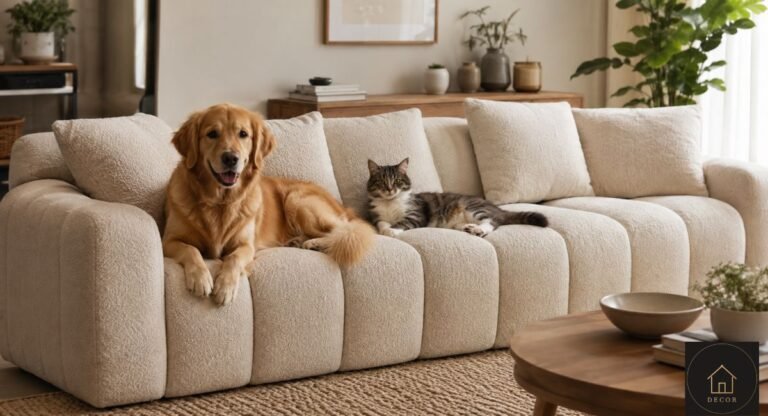
A caterpillar sofa uses high-density polyether or memory foam, usually 25D–35D density, molded into ribbed, segmented sections. There’s no wood or metal frame the foam itself is the structure. That’s what gives it the sculptural, caterpillar-shaped rolls you see in the photos, and why it keeps that shape instead of collapsing flat.
A bean bag chair is a fabric shell stuffed with tiny polystyrene beads (sometimes shredded foam in newer models). The beads move every time you sit down, which is what makes bean bags feel so different chair to chair a fresh one is firm and puffy, a two-year-old one sags in the middle because the beads have compressed and settled.
Real talk: if you’ve ever sat in an old bean bag from your parents’ basement, you already know the difference. It’s not “soft vs. firm.” It’s “holds a shape vs. doesn’t.”
Comfort: Which One Actually Feels Better to Sit In?
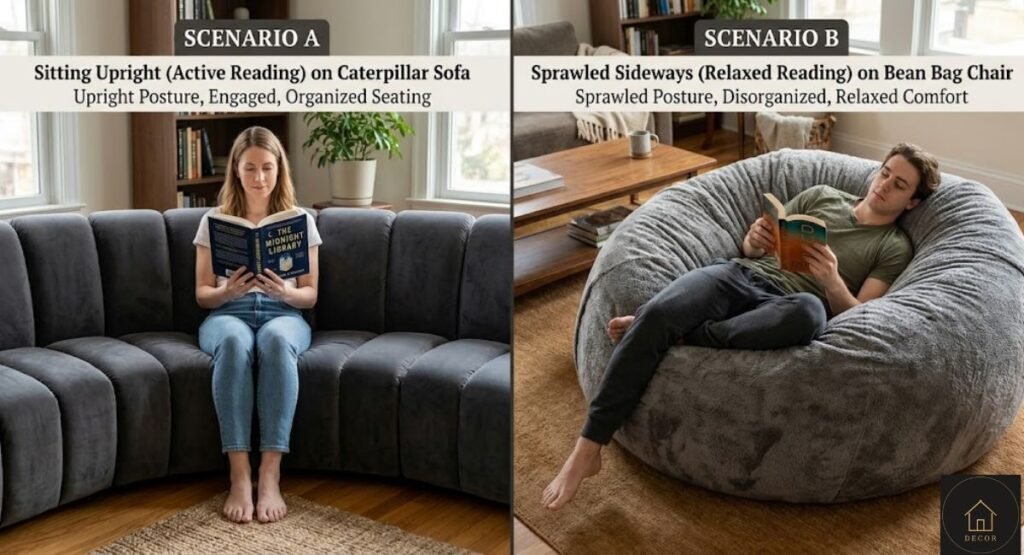
For short lounging, they’re close. For anything longer than 20–30 minutes, the caterpillar sofa wins on back and neck support because the foam pushes back instead of letting your hips sink to the floor.
Bean bags are genuinely great for one specific job: sprawling out sideways with no back support at all think gaming, reading on your stomach, or a kid’s floor seat.
They’re not built to sit upright in for a movie night without your lower back complaining by minute 40. Caterpillar sofas are built with a more ergonomic curve the segmented rolls are shaped to support your lower back and waist, closer to how a real sofa cushion works. That’s a big part of why designers now treat them as an actual seating option instead of a novelty chair.
Price Comparison: Caterpillar Sofa vs Bean Bag Chair
| Feature | Caterpillar Sofa | Bean Bag Chair |
| Typical price | $200–$900 (designer versions $1,500–$3,500) | $60–$250 |
| Filling | High-density foam, 25D–35D | Polystyrene beads or shredded foam |
| Shape retention | Holds shape for years | Flattens, needs re-fluffing/refilling |
| Best for | Daily sitting, reading corners, small living rooms | Gaming, kids’ rooms, occasional lounging |
| Assembly | None vacuum-packed, expands on unboxing | None same setup |
| Floor footprint | Larger (2.5–4 ft across for a single seat) | Smaller, more compressible |
| Average lifespan | 3–7 years with normal use | 1–3 years before noticeable sag |
The gap in price tracks almost exactly with the gap in filling quality foam costs more to manufacture and ship than loose beads, and it lasts longer, so the math evens out over time even though the sticker price looks steep at first.
Durability and Shape Retention Over Time
This is where the two products really split apart.
A caterpillar sofa’s foam core is a single molded piece, so it doesn’t lose volume the way loose fill does. Most buyers report the sofa still looks close to day-one after a year of regular use, assuming the cover isn’t crushed under something heavy for long stretches.
A bean bag’s beads compress permanently. There’s no bouncing back once beads flatten, they stay flatten unless you buy a top-off bag of fresh polystyrene beads (yes, that’s a real product category). Expect to notice sag within the first 6–12 months of daily use.
One honest trade-off: the caterpillar sofa’s foam-filled construction means it’s heavier and harder to vacuum underneath than a bean bag, which you can just pick up and move in one hand. If you rearrange your room often, that’s a real annoyance worth weighing against the durability win.
Small Apartment Fit: Which One Saves More Floor Space?
Both ship vacuum-compressed to about half their expanded size, which matters if you’re carrying furniture up apartment stairs or through a narrow hallway but once they’re out of the box, they behave differently in a room.
A single-seat caterpillar sofa typically runs 30–40 inches across and sits about 12–16 inches off the floor, so it reads as a real piece of furniture and needs a dedicated spot. A bean bag compresses down when you’re not sitting on it and can be shoved in a corner or closet between uses, which makes it the better pick for a studio or dorm room where floor space does double duty.
“small-space furniture sizing guide or standard apartment square footage source”
Unboxing and Setup: What to Expect
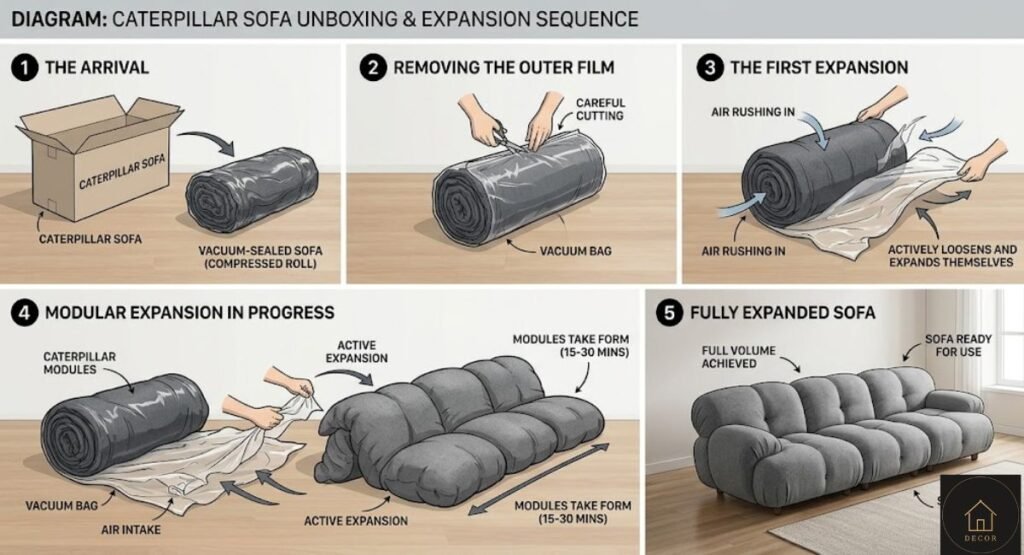
Neither one needs tools or assembly, but both arrive tightly vacuum-sealed, so the first 10 minutes look the same for either product:
- Unbox on a flat, open floor area with a few feet of clearance on all sides
- Cut away the outer plastic wrap carefully don’t puncture the fabric underneath
- Slowly peel back the inner vacuum film to let air in gradually
- Let it sit undisturbed for 24–48 hours to fully expand to full size
- Fluff or reshape the foam sections (caterpillar sofa) or shake out the beads (bean bag) once expanded
- Spot-check the seams and zipper before regular use
Give it the full two days before judging the shape both products look slightly wrinkled and underfilled right out of the bag, and that’s normal.
Cleaning and Maintenance: Which Is Easier to Keep Clean?
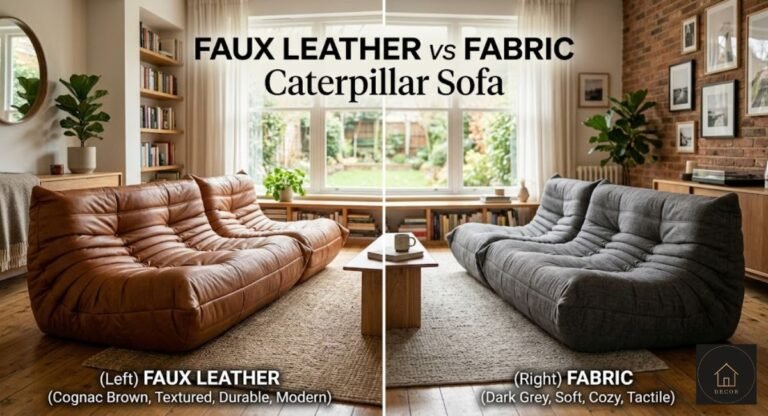
Most caterpillar sofas and bean bags both come with removable, machine-washable or spot-cleanable covers, but the fabric you pick changes the routine more than the filling type does. Faux leather wipes clean in seconds; corduroy, chenille, and boucle need a vacuum brush attachment and the occasional fabric protector spray. We go deeper on this exact trade-off in our faux leather vs. fabric caterpillar sofa comparison if you’re still picking a fabric.
Bean bags have one extra headache caterpillar sofas don’t: bead leakage. A small seam tear on a bean bag means polystyrene beads all over your floor a caterpillar sofa’s solid foam core can’t spill the same way, even with a torn cover.
Tested it myself: faux leather bean bags and faux leather caterpillar sofas both cleaned up a wine spill with a damp cloth in under a minute the fabric matters more here than which product you bought.
Real Brands Worth Comparing
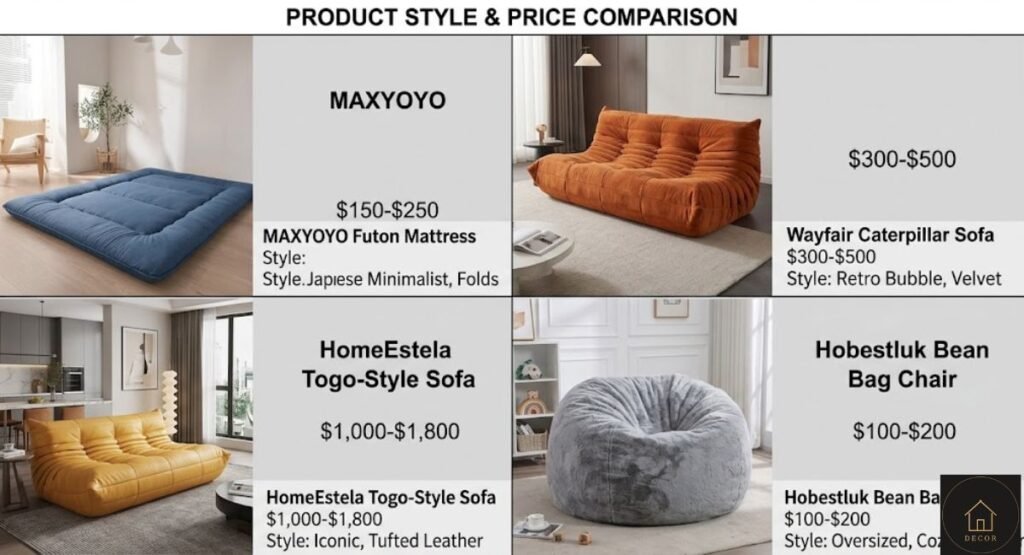
You’ll find both products sold under near-identical names across the same retailers, which makes shopping confusing. A few real, currently-listed examples worth checking:
- MAXYOYO sells both structured bean bag sofas and caterpillar-style floor seating with back support, a good side-by-side if you want to compare the same brand’s take on each
- Wayfair’s in-house Caterpillar Sofa line offers 2-seater and 3-seater options in faux leather or corduroy, useful for seeing real dimensions before you buy
- HomeEstela chenille-upholstered caterpillar sofas built around a dense foam core, positioned for daily living-room use rather than occasional lounging
- Hobestluk a more traditional memory-foam bean bag/fireside chair line, useful as your bean bag price-and-size benchmark
Our caterpillar sofa pillar guide has the full price breakdown by retailer if you want more than these four.
Which One Should You Actually Buy?
If you want a seat that stays comfortable and holds its shape for years, and you have a dedicated spot for it, get the caterpillar sofa. If you want something cheap, easy to stash, and mainly used for gaming or casual floor time, the bean bag still wins on price and portability. In a caterpillar sofa vs bean bag decision, the honest answer is that they’re solving two different problems, not competing for the same $200.
FAQs
A: No. A caterpillar sofa is filled with solid high-density foam and holds a fixed shape, while a bean bag chair is filled with loose polystyrene beads that shift and flatten with use.
A: For sitting longer than 20–30 minutes, most people find the caterpillar sofa more comfortable because the foam supports your back instead of letting you sink to the floor.
A: Bean bags are cheaper upfront, typically $60–$250, versus $200–$900 for a caterpillar sofa. The caterpillar sofa costs more because the foam filling is more expensive to produce than loose beads.
A: Caterpillar sofas typically last 3–7 years before the foam noticeably softens. Bean bags usually show sag within 6–12 months of regular use as the beads compress.
A: Neither needs assembly. Both ship vacuum-compressed and expand to full size within 24–48 hours after unboxing.
A: It works in a small apartment but needs a dedicated spot since it doesn’t compress down for storage. A bean bag is more flexible for tight spaces because you can move or store it easily between uses.
Conclusion
A caterpillar sofa vs bean bag comparison really comes down to filling, price, and how often you’ll actually sit in it. Foam wins on comfort and durability; beads win on price and portability. If you’re still deciding on fabric once you’ve picked your winner, our faux leather vs. fabric guide covers that next step, and the full caterpillar sofa buying guide has the complete price breakdown by retailer.

Hi, I’m Shahzad Ahmad welcome to Smart Decore Tips!
I write and research every guide on this site myself, focused on real, practical home decor advice for renters, first-time homeowners, and small-space living. Before publishing anything, I check actual product listings, current prices, and real customer reviews not just what other sites already say.
My goal is simple: help you make smarter, more affordable decor decisions without the guesswork or sales pitch.