Best Caterpillar Sofa for Pets: Fabrics That Survive Claws
Reader’s Digest tested a batch of couches with real cats over several months, and the results sorted by fabric, not by style. Two performance-velvet sofas came through with no visible claw marks. A linen-blend sleeper had its arms scratched up. The same rule applies to a caterpillar sofa for pets: the curved foam shape is fine, and the cover decides whether the sofa lasts. Most listings are vague about that cover, so you’ll have to ask.
What is a caterpillar sofa for pets?
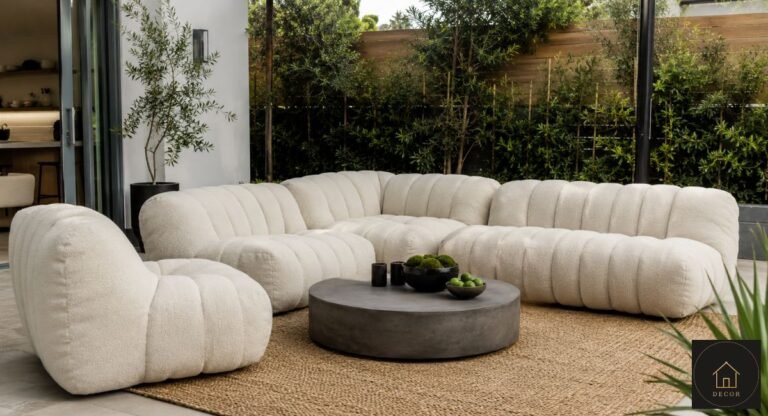
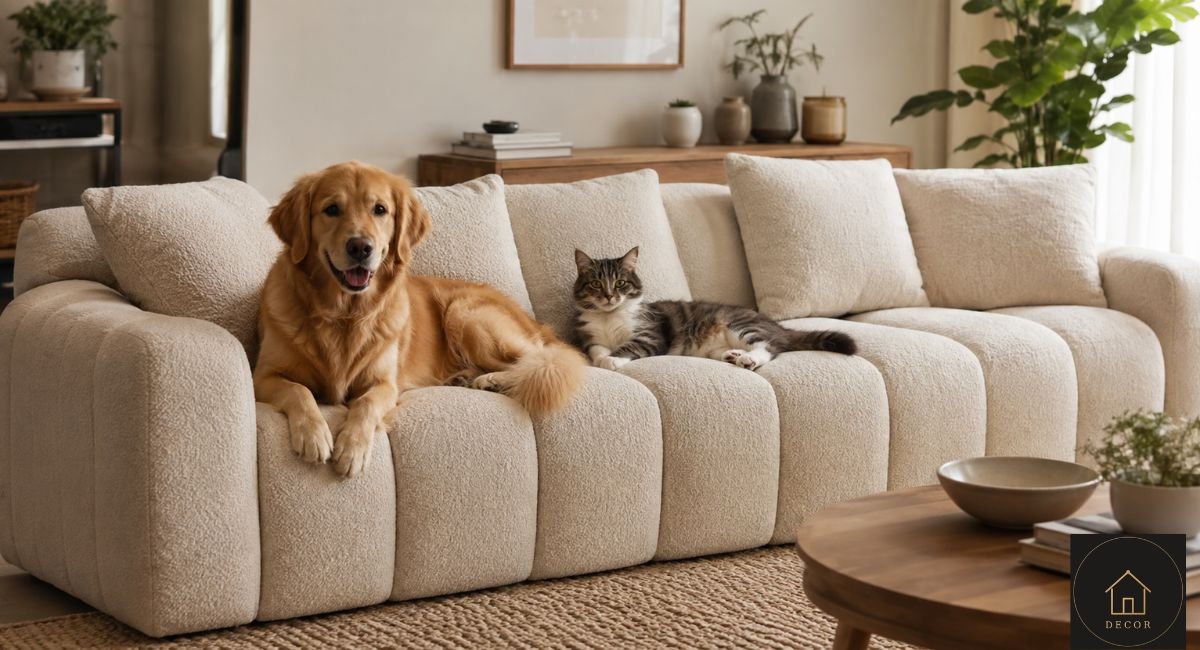
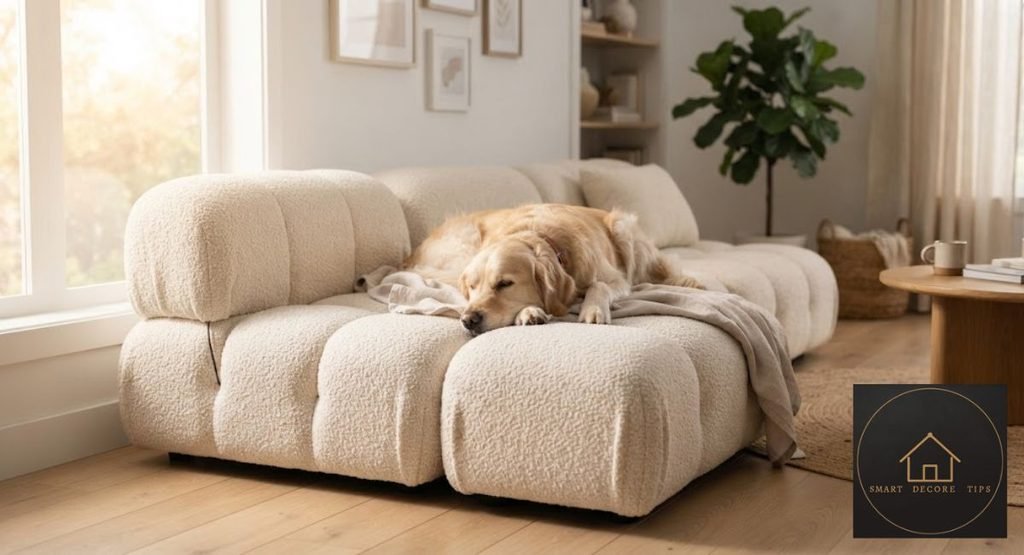
A caterpillar sofa for pets is a low, all-foam sofa with a tight-weave, low-pile cover, such as performance velvet, microsuede or real leather, that claws slide across instead of catching. The cover matters more than the shape. Loopy fabrics like chenille, bouclé and tweed are the ones that snag.
Quick takeaways
- Chenille takes its name from its fuzzy yarn, not from the sofa’s shape, and its loops and tufts are easy for claws to catch.
- Performance velvet and tight microfiber have the best record with cats. Real leather gets mixed reviews.
- Faux leather has a thin coating that claws can puncture and lift.
- “Teddy” can mean loops or short pile. Ask which one you’re getting, and get a swatch.
- None of the caterpillar listings I checked advertised a removable cover, so plan on spot cleaning.
Is chenille good for cats?
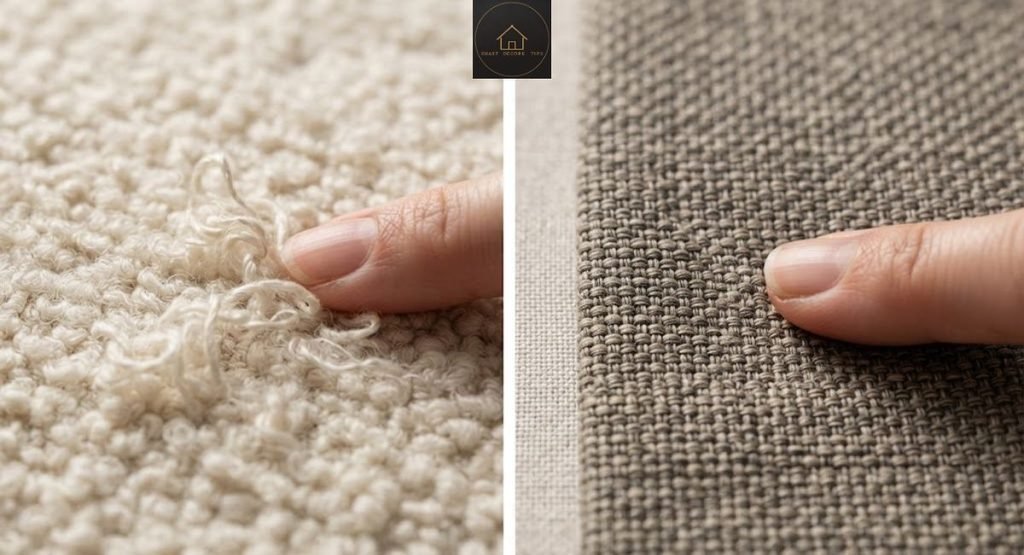
Mostly no. Loose, loopy chenille gives claws something to hook, and tighter performance chenille copes with light pawing better than with a daily scratcher.
The name confuses people. Chenille is the French word for caterpillar, and it was given to the yarn because the fuzzy cord looks like a caterpillar. The sofa got its name from its segmented body. Two caterpillars, two unrelated origins. HomeEstela does sell a yellow caterpillar sofa in 100% polyester chenille over 32D foam, so the fabric is easy to find on this style.
Catster’s fabric guide points out that chenille roughens as a cat works on it, which invites even more scratching. Chita Living, a sofa retailer, calls performance chenille snag-resistant but not snag-proof and says it suits cats that only paw or knead now and then. It adds that plenty of owners do fine when a sturdy scratching post sits nearby.
If you love the look anyway, get a swatch first. Drag a fingernail or a house key across it, then pull. If loops lift or the pile tufts, a cat will find that out too.
Caterpillar sofa fabrics for cats vs. dogs
Cats and dogs wreck sofas in different ways, so “pet-friendly” isn’t one box to tick.
For cats: tight weave wins
Reader’s Digest’s testers gave me the best evidence I found. Nina Derwin’s 13-year-old cat spent weeks on a performance-velvet Interior Define Maxwell sofa, and she saw no claw marks. Allison Robicelli lives with four cats and two teenage sons. Her 7th Avenue sectional in performance velvet showed no scratches or pilling after about two months. Short threads and minimal pile also explain why that fabric lets go of hair so easily.
A vet quoted in the same roundup, Dr. Eliza O’Callaghan, names microfiber, microsuede and leather as generally safer because they snag less. She tells owners to avoid loose weaves such as linen and tweed.
Leather is where sources split. Whataroom’s pet guide doesn’t recommend full-grain leather for cats, and Rub ‘n Restore notes that claws on real leather can expose the suede backing. The same repair site says real hide still stands up to claws better than the fake stuff.
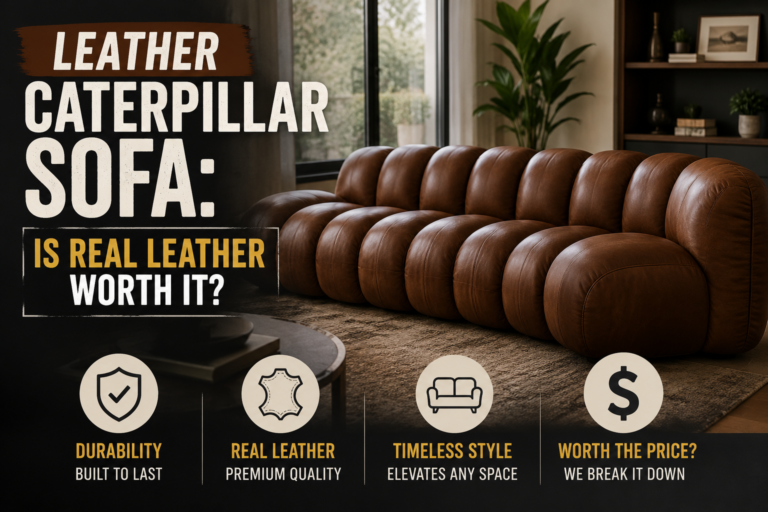
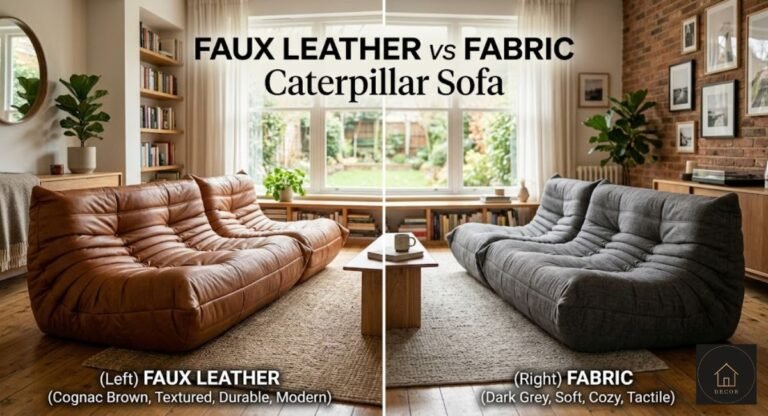
Faux leather is the bigger risk. It’s a thin polyurethane or PVC coating over a fabric base, and Engineer Fix explains that claws puncture and lift that layer. That matters here because Intuition Decor sells its Maggis caterpillar sofa in PU leather, and a Wayfair caterpillar listing offers faux leather in black and beige too.
Then there’s “teddy,” the cover on many budget caterpillar sofas. It isn’t one fabric. Dweva’s teddy-sofa guide says teddy upholstery often means either bouclé-like loops or a sherpa-like pile, and looped versions can snag on claws. I couldn’t find an independent claw test of teddy velvet, so treat it as unproven until you’ve held a swatch.
One last number to ask for: the rub count. Atunus Home’s own fabric guide says to look for a Martindale rating above roughly 40,000 rubs in a cat home. None of the caterpillar listings I checked published one.
For dogs: hair, mud and weight
I tested a short-pile teddy velvet caterpillar sofa with a shedding golden retriever for about four months. The hair mostly sat on top and vacuumed off easily. A muddy paw mark had to be blotted within the hour or it left a faint ring. Speed mattered more than anything the fabric’s marketing claimed.
Dogs also test the foam. Ask the seller for the foam density and a weight rating. Intuition Decor lists 330 pounds as the recommended capacity for its Maggis three-seater, and HomeEstela gives 32D density for the foam in its chenille model. If a listing gives neither number, that tells you something.
How common covers compare for cats
| Cover | Cat verdict (my summary) | What the sources say |
| Performance velvet | Good | Two Reader’s Digest testers reported no claw marks; short pile releases hair |
| Microfiber / microsuede | Good | Vet Eliza O’Callaghan lists both as snag-resistant; Pacific Nook calls its microsuede scratch- and stain-resistant (brand claim) |
| Real leather | Mixed | O’Callaghan lists leather as safer; Whataroom advises against it for cats; deep scratches show the backing |
| Faux (PU) leather | Weak | Thin coating can be punctured and lifted, per Engineer Fix |
| Corduroy | Mixed | Wayfair and Divan Dreams call it scratch-resistant; Atunus Home lists corduroy among weaves that can snag |
| Teddy (loop or pile) | Unknown | Loops snag, per Dweva; no independent claw test found |
| Chenille | Weak to mixed | Catster and J. Miles Design rank it poorly; Chita Living says performance chenille suits light pawing |
| Bouclé, tweed, linen | Weak | Reader’s Digest says bouclé attracts claws; O’Callaghan says avoid linen and tweed |
Which colors hide the damage
Chelsea Cleaning suggests dark or patterned fabric because it disguises paw marks, drool, scratch marks and hair, and matching the cover to your pet’s coat hides shedding between vacuuming sessions. Reader’s Digest’s Burrow tester reached a similar conclusion: a darker, corrugated fabric helped hide the tears from her cat.
Caterpillar sofa brands worth checking for pet homes
None of these are sponsored. Each is a brand whose own page I read on September 29, 2026, with what the page says and what to confirm before you order.
| Brand | Cover options listed | Confirm before buying |
| Pacific Nook | Corduroy, water-based latex leather, microsuede, velvet, faux leather, matte cowhide leather; all-foam build | The Caterpillar collection page showed only a lounge chair in stock when I checked, so confirm the sofa ships in your cover |
| Intuition Decor (Maggis) | Corduroy in a range of colors, or PU leather in black and beige; 330 lb recommended capacity; 1-year warranty; free swatches | The page’s marketing copy mentions teddy velvet, but the fabric menu lists only corduroy and PU leather |
| Atunus Home | Teddy velvet, 72-inch modular three-seater; the brand calls it pet-friendly and assembly-free; 30-day return | Which teddy weave (loops or pile), and whether a swatch is available |
Pacific Nook lists microsuede as scratch- and stain-resistant and describes its water-based latex leather as genuine leather. Those are the brand’s own claims, so ask for a swatch and the return terms. The Maggis three-seater comes only in corduroy or PU leather, which puts cat households in a tough spot: one option is faux leather and the other is a ribbed weave with mixed reviews. For sizes and prices across the style, see our caterpillar sofa buying guide. For leather in depth, the leather caterpillar sofa guide goes further.
Five questions to ask the seller
- What is the exact fabric content, and is it loops or a cut pile?
- Is there an abrasion (rub) rating?
- What is the foam density, and the weight capacity?
- Does the cover come off?
- How long is the return window, and does it cover a swatch that failed your scratch test?
Does the low-profile shape help pets?
Yes, mainly for getting on and off. A floor-level seat means a short step instead of a jump, and both the AKC and PetMD say jumping to and from raised furniture puts strain on the joints of arthritic dogs.
I couldn’t find a study that tests caterpillar sofas specifically, so treat this as simple logic: less height, less impact. A few other things follow from the build:
- No legs, so nothing for a kitten or small dog to get wedged under.
- Rounded foam and no exposed frame corners. Divan Dreams’ guide says this makes the style safe for young kids, and the same logic covers a clumsy puppy.
- The trade-off is that there’s no raised seat for you to sit above a shedding dog. A seat this low can also be hard to stand up from if your own knees or hips complain, so try one first. Atunus Home lists a 30-day return.
How to protect a caterpillar sofa from pets
- Choose the weave before the color. Then pick a dark or textured cover if you can.
- Test a swatch. Intuition Decor offers free swatches. Ask any other seller for one.
- Put a scratching post next to the sofa. O’Callaghan’s advice is to redirect scratching to surfaces you approve of, placed near the furniture cats already target.
- Keep claws trimmed. Vet Matthew McCarthy says soft nail caps also blunt scratching, but they need replacing every four to six weeks.
- Throw a washable cover over the most-used cushion. Daily wear then lands on something you can replace.
- Deal with pulls early. Reader’s Digest’s Burrow tester trimmed frayed strands and ran a fabric shaver over the scratched arms, and the sofa still looked presentable. Snip a pulled loop; don’t yank it.
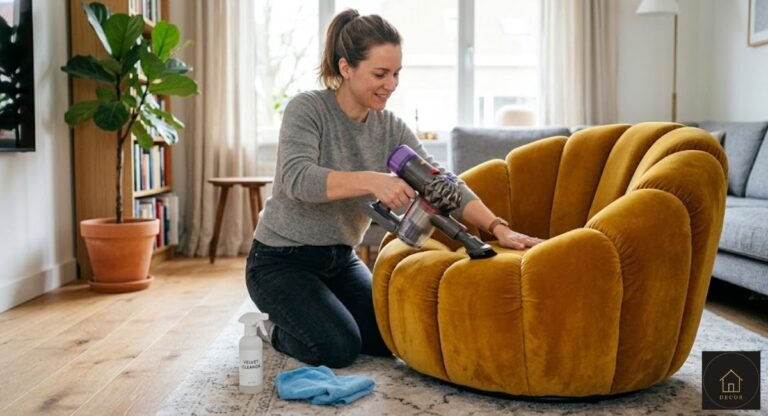
- Vacuum weekly with an upholstery attachment, so hair doesn’t work into the fabric.
Can you wash a caterpillar sofa?
Usually not in a machine. Three of the brands I read (Pacific Nook, Intuition Decor and HomeEstela) describe all-foam builds, and none of the listings advertised a removable cover, so spot cleaning is the realistic option. For an accident:
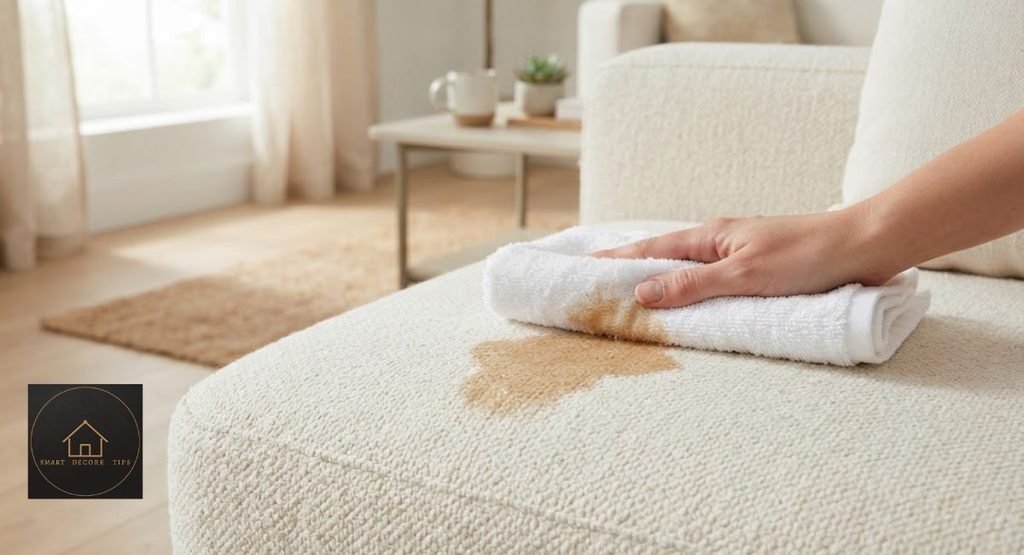
- Blot, don’t rub.
- Use an enzyme-based pet cleaner for urine. PetMD says enzymes break down the compounds behind the smell, and it warns against ammonia-based products.
- Go easy on the liquid. Petco advises against soaking foam cushions and says foam has to dry fully or mold can set in.
- Skip the steam cleaner. PetSmart’s stain guide says high heat can set urine odors into upholstery for good.
- Air-dry it, with a fan if you have one, before anyone sits back down.
Who should skip a caterpillar sofa in a pet home
Even a good cover isn’t scratch-proof. Reader’s Digest’s tester Annamarie Higley used a dark Burrow sectional built to resist claws, and after months with a dedicated scratcher a keen observer could still spot marks on the arms. If your cat goes for upholstery daily, expect some wear.
Skip the style if machine-washable covers are non-negotiable. Reader’s Digest’s top pick for cat households was the Pottery Barn York, and its washable, replaceable slipcovers were the reason.
Busy multi-pet homes with muddy paws and wet fur may also do better keeping the caterpillar sofa in a quieter room and putting easier-clean furniture where the traffic is.
The short version
A caterpillar sofa for pets comes down to the cover. Tight-weave, low-pile fabrics like performance velvet and microfiber have the best record with cats. Loops (chenille, bouclé, some teddy) and thin faux leather are the risks. Order a swatch, put a scratching post beside the sofa, and blot spills within the hour. Get the cover right, and the low, legless shape makes life easier for your pets, not harder.
FAQs
Loose, loopy chenille is a poor choice for cats because claws catch the loops and pull them out. Tightly woven performance chenille handles occasional pawing better, but it still isn’t the safest cover for a cat that scratches upholstery every day.
Tight-weave, low-pile fabrics such as performance velvet, microfiber and microsuede suit cat owners best, because claws have no loops to hook. Veterinarian Eliza O’Callaghan, quoted by Reader’s Digest, advises avoiding loose weaves like linen and tweed.
They can be, mainly because the seat sits at floor level, which means less jumping for older dogs and dogs with joint problems. Check foam density and weight capacity before buying, since Intuition Decor lists 330 pounds as the recommended capacity for its Maggis three-seater.
Yes. Faux leather is a thin polyurethane or PVC coating over a fabric base, and a cat’s claws can puncture that coating and lift it, which exposes the backing underneath.
Usually not in a machine. Pacific Nook, Intuition Decor and HomeEstela all describe all-foam builds, and none of the listings I read advertised a removable cover, so spot cleaning with a damp cloth is the realistic method.
A low sofa is easier for pets to get on and off, and the AKC and PetMD both note that jumping to and from raised furniture strains the joints of dogs with arthritis. The cover fabric still decides whether the sofa survives claws.
According to Sohnne’s 2026 fabric guide, top-grain leather and treated performance velvet rank highest for cat scratch resistance, with chenille in the middle and loose-weave linen at the bottom.

Hi, I’m Shahzad Ahmad welcome to Smart Decore Tips!
I write and research every guide on this site myself, focused on real, practical home decor advice for renters, first-time homeowners, and small-space living. Before publishing anything, I check actual product listings, current prices, and real customer reviews not just what other sites already say.
My goal is simple: help you make smarter, more affordable decor decisions without the guesswork or sales pitch.