Best Couches for Small Apartments: 2026 Fit Guide
Choosing the best couch for a small apartment is less about finding the shortest sofa and more about protecting the room’s function. A sofa can fit flush against the wall and still be wrong if it blocks a doorway, eats the dining zone, or can’t make the turn from the stairwell into the living room.
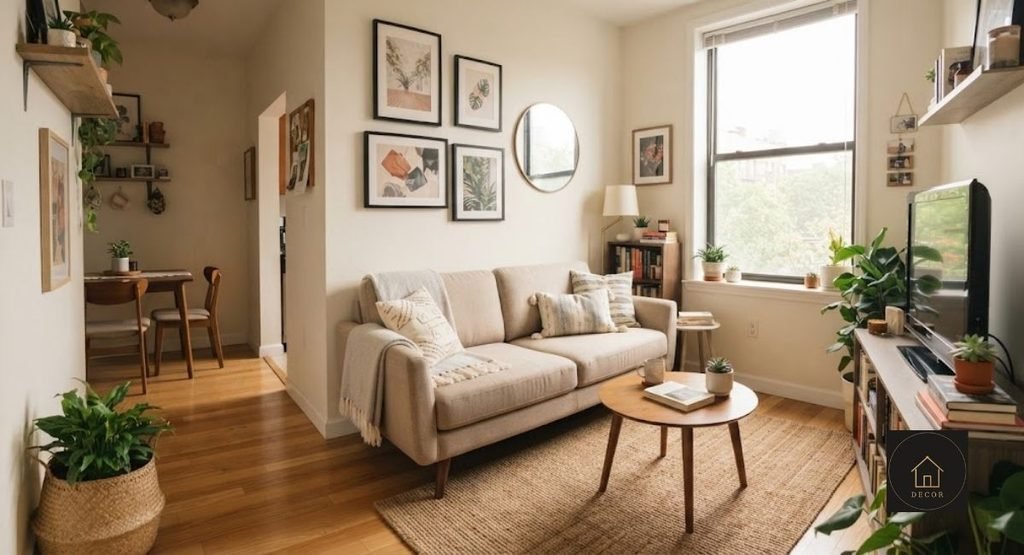
The best couches for small apartments are sofas that fit the room, the delivery route, and the daily routine without wasting floor space. Compact loveseats, shallow sofas, modular seating, and knockdown-shipped sofas can all work the right choice depends on usable wall length, sofa depth, doorway access, and how many seats you actually need.
Quick Answer: Which Couch Type Works Best?
Start with a compact two- or three-seat sofa and only move to a sectional once the floor plan proves it fits. A loveseat is safest for a studio. A modular sofa is strongest for renters and tricky delivery routes. A knockdown-shipped sofa one that arrives in boxes and gets assembled inside the apartment solves the doorway problem entirely, because nothing large ever has to go through the door.
| Couch Type | Best For | Main Advantage | Main Trade-off |
| Loveseat | Studios, one-person households | Leaves the most usable floor area | Limited fixed seating |
| Compact Sofa | Small one-bedrooms | Everyday seating without sectional bulk | Less flexible than modular |
| Modular Sofa | Renters, awkward access routes | Smaller, movable sections | Usually costs more |
| Knockdown/Boxed Sofa | Walk-ups, tight stairwells, solo movers | No large piece ever enters the doorway | Assembly time, more hardware to track |
What Size Couch Fits a Small Apartment?
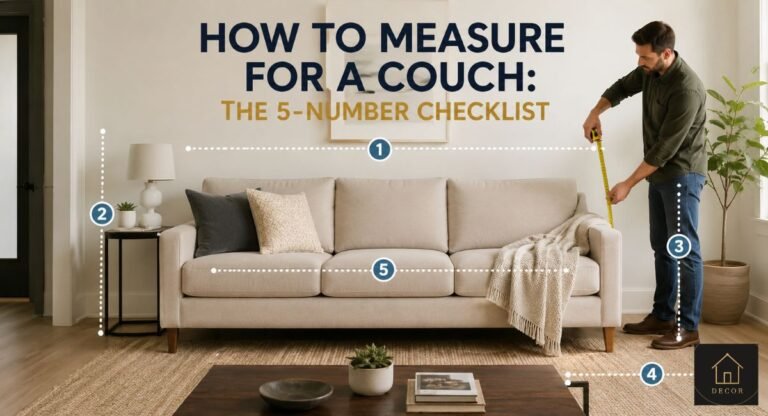
A small-apartment couch should be sized from the room and delivery path, not from a fixed “apartment sofa” width. Measure the usable wall, maximum sofa depth, main walking route, door opening, hallway turns, and stairs before choosing a width.
There’s no single industry cutoff for “small.” Here’s the actual spread across four current sofas, with numbers pulled from the manufacturer or a verified resale listing quoting the manufacturer’s own specs:
- West Elm Oliver (72″ version): 72″W, depth reported 30–32″ depending on measurement point, 30–31″H. Legs removable.
- IKEA SÖDERHAMN (3-seat, open end): 73.25″W × 39″D × 32.625″H, per IKEA’s own listed assembled dimensions for that configuration. Other SÖDERHAMN combinations run wider check the specific configuration, not just the series name.
- Lovesac Sactionals (standard seat insert): 35″L × 29″W × 18″H per seat module, arriving and assembling as separate pieces rather than one frame.
- Burrow Nomad (3-seat): 85″W × 35″D × 33″H assembled but it ships disassembled in five to six FedEx-sized boxes that one person can carry, snapped together inside the apartment with a screwdriver.
That Burrow number is the one most sizing guides skip: an 85-inch assembled sofa sounds too big for a small apartment, but because it never travels as one 85-inch object, it can go up a stairwell or through a doorway that would reject a one-piece sofa half its size. Boxed dimensions matter as much as assembled dimensions when the delivery route is the real constraint.
I’ve watched a loveseat solve a room that three different full-size sofas couldn’t; the extra width was the entire problem, not the style or the color.
A worked example
Say your narrowest doorway is 30 inches and your hallway has a 90-degree turn with about 34 inches of swing room. A one-piece sofa with a 32-inch depth and 72-inch width usually can’t pivot through a 34-inch turn without tilting on its side — which then runs into ceiling height. A boxed sofa sidesteps the whole calculation: each box just needs to be narrower than 30 inches, which almost every flat-packed sofa box is. That’s the actual decision point, not “is the sofa small enough” in the abstract.
For a deeper look at how width and depth interact once the sofa is in the room, the Smart Decore Tips cloud couch dimensions guide walks through why both numbers need checking together, not just the one on the price tag.
Measure the Full Sofa Footprint Before You Shop
Use painter’s tape to mark the complete sofa rectangle on the floor, including any chaise or ottoman position. Then walk the space exactly as you would on a normal day.
Check:
- Can you still use the main walking route comfortably?
- Can doors and drawers open fully?
- Is there room for the coffee table you actually use?
- Can you reach windows, outlets, and storage?
- Does the sofa leave space for dining or work if the room serves more than one job?
A width-only measurement can mislead you. A 68-inch sofa that’s unusually deep can interfere with a narrow room more than a slightly wider sofa with a shallow frame.
That same oversized-sofa room taught me to measure the empty floor left after the couch, not just the wall the couch touches the leftover floor is where daily life actually happens.
Are Modular or Knockdown Sofas Good for Small Apartments?
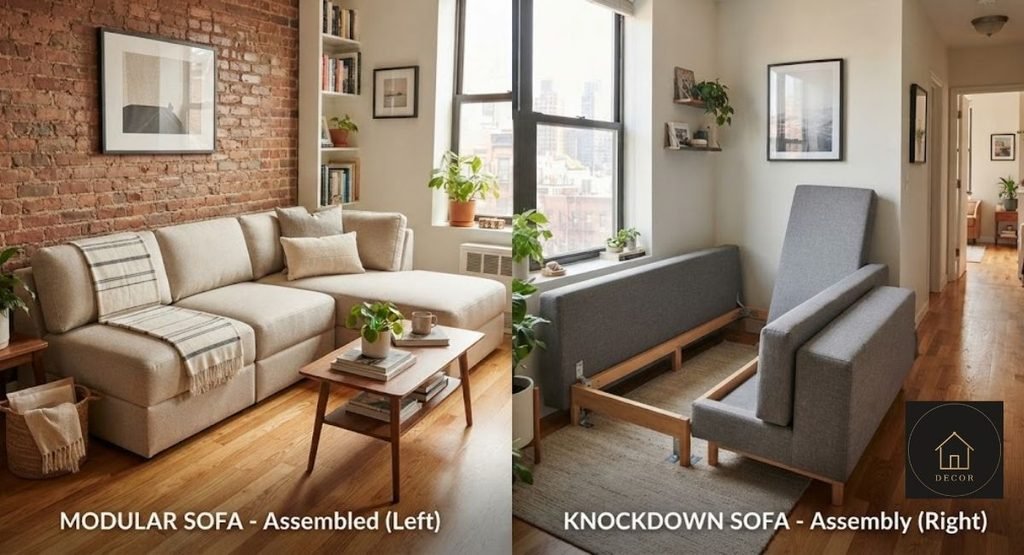
Both solve the same underlying problem getting a large object through a small access point but by different mechanisms. Modular sofas split the seating into permanent smaller pieces; knockdown sofas ship as flat panels that assemble into one fixed frame once inside.
Lovesac’s Sactionals system stays modular even after setup: seats and sides connect with steel clamps and can be rearranged or expanded any time. Standard, deep, and storage seat inserts all share the same 35 × 29 × 18-inch footprint, per Lovesac’s own spec sheet, while a standard side measures 35 by 6 by 28.5 inches. Because the pieces move independently, a Sactionals setup can go through a doorway or up a stairwell that would stop a one-piece sofa of the same total size.
Burrow’s Nomad takes the opposite approach it becomes one fixed sofa after assembly, but the assembly itself happens inside your apartment. Reviewers who’ve set it up describe roughly 15–30 minutes of work with a screwdriver, connecting seat sections with latching joints; no professional movers required.
The trade-off differs by type. Lovesac’s flexibility costs more per seat and adds ongoing complexity more modules mean more connection points to manage, and the deep-seat option adds six inches of extra depth over the standard seat, which is worth knowing before you default to the “deeper is comfier” option. Burrow’s one-time assembly is simpler once it’s done, but you’re committed to a fixed 85-inch frame afterward there’s no rearranging it later the way you can with Sactionals.
I’d choose the modular route first when I expect the room layout to keep changing; I’d choose knockdown-shipped first when the room is settled but the building’s access is the real obstacle.
Loveseat vs. Compact Sofa: Which Is Better?
A loveseat is better when preserving circulation matters more than a third fixed seat. A compact sofa is better when three-person seating gets used regularly and the room can still function around it.
A loveseat works well if you live alone, share the space with one other person, or can bring in a lightweight chair for guests. It can free up enough wall length for a desk, console, or narrow dining zone.
Look at arm width as well as total sofa width slim arms can add noticeably more usable seat space without increasing the overall footprint.
When Does a Small Sectional Make Sense?
A small sectional makes sense when it uses a corner efficiently without blocking the main route through the room. It becomes a poor fit when the chaise projects into the only useful walkway.
A reversible chaise gives more flexibility after rearranging or moving than a permanently left- or right-facing design. A separate ottoman adds even more options footrest, spare seat, or temporary table.
If you’re weighing a pale, compact sectional, the Smart Decore Tips small white sectional couch guide covers why chaise projection matters as much as overall width.
Don’t buy a sectional just because it appears to seat more people. In a tight apartment, a compact sofa plus one movable chair often supports more real-life layouts than a sectional that permanently fills the corner.
Where the SÖDERHAMN Falls Short an Honest Read
IKEA’s SÖDERHAMN gets recommended constantly for small spaces because it’s modular, relatively affordable, and sits low with a light visual footprint. But a recurring complaint across IKEA’s own posted customer reviews for this series is worth knowing before you order: multiple owners report the seat cushions flattening within days of assembly and not regaining their loft, even after airing out. One reviewer resolved it by cutting a foam mattress topper to fit inside the cushion covers a workaround, not a fix.
That doesn’t make SÖDERHAMN a bad choice. It makes it a specific choice: strong for the price and the modularity, weaker if plush, long-lasting cushion support matters more to you than either of those things. That’s the kind of trade-off a spec sheet alone won’t tell you.
How Do I Know If a Couch Will Fit Through My Door?
A couch fits only when its dimensions and possible orientations clear every restrictive point in the delivery route the doorway, hallway turns, stairs, elevator opening, and any ceiling restrictions.
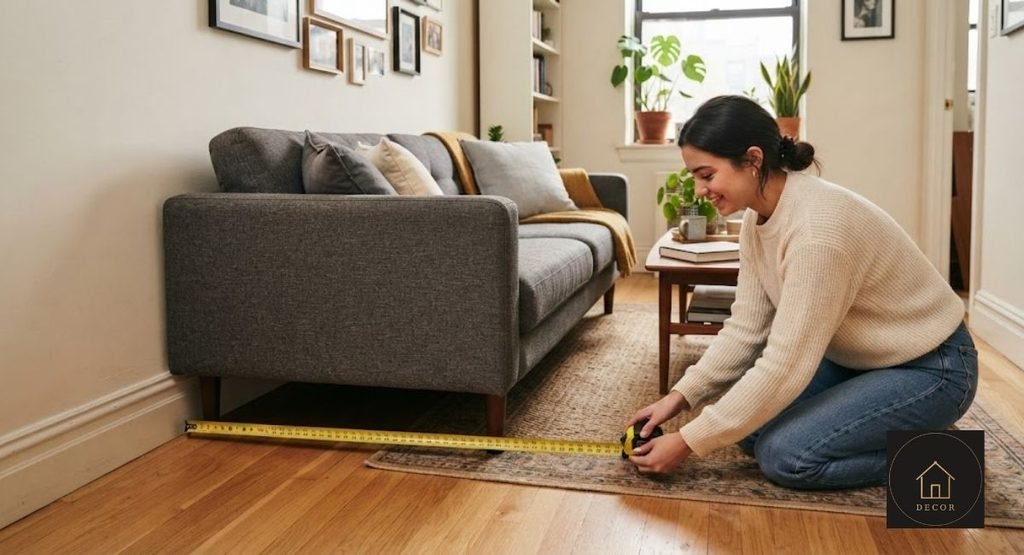
Measure overall sofa width, depth, height, the narrowest doorway, the tightest hallway turn, the stair landing, and the elevator interior. Then check whether legs, cushions, or arms can be removed to shave down the delivery dimensions. For modular or knockdown pieces, ask for the largest single box dimension, not just the assembled sofa size that’s often the more useful number for apartments with tight access.
I learned this one the hard way with a delivery that made it through the building’s front entrance without issue, then stalled at a stairwell landing that was two inches too tight for the sofa to pivot a measurement I hadn’t thought to check because the door itself was plenty wide.
Common Mistakes That Make a Small Apartment Feel Smaller
Buying from styled photography instead of dimensions is the first mistake. Checking width while ignoring depth is the second. Buying seating sized for rare guests instead of your normal week is the third. Trusting the word “compact” on a listing without a tape measure is the fourth there’s no regulated meaning behind that word.
For renters specifically, furniture that ships disassembled or breaks into modules often has more long-term value than a fixed sofa shaped perfectly for only one room, since the next apartment’s doorway is an unknown.
How to Choose the Best Couch for Your Small Apartment
Choose the smallest sofa that comfortably handles your normal week, not the largest sofa the room can physically hold.
- Choose a loveseat if one or two people use the sofa most days.
- Choose a compact sofa if you genuinely need a third fixed seat.
- Choose a modular sofa if the room layout itself is likely to change.
- Choose a knockdown-shipped sofa if the room is settled but building access (stairs, tight turns, no elevator) is the real obstacle.
- Choose a sectional only after taping the full chaise footprint onto the floor.
The best couches for small apartments solve more than one constraint at once they fit the room, clear the delivery route, support everyday seating, and leave enough open floor for the apartment to keep doing its other jobs.
FAQs
A sofa works in a small apartment when its full width and depth leave the room functional and its dimensions or its shipping-box dimensions, for knockdown sofas clear the complete delivery path.
A loveseat is usually the better option when one or two people use the seating most days and preserving room for dining, work, or circulation matters more than a third fixed seat.
A modular sofa stays as separate, rearrangeable pieces permanently; a knockdown sofa ships in flat boxes and is assembled once into a single fixed frame inside the home.
A sectional can work when the full chaise or corner footprint stays outside the main traffic route and doesn’t interfere with doors, storage, or other daily functions.
Measure the sofa’s (or its shipping box’s) width, depth, and height together with the narrowest doorway, hallway turn, stair landing, and elevator opening.
Multiple owner reviews on IKEA’s own product pages describe the seat cushions losing loft within days of assembly and not regaining it a documented, disclosed trade-off, not a universal guarantee of failure.

Hi, I’m Shahzad Ahmad welcome to Smart Decore Tips!
I write and research every guide on this site myself, focused on real, practical home decor advice for renters, first-time homeowners, and small-space living. Before publishing anything, I check actual product listings, current prices, and real customer reviews not just what other sites already say.
My goal is simple: help you make smarter, more affordable decor decisions without the guesswork or sales pitch.