Hypoallergenic Sofa Guide: 6 Materials That Actually Work
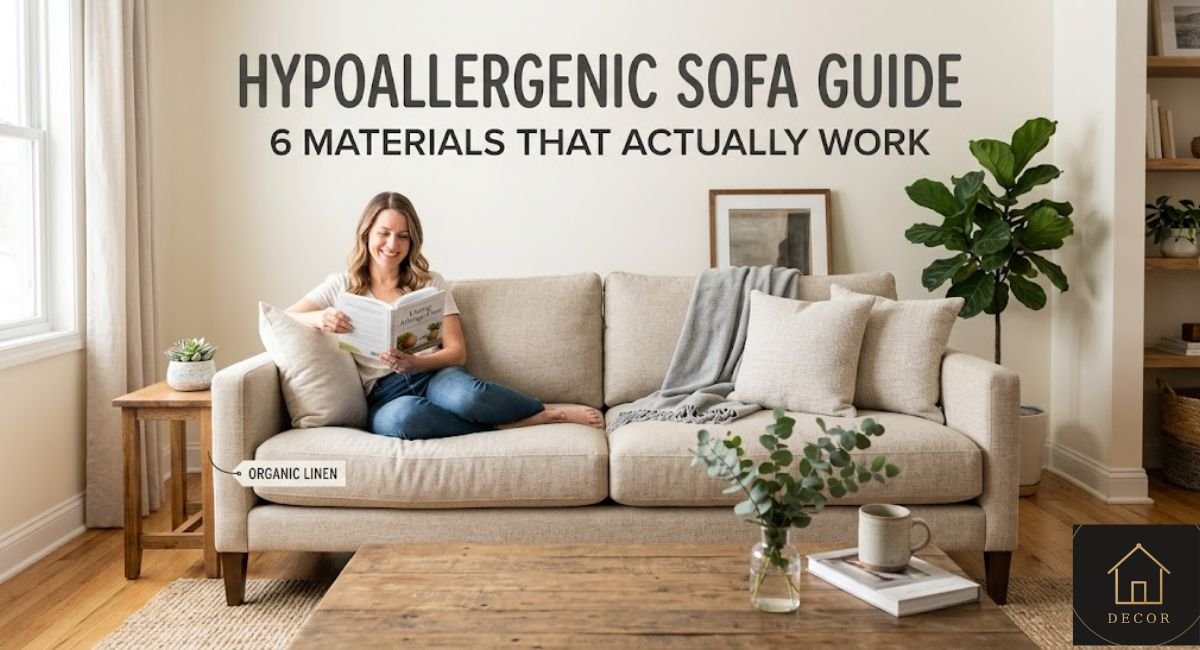
Your couch might be part of the reason you keep sneezing on the couch. A hypoallergenic sofa won’t fix every allergy trigger in your living room, but the right fabric, the right cushion fill, and a decent cleaning routine can cut down a lot of what’s building up in there. Here’s what actually works and what’s just a word on a tag.
A hypoallergenic sofa is upholstered furniture built to resist common allergens like dust mites, pet dander, and pollen usually through a tight-weave or non-porous fabric, a low-fuzz cushion fill, and a removable, washable cover. No sofa is fully allergen-proof, but some designs make it a lot easier to keep allergens from settling in.
Quick Takeaways
- Leather and faux leather trap the fewest allergens because they’re non-porous wiping beats vacuuming.
- Tightly woven microfiber and performance fabric are the best true “fabric” picks for allergies.
- Cushion fill matters as much as the surface down and feather sit worse with allergy sufferers than foam or poly-fill.
- Washable, removable covers do more for allergy control than any fabric label by itself.
- “Hypoallergenic” isn’t a regulated term on furniture check the actual materials, not just the word.
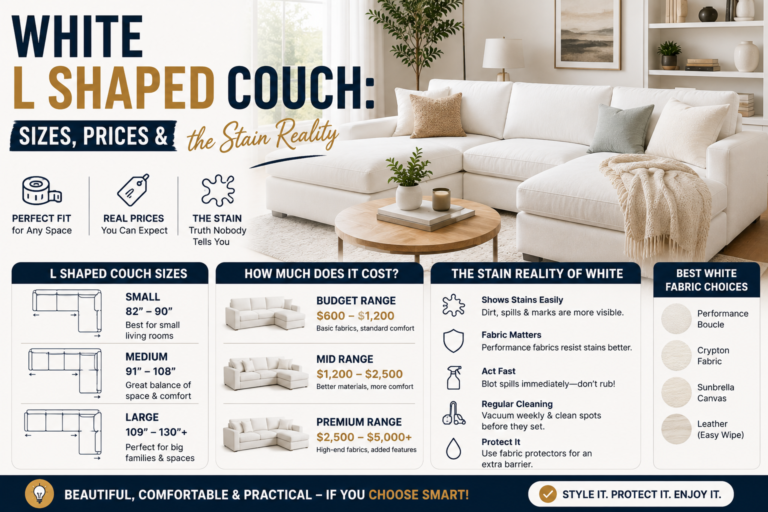
If you’re still working out the bigger picture color, material, overall vibe our Couch Color & Material Guide: White, Teal, Down or Foam? covers that decision in more depth. This guide zooms in on the allergy side of it.
Is Leather or Fabric Better for Allergies?
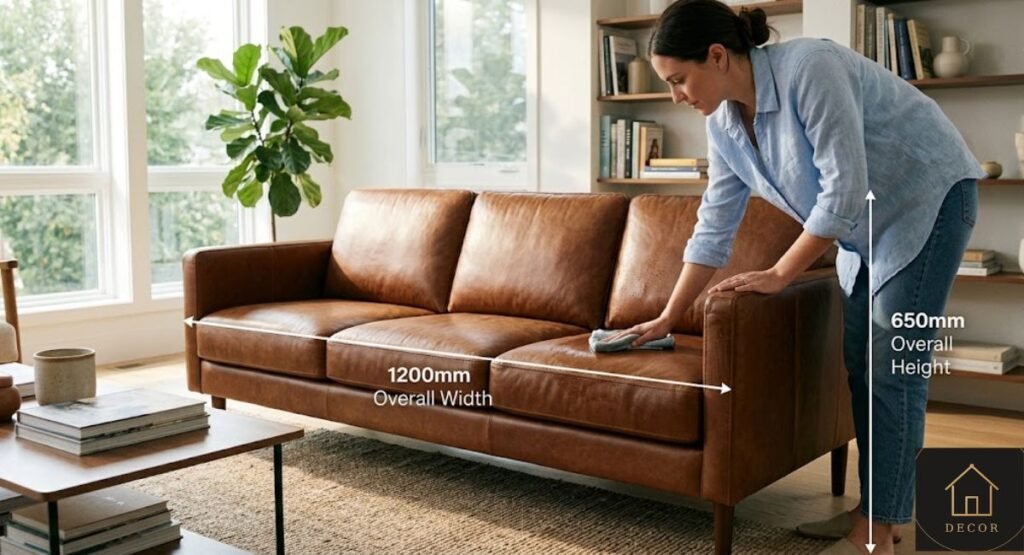
Leather and faux leather are usually the better pick for allergies because they’re smooth and non-porous, so dust and dander sit on the surface instead of soaking in. That’s the whole advantage in one sentence everything else is details.
With fabric, allergens work their way down into the weave and hide from a regular vacuum. With leather, a damp microfiber cloth once a week picks up almost everything sitting on top. There’s no deep pile for dust mites to burrow into, and pet dander wipes off instead of clinging.
The trade-off: leather costs more, feels cold in winter, and only comes in a handful of colors. If you want the coziness of fabric without giving up easy cleaning, that’s exactly where performance fabric earns its keep more on that next.
Which Fabrics Are Actually Hypoallergenic?
Not all fabric is equal here. Tight weave and washability decide almost everything.
| Fabric | Weave / Texture | Removable, Washable Covers? | Allergy Friendliness | Best For |
| Performance fabric (tight weave) | Dense, flat, low texture | Usually yes | High | Families, everyday allergy control |
| Microfiber | Very tight synthetic weave | Often yes | High | Homes with pets |
| Cotton (tight-weave canvas) | Breathable, natural | Sometimes | Medium-high | Renters, natural-fiber preference |
| Linen | Loose, breathable weave | Sometimes | Medium | Warm climates, low-shed households |
| Polyester (standard) | Varies, can be loose | Rarely | Medium | Budget picks, less severe allergies |
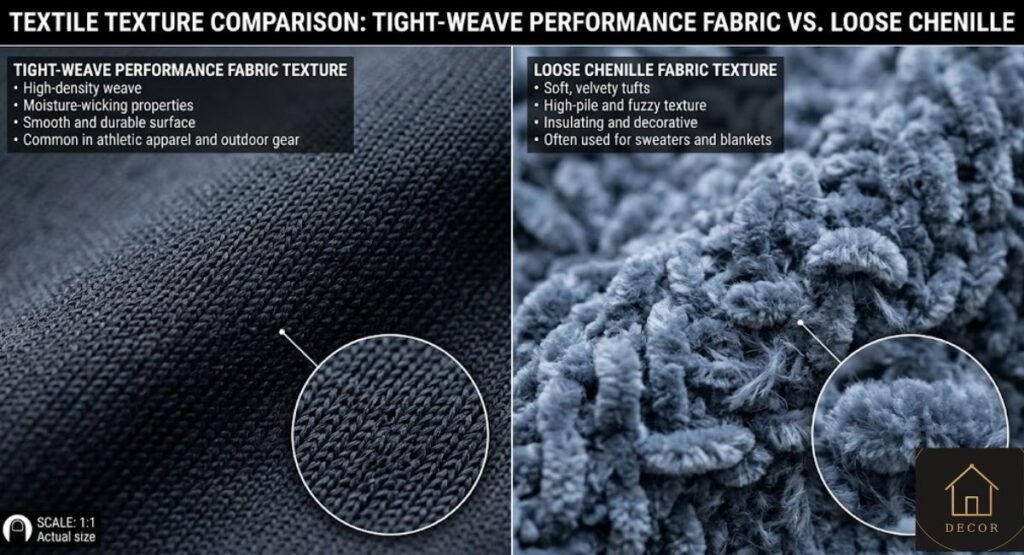
| Chenille | Textured, slightly fuzzy | Rarely | Lower | Style-first buyers, light allergy concerns |
| Velvet (untreated) | Dense pile, holds particles | Rarely | Lower | Occasional-use rooms, not daily lounging |
The pattern: flat, tight, washable beats fuzzy, loose, and dry-clean-only every time. If you love a textured look like velvet or chenille, save it for a room you don’t nap in daily.
Don’t Forget the Cushion Fill (Foam vs. Down vs. Poly-Fill)
The fabric on top isn’t the whole story what’s stuffed inside your cushions matters just as much for allergies.
Down and feather fill compress over time and shed fine particles that stir into the air every time you sit down. They also hold onto humidity, which dust mites love.
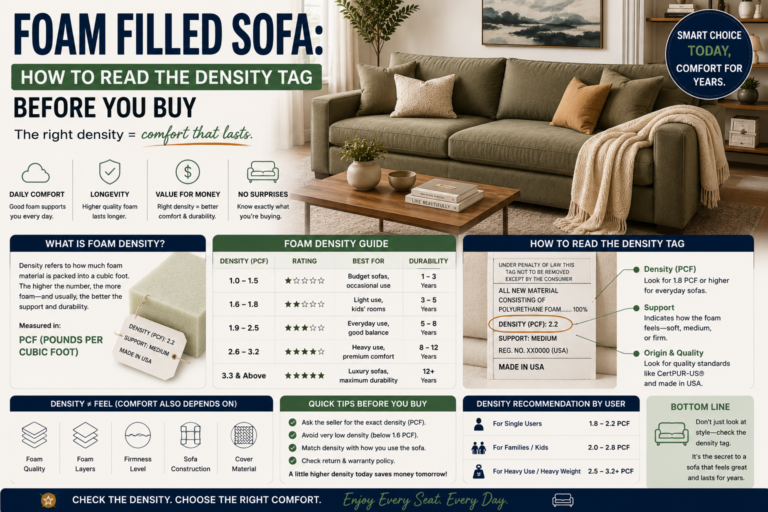
High-resilience foam and CertiPUR-US certified foam don’t give dust mites anything to live in, and poly-fill (a down-alternative) gives you a similarly soft, plush feel without the biological material.
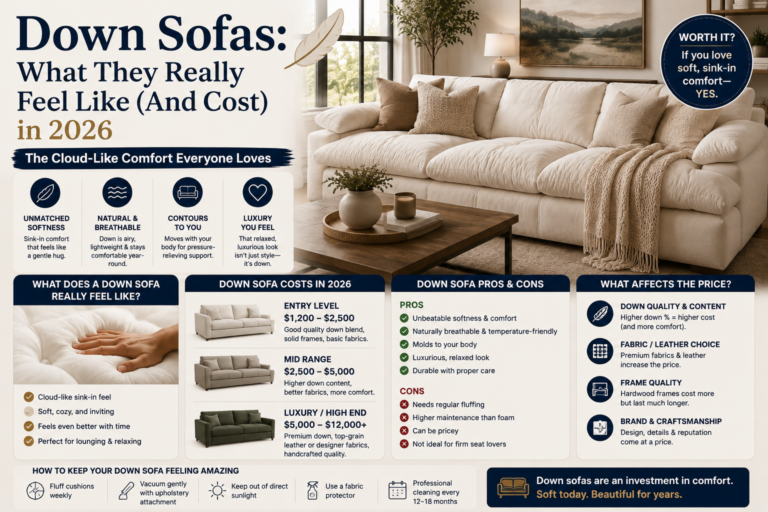
If you’re drawn to the sink-in comfort of a down sofa anyway, it’s worth knowing what you’re trading off. Our full breakdown of Down Sofas: What They Really Feel Like (And Cost) in 2026 covers that feel and price honestly allergy-wise, though, it’s usually not the first pick. A hybrid cushion (foam core wrapped in a poly-fill layer) is a solid middle ground if you want both.
Best Hypoallergenic Sofa Brands You Can Actually Buy in the US
You don’t need to guess a handful of real brands make this easier to shop for.
IKEA’s Vimle and Kivik sofas have fully removable, machine-washable covers, starting around $700–$900 the budget pick if you want to just throw the whole cover in the wash.
Burrow uses stain-resistant, easy-clean upholstery on its modular sofas, from about $1,600.
Article’s leather sofas, like the Sven, give you that non-porous, wipeable surface starting near $1,700.
Castlery offers both performance fabric and leather with removable cushion covers across most of its lineup.
Homebody uses OEKO-TEX certified fabric and hypoallergenic down-alternative fill with fully removable, washable covers, roughly $1,150–$5,500 depending on size. For the full price and color comparison across all of these, the Couch Color & Material Guide has the deeper breakdown.
How to Deep-Clean Your Sofa to Cut Allergens
Even the best fabric needs upkeep. Here’s the routine that actually moves the needle:
- Vacuum first with a HEPA-filter vacuum and upholstery attachment get into seams and under cushions.
- Pull and wash covers on the hottest setting the fabric label allows; 130°F kills dust mites.
- Spot-treat non-removable cushions with a fragrance-free upholstery cleaner never soak foam.
- Steam if you can. A handheld steamer kills dust mites without heavy chemicals.
- Air dry completely. Trapped moisture invites mold, which is its own allergy trigger.
- Wipe the legs and frame dust collects near the floor even on a “clean” couch.
- Repeat the cover wash every 1–2 weeks and do the full deep clean every 3 months.
Hypoallergenic Sofas for Small Apartments and Renters
Renters have it a little harder you often don’t know what a sofa was exposed to before you moved in, or you’re stuck with whatever came with the unit. If you inherited a couch, a well-fitted slipcover in a washable performance fabric is the cheapest fix wash it every couple of weeks and you’ve solved most of the problem without buying new furniture.
If you’re buying for a small apartment, a compact leather loveseat or an apartment-size sectional in performance fabric keeps the allergen-holding surface area down, too less upholstery overall means less for dust and dander to collect on.
Does “Hypoallergenic” on a Label Actually Mean Anything?
Honestly? Less than you’d think. There’s no strict legal definition that furniture makers have to meet to use the word “hypoallergenic.” The FTC has guidance on unsubstantiated marketing claims that applies here it’s a marketing term, not a certification.
What actually tells you something: OEKO-TEX certification (no harmful chemicals in the fabric), CertiPUR-US certification (foam tested for content and emissions), and a plainly listed tight-weave or non-porous material. Skip past the word on the tag and check those instead.
Real Talk: What I’d Actually Buy If I Had Allergies
I tested this out on my own living room over a few months, swapping a chenille throw pillow set for tight-weave performance fabric covers, and the difference in how often I was wiping dust off the cushions was noticeable within a week.
Honest trade-off: leather is the best material for allergies, full stop but it’s not the coziest thing to curl up on during a cold January. If you want daily-nap comfort and allergy control, tight-weave performance fabric with a poly-fill cushion is the best real-world compromise. It won’t feel as plush as down, but you’ll be dusting it far less often.
FAQs
A: Not officially certified, but functionally yes. Leather’s non-porous surface doesn’t hold dust mites or dander the way fabric does, and it wipes clean instead of needing a deep vacuum.
A: Microfiber’s tight synthetic weave keeps most allergens from settling deep into the fabric, making it one of the better true “fabric” choices for allergy sufferers.
A: It depends on the weave. A tight, dense polyester performance fabric behaves a lot like microfiber. A loose, standard polyester weave doesn’t offer much protection.
A: High-resilience or CertiPUR-US foam and poly-fill (down alternative) are the better options. Down and feather fill shed fine particles and hold onto moisture, which favors dust mites.
A: Vacuum weekly, wash removable covers every 1–2 weeks, and do a full deep clean steaming, spot-treating, airing out every three months.
Conclusion
There’s no single “hypoallergenic sofa” that fixes everything it’s a combination of a tight-weave or non-porous surface, a foam or poly-fill cushion instead of down, and a cover you actually wash. Leather wins on raw allergen control, performance fabric wins on comfort-plus-practicality, and either one beats a fuzzy, loose-weave couch you never get around to cleaning. Start with the material, back it up with a real cleaning routine, and your living room will thank you.

Hi, I’m Shahzad Ahmad welcome to Smart Decore Tips!
I write and research every guide on this site myself, focused on real, practical home decor advice for renters, first-time homeowners, and small-space living. Before publishing anything, I check actual product listings, current prices, and real customer reviews not just what other sites already say.
My goal is simple: help you make smarter, more affordable decor decisions without the guesswork or sales pitch.



One Comment