
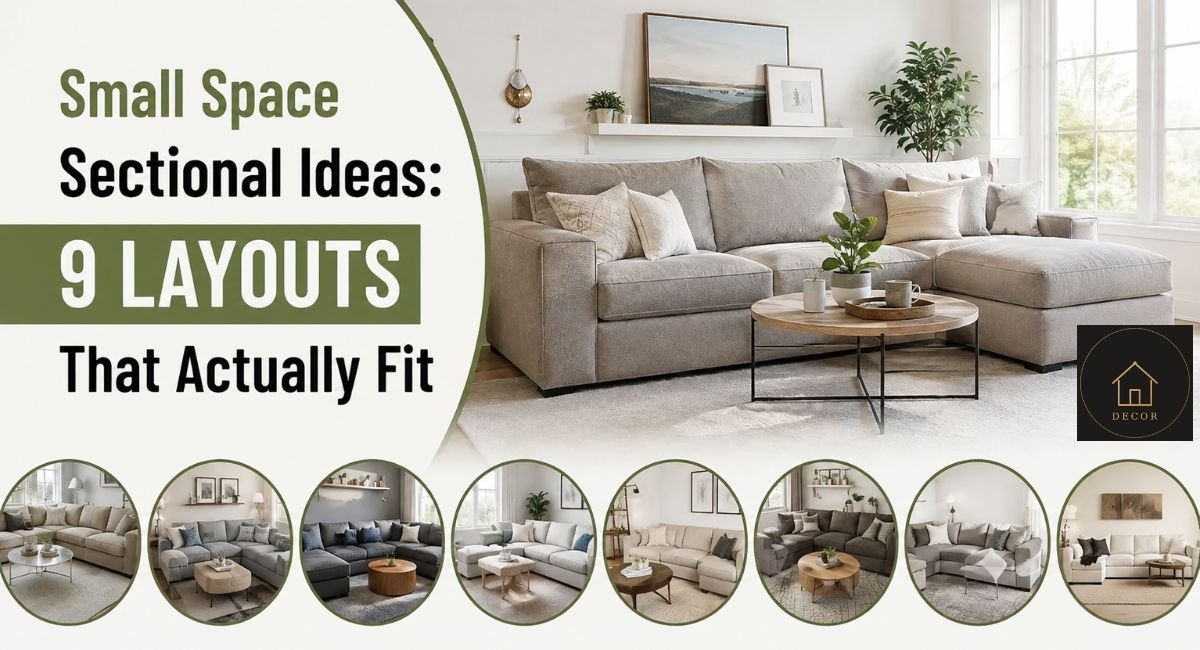
Small Space Sectional: 7 Layouts That Actually Fit
Burrow’s own product page lists the Nomad loveseat with chaise at 60 inches wide and 61 inches deep. Sixty inches sounds tiny. The 61 is the number that decides whether a sectional fits your living room, because most small rooms run out of floor and walkway long before they run out of wall.
What Is a Small Space Sectional?
A small space sectional is a sectional sofa about 90 inches wide or less, usually L-shaped or modular, sized so a room keeps a clear 30 to 36 inch walkway. Width matters, but depth matters too: a compact chaise can run 60 inches deep and take more floor than the same loveseat without it.
What Size Sectional Works Best in a Small Living Room?
Keep the long side to about two-thirds of the wall it sits against, and stay at or under roughly 90 inches wide. Chapin Furniture, Seatcraft and Arcedior all publish the two-thirds rule, and Groens Fine Furniture calls about 90 inches a practical benchmark for small rooms.
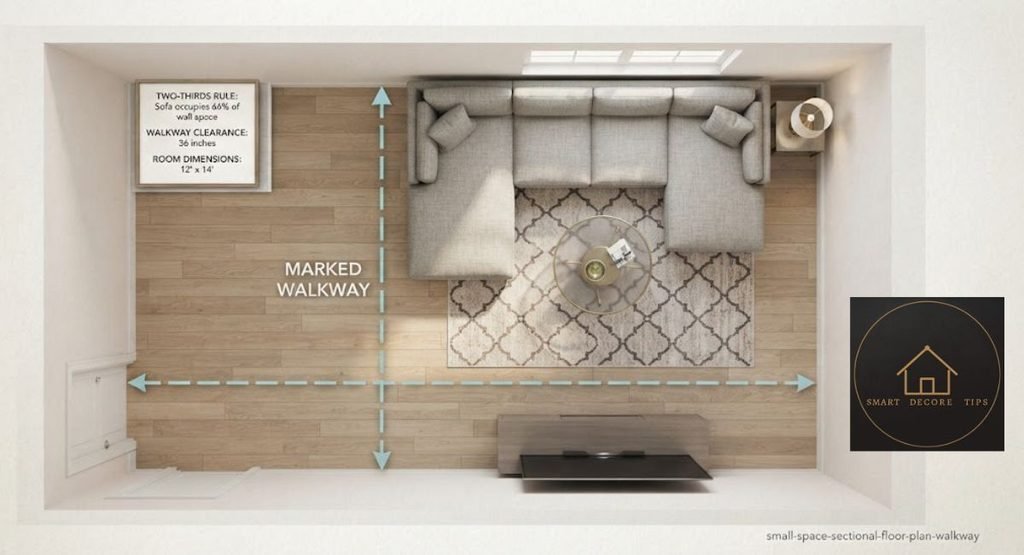
The right-hand column below is plain arithmetic from that rule, not a published chart.
| Wall length | Two-thirds limit for the long side |
| 9 ft (108 in) | 72 in |
| 10 ft (120 in) | 80 in |
| 11 ft (132 in) | 88 in |
| 12 ft (144 in) | 96 in |
On a 12-foot wall the rule allows 96 inches, but the 90-inch benchmark still applies, so take the smaller number. If your wall falls between two rows, size down. A sectional that is a little small looks chosen. One that is a little big blocks a walkway.
Depth needs its own check. Groens puts compact sectionals at roughly 32 to 36 inches deep, with chaise extensions running 60 to 70 inches. Burrow’s Nomad sofa is 35 inches deep, while its chaise version is 61, so the chaise costs 26 inches of floor.
What Is the Best Sectional Shape for a Small Room?
An L-shape. It sits in a corner, uses space you were not using anyway, and leaves the middle of the room open.
U-shapes need a second run of seating, and that run usually lands on a walkway or a window. Even Living Spaces’ “small” white sectional filter includes a 140-inch U-shaped model, so a “small” label on a listing proves nothing about fit.
Modular sectionals sit between the two. You buy a loveseat and a corner now and add an ottoman or another seat when you move somewhere bigger. Apartment Therapy counts 12 configurations for Cozey’s Ciello line, and Lovesac joins its seats and sides with clamps, so either can be split apart later.
“Sectional” does not automatically mean “big.” A 60-inch loveseat with a chaise is a sectional, and it is smaller than most three-seat sofas.
Should I Choose a Sectional or a Sofa for a Small Space?
Choose a sofa if the room has no free corner or the layout would leave less than 30 inches to walk. Choose a compact sectional if a corner is open and you regularly seat more than three people.
Arcedior suggests keeping a sofa under 75 inches wide in a small living room. Past that width you are shopping for a loveseat plus a chaise, and the chaise is where the depth problem starts.
7 Small Space Sectional Layouts That Work
- Tuck it into the corner. Push both runs against the walls and the whole center of the room is free for a rug and a table. Living Cozy calls corner placement the best way to get more from a smaller room. Check the long side against your two-thirds limit first, or the corner just moves the crowding onto one wall.
- Point the chaise away from traffic. A chaise aimed at a doorway or hallway creates a bottleneck. Aim it at the window or a blank wall instead. Arcedior also suggests keeping the sofa about 36 inches from a door’s swing path.
- Float it to split an open plan. In a studio, pulling the sectional off the back wall marks out a living area without adding a partition. Thirty inches behind it is the usual floor, and Chapin Furniture recommends 36 for a floated sectional. A low back, as DreamSofa points out, keeps sightlines open toward the kitchen.
- Pick exposed legs over a skirted base. Light passes under the frame, so the piece reads lighter at the same width. Living Spaces makes the same point in its small-sectional advice, and Burrow’s Nomad sits on 7-inch legs.
- Use a round table, or none. A round or oval table has no corner to catch a hip in a tight path. Keep 14 to 18 inches between the sofa edge and the table.
- Skip the accent chair and add a slim side table. In a room this size, one sectional and one narrow table usually beats a sectional plus a chair, unless a 30-inch path survives the chair. For overflow seating, a low ottoman takes less room.
- Choose the chaise side from the room, not the catalog. Left-facing and right-facing are judged standing in front of the sectional and looking at it, not sitting on it. Pick the side that keeps the chaise away from your entry path. Our left-facing vs right-facing sectional guide covers the orientation call in detail.
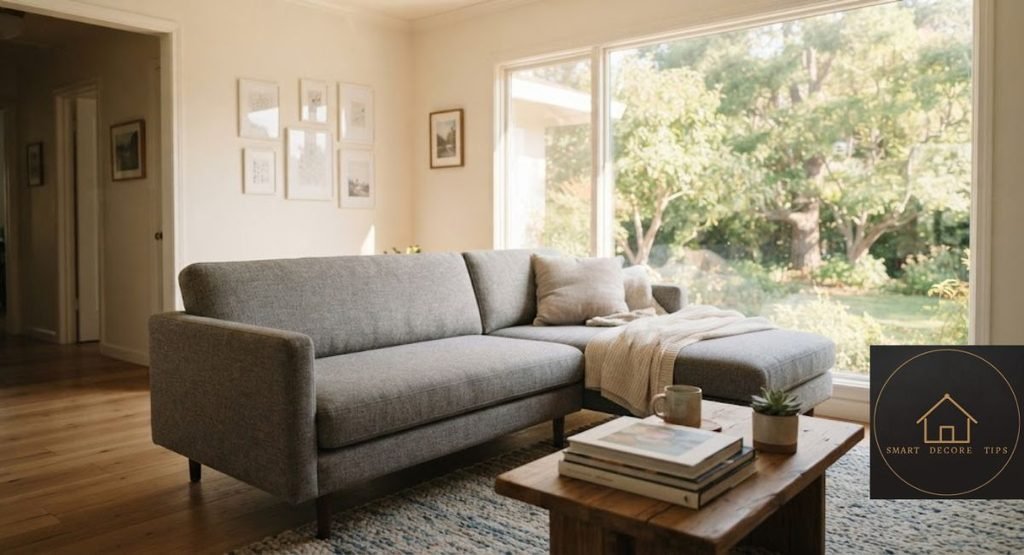
Can I Fit a Coffee Table With a Sectional in a Small Living Room?
Yes, if you leave 14 to 18 inches between the sofa and the table and keep at least 30 inches of walkway on that side. A round table, nesting tables or an ottoman that can move suit a tight room better than a rectangular table.
Modular Options That Stay Under 90 Inches
If you like the deep-cushion, cloud-couch look but want a smaller footprint, modular is the practical route. The sizes below come from brand pages, plus one retailer listing for the Kova sofa. They were checked on September 28, 2026. Brands revise modules, so re-check before you order.
| Sectional | Published size (W x D) | What to know |
| Burrow Nomad loveseat with chaise | 60 x 61 in | Smallest chaise sectional in this group. The 61-inch depth is the catch. |
| Lovesac Sactionals | Seat 35 x 29 in, side 6 x 35 in | Two seats and two sides in a row make an 82-inch sectional. Each seat weighs 53 lb. |
| Cozey Ciello | Seat 31.1 x 21.7 in | Two seats are 62.2 in wide before arms. The XL seat is deeper, at 26.4 in. |
| Albany Park Kova | Sofa with ottoman 85.5 x 79 in; L-shape 122 x 79 in | The sofa version fits the 90-inch limit. The L-shape does not. |
| AlivingHome CloudCubo | 74.4 x 36.6 in configuration listed | Closest to the oversized cloud look. A 100.6-inch configuration is also listed, which is over the limit. |
Lovesac’s seat inserts measure 35 by 29 inches and its standard sides are 6 inches wide, so two seats and two sides make an 82-inch row. Albany Park lists its Kova L-shape at 122 inches wide and 79 inches deep, well past the 90-inch benchmark. Harper’s Bazaar named the Kova sofa with ottoman, not the L-shape, as its small-space pick, and that difference is easy to miss in a roundup.
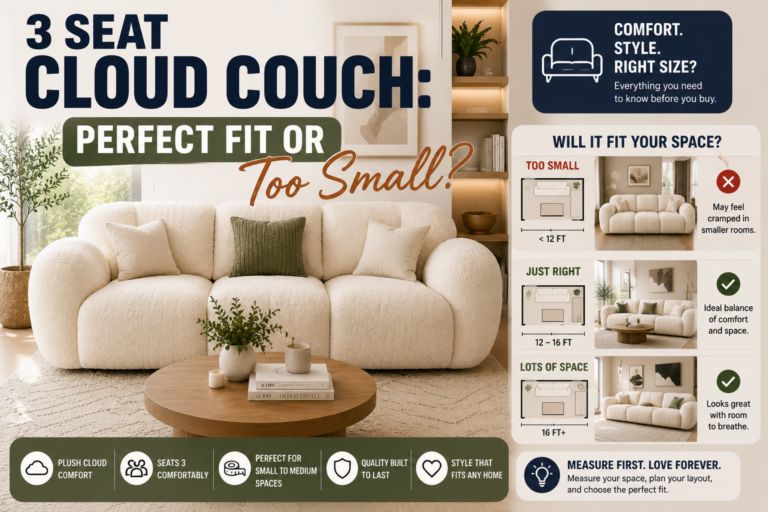
If you are leaning toward a light color, fabric and cleaning are covered in our small white sectional couch guide. For the cloud-couch style specifically, our 3 Seat Cloud Couch guide covers pricing and buying mistakes.
Getting a Sectional Into a Small Apartment
A sectional that fits the room can still fail at the front door. Work through this before you order:
- Measure the front door, every hallway turn and the stairwell, not only the room.
- Read the box sizes on the listing, not the assembled size. Albany Park lists its Kova L-shape boxes at up to 43.5 by 43.5 inches, and the flat ones at 7 inches thick.
- Check whether it ships as modules. Lovesac’s seat inserts weigh 53 pounds each, which is a two-person lift but a doable one.
- If it is a single frame, measure the diagonal of any tight turn, not just the hallway width.
- Lay cardboard or a moving blanket along the path the day before delivery, and have modular pieces come in one at a time.
Mistakes That Make a Small Room Feel Smaller
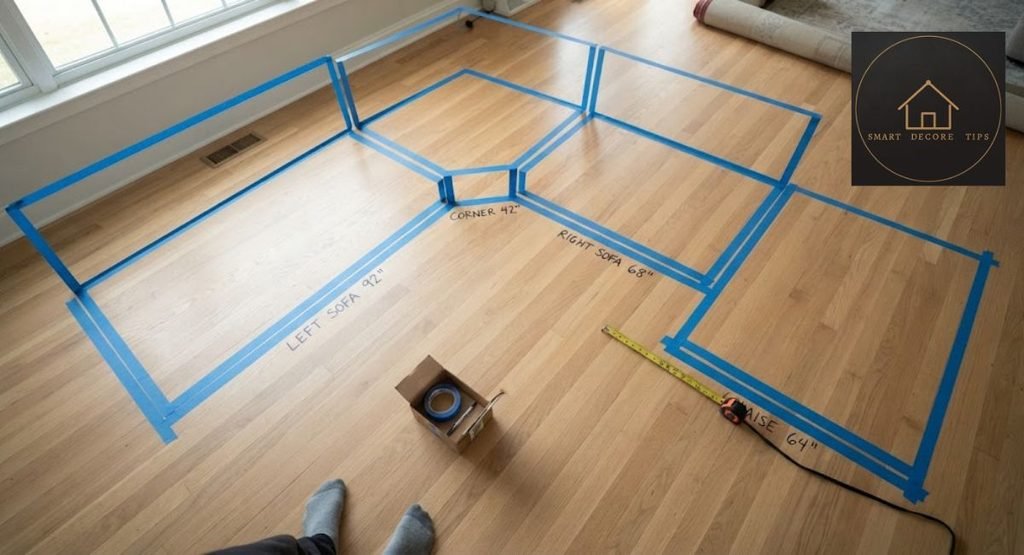
Buying from the showroom floor. A sectional that looks modest in a 500-square-foot showroom looks huge in a 180-square-foot living room. Tape the full footprint on your floor, chaise included, and walk your normal route to the door.
Checking clearance on one side only. People measure the wall behind the sectional and forget the path in front of it. Most guides put a main walkway at 30 to 36 inches, and OROA suggests about 24 inches for a secondary path in a compact room. Those are furniture-retailer rules of thumb, not building code.
Ignoring depth. A 60-inch-wide sectional with a 61-inch chaise fits a wall and still fails the room.
Who this advice does not suit. If you host more than six people regularly or rearrange the room every few months, a fixed L-shape works against you, because it cannot move without real effort. A modular set can be pulled apart for a party. Rooms with several doorways also rarely have a free corner, and Arcedior notes that sectionals work best in small rooms without multiple doorways.
Before You Order
Measure the wall, take two-thirds, cap the result near 90 inches, then check depth against a 30 to 36 inch path. If the chaise version of a model fails that test, the sofa version of the same model often passes. Do that math first and a small space sectional stops being a gamble.
FAQs
A sectional about 90 inches wide or less works best in a small living room, and its long side should not take up more than two-thirds of the wall it sits against. On a 10-foot wall, that limit is 80 inches.
Choose a sofa when the room has no free corner or the layout would leave less than 30 inches to walk. Choose a compact sectional when a corner is open and you regularly seat more than three people.
Yes, if you leave 14 to 18 inches between the sofa and the table and keep at least 30 inches of walkway on that side. A round table, nesting tables or an ottoman fit tight rooms better than a rectangular table.
Leave 30 to 36 inches for a main walkway and about 24 inches for a secondary path in a compact room. Furniture retailers publish these figures as rules of thumb, not building codes.
An L-shaped sectional set into a corner is the best shape for most small living rooms because it uses corner space and leaves the center open.
Yes, a modular sectional lets you start with two or three pieces and add more later, and separate boxes are easier to carry through a narrow stairwell than one large frame.
Among the brands checked for this guide, the smallest chaise sectional is Burrow’s Nomad loveseat with chaise at 60 inches wide, though it is 61 inches deep.
Face the TV in most rooms, but if one wall has to serve both, angle the sectional slightly instead of boxing it between the two.

Hi, I’m Shahzad Ahmad welcome to Smart Decore Tips!
I write and research every guide on this site myself, focused on real, practical home decor advice for renters, first-time homeowners, and small-space living. Before publishing anything, I check actual product listings, current prices, and real customer reviews not just what other sites already say.
My goal is simple: help you make smarter, more affordable decor decisions without the guesswork or sales pitch.



2 Comments