
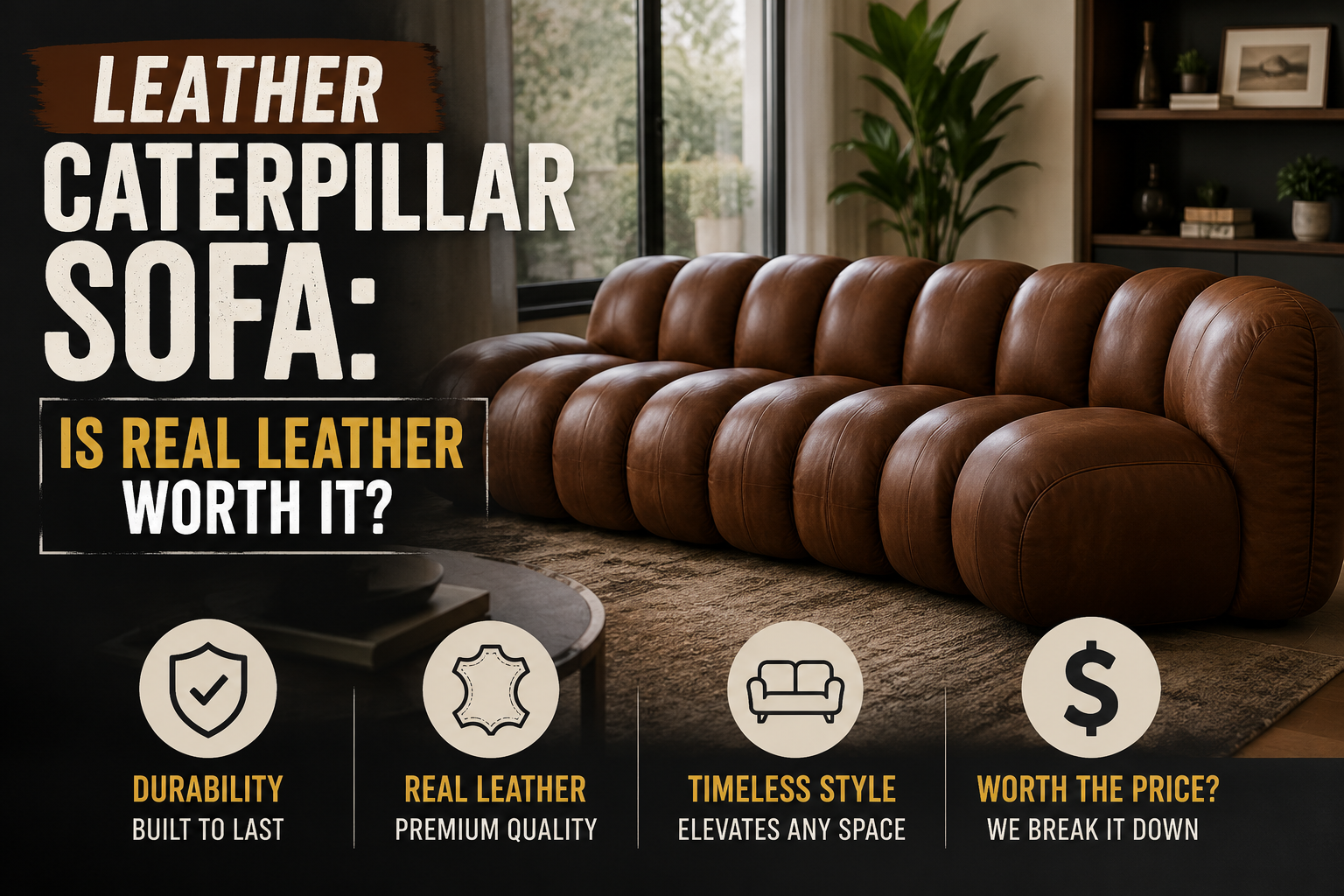
Leather Caterpillar Sofa: Real vs Faux, Prices & Lifespan
A leather caterpillar sofa can look close to identical in photos whether it costs $670 or $13,495. The difference shows up later. One keeps wiping clean for years. The other starts flaking at the seams.
This guide covers what real, faux and fiber leather cost right now, how long each one lasts, where the caterpillar shape actually comes from, and what to check in a listing before you pay. If you’re still comparing every material, start with our caterpillar sofa guide.
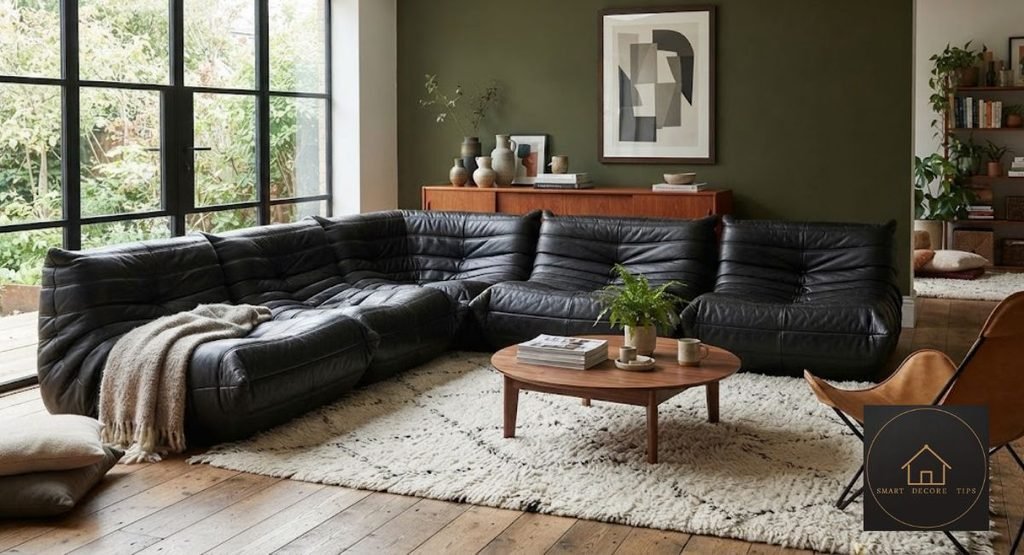
A leather caterpillar sofa is a low, segmented lounge sofa made of layered foam and wrapped in real, faux or fiber leather. Most have no wood frame and no springs. The shape copies the Togo, which Michel Ducaroy designed for Ligne Roset in 1973.
Quick Takeaways
- Fiber and faux leather versions I opened cost $670–$1,750. Real-leather versions start near $2,043 for a single seat.
- The original Togo in leather costs $8,795–$13,495 at Design Within Reach.
- Lifespan quotes for faux leather run from 1–3 years (low grade) to 7–10 years (high grade). Sources disagree, so ask about the coating.
- “Genuine leather” on a label can mean split leather, the lower grade. Look for top-grain or full-grain.
- The caterpillar shape is about the foam construction, not the cover — leather is just one of several materials it comes wrapped in.
Real leather vs faux leather: what actually differs?
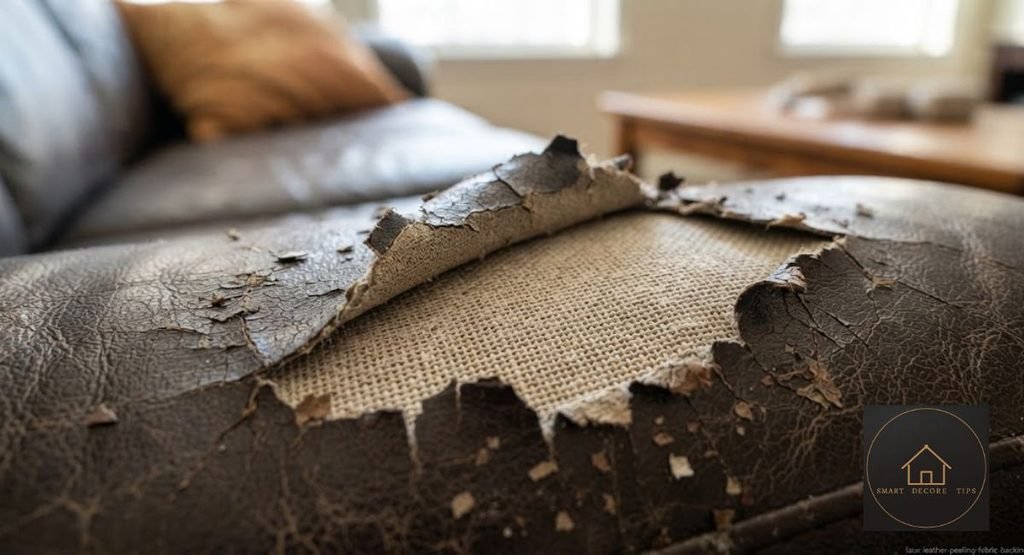
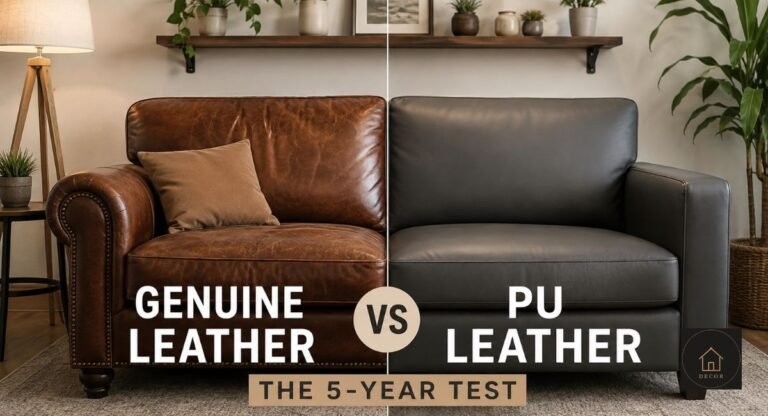
Real leather is animal hide with a finish coat. Faux and fiber leather are a plastic or microfiber coating on a fabric backing. Real leather softens and scuffs with age, while faux leather cracks or peels once the coating breaks down.
| Cover type | What it is | Lifespan sources quote | How it usually fails |
| Full-grain or top-grain leather | Real hide, top layer kept | 15–25 years on a standard sofa | Dryness, fading, scratches |
| “Genuine” (split) leather | Real hide, lower layers only | No figure found; less durable than top-grain | Surface wear |
| PU faux leather | Plastic coating on fabric | 1–3 years (low grade) to 7–10 (high grade) | Peeling, cracking at folds |
| Fiber or microfiber leather | Microfiber base, leather-look finish | 5–10 years for high-end versions | Wear on seats and edges |
| Bonded leather | Leather scraps plus a polyurethane skin | 1–5 years | Peeling on seat and arms |
Those figures come from Adobe Interiors, Povison, Sunsgoods and Leather Medic. They are planning ranges, not warranties, and they disagree with each other.
Why do faux leather sofas peel?
Moisture and heat slowly break down the polyurethane coating until it lifts off the fabric underneath. Rub n Restore says repairs seldom last, and Luxe Living Insights says the surrounding coating usually keeps peeling. A quick check: if you see woven fabric behind a crack, the cover is faux.
Who makes the highest quality leather couches?
No single brand universally makes “the best” leather couch — quality comes down to the leather grade, not the manufacturer’s name. Full-grain leather, which keeps the hide’s natural surface intact, is the top tier regardless of who makes it.
Within the caterpillar sofa category specifically, Ligne Roset’s original Togo is the recognized benchmark and uses full-grain leather, while most replica makers, including CurverK and Lyfairs, cover theirs in faux or fiber leather instead of real hide.
Read the spec table, not the title
When I opened listings for this rebuild, one Lyfairs product titled “Napa Leather Sofa” listed “Teddy Fleece/Fax Leather” as the upholstery in its spec table, and “Wood, Plywood” as the frame. Trust the spec table over the title. Ask the seller to confirm the leather type in writing.
Where does the caterpillar sofa design come from?
What makes a sofa a caterpillar sofa?
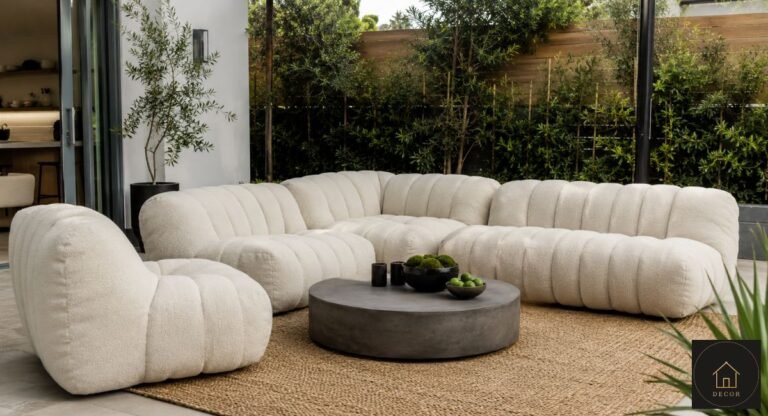
A caterpillar sofa gets its name from its shape: stacked, tube-like foam segments joined together with no visible wood frame, legs or springs underneath. The segments flex somewhat independently, so the sofa molds around whoever sits on it instead of holding a fixed shape. This foam construction, not the cover material, is what defines the style — the same segmented base shows up under leather, faux leather and fabric versions alike.
Who made the original caterpillar couch?
French designer Michel Ducaroy created the original version, the Togo, for Ligne Roset in 1973. It was one of the first sofas built almost entirely from foam with no internal frame, and the shape has been widely copied since. That’s why most caterpillar sofas sold today are replicas of that 1973 design rather than a separate model in their own right.
How much does a leather caterpillar sofa cost?
Fiber and faux leather versions I opened cost $670 to $1,750, real-leather versions start near $2,043 for a single seat, and the original Togo in leather costs $8,795 to $13,495. I checked every price on September 24, 2026.
| Tier | Example I opened | Price seen |
| Faux leather, 3-seat | Intuition Decor Maggis 3-seater | $849 (list $899) |
| Fiber leather | CurverK black fiber leather | $670 on sale from $1,390 (size not stated); multi-seater $1,540–$1,750 |
| Real leather, single seat | Cocochairs genuine leather armless chair | From $2,043 |
| Original Togo in leather | Ligne Roset, sold at Design Within Reach | Corner seat $8,795, loveseat $10,595, sofa $13,495 |
The leather Togo sofa at $13,495 costs about 16 times the $849 faux three-seater. The sizes are close but not identical, so treat that as a rough gap. If you’re weighing replicas, our Togo couch dupe guide compares the cheaper options.
Watch the sale math. CurverK’s page showed 52% off with a countdown timer, so its “was” price tells you little.
Here is the cost per year. A $700 cover that lasts 3 years costs about $233 a year. A $2,000 leather sofa that lasts 10 years costs $200 a year. Real leather only wins if you keep the sofa.
Is a caterpillar sofa too low?
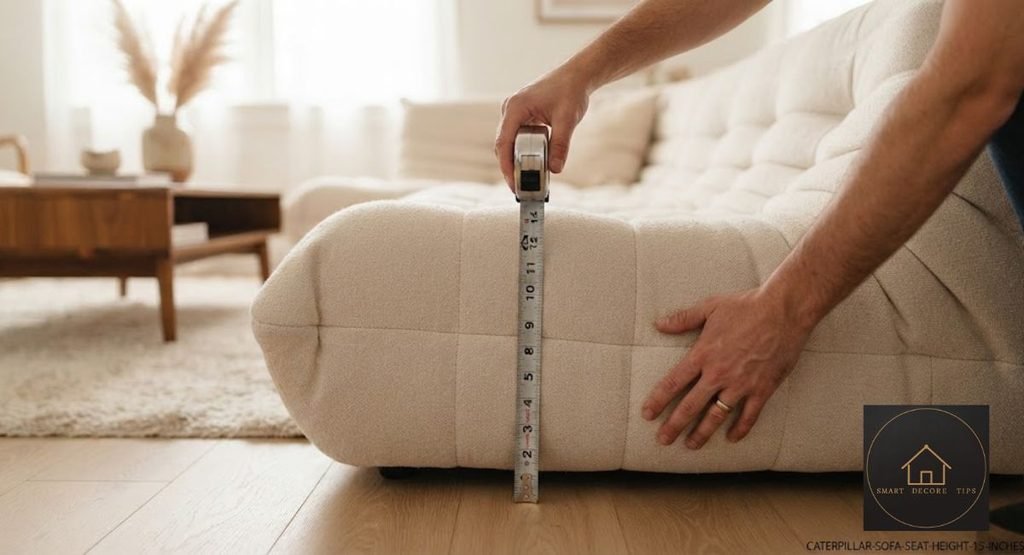
For some people, yes. The original Togo sofa’s seat sits 15 inches off the floor, and Atunus Home notes that low seats are hard to get out of with knee or back problems. Measure the seat height of the sofa you use now and compare it to 15 inches.
I’ve sat on both a fabric and a faux leather version in the same size, and the leather one felt slightly firmer at first. It softened after a few weeks of regular use as the top layer relaxed.
Also ask whether the sofa ships compressed. CurverK says its sofas arrive uncompressed and ready to use, instead of needing 72 hours to recover.
How do you clean and care for leather on a caterpillar sofa?
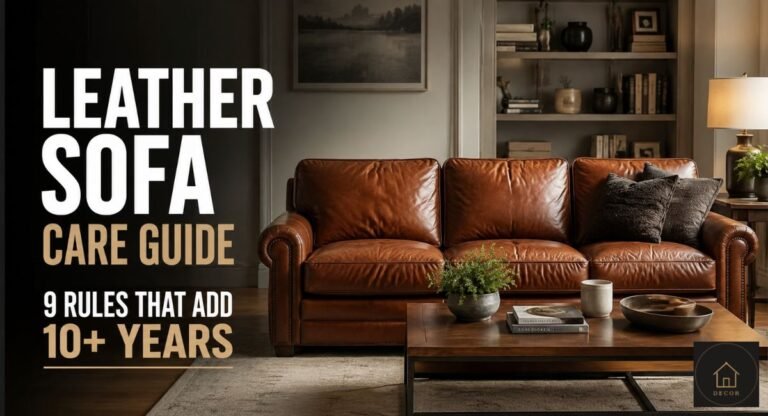
Dust weekly, blot spills fast, and condition real leather every 6 to 12 months. Faux leather needs no conditioner, only a wipe with mild soap and water.
- Dust weekly. Grit collects in the pleats and seams.
- Blot spills right away. Don’t rub.
- Condition real leather every 6–12 months. Sources split: one Togo care guide says every 3–6 months, Adobe Interiors and Cocochairs say 6–12. Lean toward 3–6 in a sunny or dry room.
- Skip alcohol-based cleaners. They dry out leather.
- Keep it out of direct sun and heat. Both crack leather over time.
- Rotate your seat. A foam-only sofa flattens where one person always sits.
Does leather work for pets and kids?
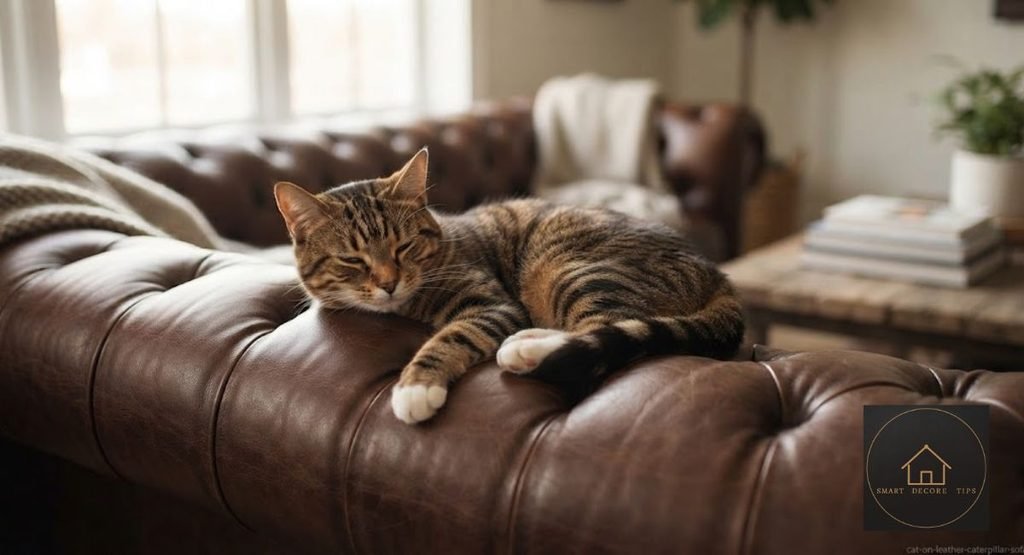
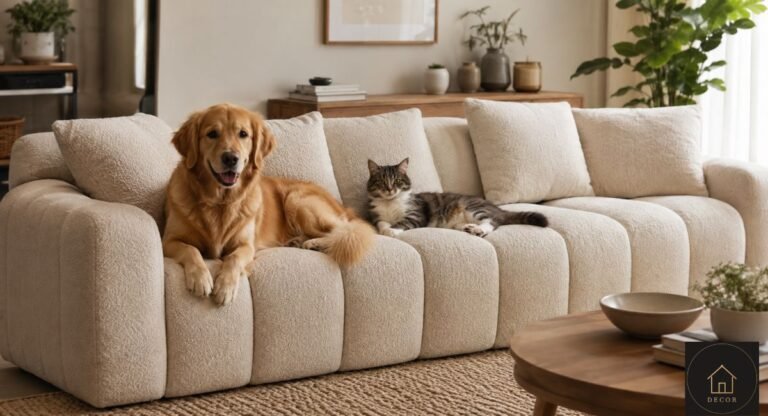
Yes for spills, less so for claws. Crayon, juice and muddy paws wipe off leather, but cat claws scratch both real and faux leather, and Biltrite Furniture notes faux leather punctures easily.
Which is better for cats, a leather sofa or a fabric sofa?
Leather usually holds up better than a loosely woven fabric because there’s no weave for a cat’s claws to catch on, and light scratches on real leather often soften or buff out over time. But leather shows scratches more visibly than a tightly woven performance fabric like microfiber or polyester, which resists claws just as well without marking as easily. If your cat scratches aggressively, a tight-weave fabric cover may outlast a leather one; if it’s a light scratcher, leather’s wipe-clean surface is the more practical everyday choice.
Who should skip leather on a caterpillar sofa?
Skip it if you want a cover that hides fingerprints, if you have knee or back trouble, or if you live somewhere hot and humid without air conditioning.
- Leather, real or faux, shows fingerprints and light scratches more than a textured fabric does.
- Leather feels cool at first touch and can feel warm and sticky in a hot room.
- Heat and humidity speed up the coating breakdown on PU covers.
- If you’ll move within two or three years, a fiber or faux cover at a lower price is the smarter buy.
Before you pay: six checks that matter more than the cover
- Get the leather type in writing. “Top-grain,” “full-grain” or the seller’s own name for it.
- Ask about foam layers. Four densities is a real spec. “High-density” is not.
- Ask if it ships compressed. Uncompressed saves you the 72-hour wait.
- Read the return terms. CurverK allows returns within 30 days but wants requests within 7 days of delivery. Lyfairs offers a 90-day trial, but you pay return shipping if there’s no defect.
- Check the warranty wording. CurverK lists five years, Lyfairs lists two. Ask whether peeling counts.
- Plan the delivery. CurverK’s multi-seat sofas need truck delivery — measure your door and hallway first.
Is real leather worth it on a caterpillar sofa?
Yes, if you’ll keep the sofa five years or more. Top-grain leather costs more upfront but can outlast several faux covers, as the cost-per-year math above shows.
A faux or fiber leather version makes sense if you rent, move often, or want to test the shape first. Buy it knowing it may need replacing in a few years.
One honest trade-off: leather shows every fingerprint and light scratch. If you want a sofa that hides daily wear, fabric is more forgiving.
Choose a leather caterpillar sofa by how long you plan to keep it. Then check the spec table, the foam and the return terms before the leather grade.
FAQs
A caterpillar sofa is defined by its stacked, tube-like foam segments with no visible wood frame or springs, not by what covers it. Leather, faux leather and fabric versions all share the same segmented foam base.
French designer Michel Ducaroy created the original Togo sofa for Ligne Roset in 1973. Most caterpillar sofas sold today are replicas of that design rather than a separate model.
Caterpillar sofas sold as leather can be real hide or synthetic, depending on the listing. Top-grain, full-grain or cowhide means real hide, while PU, vegan, fiber and microfiber leather mean a synthetic cover.
Adobe Interiors quotes 15 to 25 years for good full-grain or top-grain leather couches and 3 to 7 years for bonded or faux leather.
The original Togo seat sits 15 inches off the floor, which is low enough that people with knee or back problems can struggle to stand up from it.
No manufacturer universally makes the “best” leather couch — quality depends on the leather grade used, not the brand. Full-grain leather is the top tier regardless of maker, and within caterpillar sofas specifically.
Leather generally resists cat claws better than a loosely woven fabric because there’s nothing for claws to catch on, though it shows scratches more visibly than a tightly woven performance fabric.
Light scratches on real leather can often be softened with a conditioner. Peeling faux leather is hard to repair because the coating has separated from its fabric backing.
No, the leather cover is not machine washable. Ligne Roset recommends a factory recovery service for its own sofas, and replica makers such as CurverK advise a soft brush and a mild cleaner.

Hi, I’m Shahzad Ahmad welcome to Smart Decore Tips!
I write and research every guide on this site myself, focused on real, practical home decor advice for renters, first-time homeowners, and small-space living. Before publishing anything, I check actual product listings, current prices, and real customer reviews not just what other sites already say.
My goal is simple: help you make smarter, more affordable decor decisions without the guesswork or sales pitch.


3 Comments