
Home Decor Styles: Names, Examples & How to Decorate Each
By Shahzad Ahmad | Last updated: October 4, 2026
The most common decorating mistake is picking a look from a photo, then buying pieces that belong to three different ones. Knowing the names first prevents that. Home decor styles are labels such as modern, Scandinavian or farmhouse that group furniture shapes, colors and materials into one recognizable look. Most homes lean on one lead style and borrow lightly from a second. Below are 12 common ones, a plain way to choose, and the mistakes that blur a room.
How this guide was made This guide compares how two style guides define each look: HGTV’s “Interior Design Styles, Defined” (the page shows an update date of July 28, 2025) and the Mixtiles blog’s 25-style home decor guide (no update date visible). History points come from the Metropolitan Museum of Art and HGTV. Date checked: October 4, 2026. Method: a style is described only where at least one of these sources defines it, and the table below shows which source each row relies on. Nothing here was tested, owned or photographed by the author, and no products are rated. A claim supported by only one source is marked “Verify”.
What are the top 10 interior design styles?
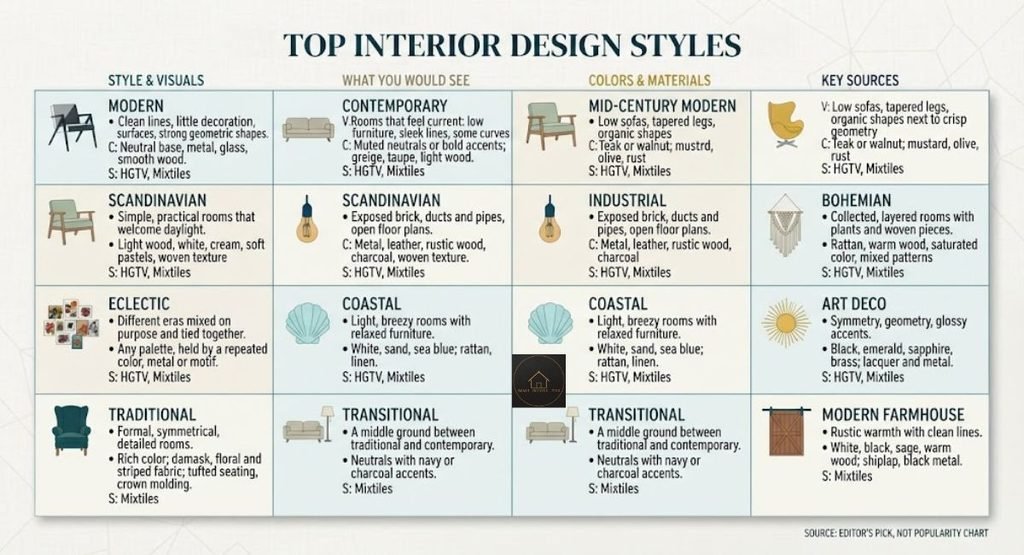
There is no official ranking. A practical top 10 is modern, contemporary, mid-century modern, Scandinavian, industrial, bohemian, eclectic, coastal, traditional and transitional, and this guide adds Art Deco and modern farmhouse to make 12. Treat the list as an editor’s pick, not a popularity chart.
| Style | What you would see | Colors and materials | Source |
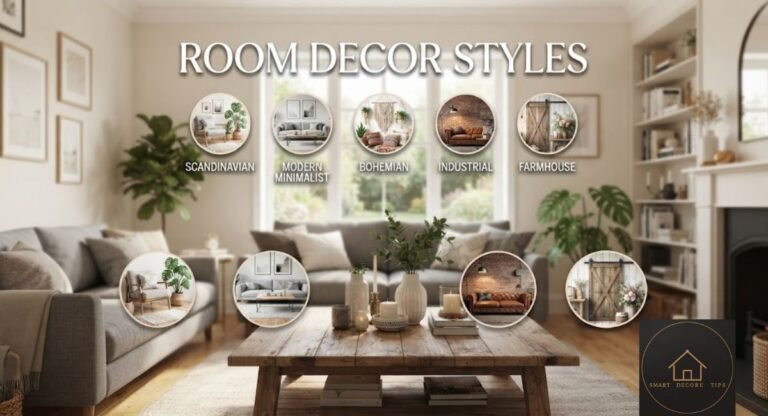
| Modern | Clean lines, little decoration, polished surfaces, strong geometric shapes | Neutral base, metal, glass, smooth wood | HGTV, Mixtiles |
| Contemporary | Rooms that feel current: low furniture, sleek lines, some curves | Muted neutrals or bold accents; greige, taupe, light wood | HGTV, Mixtiles |
| Mid-century modern | Low sofas, tapered legs, organic shapes next to crisp geometry | Teak or walnut; mustard, olive, rust | HGTV, Mixtiles |
| Scandinavian | Simple, practical rooms that welcome daylight | Light wood, white, cream, soft pastels, woven texture | HGTV, Mixtiles |
| Industrial | Exposed brick, ducts and pipes, open floor plans | Metal, leather, rustic wood, charcoal | HGTV, Mixtiles |
| Bohemian | Collected, layered rooms with plants and woven pieces | Rattan, warm wood, saturated color, mixed patterns | HGTV, Mixtiles |
| Eclectic | Different eras mixed on purpose and tied together | Any palette, held by a repeated color, metal or motif | HGTV, Mixtiles |
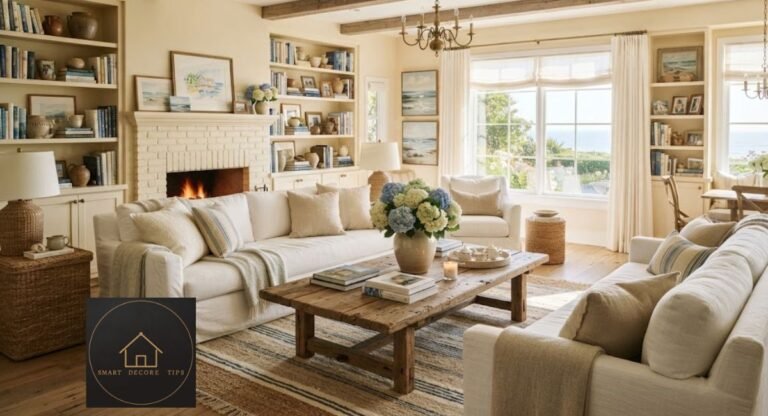
| Coastal | Light, breezy rooms with relaxed furniture | White, sand, sea blue; rattan, linen | HGTV, Mixtiles |
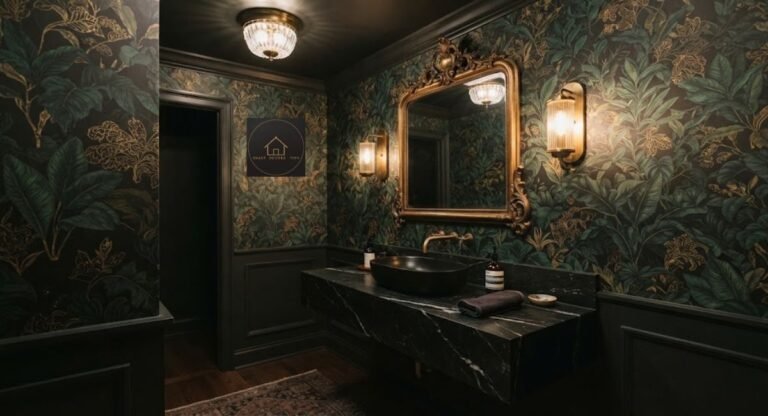
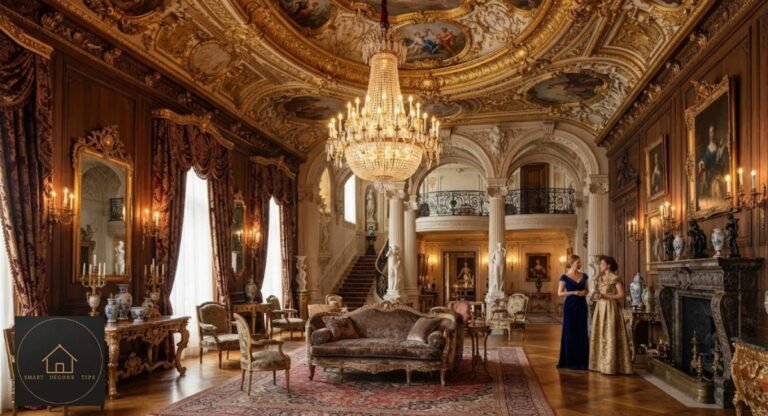
| Art Deco | Symmetry, geometry, glossy accents | Black, emerald, sapphire, brass; lacquer and metal | HGTV, Mixtiles |
| Traditional | Formal, symmetrical, detailed rooms | Rich color; damask, floral and striped fabric; tufted seating, crown molding | Mixtiles |
| Transitional | A middle ground between traditional and contemporary | Neutrals with navy or charcoal accents | Mixtiles |
| Modern farmhouse | Rustic warmth with clean lines | White, black, sage, warm wood; shiplap, black metal | Mixtiles |
Newer looks such as Japandi, minimalist and organic modern also appear in Mixtiles’ list, but they are variations on the rows above rather than separate starting points.
Which style fits the room you already have?
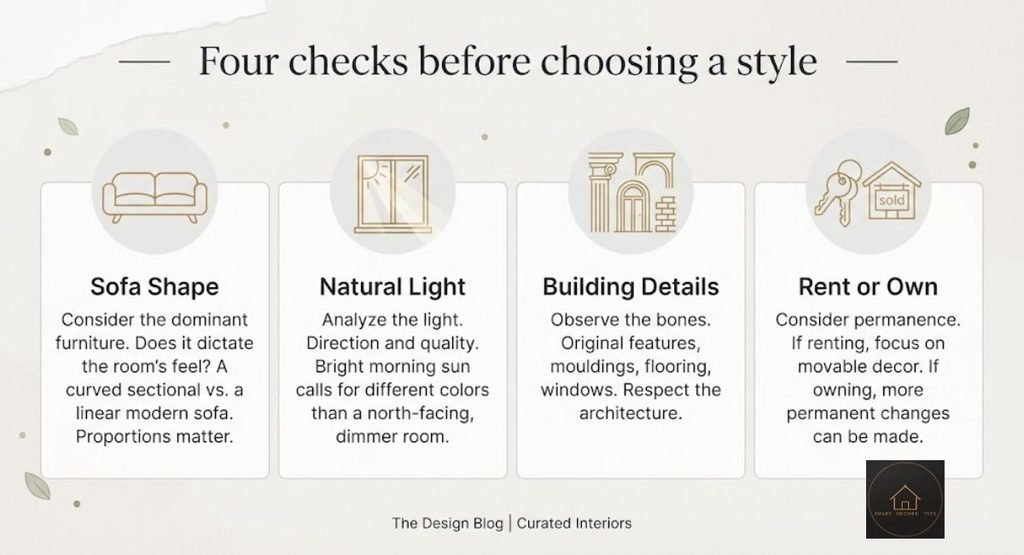
Start from what is in the room, not from a photo you like. Four quick checks narrow the list:
- Sofa shape. A low, sleek sofa points toward modern, contemporary or mid-century. Tufted seating points toward traditional or transitional.
- Light. Scandinavian and coastal looks both depend on airy, bright rooms. A dim room makes pale palettes harder to pull off, which is a judgment call rather than a rule from either guide.
- Building details. Exposed brick or ducts suggest industrial. Shiplap suggests farmhouse. Beams and stone suggest rustic or Mediterranean.
- Rent or own. Renters can rarely repaint or swap fixtures, so the movable layer (rugs, lamps, textiles, art) has to carry the style.
Count which style claims the most of what you already own. That one leads.
Modern vs. contemporary and other home decor styles people confuse
These pairs cause most of the mix-ups. In each, one feature separates them.
| If you are comparing | The tell |
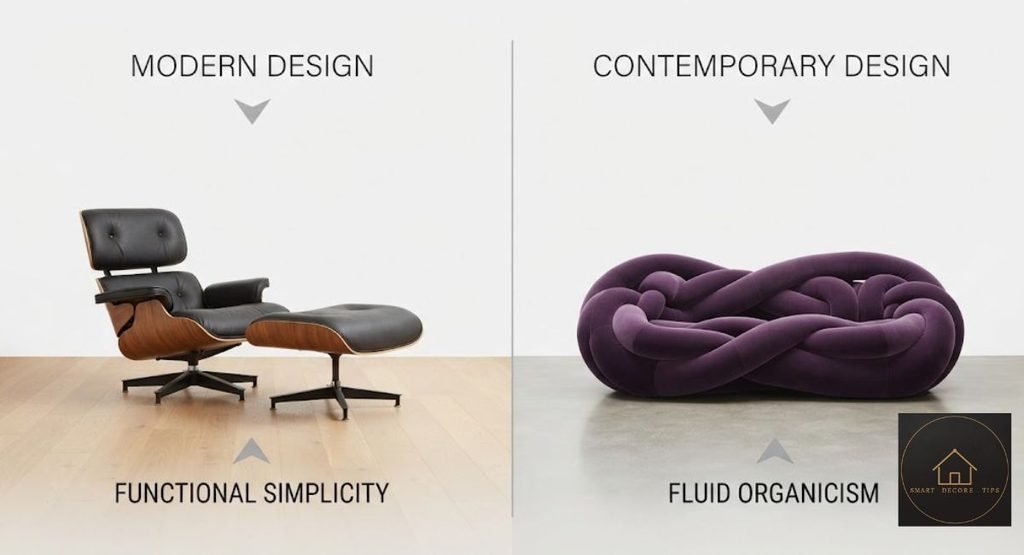
| Modern and contemporary | Modern is a historical movement from the early to mid twentieth century with almost no ornament. Contemporary just means current, so it keeps shifting and allows curves and textured neutrals. |
| Modern and mid-century modern | Mid-century adds organic forms, warm woods and autumn colors. Plain modern stays neutral, polished and geometric. |
| Bohemian and eclectic | Bohemian grows by accumulation: layers, plants, collected pieces. Eclectic mixes eras deliberately and needs a repeated color or finish to hold together. |
| Modern farmhouse and rustic | Farmhouse keeps clean lines, shiplap and black metal. Rustic leans on raw, weathered wood, stone and chunky texture. |
| Scandinavian and Japandi | Scandinavian is bright and cozy. Japandi blends Japanese and Scandinavian ideas into a quieter, lower, more minimal look. |
If a room seems to match both halves of a pair, it is probably transitional or eclectic, and that is fine.
How to decorate each of the 12 home decor styles
Each entry gives one move that makes the look read correctly and one thing to skip.
Modern
Keep surfaces clean and let materials show: smooth wood, metal, glass, a neutral base and maybe one color accent. Skip ornament, since the style depends on its absence. HGTV notes that strict modern is hard to hold in a family room and fits most naturally in a kitchen, so apply it there first.
Contemporary
Choose low furniture with sleek lines and a muted neutral base, then add one sculptural light. Skip fussy detail. Because contemporary means “current,” it makes sense to buy simple shapes and change the textiles and accents as tastes move.
Mid-century modern
Start with chairs. HGTV calls dining chairs the beginner-friendly way in, while iconic pieces such as the Tulip table cost far more. Add tapered legs, a warm wood and one accent in olive, mustard or rust. Skip matching the whole room to the era. If you want a color anchor, our teal sofa guide covers shades that suit mid-century and transitional rooms.
Scandinavian
Use light wood, white and cream, and woven texture, and keep window coverings light so daylight does the work. HGTV suggests resisting the urge to over-style floors, furniture and accessories. A pale sofa fits here; our white sectional sofa guide covers fabric and upkeep questions.
Industrial
Look at what the building already offers: brick, concrete, ducts, big windows. Add metal pendant lights, leather and rustic wood to match. Skip faking it. Without real structural details, one metal-and-wood piece repeated twice is more convincing than a themed room.
Bohemian
Build it in layers over time. HGTV points to pillows as the easy first step because they are cheap to collect, with rattan, plants and woven hangings added later. Repeat one color so the room reads as collected instead of cluttered. Skip buying everything in one trip.
Eclectic
Pick one or two anchor pieces, then connect everything else with a shared color, metal or shape. HGTV is clear that eclectic is not “anything goes”; color, pattern, texture and composition do the connecting.
Coastal
Start with a white, sand and sea-blue base, then add rattan and linen and keep fabrics airy. For a landlocked room, HGTV suggests indigo-dyed textiles and whitewashed furniture. The two guides differ on props: HGTV lists lighthouses and seashells as typical accessories, while Mixtiles warns that literal themes feel forced and suggests hinting at the coast through texture, blue and light instead. The second route ages better.
Art Deco
Aim for symmetry, geometry and one or two gleaming accents such as candlesticks, a sculpture or a geometric mirror. Black, emerald, sapphire and brass are the usual colors. Skip going all in; one dining room or one wall is enough.
Traditional
Use matching pairs (lamps, frames, chairs) and patterned fabrics like damask, stripe or floral, with tufted seating and visible molding. Skip a fully matched furniture suite, which looks like a showroom rather than a home.
Transitional
Combine classic silhouettes with modern finishes on a neutral base, with navy or charcoal as accents. Symmetry works well here. Skip playing it too safe; add at least one piece with real texture or color.
Modern farmhouse
Look for Shaker-style furniture, black metal accents, shiplap and a palette of white, black, sage and warm wood. Keep the lines clean, because that is what separates it from rustic.
A short timeline, so the names make sense
Names stick better with a date attached. Art Deco takes its name from the 1925 International Exhibition of Modern and Industrial Decorative Arts in Paris, which the Metropolitan Museum of Art says drew over 16 million visitors and showed a style that was already mature. Mid-century modern first became popular in the 1950s and 1960s, and HGTV dates Eero Saarinen’s Tulip table line to 1957. HGTV traces modern design to the 1930s, while Mixtiles calls it an early to mid twentieth-century movement. Scandinavian design comes from Norway, Sweden and Denmark. Contemporary has no start date at all, because it simply means what is current.
What is the most popular home decor style?
No official body ranks home decor styles. One style guide, from Mixtiles, names transitional, modern farmhouse, Scandinavian and contemporary as consistent leaders and adds that popularity varies by region (Verify; single source).
Popularity is a weak reason to choose. A style that matches your sofa and your light will look better than a trending one that fights both.
What is the 3-5-7 rule in decorating?
It is a styling rule of thumb that groups objects in odd numbers, three, five or seven, with varied heights and even spacing, according to Mixtiles’ guide (Verify). It is a guideline for shelves, mantels and wall groupings, not a standard, and no design body publishes it as one.
A mantel with three objects of different heights is the simplest test. If it looks stiff, change the heights before changing the count.
Mixing styles without a mess, and five mistakes to avoid
Mixtiles suggests a 60/30/10 split: one style leads at 60 percent, a second supports at 30 and a third adds 10 (Verify). In practice, two styles is plenty for most rooms.
Mixing goes wrong in five predictable ways, all described in that same guide. Wood tones and metal finishes get scattered with no repetition; the fix is one dominant finish repeated with a secondary one in at least three places. Wall art is hung too high or too small. Every pattern shouts at the same volume, when one large, one medium and one small pattern read as calmer. Themes turn literal, like anchors in a coastal room. And overhead lighting does all the work, which flattens color and texture; lamps and sconces add depth.
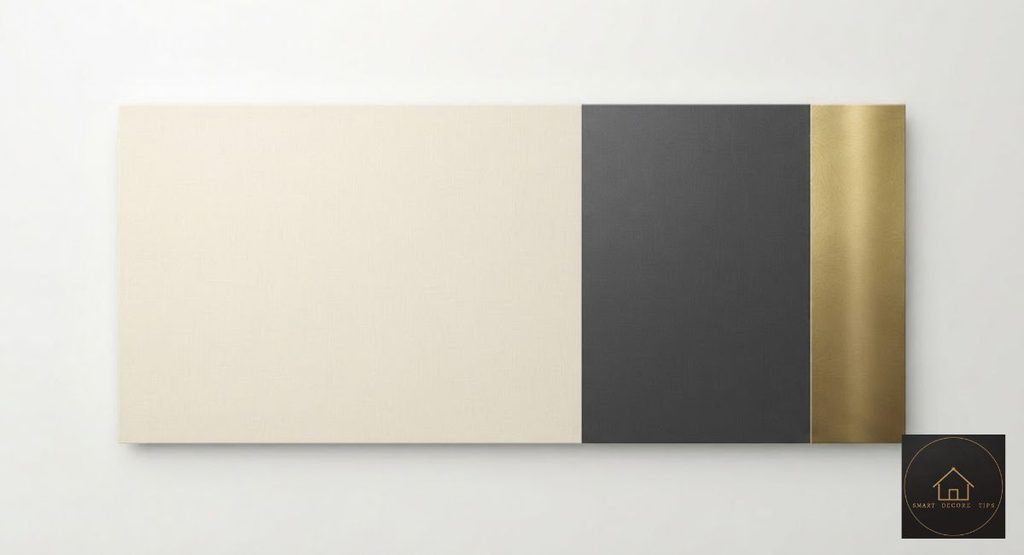
Our pick, and who it is wrong for
For a first-time decorator, this guide’s pick is transitional as the lead style. Mixtiles defines it as a bridge between traditional and contemporary on a neutral base, which means new pieces are less likely to clash and old ones can stay. That is a reasoned opinion, not a tested result.
Two honest trade-offs. Transitional is wrong for anyone who wants a room to announce its style from the doorway, since it is built to sit in between. Industrial is wrong for rooms without real structure, because HGTV describes the look as one that exposes existing building elements, and a smooth drywall box has none to expose.
Tonight, photograph your main room in daylight and list the five biggest pieces in it. Match each to a row in the table. The style that claims the most is your lead, and anything you buy next should answer to it.

Hi, I’m Shahzad Ahmad welcome to Smart Decore Tips!
I write and research every guide on this site myself, focused on real, practical home decor advice for renters, first-time homeowners, and small-space living. Before publishing anything, I check actual product listings, current prices, and real customer reviews not just what other sites already say.
My goal is simple: help you make smarter, more affordable decor decisions without the guesswork or sales pitch.
10 Comments