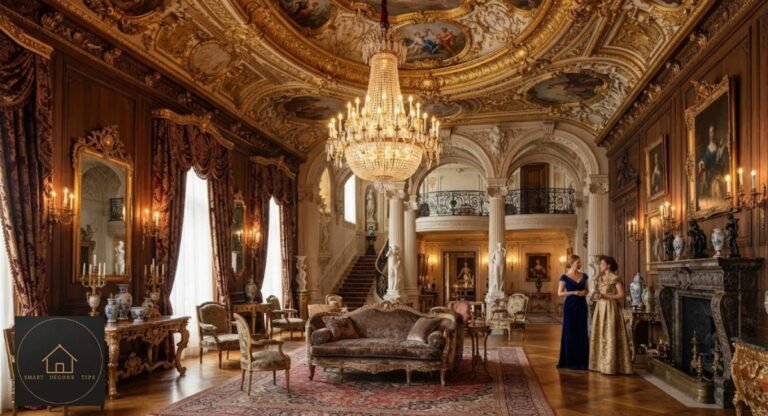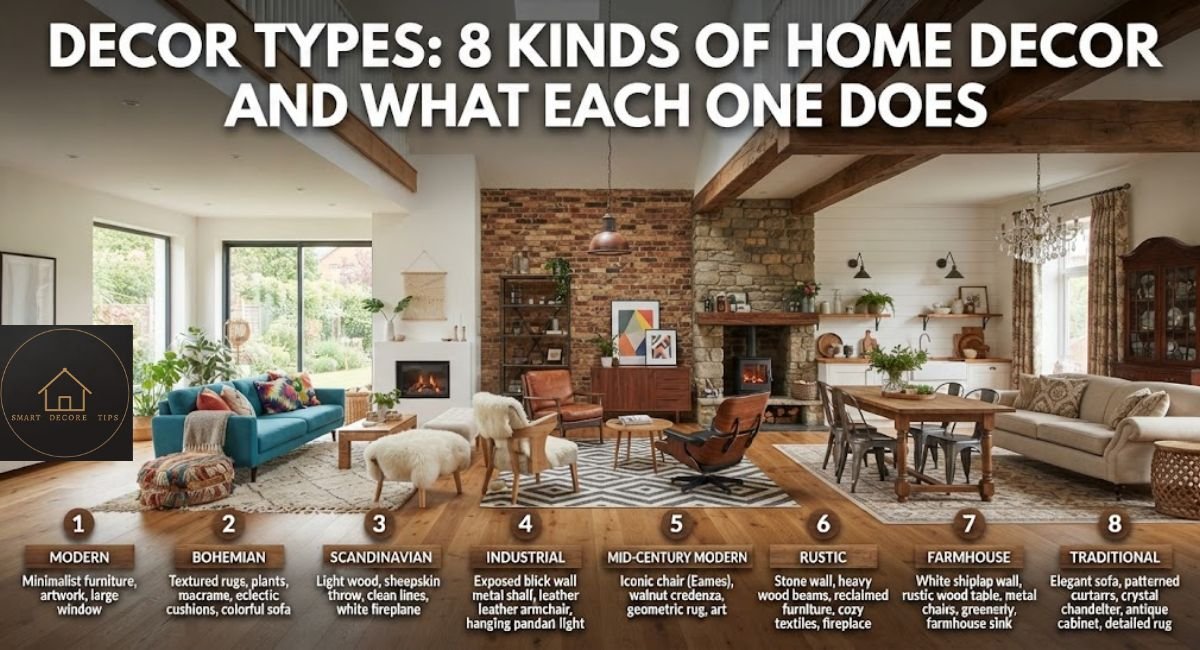
Decor Types: 8 Kinds of Home Decor and What Each One Does
By Shahzad Ahmad | Last updated: October 9, 2026
One well-known design retailer sorts more than 180 decor products into 19 categories, and the filters are object names such as mirrors and side tables, not styles. That tells you what most shoppers mean by decor types: the things you can actually put in a room.
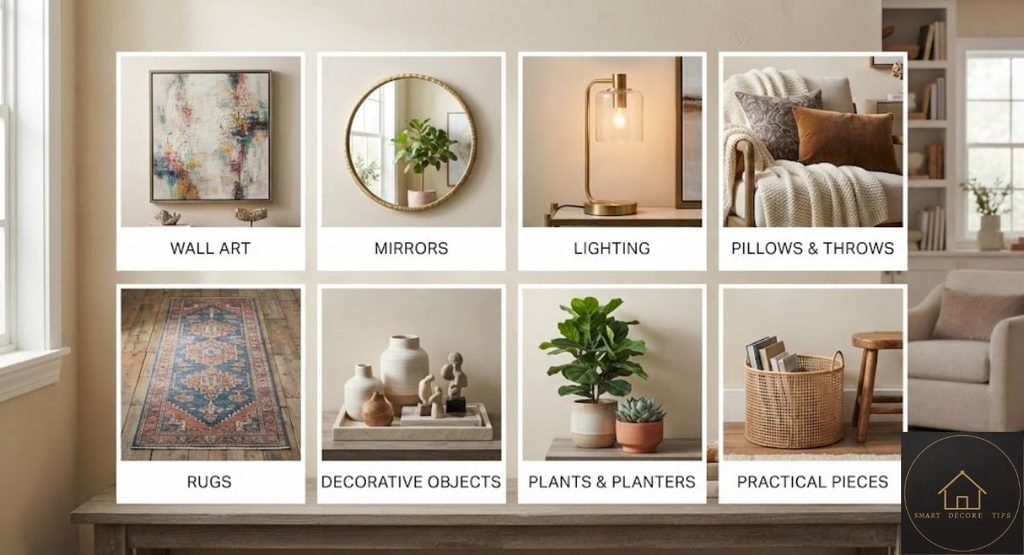
This guide sorts them into eight: wall art, mirrors, lighting, pillows and throws, rugs, decorative objects, plants and planters, and practical pieces such as baskets and trays. If you want named looks like coastal or Art Deco instead, the full guide to decor styles covers them.
How this guide was made This guide compares three kinds of sources, checked on October 9, 2026. First, the decor section of the Herman Miller online store, including its category filter (19 categories and more than 180 products on the day of the check; the count shifts between visits) and its “Types of Home Decor” text. Second, the J. Paul Getty Museum’s classroom vocabulary page for decorative arts.
Third, five popular style guides (HGTV, Decorilla, Bobby Berk, Mixtiles and Dreamscape Homes), read to see which questions they leave unanswered. The Mixtiles guide is also cited by name for a few rules from its mistakes section. Method: a decor type made the list only if the store treats it as its own category and it does a different job in a room from the others.
Any number or rule comes from a named source, and if only one source states it, it is marked “Verify”. Nothing here was tested, owned or photographed, and no products are rated.
Look or object? The two questions inside “decor types”
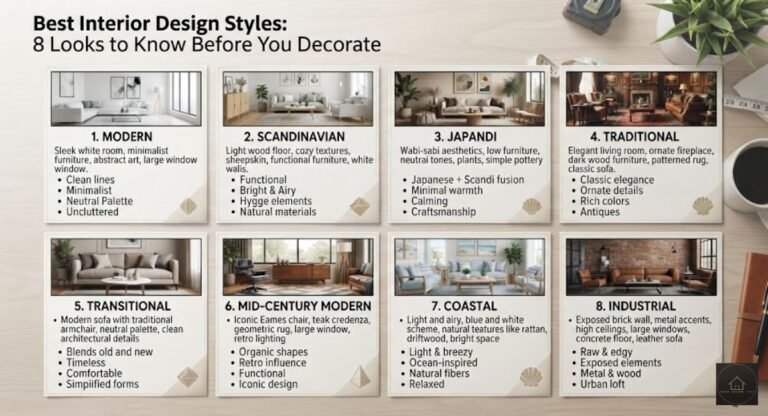
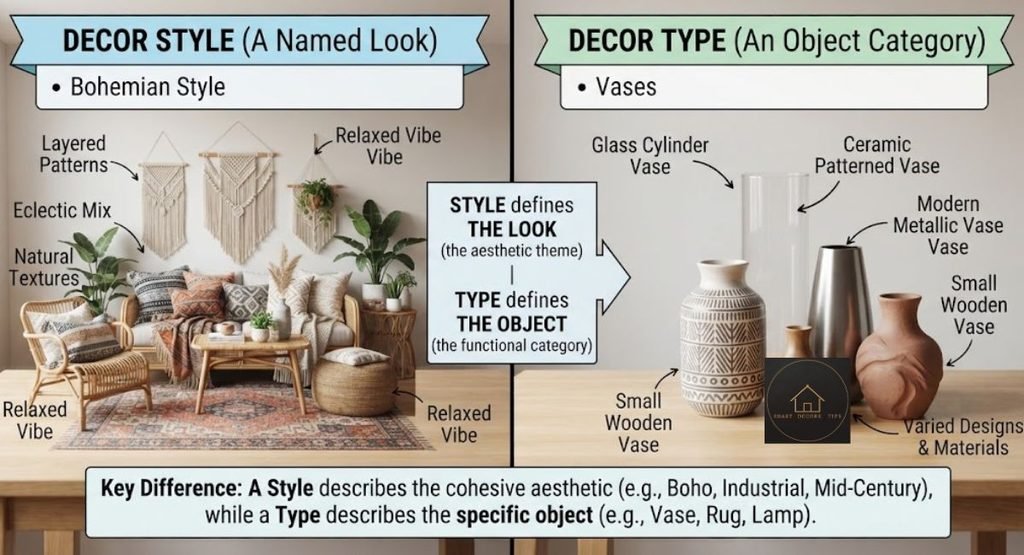
A decor style is a named look, such as farmhouse or Art Deco. A decor type is a kind of object, such as a rug or a mirror. Style says how the room should feel; type says what goes in it.
The five style guides read for this article all answer “types” with style names, which is useful but skips the object question. When a page promises interior design categories, it almost always means styles too.
These are two ways of decorating that work together: start from a look and check which types are missing, or start from the types and let the look follow. If you have no look yet, the guide on picking a home decor theme without it turning into a costume is the better first stop.
How many types of decor are there?
There is no official count. On the day of the check, one design retailer’s decor shop filtered into 19 categories, while the Getty Museum groups decorative arts into six material families: ceramics, furniture, glass, metalwork, textiles and woodwork.
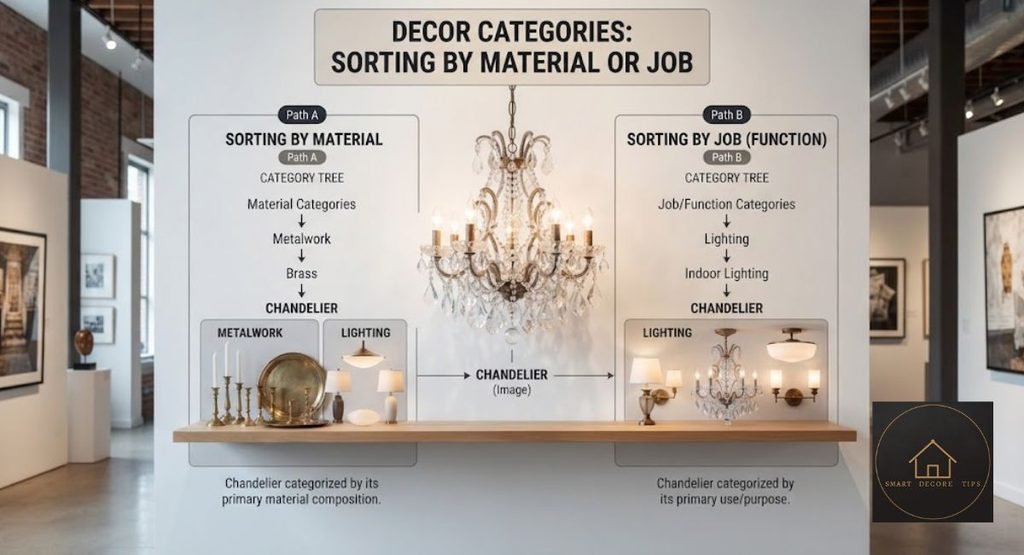
Home decor categories tend to come in two flavors. Sorting by material is how museums work, and it puts mirrors under glass and chandeliers under metalwork. Sorting by job is how stores and room guides work, and it puts that same chandelier under lighting. This guide sorts by job, with eight types, because that is how people shop and arrange a room.
What are the different types of decorations?
The eight types are wall art, mirrors, lighting, pillows and throws, rugs, decorative objects, plants and planters, and practical pieces. Types of home decor are easiest to compare when each kind of decoration has one job, so the table gives that job plus one rule or slip to watch, with the source named.
| Decor type | Its job in the room | Typical pieces | Rule or slip to watch (source) |
| Wall art | Fills blank walls and sets scale | Prints, framed photos, wall clocks, wall textiles | Art hung too high or too small gets lost; a group about two thirds to three quarters of the sofa width suits the furniture below (Mixtiles; Verify) |
| Mirrors | Add depth and bounce light around | Wall mirrors, dresser mirrors | Herman Miller lists mirrors as their own decor category; the common tip to hang one across from a window is Verify (not checked against an official source) |
| Lighting | Sets the mood and keeps the room usable after dark | Table lamps, floor lamps, sconces, pendants | Overhead light alone flattens color and texture; lamps and sconces add depth (Mixtiles) |
| Pillows and throws | Add color and texture to seating | Throw pillows, blankets | Two to three pillows for a sofa or bed (Herman Miller; Verify) |
| Rugs | Define the floor and soften it | Area rugs, runners | High-pile rugs cushion hard floors; flatwoven runners suit halls and entries (Herman Miller) |
| Decorative objects | Give surfaces a focal point | Sculptures, vases, candleholders, bookends | A shelf that tries to show everything reads as clutter (Mixtiles) |
| Plants and planters | Add life and height | Potted plants, planters | Herman Miller suggests a potted plant or two for a living room, bedroom or home office |
| Practical pieces | Storage and small tools that also look good | Baskets, trays, desk accessories, books | Herman Miller groups storage accessories under decor |
Furniture is left out on purpose. It is the base the eight types sit on, and the FAQ below explains the choice.
Type by type: what each one needs
The table gives one rule per type. These notes add the buying detail, taken from the same sources.
Wall art
The Herman Miller store counts posters, framed photographs, wall clocks and wall textiles as wall decor, so “art” here is wider than paintings. Mixtiles’ mistakes section names scale and placement as the top pitfalls and says to anchor a group to the nearby furniture and aim for an eye-level centerline. It gives no inch figure, which is why the 57-inch number in the FAQ stays marked Verify. To keep a mixed group calm, Mixtiles also says to unify it with one color treatment or one frame style.
Mirrors
Mirrors are the thinnest type in the sources: the Herman Miller store lists them as their own filter, and that is all it says. Treat any placement rule for them as a tip to test on your own wall, not a checked fact.
Lighting
Mixtiles puts it bluntly: overhead light alone flattens color and texture, and the fix is dimmable lamps and sconces that create layers and set mood. A dimmer matters for the same reason. One fixed brightness can only do one job.
Pillows and throws
Herman Miller describes pillows and blankets as doing double duty, adding color and texture to the room, and suggests two to three pillows for a sofa or bed. It also suggests keeping a blanket within easy reach, which is the practical half of the idea: a throw nobody can reach does nothing for the room.
Rugs
The same retailer says rugs add texture and warmth instantly. Its split is simple: thick, high-pile rugs soften hard floors in living areas, and flatwoven runners suit busy halls and entryways, where a thick pile would be in the way.
Decorative objects
Herman Miller describes sculptures, bookends and mobiles as pieces that add character to empty areas, and suggests pairing them with candles or flowers on a coffee table or putting them on shelves. Mixtiles adds the limit: a shelf that shows everything reads as clutter, so leave some empty space around the pieces that matter.
Plants and planters
Herman Miller suggests a potted plant or two for a living room, bedroom or home office, and says planters come in many materials and sizes. It adds that many work indoors or outdoors, so the pot can follow the plant when you move it.
Practical pieces
Herman Miller’s storage accessories include coat racks, baskets, bins and desktop trays, and it calls them functional and beautiful at once. The test is whether the piece still looks right with its contents in it. An empty basket does little for a room.
What to add first, and what to leave for last
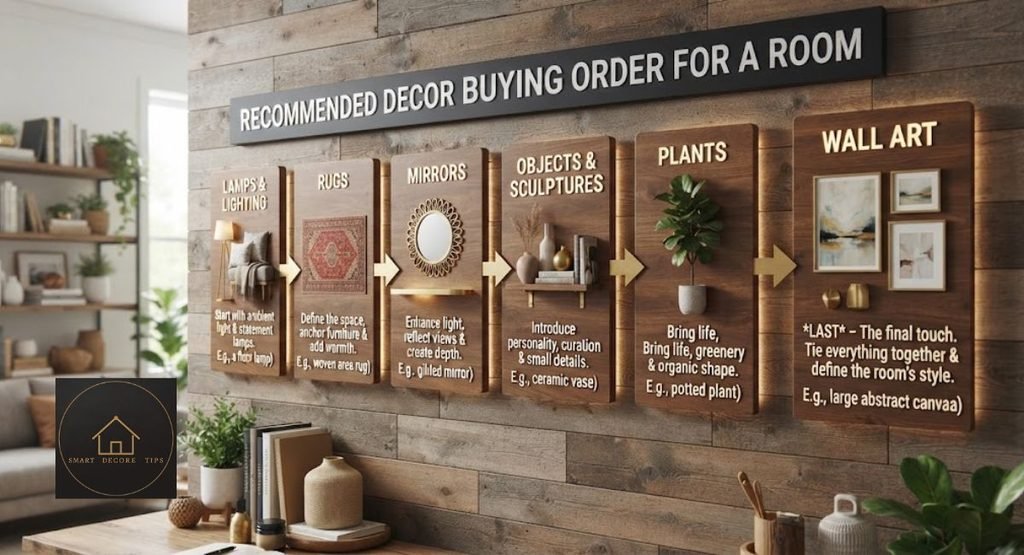
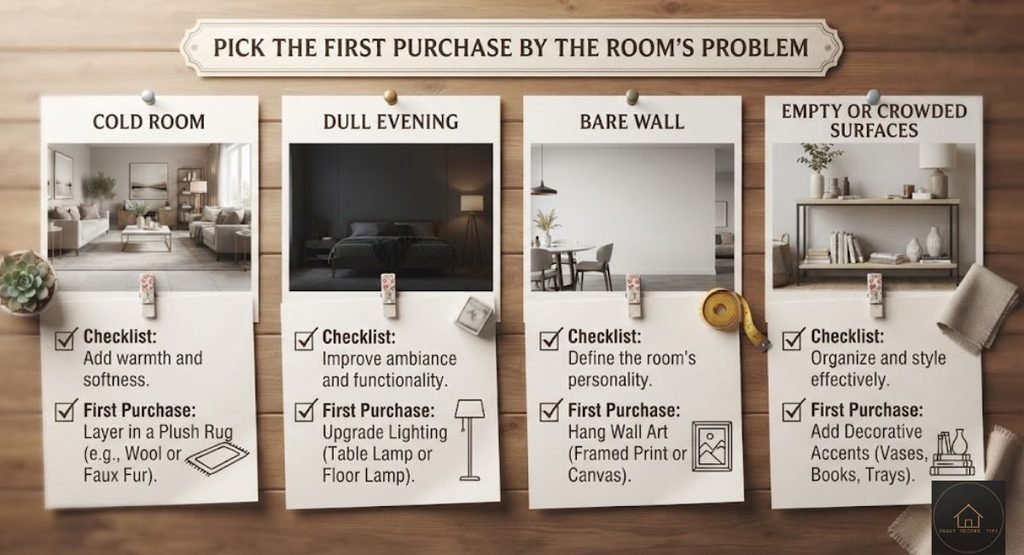
My pick, which is a reasoned opinion and not a tested result: lighting and soft textiles first, wall art last. A room with one ceiling light and bare seating feels unfinished in a way a missing print does not. Mixtiles’ guide says overhead light alone flattens color and texture, and Herman Miller sells pillows and blankets as decor for sofas and beds. Wall art has the most ways to go wrong, since height and size both matter, so it goes at the end.
If you would rather pick by problem:
- The room feels cold: a rug first, then pillows and throws.
- It is dull after sunset: a table or floor lamp near the seating before anything else.
- One wall looks bare: art sized to the furniture below it, or a mirror.
- Surfaces look empty or crowded: decorative objects, edited down to a few per surface.
Two honest trade-offs. This order is awkward for renters who cannot drill, because the wall types are limited and the movable ones (pillows, throws, rugs, lamps, objects, plants) have to carry the room; wall art may stay last for good. It is also wrong for collectors and maximalists. If one type is the whole point, such as a gallery wall or a shelf of plants, an even order across the eight will feel timid.
Six slips that make decor types fight each other
Mixtiles’ mistakes section is the best single source found on this, and the fixes below follow it.
Scale and placement. Art that hangs too high or too small gets lost. Anchor the group to the furniture under it and aim for an eye-level centerline.
Too many finishes. Mixing many wood tones or metals without repetition looks accidental. Mixtiles’ fix: pick one dominant finish and repeat a secondary one in at least three places.
Pattern overload. Patterns overwhelm when every scale shouts at once. Balance patterned pillows or prints with solid textiles and calm paint.
Crowded shelves. Leave negative space so special pieces stand out.
Lighting from the ceiling only. Add lamps and sconces.
Wall art with no link between pieces. A shared color treatment or frame style ties varied subjects together.
None of these needs a purchase. Most are fixed by moving, removing or repeating something you already own.
Living room or bedroom: which decor types lead?
In my reading, living rooms lean on wall art, objects and plants, and bedrooms lean on the soft types: rugs, pillows and throws. That split is a reasoned opinion, not a sourced rule.
The sources give a few pieces to build on. Herman Miller’s decor text suggests decorative objects for coffee table decor, two to three throw pillows for a sofa or bed, and a potted plant or two for a living room, bedroom or home office. Mixtiles says a living room art group can span about two thirds to three quarters of the sofa width, and that kitchen art belongs on walls away from steam and splashes.
Quick answers on furniture, lighting and wall art
Not in this guide. Museums such as the Getty file furniture under decorative arts, and the Herman Miller store lists side tables in its decor filter, so the line is blurry. Here furniture is the base layer, and the eight types are what sits on, hangs near or surrounds it.
Both. The Getty describes decorative arts as objects made for functional and aesthetic reasons, and it names chandeliers as an example under metalwork. A lamp earns its place by working and by looking right.
Herman Miller’s decor guide suggests two to three for a sofa or bed (Verify; single source). Treat that as a starting point and edit by how the sofa is used.
About 57 inches from the floor to the center of the piece is the figure gallery and framing guides repeat most (Verify; this check found art-seller and gallery pages, not an official museum page). Over a sofa, those guides let the furniture set the height instead.
This check found no standard list of seven (Verify). Guides that use the phrase usually mean style names such as modern or traditional, which the style-by-style guide covers one at a time. This article covers decor objects instead. One warning before you shop: a fifth pillow will not fix a room with one overhead light and bare walls. Fill the missing type first, then double up.

Hi, I’m Shahzad Ahmad welcome to Smart Decore Tips!
I write and research every guide on this site myself, focused on real, practical home decor advice for renters, first-time homeowners, and small-space living. Before publishing anything, I check actual product listings, current prices, and real customer reviews not just what other sites already say.
My goal is simple: help you make smarter, more affordable decor decisions without the guesswork or sales pitch.