
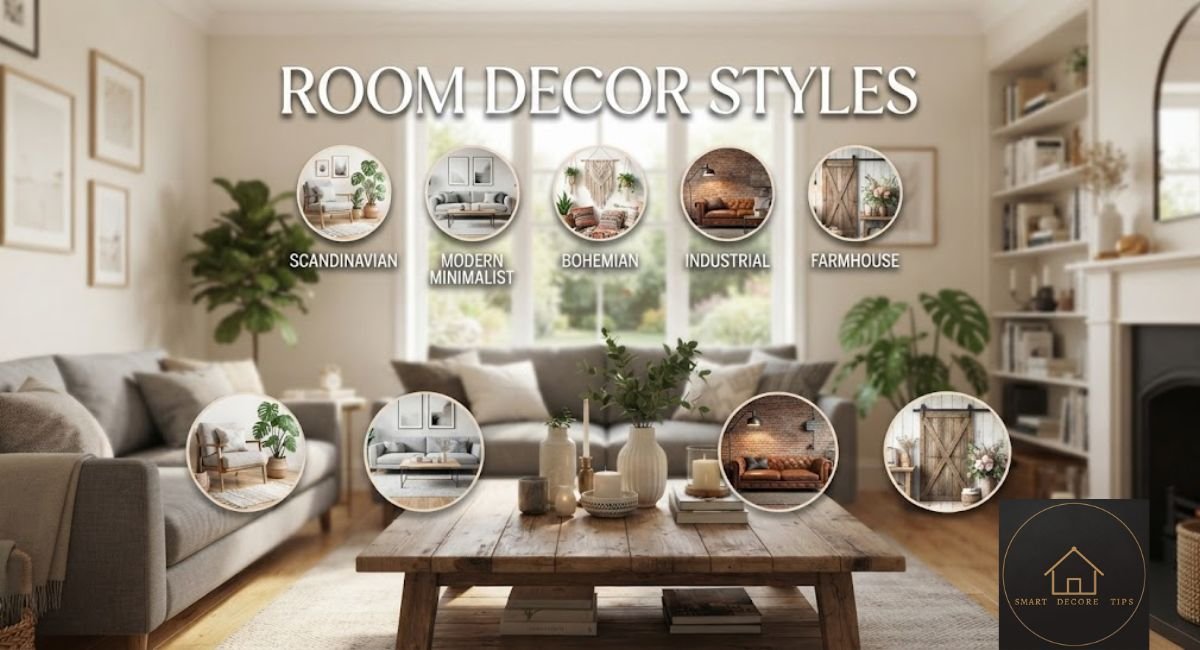
Room Decor Styles: Which Style Fits Which Room
You do not have to pick one style and force it into every room. Room decor styles work best when each room’s job leads the choice: a calm look for sleeping, an easy-to-clean look for cooking, a flexible look for the room where everyone sits.
A few repeated details then keep the rooms related. This guide matches common styles to five rooms, flags where each one struggles, and shows what to repeat so the house still reads as one home. For the full list of style names, see our home decor styles guide.
Does every room need the same style?
No. A room decor style is a named look, such as Scandinavian or coastal, applied to one room instead of the whole house, and room design styles can differ from room to room. The condition is consistency in a few basics. Bobby Berk’s style guide says changing styles between rooms is fine when flooring, color flow and hardware finishes stay consistent.
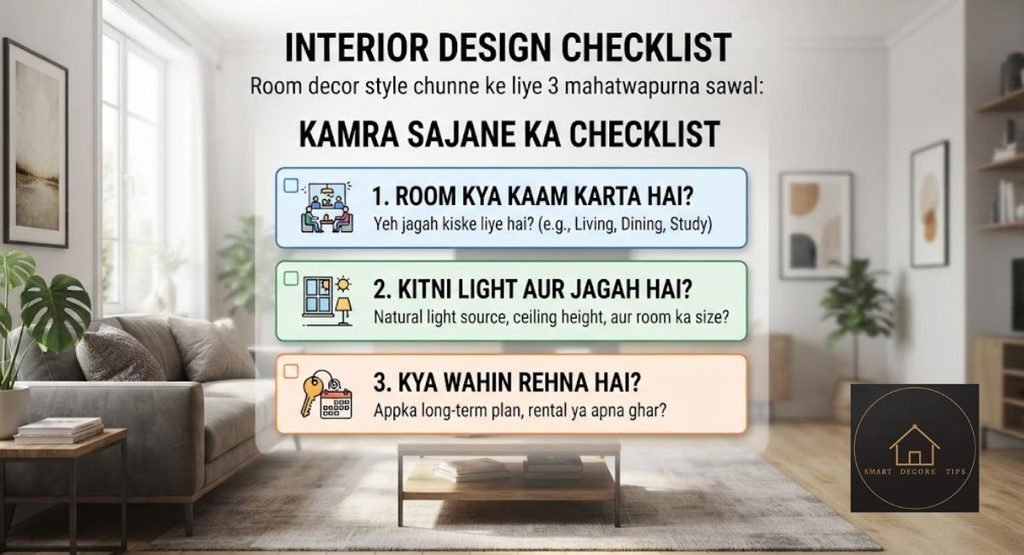
Before choosing, answer three questions:
- What does the room do? Sleeping, cooking and entertaining ask different things of a style. This is my reasoning, not a rule from the guides I read.
- How much light and space does it have? Emilgroup’s style guide says small or dim rooms call for lighter choices, while larger rooms allow more creative freedom.
- What has to stay? Floors, cabinets, built-ins and large furniture usually narrow the styles that fit.
Which room decor styles suit each room?
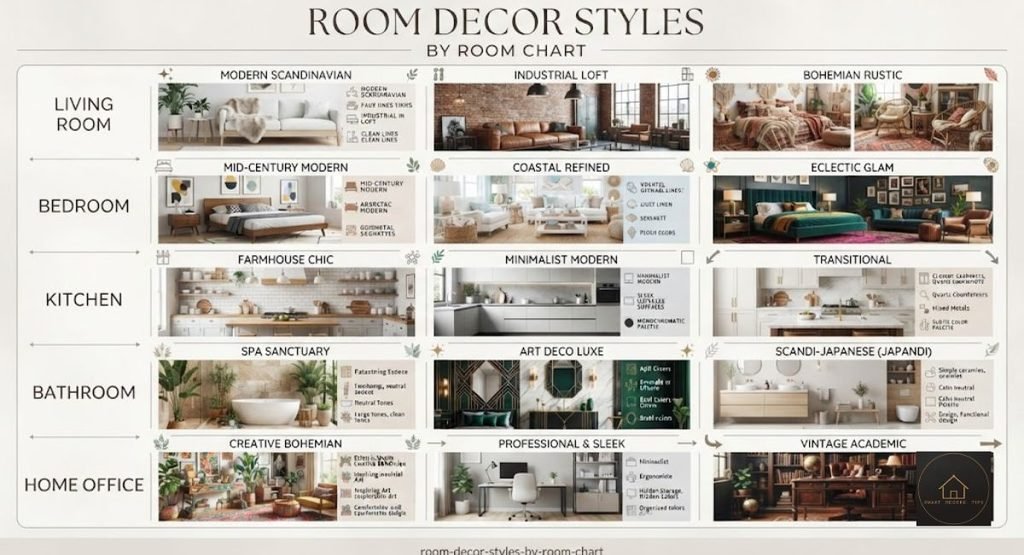
Use the table as a starting point, then adjust for your own light, budget and furniture. Each row lists styles that guides tie to that room, plus one thing to watch.
| Room | Styles to try | Why they fit | Watch for |
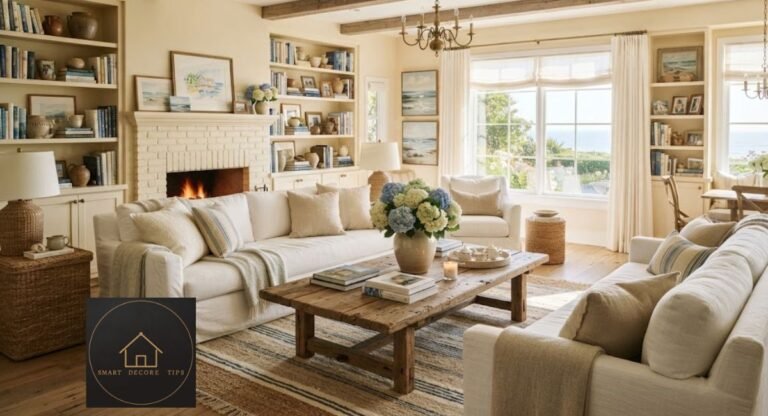
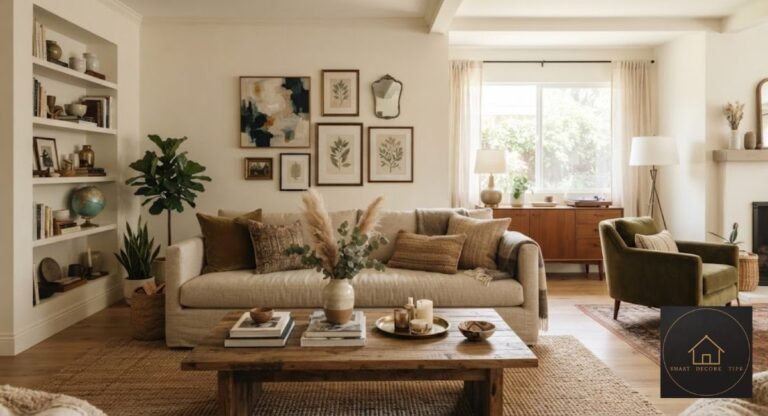
| Living room | Transitional, modern farmhouse, eclectic | Decorilla’s designers list these three as living room picks. A Houzz guide republished by Dreamscape Homes calls transitional a good compromise when partners like different looks. | Eclectic needs a repeated color, pattern or shape, or it reads as a pile of pieces (HGTV). |
| Bedroom | Scandinavian, Asian Zen, contemporary | Decorilla names these three for bedrooms. HGTV says Zen suits spaces built to restore balance, including bedroom retreats. | Zen and Scandinavian both depend on restraint; HGTV warns against overtreating floors, furniture and accessories in Scandinavian rooms. |
| Kitchen | Modern (softened), industrial touches | HGTV calls a slightly softened kitchen the most natural home for modern style, with monochrome surfaces that are easy to clean. It names metal pendants as the simplest industrial move for kitchens and dining areas. | Metal and open space can feel cold, so add texture and warmth (Houzz guide via Dreamscape). |
| Dining room | Mid-century modern, industrial lighting | HGTV calls dining chairs the beginner-friendly way into mid-century furniture because they mix well with other pieces. | Famous pieces such as the Tulip table are expensive, so start with chairs. |
| Bathroom or powder room | Asian Zen, country | HGTV links Zen to spa bathrooms and describes a country powder room built on a farmhouse sink, shiplap and a slab table instead of a vanity. | None of these sources covers moisture or durability, so check each product’s care notes. |
Treat these as starting points. Decorilla’s picks are its own designers’ opinions, and HGTV’s room notes come from single photographed examples, so none of them proves that a style is correct for a room.
Living room or bedroom: how do you choose?
Let the living room carry the more flexible look and keep the bedroom simpler. That is my reading of the sources, not a rule any of them states. The pattern I notice is that Decorilla’s living room picks (transitional, modern farmhouse, eclectic) all welcome blending, while its bedroom picks (Asian Zen, contemporary, Scandinavian) all lean toward restraint.
Use these decision rules:
- Several people share the living room and tastes differ: start with transitional as the base.
- You want a calm bedroom: Scandinavian, shown by HGTV with layered, textured white bedding on a pale frame, or Zen, which Decorilla says treats empty space as part of the design.
- You like collecting things: choose eclectic in the living room and keep the bedroom’s surfaces clear.
Two trade-offs. Transitional is easy to live with, but it will not make a strong first impression. A Zen or Scandinavian bedroom works only if you can store things out of sight, which frustrates people who like to display collections.
How do kitchens, dining rooms and bathrooms change the choice?
Put the style in the parts you can swap, and keep the big surfaces simple. HGTV’s examples for these rooms lean on pendants, barstools, dining chairs and a sink, which are the pieces easiest to change later. In a rental, they are often the only parts you can change at all.
- Keep the permanent layer quiet. Counters, cabinets, tile and flooring should stay simple.
- Add the style through lighting, stools or chairs.
- Soften hard materials. The Houzz guide republished by Dreamscape suggests filament-bulb lights, potted plants and candles to warm up metal-heavy rooms.
For help reading chair and stool shapes, our guide to house furnishing styles explains legs, frames and finishes.
How do you keep different rooms connected?
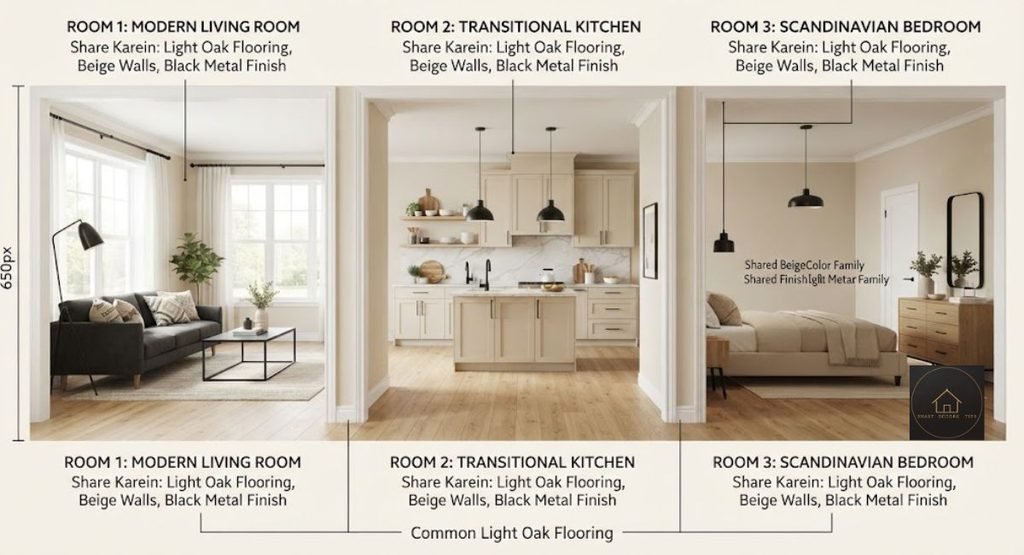
Repeat two or three things from room to room. Bobby Berk’s guide names flooring, color continuity and hardware finishes, which is the most specific rule any source I read gives for rooms with different styles.
- Keep the floor consistent. It is the hardest thing to change, so let it run through connected rooms.
- Pick one color family. Give it a place in every room, even as a small accent.
- Match metals and hardware. Handles, lamp bases and frames in one finish tie rooms together.
- Check the doorway view. Stand where two rooms show at once. If they look like strangers, add one shared color or material to each.
Steps 1 to 3 follow Bobby Berk’s list. Step 4 is my own check. The trade-off: more repetition makes a home calmer but less varied, while less repetition gives each room more personality and a higher chance of clashing.
What are some current room decor trends?
Two 2026 guides point to Japandi, wabi-sabi, cozy and quiet luxury (Emilgroup, May 29, 2026) and organic modern (Decorilla, August 12, 2026). Both come from companies that sell something and neither shows popularity data, so treat them as signals, not rankings.
Emilgroup describes Japandi as Nordic comfort with Japanese minimalism, wabi-sabi as an appreciation of imperfection and natural materials, and cozy as more of a mood than a style. Decorilla describes organic modern as minimalism warmed with materials such as linen, oak and plaster.
Put trends in the layer that is cheap to change: pillows, throws, lamps and accessories, which our decor types guide lists. Keep floors and large furniture neutral. If the trend fades, you replace a lamp, not a sofa. The cost is that a trend never shows up at full strength this way.
Which room decor style should you start with?
Start with the bedroom. It has the fewest users and the simplest job, so a clear style is easiest to apply and easiest to judge there. Then carry its color family and metal finish into the next room.
Who should choose differently: if you host often, or share the living room with people who disagree on style, start there with a transitional base. If your bedroom doubles as an office or storage space, restraint will be hard to keep, so begin in a room with less going on. The honest limit is that guests will not see the bedroom result first. That is a fair price if you would rather test a style where fewer people see it.
Frequently asked questions
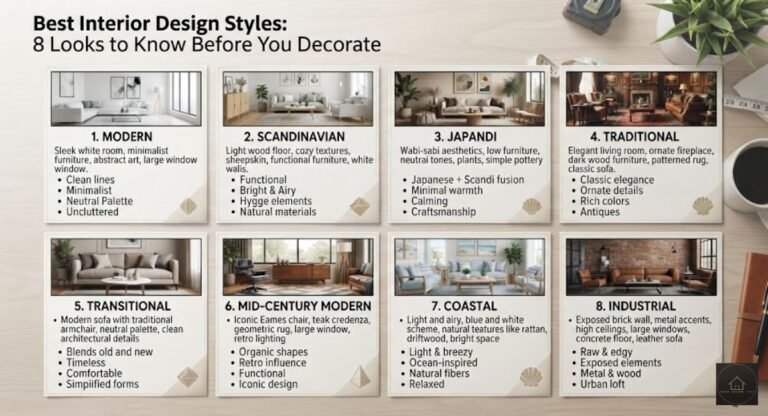
There is no official list. Common room style types include modern, contemporary, mid-century modern, Scandinavian, industrial, bohemian, eclectic, coastal, traditional and transitional. Our home decor styles guide defines twelve of them with examples.
They can. Emilgroup’s guide says small or dim rooms suit lighter choices, while larger rooms allow more freedom. That points toward simpler, lighter looks in small rooms. The inference is mine, not the guide’s.
How this guide was made
This guide was prepared on October 12, 2026. I opened four competitor guides directly (Bobby Berk, Decorilla, Emilgroup, and a Houzz guide republished by Dreamscape Homes) and compared them with HGTV’s “Interior Design Styles, Defined”, which shows an update date of July 28, 2025.
A House Beautiful page was also on my list but could not be opened, so it was not used. Method: a style is matched to a room only where at least one source ties them together, and opinions are labeled as mine. No rooms were decorated, no products were tested, no customer reviews were used and no rankings were checked. Where a claim rests on one source, the text says so.

Hi, I’m Shahzad Ahmad welcome to Smart Decore Tips!
I write and research every guide on this site myself, focused on real, practical home decor advice for renters, first-time homeowners, and small-space living. Before publishing anything, I check actual product listings, current prices, and real customer reviews not just what other sites already say.
My goal is simple: help you make smarter, more affordable decor decisions without the guesswork or sales pitch.
One Comment