
Home Decor Themes: How to Pick One That Isn’t a Costume
By Shahzad Ahmad | Last updated: October 8, 2026
Most home decor themes fail the same way: the props show up before the idea does. A good theme is one idea carried by a palette, a few materials and one anchor piece, and it still reads after the props are gone.
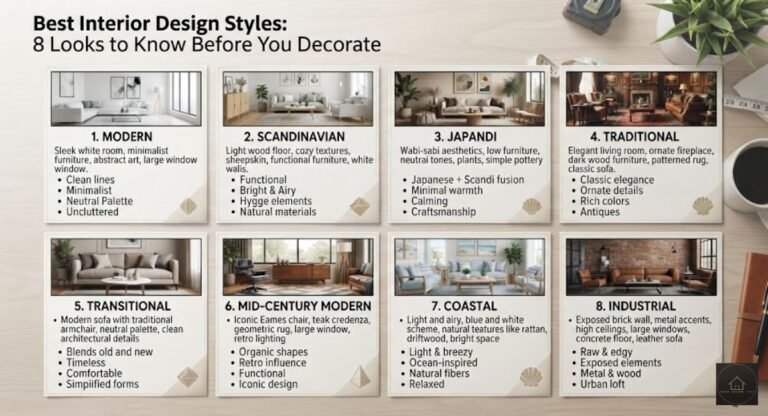
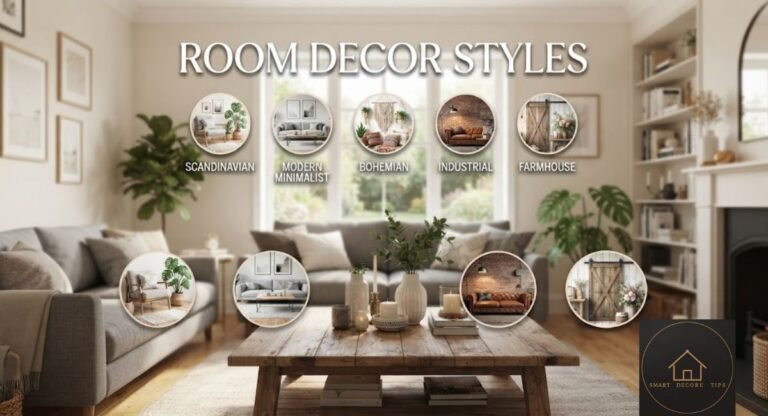
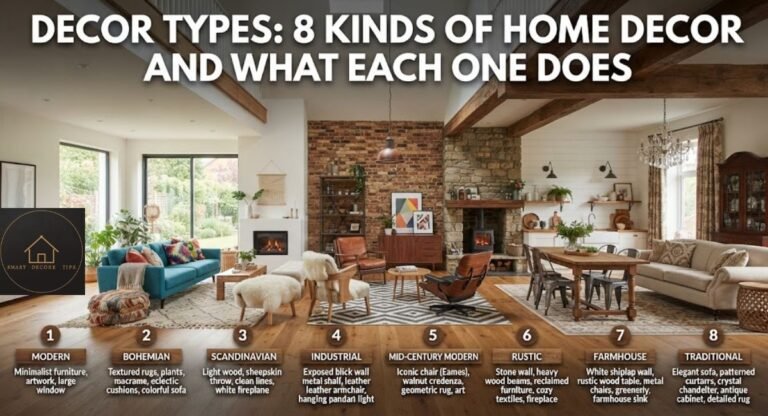
A home decor theme is the idea a room is built around, such as a place, a season, a mood or a memory. A style is the design language that tells it. This guide covers the idea, how literal to make it and what to buy first. For the named looks themselves, see every named look, with examples.
How this guide was made
What was compared: four of the five pages that appear for this keyword (Decorilla, HGTV, Bobby Berk and the Dowsing & Reynolds themes page), all opened on October 8, 2026. House Beautiful’s page could not be opened, so it is not counted. Live rankings were not verified.
Where the theme advice comes from: the National Association of Realtors’ staging article “How to Use a Home Decor Theme in a Room” (June 6, 2016, an archive page that NAR says may not be current), the Tidbits&Twine explainer on style vs theme (updated March 10, 2026), the Baer’s Furniture glossary (date not visible) and a 2026 trend forecast from Westlake Royal Building Products (date not visible).
Scoring method: a claim stays only if a named page says it. A claim that rests on one page is marked. The five-level literal dial below is an original sorting tool, not a validated one.
What was not done: no rooms were visited, nothing was tested or photographed, and no products are rated. No prices appear because none of the pages gave price ranges.
Why home decor themes so often turn into stage sets
The confusion starts with the words. Dowsing & Reynolds, a lighting and hardware retailer, sorts its themes page into 11 collections, and most of them, such as Japandi, mid-century, farmhouse and French country, are names of looks rather than stories. Baer’s Furniture’s glossary has the same loose habit, describing styles as themes you can design a room around. When sellers use one word for both, rooms drift toward whatever the shelf is stocked with.
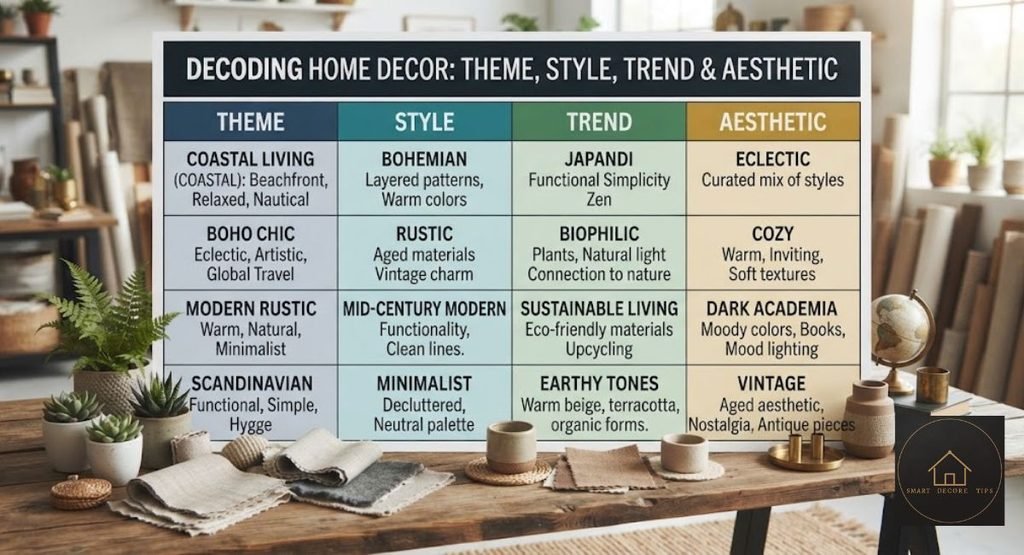
Tidbits&Twine draws the line with two tests. The first is items versus feeling: a themed room shows the idea through literal objects, such as vintage oars, nautical pillows or seashell art, while a style carries the same idea through color, texture and shape. The second is quantity. A few recognizable pieces won’t make a theme, but many of them together turn the idea into the main event.
A trend is a third thing. Baer’s describes trends as colors, textures and patterns that can sit inside different looks without changing them. Here is how this guide uses the four words.
| Word | What it means in this guide | Source |
| Theme | The idea a room is built around, shown through literal items | Tidbits&Twine; NAR |
| Style | A feeling made from color, texture, material and shape | Tidbits&Twine |
| Trend | A color, texture or pattern that can sit inside different looks | Baer’s Furniture |
| Aesthetic | The overall feel a room gives off, which is what people mean by interior aesthetics | This guide’s working definition |
NAR’s staging article adds a useful point: design style is only one possible cue for a theme, next to a location, a season or even a child’s favorite character.
What are some good themes for decorating?
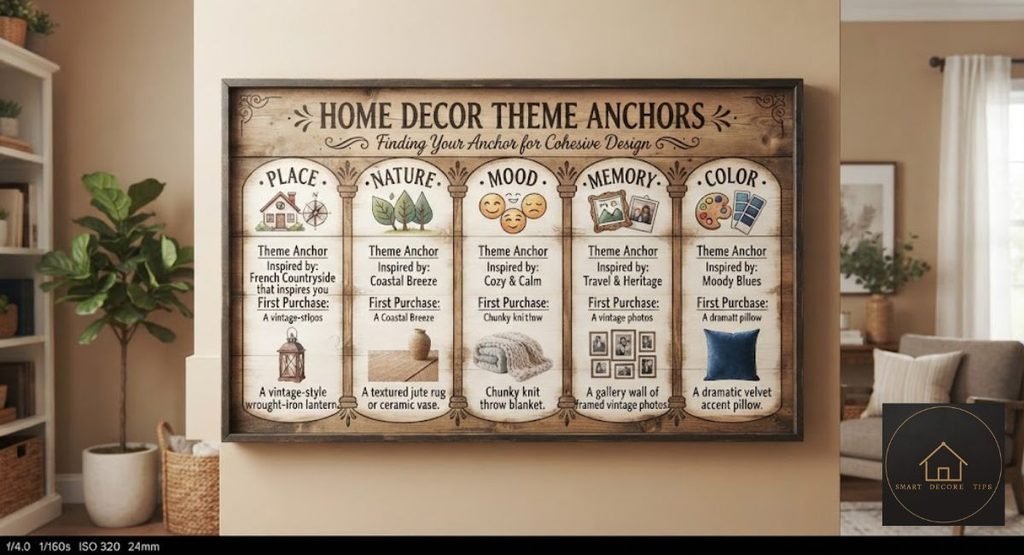
A good theme is one idea you can say in a sentence and build with a palette, materials and one anchor piece. These five anchors cover most of what people ask for.
| Anchor | Theme examples | Start with | Source |
| Place | Coastal, desert Southwest, Mediterranean | A palette taken from the setting; NAR’s beach palette is sky blue, earthy brown, sea-kelp green and turquoise | NAR; HGTV |
| Nature | Biophilic | Daylight and plants at different heights, with wood or stone left raw | Decorilla; Westlake Royal |
| Mood | Quiet luxury, dopamine decor | Quiet luxury: clean lines, quality materials, small details. Dopamine: bright color and playful details | Westlake Royal; Dowsing & Reynolds |
| Memory | Travel, collections | One anchor piece, such as a map for a travel theme | NAR |
| Color | A single palette | Paint first, then touches that echo it | NAR |
Interior decorating themes hold up best when they start from something already in the room. Renters can’t always repaint, so the same palette can ride on a rug, curtains and bedding; that swap is this guide’s suggestion, not NAR’s. If nothing in the table pulls at you, look at what you keep saving. The tagging method in how to determine your decorating style turns saved photos into a pattern you can name.
How literal should a theme be?
Less literal than a catalog suggests. For rooms you plan to keep, a theme reads best when color and material carry most of the idea and one or two objects hint at it. Full props belong in a single room where play is the point.
Two pages I opened disagree on coastal rooms. HGTV (updated July 28, 2025) lists lighthouses and seashells as typical accessories. Decorilla (August 12, 2026) says a coastal room doesn’t scatter anchors and seashells everywhere, and points to blue glass vases, striped wallpaper or abstract paintings instead. Both describe the same idea at different volumes, which is why a dial is more useful than a rule.
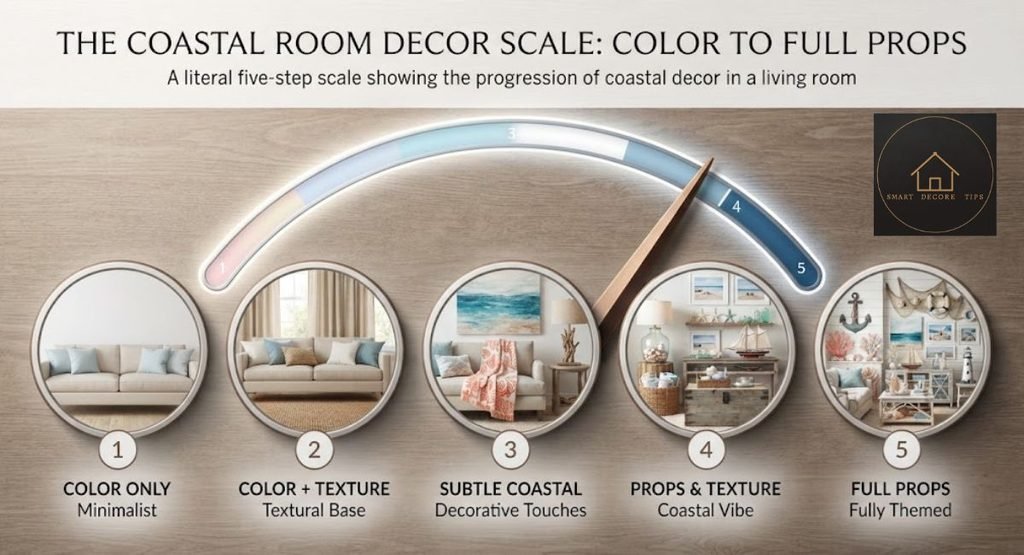
The literal dial (an original sorting tool, not tested or validated)
| Level | What you add (coastal example) | What the room says |
| 1 | Sky blue and sand on the walls or a big rug | “Calm” |
| 2 | Level 1 plus natural wood, linen, jute or wicker | “Relaxed and light” |
| 3 | Level 2 plus one suggested piece, such as a blue glass vase or an abstract painting | “Coastal, if you think about it” |
| 4 | Level 3 plus clear motifs: vintage oars, nautical pillows, seashell art | “A beach room” |
| 5 | Level 4 plus lighthouses, boat-shaped furniture and shells everywhere | “A theme room” |
I’d stop at level 3 for a living room or bedroom you plan to keep. Levels 4 and 5 belong in one room where play is the point, such as a child’s room; Tidbits&Twine notes that themes tend to feel playful and often live in a single room. Level 3 is wrong for anyone who wants the idea obvious from the doorway. Level 5 is wrong for a room you will want to change, because every prop belongs to one idea.
What is the best theme for interior design?
There is no single best theme, and none of the pages I opened ranks them. For a first room I’d pick a nature-led theme, because it can be built from small, movable pieces and doesn’t depend on props.
NAR’s staging article says natural elements give a room a warm, welcoming feel. Decorilla’s biophilic entry starts with plants at several heights and windows left clear of heavy treatments, with wood and stone kept raw or lightly finished. Westlake Royal’s 2026 forecast lists biophilic design among five core trends, though that is a building-products vendor’s data and leans toward exteriors. Because part of the look is a trend, keep the theme fixed on nature and let the current shades and finishes be the part you swap.
Two trade-offs. It is wrong for a room with little daylight or for anyone who can’t keep plants alive, since daylight and greenery do much of the work in Decorilla’s description. It is also wrong for someone who wants the idea obvious from the doorway, because a nature-led room reads quiet.
What are some unique home decor ideas?
Unique ideas come from something you already have a story for, not from a catalog category. NAR’s examples are a travel theme that starts with a map and a lemonade-inspired dining room whose artwork either shows a lemon tree or just borrows its colors.
Two more starting points in the same spirit, both my suggestions and not from a source: a shelf built around a collection you already own, or a hallway that borrows its colors from one photograph you love. A quick test for “unique”: can you state the theme in one sentence using an object you own? If the sentence needs a catalog category, it is probably the common version.
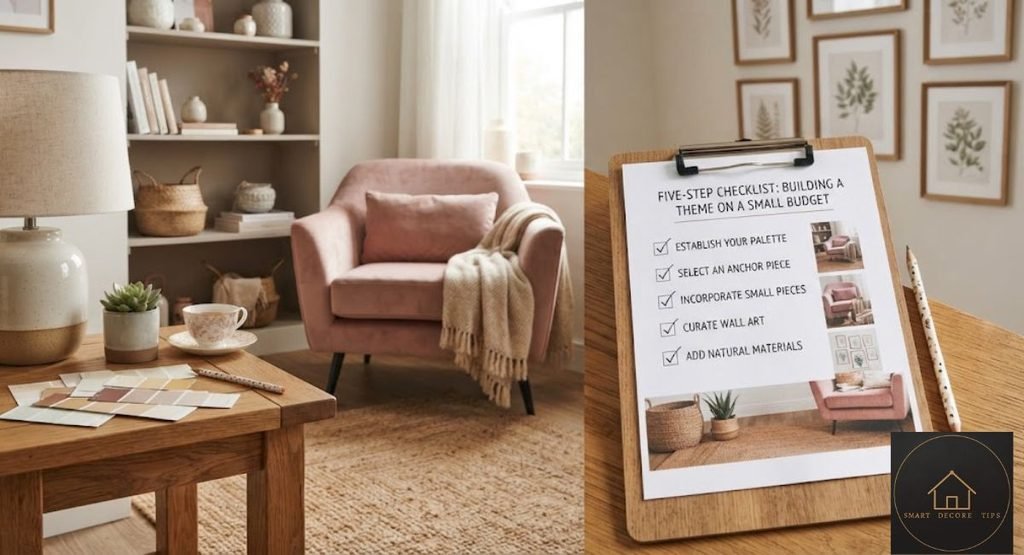
Home decor themes on a small budget: buy in this order
None of the pages I opened gives price ranges for a theme, so this guide doesn’t either. What NAR’s five rules do give is a sequence of low-cost moves. The order below is my reshuffle of them, built so each step can be reversed if the theme isn’t working.
- Palette first. NAR starts with color and calls paint the simple route. If you rent, carry the same palette on a rug, curtains and bedding (this guide’s suggestion).
- One anchor piece. NAR says to build the theme around a single piece you love and to take your time in furniture stores, yard sales and antique stores.
- Small pieces. NAR names throw pillows, table accessories, rugs and even knobs, and says little touches can matter more than an overall overhaul.
- Art last. NAR says art can be literal or abstract and mentions originals as well as more affordable prints and posters. Waiting until the palette and anchor exist makes the match easier (my reasoning).
- Natural, authentic materials throughout. NAR’s fifth rule says to use decor that is natural to the theme and authentic.
The trade-off: this sequence is slow on purpose, so it is wrong for anyone who needs a room finished in one weekend.
Four slips that turn a theme into clutter
Too many literal items. Tidbits&Twine’s quantity test works as a warning too: a few recognizable pieces stay accents, but many together make the idea the whole show. Stores often group themed items together, which makes it easy to keep adding.
No anchor. NAR’s third rule is a focal piece. Without one, a palette and a pile of accessories have nothing to answer to.
Mistaking a trend for a theme. Baer’s describes trends as colors and textures that can sit inside any look, and its example is a Pantone Color of the Year, Very Peri in 2022. A room built only on a trend carries the year it was bought.
Souvenir props instead of real materials. HGTV’s advice for a landlocked coastal room is indigo-dyed textiles, whitewashed furniture, woven pendants and rattan, with spiky greenery such as sago palm fronds in place of flowers. That is the setting’s materials and colors, not its souvenirs, and it lines up with NAR’s call for authentic materials.
Questions that come up after picking a theme
Yes, if something ties the rooms together. Bobby Berk says changing looks from room to room is fine when flooring, color continuity and hardware finishes stay consistent (page modified June 28, 2026).
Bobby Berk suggests blending through a neutral base and shared materials, and letting different rooms lean different ways.
Yes, because most of the work sits in small, movable pieces such as pillows, table accessories and rugs, which NAR names. Check your lease before swapping knobs or painting.
Use them as a layer, not the base. Westlake Royal’s forecast names both among five core 2026 trends, but it is a vendor’s data and leans toward exteriors. Baer’s treats trends as colors and textures that sit inside other looks.
The prop test
Before keeping a theme, picture the room with every literal object taken out. If the palette, the materials and the anchor piece still say the same thing, the theme is working. If the room goes blank, it was only props. A theme is worth keeping only if the room still makes sense after the props leave.

Hi, I’m Shahzad Ahmad welcome to Smart Decore Tips!
I write and research every guide on this site myself, focused on real, practical home decor advice for renters, first-time homeowners, and small-space living. Before publishing anything, I check actual product listings, current prices, and real customer reviews not just what other sites already say.
My goal is simple: help you make smarter, more affordable decor decisions without the guesswork or sales pitch.
One Comment