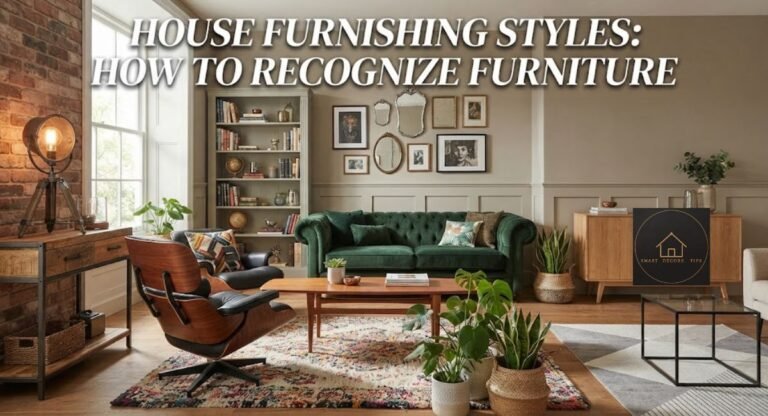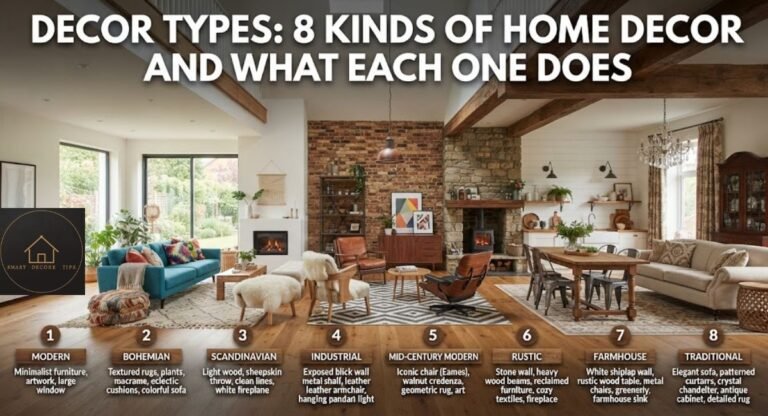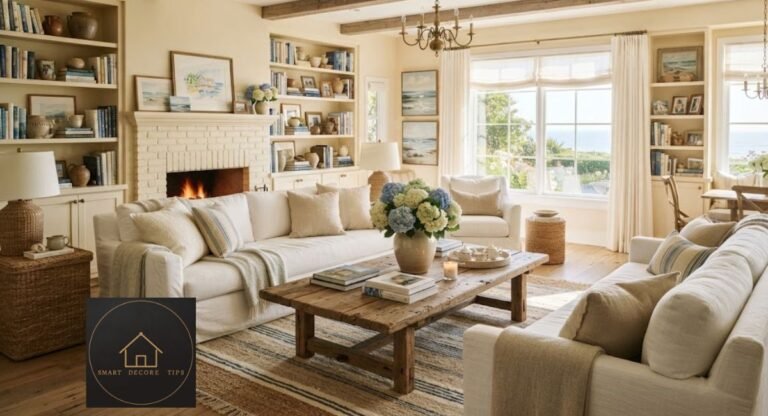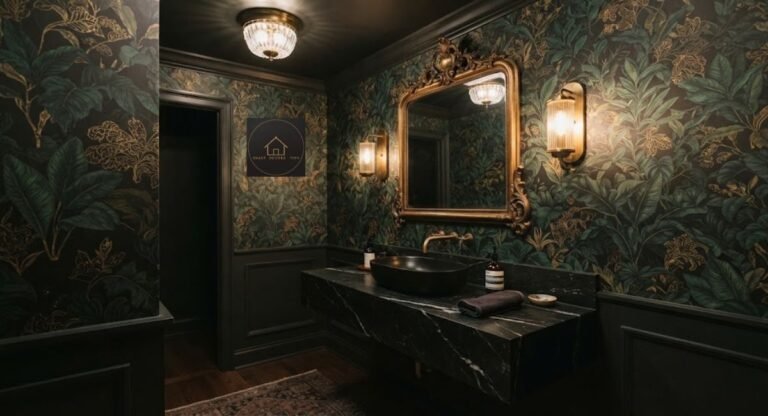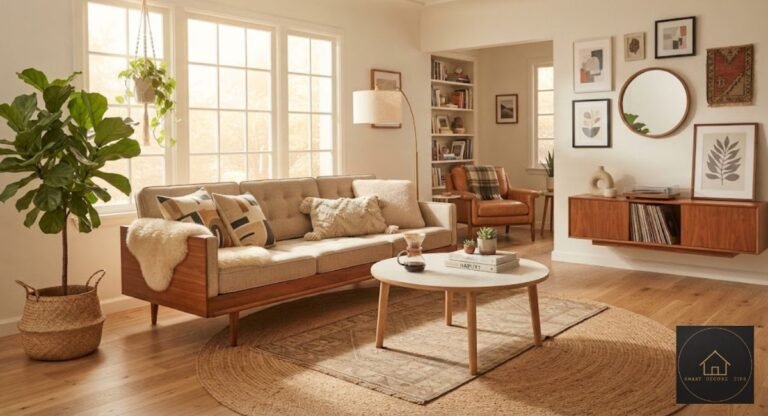
How to Determine Your Decorating Style in 4 Steps
By Shahzad Ahmad | Last updated: October 7, 2026
Open your phone’s saved-photos folder, then your last few online carts. Different rooms, different labels, yet something repeats: curved edges, warm wood, or nothing but white. That repeat is your style, and counting it works better than guessing.
To determine your decorating style, tag what you have already saved and bought by shape, material, color mood and ornament, count the tags, and name the winning combination. A quiz can confirm the result later. It shouldn’t be the starting point.
A decorating style, in plain terms, is the repeating pattern of shape, material, color and ornament in the things you choose for your home.
This page covers the step before choosing a label. The names themselves are laid out in our guide to every named style.
How this guide was made
- What was compared: five pages that appear for the main keyword (Designer Society of America, HGTV, Havenly, Decorilla and Nina Hendrick), all opened on October 7, 2026. Live rankings were not verified.
- What was checked for dates and origins: three entries in Tate’s online glossary (Arts and Crafts, Art Deco, Bauhaus), opened October 7, 2026.
- What was read for the “cheap” and 2026 questions: designer-quote articles from Homes & Gardens and Livingetc, plus trend reports from Living Spaces, Homes & Gardens and Domus Academy.
- Scoring method: the four-tag worksheet below is an original method. Its columns follow the features Tate’s entries use to separate one look from another. It has not been validated in a study.
- What was not done: no products were tested, no rooms were visited and no photos were taken for this article.
Step 1: Find your home decor style from what’s already in the room
Start with evidence you didn’t have to think hard about: the things you saved and the things you bought. Pull together about 20 saved images and 10 objects from your own home that you’d keep if you moved tomorrow. Those counts are a working number, not a researched threshold. Fewer is fine. The pattern just gets noisier.
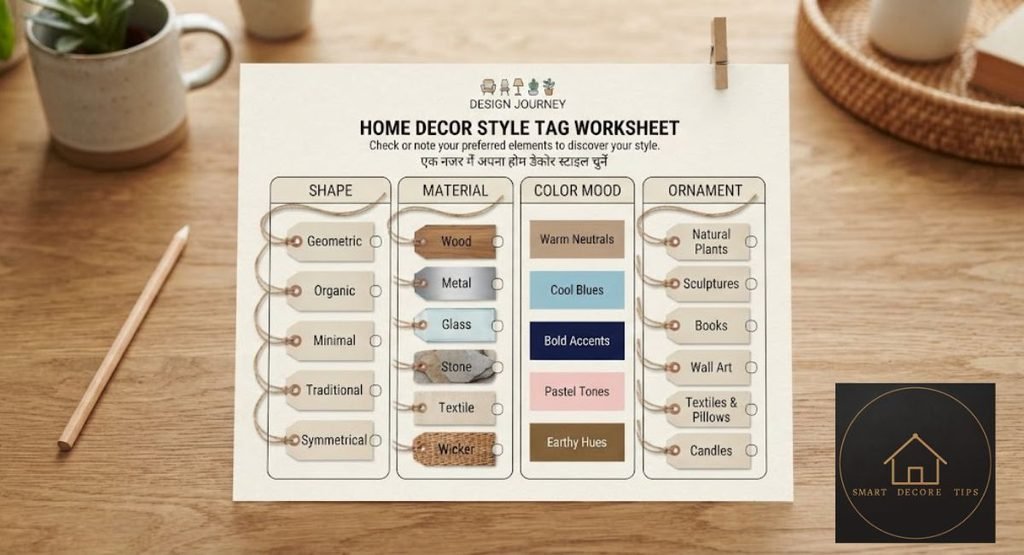
Tag every item in four columns.
| Column | Pick one |
| Shape | Straight, curved or mixed |
| Main material | Wood, metal, stone, fabric, glass or painted surface |
| Color mood | Warm, cool, neutral or high contrast |
| Ornament | Bare, some or layered |
Why these four? Tate’s glossary separates Arts and Crafts, Art Nouveau and Art Deco mostly by how much ornament each carries, whether lines curve or turn geometric, and which motifs they borrow. Shape and ornament come straight from that. Material and color mood are there because they decide how a room feels on an ordinary Tuesday.
Renting, or working with one small room? Tag only what can move with you: lamps, textiles, frames, a rug. Floors and cabinets aren’t yours to change, so they shouldn’t get a vote.
Why a quiz result is only a starting point
A quiz sorts people into a fixed number of buckets, so mixed taste gets squeezed into one. The five pages I opened show the pattern.
The Designer Society of America quiz runs 12 questions, each with six lettered picture answers; its result screen wasn’t visible on the page I opened. Nina Hendrick’s quiz returns percentages across six archetypes, and her own post says most people don’t fit one neat category (page modified February 23, 2026).
Havenly’s quiz page points results toward matching with one of its paid designers. HGTV’s quiz page was updated September 25, 2025, and Decorilla’s 25-style guide, dated August 12, 2026, ends with a free quiz of its own.
None of the five gives a step-by-step way to settle a disagreement between the quiz and your habits. That gap is what the next section fills.
My pick: tags first, quiz second. A quiz records what you say you like on one afternoon. The tags record what you kept.
Who this is wrong for: anyone with an empty apartment and nothing saved. With no evidence to count, take a quiz or walk through a showroom first, then start tagging.
Step 2: How to determine your decorating style when your taste splits in two
Count the tags in each column, take the winner of each, and read the four winners together as your recipe. If the winners point at two different looks, name a lead and an accent.
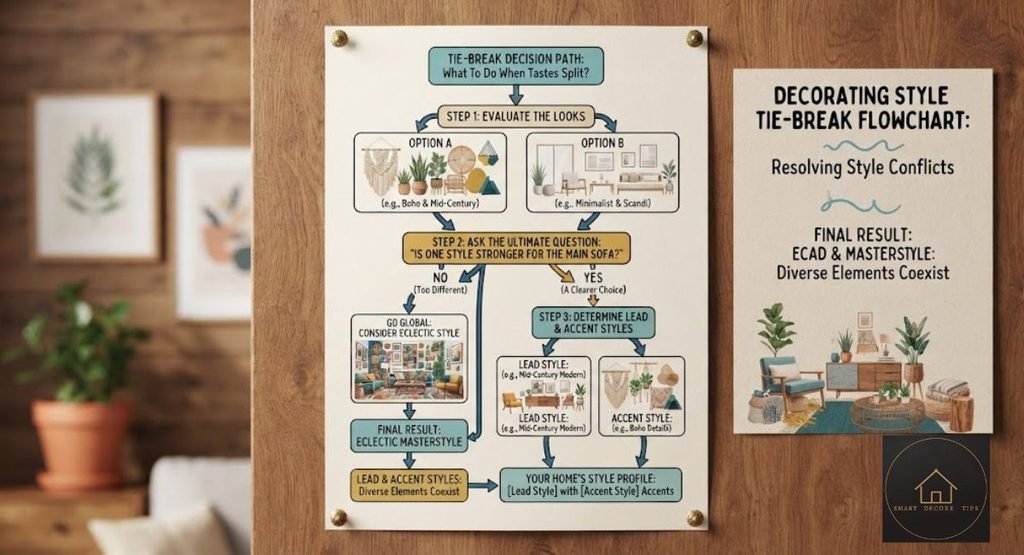
- Count. Tally each column across all 30 items.
- Write the recipe. Four winners, for example: straight, wood, warm, bare.
- Check the fit. See how many items match the recipe in at least three columns. If most do, you have a lead style.
- Break a tie. Ask which half you would pay full price for in a sofa. That half leads. The other half lives in small things such as pillows and frames.
Here is a made-up tally, for illustration only and not real data. Say all 30 items are counted:
| Column | Sample counts (30 items) | Winner |
| Shape | 18 straight, 7 curved, 5 mixed | Straight |
| Main material | 14 wood, 8 fabric, 5 metal, 3 glass | Wood |
| Color mood | 16 warm, 9 neutral, 3 cool, 2 high contrast | Warm |
| Ornament | 17 bare, 10 some, 3 layered | Bare |
The recipe is straight, wood, warm, bare. An item that matches three of those four counts as a fit. Most of the 30 fit, that recipe is your lead. If only about half do, you are in tie-break territory.
If you keep asking yourself what decorating style am I, and the answer flips every week, look at the columns one at a time. Steady on shape and ornament but split on color points to a palette decision, not a style crisis.
The trade-off: scoring misleads when every saved image came from one person’s feed or one retailer’s catalog. Mix your sources before you count, or the winner is just that feed’s taste.
Step 3: Read the dates behind a look
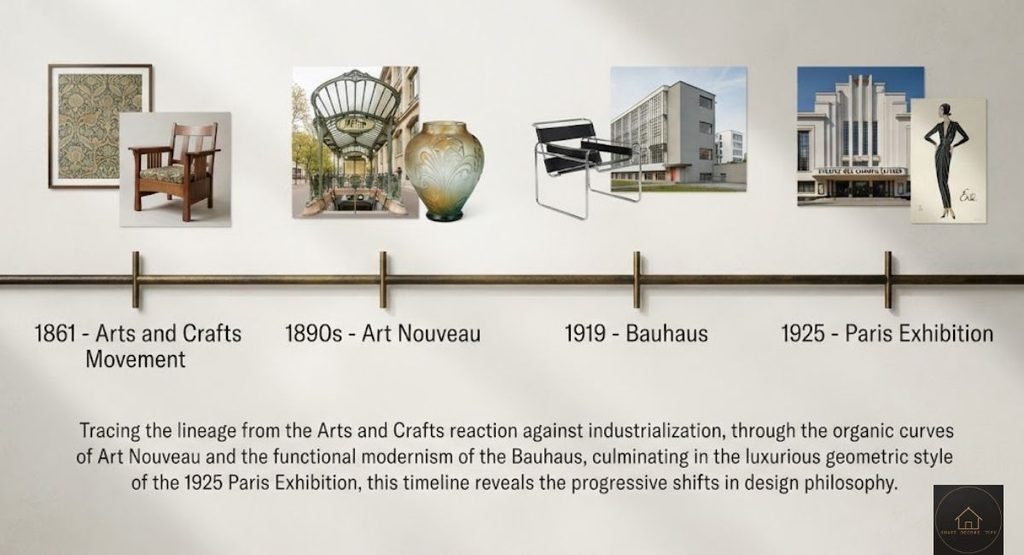
Holding one chair, one lamp or one photo and wondering what decor style is this? Dates narrow it down faster than adjectives. Tate’s glossary gives anchor dates for three looks that still shape what stores sell.
| Clue you can see | Leans toward | What Tate’s glossary says (checked October 7, 2026) |
| Plain, handmade look; plant forms used as flat pattern; little applied ornament | Arts and Crafts | A design movement started by William Morris in 1861, favoring simple, functional design over Victorian excess and using natural motifs |
| Sinuous, flowing curves | Art Nouveau | An international style that emerged in the 1890s |
| Hard geometry; angular, fragmented pattern | Art Deco | A 1920s and 1930s style, named after a 1925 Paris exhibition, shaped by cubism and, in places, by Bauhaus design |
Read the middle column as a reading aid, not a verdict. A date tells you a look’s ancestry, not the age of the object. A lamp made this year can borrow a 1925 outline.
Dates also explain why two looks you like can feel related. Tate’s Art Deco entry calls deco a successor to, and a reaction against, art nouveau. The Bauhaus, which Tate says Walter Gropius founded in Weimar in 1919, fed into deco as well.
And Tate’s Arts and Crafts entry notes that Nikolaus Pevsner’s 1936 book traced modern design from Morris to Gropius. So a taste for handmade wood and a taste for clean modern lines can share one root: less ornament.
If your tags lean modern, the sibling guide Modern Interior Styles: What Really Counts as Modern, and Which Branch to Pick sorts that side into four branches.
Four ways the tagging goes wrong
Tagging a trend week. Images saved in one burst after a viral post show that week’s feed, not your taste. Spread your saved images over several months, or leave the burst out.
Mixing up a color with a style. A sage wall is a color mood, not a look. Tag it in that one column and let the furniture decide the other three.
Counting gifts and hand-me-downs. Tag only objects you would choose again. A relative’s lamp tells you about the relative.
Naming too early. Lock in a label after ten items and every later item gets bent to fit it. Count all thirty first, then name.
What makes a house look cheap?
Designers quoted by Homes & Gardens point to clutter, furniture out of scale with the room, a rug that is too small and decor that reads as chintzy. Livingetc’s designers frame “cheap” as a lack of intention rather than a small budget.
Most of that is a consistency problem, and a recipe helps because it works as a yes-or-no filter. Before buying, ask whether the piece matches at least three of your four winning tags. Homes & Gardens also quotes Mike Semegen of Hello Home Studios on flooring: mismatched floors from room to room give a space a pieced-together feel. Fixing a room costs more than filtering a purchase.
What is the 2026 decorating style?
There isn’t one official style. The three 2026 trend reports I opened overlap on warm, earthy color and organic shapes, then each adds something different. Living Spaces lists earth tones as in and cool greys as out, and also names biophilic design. Homes & Gardens points to browns, caramel and merlot, plus vintage. Domus Academy describes curved forms, a return to craftsmanship and a refined kind of maximalism.
I’d treat a trend as an accent layer: a throw, a vase, a lamp shade. A style should survive the day your saved-images folder gets cleaned out. A trend usually doesn’t.
Four questions people ask after the worksheet
It is a styling guideline: group objects in odd numbers, such as three, five or seven, so a shelf or table feels balanced. Livingetc’s reporting adds that formal rooms like a dining room may suit symmetry better. It’s a layout trick, not a style, so it comes after you’ve picked a lead.
There is no official list. MasterClass and Better Homes and Gardens Australia each publish a seven-style list, and the members differ: one names Hamptons, another names modern farmhouse. Treat any “seven” as one editor’s cut. The pillar guide linked above holds the full set of names.
Trust the tags for anything that costs more than a lamp. Then remove images you saved for one detail, such as a paint color, and retake the quiz. If the result moves toward your tags, the quiz was reacting to noise.
Not for buying. Nina Hendrick says a name isn’t necessary if you know the direction you’re headed, while Amanda Katherine’s guide recommends giving it one. Pick whichever helps you say no to purchases. A four-tag recipe works fine as a name.
Step 4: Test it on one purchase before you commit
The last step is a small experiment. Pick one piece that matches at least three of your four winning tags and costs far less than a sofa, such as a lamp or a framed print. Put it in the room and see whether everything around it still makes sense. If you want a test surface, style one shelf with five objects using the 3-5-7 guideline above. A piece that fails costs little to return, and it tells you something the quiz couldn’t. Don’t buy the sofa on the strength of one quiz result. A quiz hands out a label in minutes. A sofa you regret stays in the room long after.


Hi, I’m Shahzad Ahmad welcome to Smart Decore Tips!
I write and research every guide on this site myself, focused on real, practical home decor advice for renters, first-time homeowners, and small-space living. Before publishing anything, I check actual product listings, current prices, and real customer reviews not just what other sites already say.
My goal is simple: help you make smarter, more affordable decor decisions without the guesswork or sales pitch.