Best Interior Design Styles: 8 Looks to Know Before You Decorate
By Shahzad Ahmad
Last updated: October 6, 2026
Choosing a home style is easier when you stop asking, “Which style is the most popular?” and ask, “Which style fits my home and the way I live?”
The best interior design styles can look very different from one another. Modern is clean and controlled. Traditional is more detailed. Scandinavian feels light and practical. Japandi keeps things calm and simple.
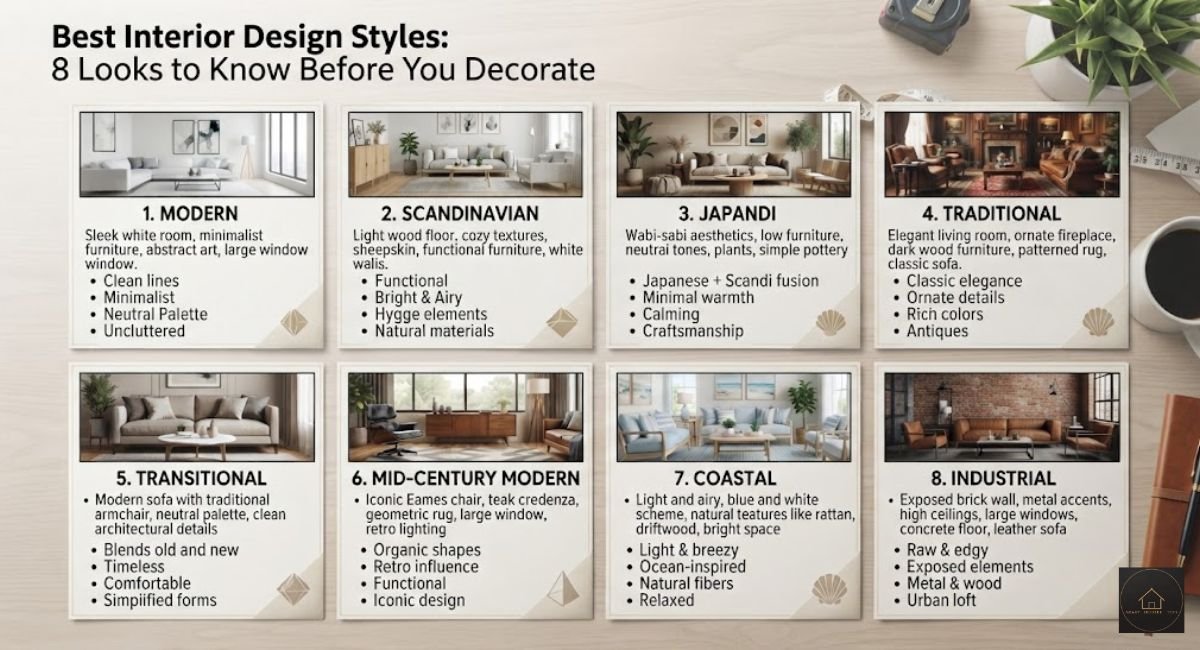
This guide compares eight popular styles and explains who each one may work best for.
For a broader look at different styles, see our guide to Home Decor Styles: Names, Examples & How to Decorate Each.
What are the top 5 styles of interior design?
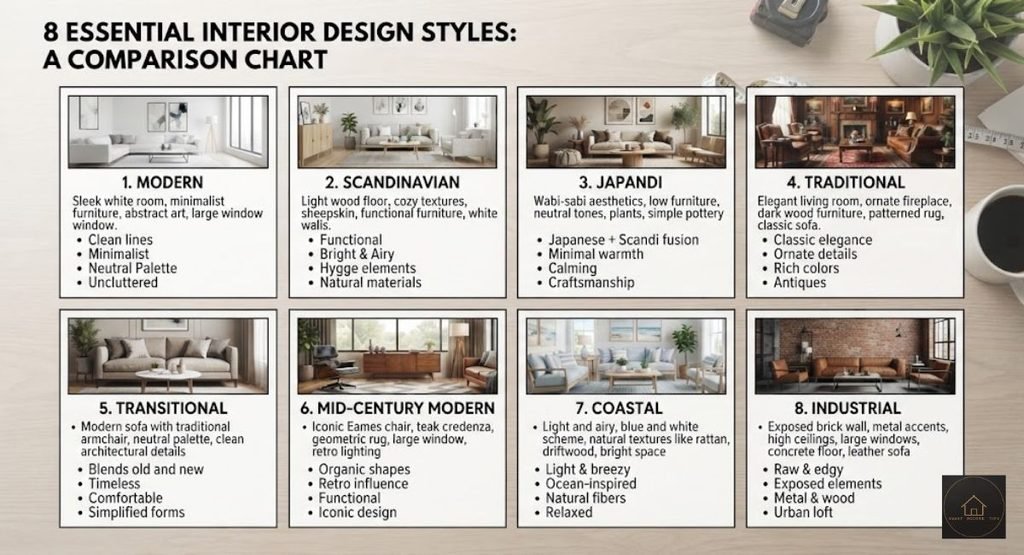
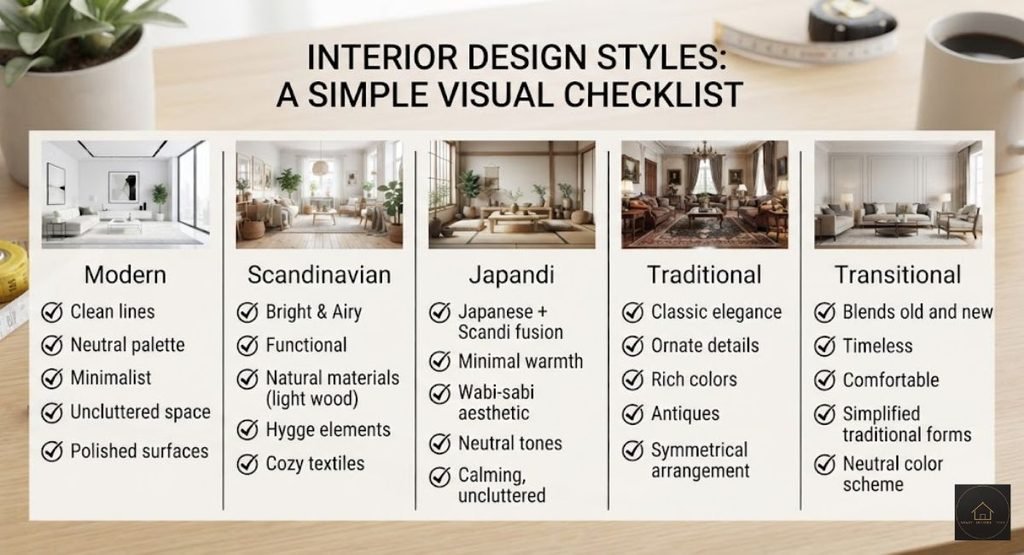
There is no official list of the five “best” interior design styles. However, modern, contemporary, Scandinavian, traditional, and transitional are five useful styles to know because they take very different approaches to furniture, color, materials, and room design.
| Style | Main feel | Good fit for |
| Modern | Clean and simple | Low-clutter homes |
| Contemporary | Current and flexible | People who like a fresh look |
| Scandinavian | Light and practical | Casual, comfortable rooms |
| Traditional | Classic and detailed | Classic or formal homes |
| Transitional | Classic with a current feel | People who want a middle ground |
The important thing is not choosing a style because it is called “the best.” Choose one that works with the home you already have.
1. Modern is best for a clean, uncluttered home
Modern interior design is known for clean lines, simple forms, restrained decoration, and functional furniture.
One point often causes confusion: modern and contemporary are not the same thing. Modern design is connected to a particular design movement and period, while contemporary design describes what feels current and can change over time.
A modern living room might include:
- A simple sofa with clean lines
- Minimal decorative objects
- Wood, metal, glass, or stone
- A neutral base with a few stronger accents
- Simple lighting
Best for: people who dislike visual clutter.
Trade-off: too much simplicity can make a room feel cold. Rugs, curtains, wood, artwork, and softer upholstery can add warmth.
2. Scandinavian works well for relaxed everyday rooms
Scandinavian design combines simple forms with functionality, natural materials, and lighter colors.
Think light wood, soft textiles, simple furniture, and a room that feels useful rather than overdecorated.
Try:
- Light or medium-tone wood
- Linen or cotton textiles
- Soft rugs
- White, beige, or gray
- Simple furniture with useful storage
Best for: homeowners who want a bright, comfortable, practical look.
Trade-off: too much white and gray can make the room feel flat. Natural wood and texture help keep it warm.
3. Japandi is a good choice for calm, simple interiors
Japandi combines Japanese and Scandinavian influences. Natural materials, simple furniture, neutral colors, and uncluttered rooms are common features.
A Japandi room does not need to be completely white.
Warm beige, natural wood, muted green, charcoal, black, and earthy shades can work together.
Best for: bedrooms, smaller living rooms, and people who prefer a quiet visual style.
Trade-off: buying too many themed accessories can work against the style. Japandi usually looks better with fewer, carefully chosen pieces.
4. Traditional is a better fit if you love detail
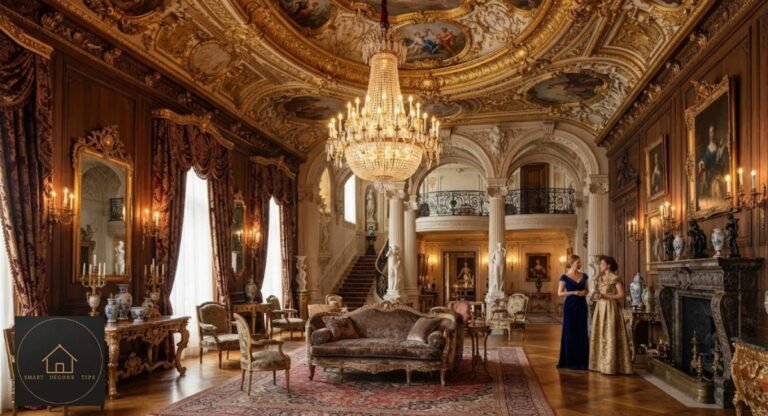
Traditional interior design takes inspiration from classic European interiors. Symmetry, detailed furniture, richer colors, patterns, wood, and decorative elements are common.
Traditional can work especially well when a home already has features such as:
- Crown molding
- Wood floors
- Built-ins
- Classic doors
- Fireplaces
- Detailed trim
You do not need every item to look antique. A newer sofa, lamp, or piece of artwork can keep the room from feeling stuck in one period.
Best for: classic homes and people who enjoy patterns, symmetry, and detailed furniture.
Trade-off: too many ornate pieces can make a room feel formal or heavy.
5. Transitional may be the safest middle ground
Transitional design sits between traditional and contemporary styles. It allows classic furniture and details to work alongside cleaner lines, calmer colors, and more current pieces.
This can be useful if you have furniture you want to keep but also want the room to feel newer.
For example, you could pair:
- A classic wood table with modern chairs
- A traditional lamp with a simple sofa
- A patterned rug with clean-lined furniture
- Older artwork with newer lighting
Best for: homeowners who cannot decide between traditional and modern.
Trade-off: the room can become visually unclear if there is no dominant direction. Pick one look as the base and use the other as support.
6. Mid-century modern adds vintage character
Mid-century modern is strongly associated with postwar design and furniture from the middle of the 20th century. Simple shapes, functional furniture, wood, tapered legs, and low-profile pieces are common features.
You do not need an entire room of period furniture.
One wood sideboard, a low-profile chair, a simple lounge chair, or a vintage-inspired lamp can establish the direction.
Best for: people who want character and a little retro influence.
Trade-off: too many pieces from the same period can make the room feel themed.
7. Coastal is about a relaxed feeling, not beach decorations
Coastal design brings in colors, textures, and materials associated with life near the water. Natural fibers, lighter colors, wood, linen, and blue accents are common choices.
A coastal living room can use:
- Cream or warm white walls
- Natural wood
- Linen upholstery
- Woven baskets
- Soft blue accents
- Light rugs
You do not need seashells, anchors, or nautical signs everywhere.
Best for: casual, airy rooms.
Trade-off: too many obvious beach accessories can make the room look themed rather than coastal.
8. Industrial makes the most sense when the room already has character
Industrial interiors use visual elements associated with industrial architecture. Exposed brick, metal, concrete, wood, pipes, and simple furniture are common features.
The style is easiest to create when the architecture already provides some of these details.
For example:
- Exposed brick
- High ceilings
- Visible beams
- Concrete surfaces
- Large windows
- Metal details
If a room has none of these features, adding every industrial element at once can feel forced.
Best for: lofts, converted spaces, and homes with strong architectural features.
Trade-off: metal and concrete can make a room feel hard. Wood, rugs, curtains, and upholstered furniture can add softness.
Which interior design style is best?
There is no single best interior design style for every home.
If I had to choose one practical starting point for the average homeowner, I would pick transitional because it gives you more freedom to combine older and newer furniture without forcing the whole room into one period.
For a simpler, lighter look, Scandinavian is a strong alternative.
Use this shortcut:
- Want less clutter? Choose modern.
- Want a current look? Choose contemporary.
- Want light and practical? Choose Scandinavian.
- Want calm and minimal? Choose Japandi.
- Want classic detail? Choose traditional.
- Want a mix of old and new? Choose transitional.
- Want vintage character? Choose mid-century modern.
- Want a relaxed feel? Choose coastal.
- Want raw materials? Choose industrial.
My pick
Transitional is the safest overall pick.
It leaves room for change. You can replace a sofa or add a modern lamp without having to redesign everything else.
But it is not right for everyone. If you strongly prefer minimalist rooms, modern or Japandi may make more sense. If you love historical detail, traditional will probably be a better fit.
How do you choose an interior design style for your home?
Start with what you already have instead of starting with a completely empty room.
Look at your flooring, walls, windows, architectural details, and the furniture you plan to keep. Then choose a style that works with those elements.
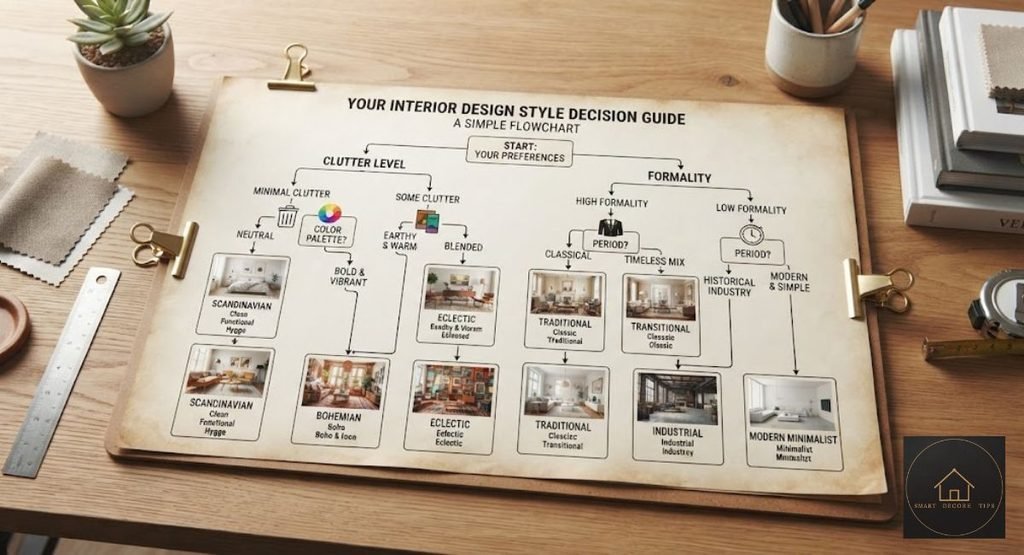
Ask yourself four questions.
Do you prefer clean or layered rooms?
Clean rooms point toward modern, minimalist, or Japandi styles. Layered rooms can work better with traditional, bohemian, or eclectic directions.
Do you prefer light or darker colors?
Light neutrals fit Scandinavian and many coastal rooms. Deeper colors can work well with traditional, industrial, and some Japandi interiors.
Do you want casual or formal?
Coastal and Scandinavian usually feel relaxed. Traditional can feel more formal.
Do you want a historical style or a current one?
Mid-century modern, Art Deco, and Victorian have stronger historical identities. Contemporary is more changeable.
This method is more useful than simply copying a room you saw online.
Can you mix different interior design styles?
Yes. Mixing styles can make a home feel more personal, but the room still needs some visual connection.
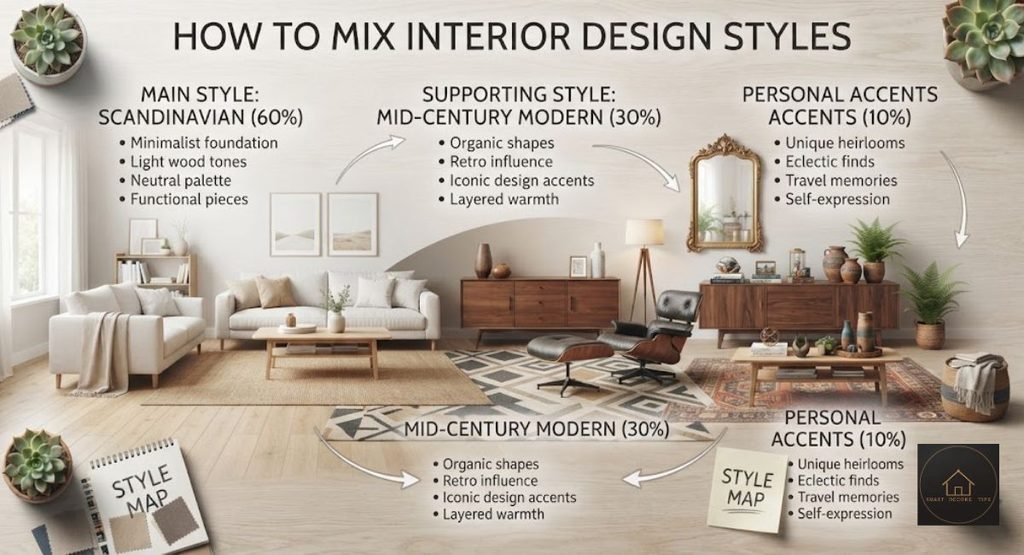
A simple approach is:
One main style + one supporting style + a few personal pieces.
For example:
- Scandinavian room + mid-century chair
- Modern room + traditional wood cabinet
- Traditional room + contemporary lighting
- Japandi room + a few vintage pieces
Look for a connection between the items. It could be a repeated wood tone, similar colors, related shapes, or the same material.
Do not try to give every piece its own style.
What color makes a house look expensive?
There is no single color that automatically makes a house look expensive.
A restrained color palette usually gives you a better starting point than chasing one “luxury” color. Warm white, cream, beige, taupe, and soft gray can all work as base colors, especially when the furniture and finishes are consistent.
For more contrast, use darker colors on selected furniture, trim, lighting, artwork, or other accents.
The goal is not to make every room look expensive. It is to make the choices look deliberate.
What is the 3-5-7 rule in interior design?
The 3-5-7 rule is a decorating guideline that suggests grouping objects in odd-numbered quantities, such as three, five, or seven, to create visual variety.
It is not a universal interior design standard.
Use it as a styling idea, not a strict formula. A shelf does not automatically look better because it contains seven objects.
The objects should still vary in height, shape, texture, or visual weight.
A simple way to make your final choice
If you are stuck between several styles, do not redesign the whole room yet.
Save five to ten rooms that you genuinely like. Ignore the furniture brands and focus on what keeps appearing.
Do you repeatedly save:
- Light wood?
- Neutral colors?
- Curved furniture?
- Dark walls?
- Patterned fabrics?
- Metal?
- Vintage furniture?
- Minimal decoration?
Those repeated details are more useful than the name attached to the room.
Then choose the style that explains most of those choices.
The best interior design style is not the one with the most attention online. It is the one that still makes sense with your furniture, your home, and your everyday life.
FAQs
Modern, contemporary, traditional, Scandinavian, transitional, mid-century modern, coastal, and industrial are among the widely recognized interior design styles. Popularity can change over time, so there is no permanent ranking.
No. Modern refers to a specific design movement and period, while contemporary generally describes what is current.
Scandinavian, modern, and Japandi can all work well in smaller homes because they generally favor simple furniture, open visual space, and less clutter.
Yes. Transitional design is one of the easiest ways to combine traditional and modern pieces. Keep one style dominant and use the other for supporting pieces.
Scandinavian or transitional can be practical starting points because they allow simple furniture, neutral colors, and flexible accents without requiring a complete themed room.

Hi, I’m Shahzad Ahmad welcome to Smart Decore Tips!
I write and research every guide on this site myself, focused on real, practical home decor advice for renters, first-time homeowners, and small-space living. Before publishing anything, I check actual product listings, current prices, and real customer reviews not just what other sites already say.
My goal is simple: help you make smarter, more affordable decor decisions without the guesswork or sales pitch.