Bespoke Sofa Cost in 2026: What You Actually Pay
Furniture makers can’t agree on what “bespoke” means. When KBB Review, a UK trade magazine for kitchens and bedrooms, asked designers and suppliers, one said a ten-colour menu isn’t bespoke, another said any workshop-built, made-to-order piece qualifies, and a third asked why standard sizes should disqualify anything. The same muddle sits behind every bespoke sofa quote you’ll collect, which is why two quotes for “the same thing” can land thousands of dollars apart.
Below, the word gets sorted into three real products, each with a price, a lead time and the specs worth getting in writing before you pay a deposit.
Short answer: A bespoke sofa is a couch a workshop designs and builds from scratch to your measurements, with the frame, springs, fill, and fabric chosen with you. A made-to-order sofa starts from a catalog design and lets you pick size, fabric, and legs. Only the first is bespoke in the strict sense.
What does bespoke mean in furniture?
In furniture, bespoke means a piece made to one customer’s specification instead of pulled from stock. The trade still argues about where that line sits.
The KBB Review conversation was about kitchens, but the split carries straight over to upholstery. One designer there said picking from ten colours doesn’t make something bespoke. A workshop owner said anything made to order in any size, colour or style does. A third voice asked why fixed sizes should disqualify a piece that’s built after you order and fitted to your room. Nobody sounded dishonest. They were using one word for three different products.
Bespoke, custom or made-to-order: which one are you buying?
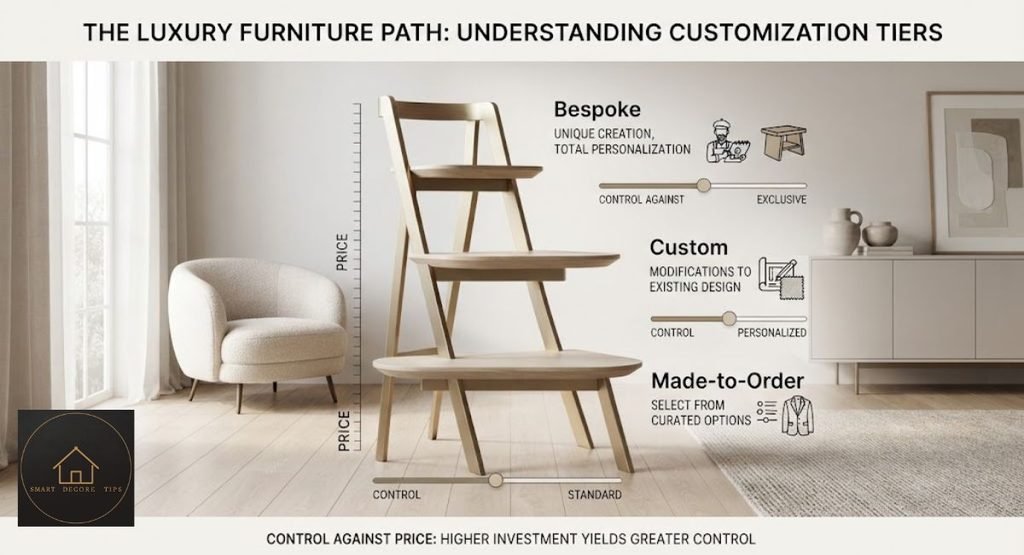
Sofas sort into three tiers, and the tier decides both the price and how much of the design is really yours.
| Tier | What you control | Example I checked | Price seen | Lead time seen |
| Made-to-order, catalog design | Fabric, leather, wood finish, fill, configuration | Joybird Hughes sofa | $2,584 list; $1,550–$1,809 on sale pages | Not stated on the pages I opened |
| Made-to-order, catalog design | Length, depth, legs, fabric, fill | Interior Define Sloan (via Havenly listings) | $1,895–$2,400 for 2-seat builds | 8–12 weeks |
| Made-to-order, catalog design | Fabric, wood finish, width | Maiden Home Sullivan | From $2,675 | 4 weeks on the product page |
| Custom workshop | Dimensions, shape, fill, fabric | Adorn Croft (the maker’s own figures) | $3,000–$8,000 typical; $10,000+ for sculptural | 2–6 weeks, maker’s claim |
| Traditional workshop, sold as bespoke | Frame, springs, fabric | Claire Langley Antiques, sofa BS07 | £6,800 (about $9,087), fabric extra | Not listed |
Collected October 1, 2026. Sale prices move weekly. The UK price includes VAT.
Look at the first three rows. Each is a named design with a menu of options. That’s made-to-order, and the build can be excellent, but I wouldn’t call a $2,000 Sloan bespoke, and I wouldn’t let a salesperson call it that either.
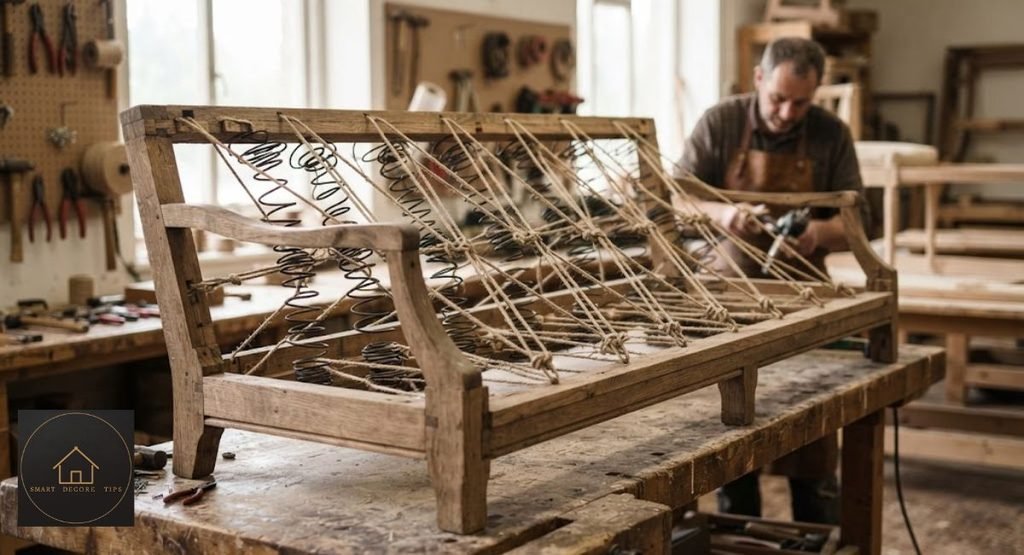
The last row is what a traditional workshop sells under the bespoke label: a beech frame, oak legs, jute webbing and hand-tied coil springs, with the fabric priced separately. Even there, the listing is a design the workshop makes again and again, so you’d still ask what can change. Genuine from-scratch commissions rarely publish prices, so treat that figure as a marker, not a quote.
How much does a bespoke sofa cost?
Expect about $1,500 to $2,700 for a made-to-order sofa from a named brand, $3,000 to $8,000 from a custom workshop, and around $9,000 before fabric for a traditional dealer-built piece. Those figures come from the pages in the table above.
For scale, Angi puts the average starting price of a custom sofa at $2,200, inside a $1,000 to $4,250 range for custom furniture overall.
Treat the biggest numbers online with care. Adorn Croft’s guide puts true custom builds at $12,000 to $19,000 and designer-label silhouettes at $20,000 to $45,000 or more, while the same company sells its own at $3,000 to $8,000. That’s one maker’s view and I found no second source, so use it as a ceiling to compare against, not a norm.
Where the money goes: frame, springs, foam and fabric
Four hidden parts set most of the price, and you can ask for all of them in writing. Get these five before you pay:
- Frame wood and joints. Maiden Home says it uses kiln-dried hardwood joined with mortise-and-tenon and corner blocks. Adorn Croft says pine, MDF and plywood-blend frames flex and squeak sooner.
- Spring system. Eight-way hand-tied springs take more labor, and Maiden Home uses them. Sinuous springs aren’t automatically worse; Adorn Croft pairs them with slim modern frames. Ask which system you’re getting and what the warranty says about it.
- Foam density in pounds per cubic foot. Adorn Croft puts the long-lasting benchmark at 2.5 or higher and says many mass-market sofas run 1.5 to 1.8. A maker who can’t give you the number is telling you something.
- Fabric rub count. Performance weaves are often rated 50,000 to 100,000 abrasion cycles, according to Adorn Croft. Ask for the rating on the exact fabric you pick.
- Warranty terms. Maiden Home covers frames and springs for life and cushion resiliency for five years. Joybird lists a limited lifetime warranty of up to ten years on wood frames. Adorn Croft offers five years on frames and cushions.
Most people spend the evening choosing a fabric and five minutes on the frame. Reverse that. A sofa can be recovered later, but changing the frame or springs means rebuilding it.
Is bespoke furniture good quality?
Not automatically. Bespoke tells you who decided the design, not how well the sofa is built.
One reader in that same KBB Review piece was quoted a “bespoke” kitchen and found the cabinets weren’t what the word had led them to expect. Sofas work the same way, because the label costs nothing to print. The five specs above are your real evidence. In the pages I read, the strongest quality claims came from the makers’ own sites, so ask for them in writing instead of trusting a product page.
Does the price pay off over time?
Only at made-to-order prices. At dealer-bespoke prices you’re paying for fit, not for a longer life.
I’ve watched a friend replace a $600 apartment-store sofa twice in eight years: cushions flattened, the frame started creaking, the fabric pilled. If each replacement cost about $600, that’s three sofas and $1,800, or $225 a year. A $2,675 Maiden Home Sullivan works out to about $334 a year over eight years and about $223 over twelve, so it pulls even around year twelve if it lasts that long. A $9,000 dealer build would need roughly forty years to match $225 a year.
That math ignores fabric, delivery and resale, and nobody publishes tested lifespans for any of these sofas, so treat claims of 15 to 25 years as marketing. The warranties above are firmer evidence.
How long does a custom sofa take to arrive?
Between about 4 and 16 weeks in the pages I checked, depending on who builds it.
Maiden Home’s Sullivan page showed a four-week ready date. Adorn Croft states 2 to 6 weeks of production. Interior Define’s listings show 8 to 12 weeks. Lauren Liess’s shop lists 14 to 16 weeks for hand-built pieces and says every piece is custom and non-returnable. Lead times follow the factory queue, so get a date in writing and ask what happens if it slips.
Returns matter more than the wait. Interior Define allows returns on made-to-order pieces within 60 days, with fees. Maiden Home’s Sullivan pages I opened show a refund minus 10% and shipping on one and minus 25% and shipping on another, so confirm which applies. A hand-built shop may take nothing back. Return terms are where made-to-order and true bespoke really part ways.
Will it get through your door?
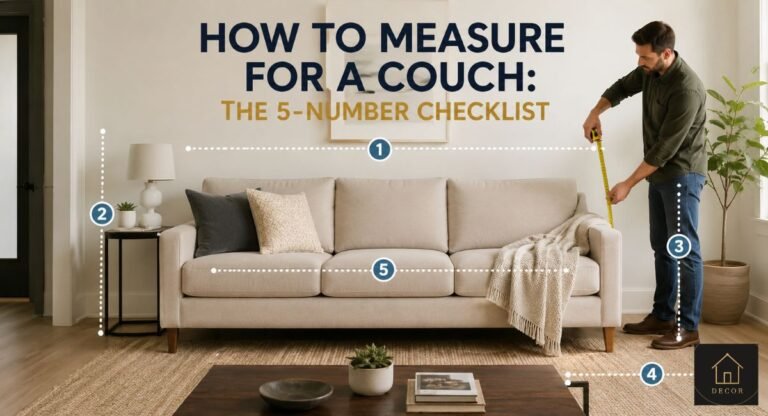
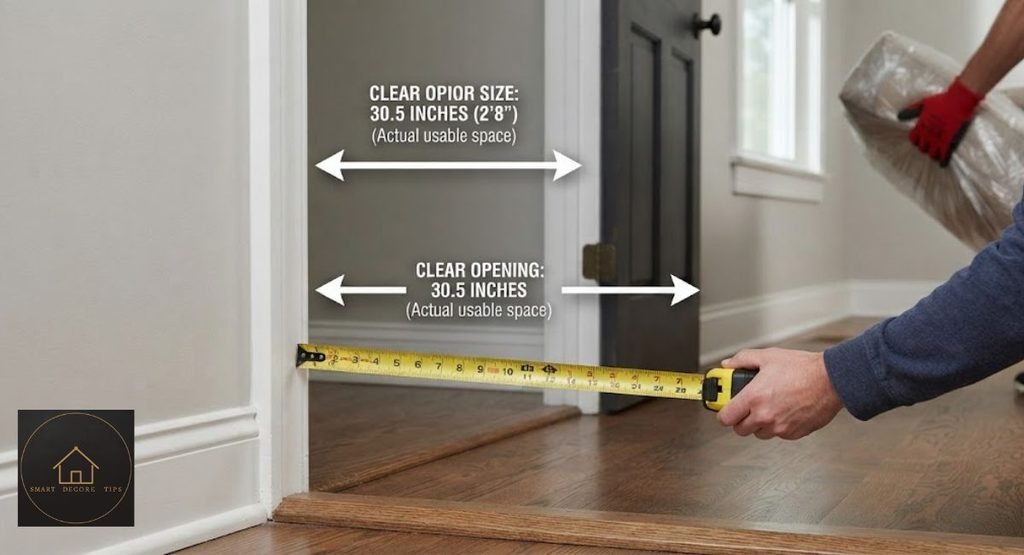
Measure the clear opening, not the number on the door.
ItemFits, a sofa-fit calculator site, says a nominal 32-inch door leaves about 30 inches clear, lifting the door off its hinges adds 1.5 to 2 inches, and a hallway under 40 inches wide can stop a couch at the 90-degree turn even when the door clears. Frontgate advises leaving several inches to spare. For a real example, Joybird lists the boxed Hughes sofa at 43 by 29 by 91.5 inches, so its narrow side clears a 30-inch opening by about an inch.
Ask any maker for the finished sofa’s diagonal depth, and whether the frame can be built in sections.
What is the 2/3 rule for sofas?
The 2/3 rule says a sofa should be about two-thirds the length of the wall it sits against, so a 12-foot wall suits a sofa near 96 inches.
Ideal Home calls it a starting point rather than a law. Designer Laura Medicus, quoted by The Everygirl, suggests taping the outline on the floor first. Because bespoke work lets you set length to the inch, the rule hands you your first number. I’d leave the tape down for a few days before committing.
Who should skip bespoke?
Skip it if your room is standard and fabric is the only thing you care about; made-to-order covers that for well under $3,000. Skip it if you rent, since twelve weeks of a twelve-month lease is nearly a quarter of it. Skip it if a non-returnable sofa would keep you up at night.
It earns its price when you have an alcove, a long awkward wall, a household that needs a deeper seat, or a doorway problem and a maker willing to build in sections. Still comparing tiers? Our guide to custom sofa prices by type breaks the costs down further.
Before you pay a deposit on a bespoke sofa
Get five things in writing: the five specs above, the delivery date, the return terms, the finished sofa’s diagonal depth, and the maker’s remedy if the sofa arrives wrong. Then show the quote to someone who isn’t selling you the sofa.
Quick answers
In furniture, bespoke means a piece made to one customer’s specification instead of sold off the shelf, though makers disagree on whether choosing sizes from a fixed menu counts.
Bespoke furniture is not automatically good quality, because the word describes who decides the design rather than how well the piece is built; check the frame wood, spring system, foam density, and written warranty.
No independent ranking I found settles this, because quality depends on construction rather than a name, and Maiden Home’s Sullivan page shows the kind of detail to demand from any maker: kiln-dried hardwood, eight-way hand-tied springs, and a lifetime frame warranty.
The 2/3 rule says a sofa should be about two-thirds the length of the wall it sits against, so a 12-foot wall suits a sofa near 96 inches.
One UK dealer lists a traditional bespoke piece at about $9,000 before fabric, while made-to-order sofas from named brands run about $1,500 to $2,700 and custom workshops about $3,000 to $8,000.
Lead times on the pages I checked ran from about 4 weeks to 16 weeks, with Interior Define listing 8 to 12 weeks.
No: custom usually means choosing fabric, size or legs on an existing design, while bespoke means the design itself is built around the customer’s brief.
For renters staying under a year, a ready-made sofa usually makes more sense, because 8 to 12 weeks of lead time uses up a large share of the lease and some custom pieces cannot be returned.

Hi, I’m Shahzad Ahmad welcome to Smart Decore Tips!
I write and research every guide on this site myself, focused on real, practical home decor advice for renters, first-time homeowners, and small-space living. Before publishing anything, I check actual product listings, current prices, and real customer reviews not just what other sites already say.
My goal is simple: help you make smarter, more affordable decor decisions without the guesswork or sales pitch.