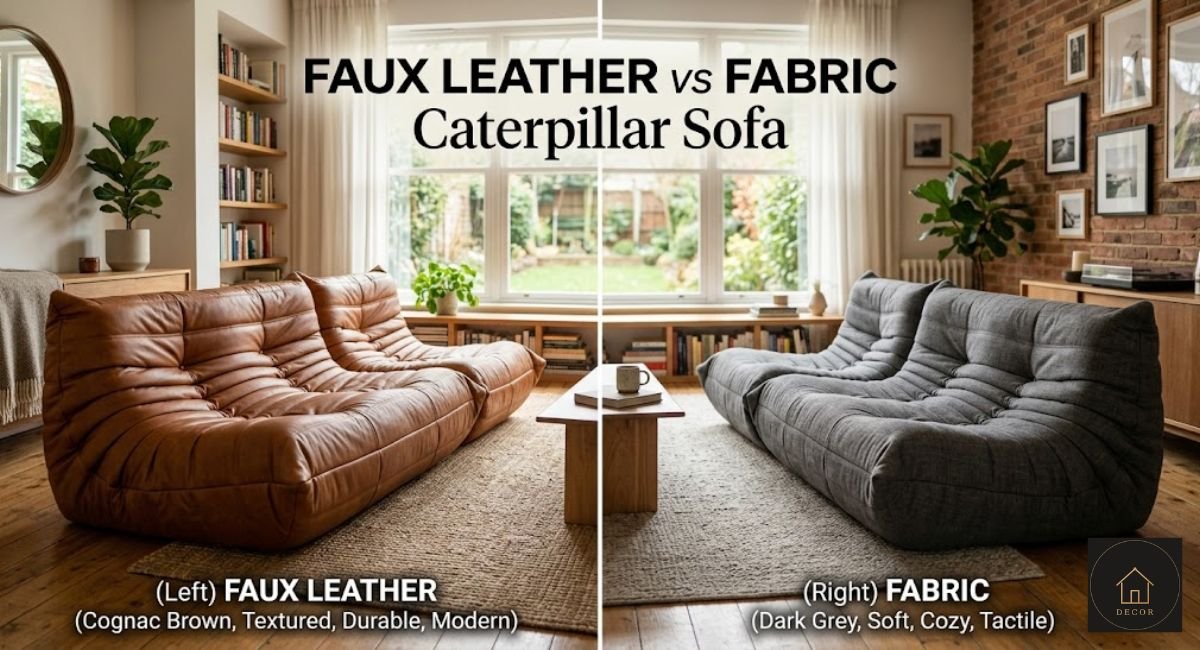
Faux Leather vs Fabric Caterpillar Sofa: Which Wins?
So you’ve narrowed it down to a caterpillar sofa, but now you’re stuck on the cover. Faux leather looks sleek in photos, fabric looks cozy in real rooms and the wrong pick means either a sticky summer or a sofa you’re scared to sit on with a snack.
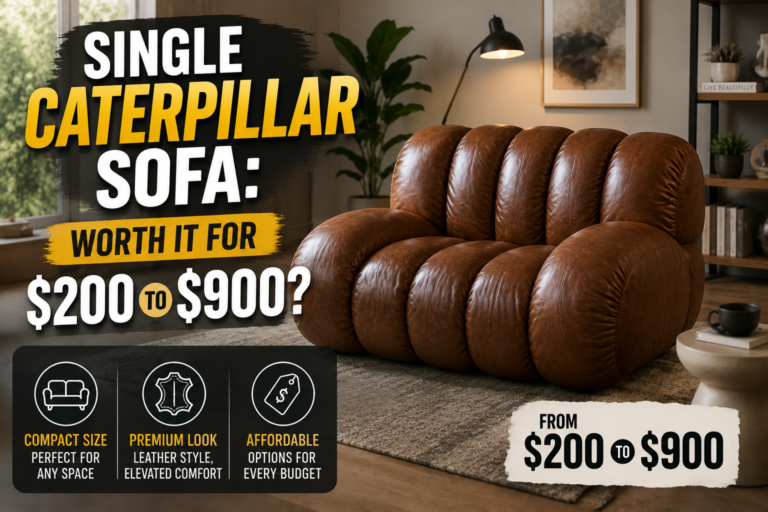
Here’s what actually separates a faux leather caterpillar sofa from a fabric one, once you get past the marketing photos. If you haven’t picked your size or shape yet, our Single Caterpillar Sofa: Worth It for $200 to $900? guide covers that groundwork first.
Quick Takeaways
- Faux leather wipes clean in seconds; fabric needs a vacuum and occasional spot cleaning.
- Fabric (corduroy, boucle, teddy velvet) feels warmer and softer against skin than faux leather.
- Faux leather resists pet hair better but can crack under cat claws; tightly woven fabrics like microsuede hold up better against snags.
- Faux leather can feel sticky in a hot, un-air-conditioned room; fabric breathes better in summer.
- Price differences are usually small the fabric type matters more than the leather-vs-fabric choice itself.
Faux leather vs fabric caterpillar sofa, in one sentence: faux leather is the easier-to-clean, cooler-to-touch option that shows scratches more, while fabric (corduroy, boucle, or velvet) feels warmer and more forgiving day to day but takes more upkeep to keep looking new.
What Is a Caterpillar Sofa, and Why Does the Cover Material Matter So Much?
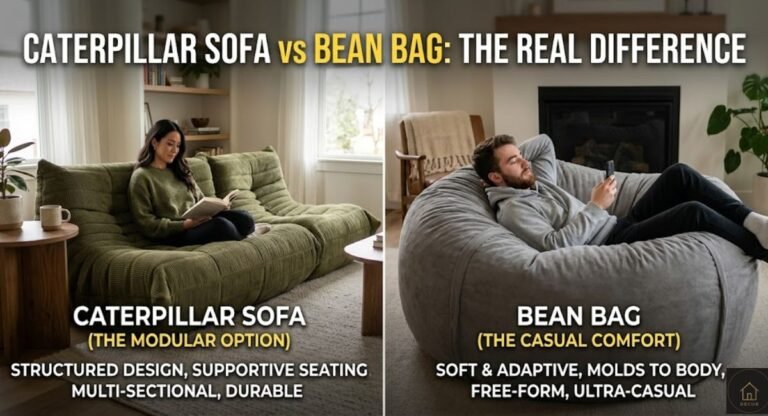
A caterpillar sofa is a frameless, floor-level lounge seat made of high-density foam, shaped into a segmented, tube-like silhouette that gives it its name. There’s no wood or metal frame underneath just foam and cover fabric which is exactly why the cover material does so much heavy lifting here.
On a normal sofa, the frame and springs carry most of the wear. On a caterpillar sofa, the cover is touching the floor, taking body weight directly, and getting sat on, laid on, and dragged around more than a standard couch. Whatever you choose has to handle daily contact with skin, pets, spills, and gravity not just look good in a listing photo.
Faux Leather Caterpillar Sofa: What You’re Actually Getting
Faux leather (also sold as “fiber leather,” “PU leather,” or synthetic leather) is a plastic-based material designed to mimic real leather’s look without the price. On a caterpillar sofa, it usually comes as a smooth, slightly glossy finish stretched over the foam curves.
Here’s what that means in daily use:
- Cleaning: A damp cloth handles most spills and everyday grime no vacuum needed.
- Feel: Cool and smooth at first touch, warms slightly with body heat, never gets “fuzzy” or textured.
- Weak point: It doesn’t breathe. In a warm room without AC, skin-on-faux-leather contact can feel sticky within 20-30 minutes.
- Aging: Cheaper faux leather can crack or peel at stress points usually where the sofa folds or where you sit most after 1-2 years of daily use. Higher-grade PU leather from brands like Pacific Nook holds up longer than budget dupes.
If your household leans toward quick cleanup over cozy texture think apartments, gaming setups, or homes without carpeted living rooms faux leather usually wins.
Fabric Caterpillar Sofa: What You’re Actually Getting
“Fabric” isn’t one material here it’s a category covering corduroy, boucle, chenille, teddy velvet, and microsuede, and the differences between those matter more than fabric-vs-leather itself.
- Corduroy: Ribbed texture, warm feel, hides minor stains well in its grooves. A common default across caterpillar sofa listings.
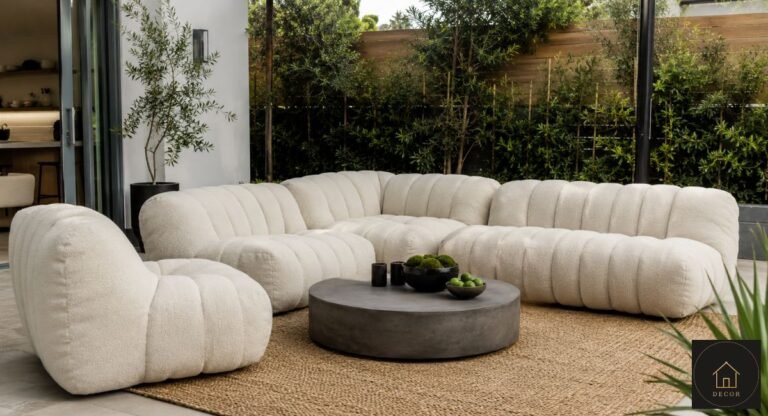
- Boucle: Looped, textured surface with a cozy, high-end look but the loops can snag on pet claws or jewelry over time.
- Teddy velvet / chenille: The softest option, closest to what people picture when they imagine a “caterpillar sofa” but it shows crumbs and pet hair more visibly than a smooth cover.
- Microsuede: A tighter, synthetic weave that resists snagging and wipes cleaner than most other fabric options, closer to faux leather in maintenance.
The trade-off across all of them: fabric feels noticeably softer and warmer against skin, especially in cooler months, but it needs regular vacuuming and the occasional deep clean to stay looking fresh.
For a full cleaning walkthrough on a caterpillar piece, see our Caterpillar Chair Cleaning Tips: The 15-Minute Routine the same steps apply directly to a caterpillar sofa’s fabric cover.
Faux Leather vs Fabric Caterpillar Sofa: Side-by-Side Comparison
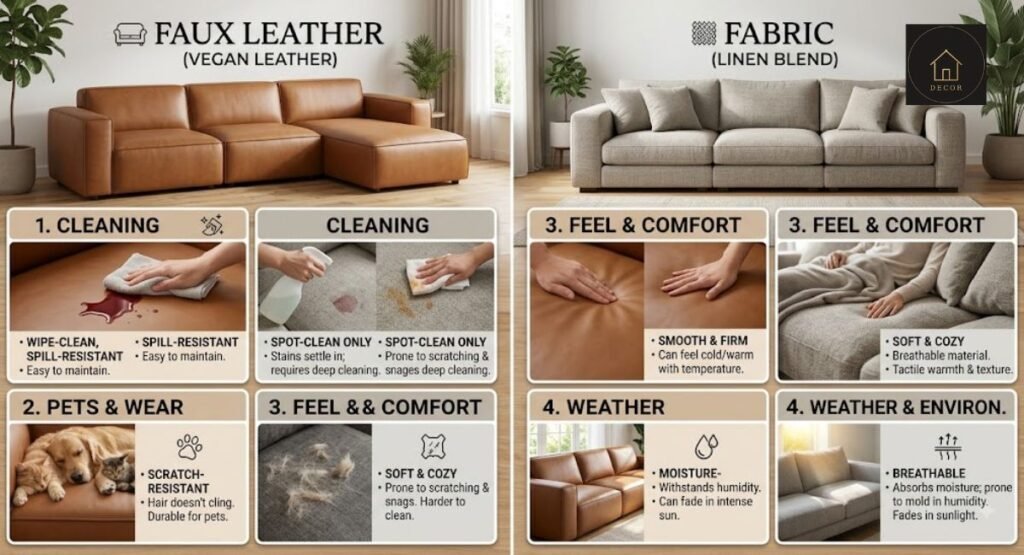
| Factor | Faux Leather | Fabric (Corduroy/Boucle/Velvet) |
| Cleaning | Wipe with a damp cloth | Vacuum + spot clean as needed |
| Feel | Smooth, cool at first touch | Soft, warm, plush |
| Pets & claws | Can crack or scratch | Tighter weaves (microsuede) resist snags better |
| Hot weather | Can feel sticky without AC | Breathes better in summer |
| Cold weather | Feels cool to sit on | Feels warm and cozy |
| Everyday durability | Can crack/peel at fold points over years | Can pill or flatten in high-traffic spots |
| Stain visibility | Spills sit on top, easy to wipe | Some fabrics absorb spills, need faster action |
How Do You Clean Each One? (5-Minute Routine)
Both materials are manageable, but the steps differ enough that using the wrong method can do damage.
For faux leather:
- Wipe the surface with a microfiber cloth and warm water.
- For spills, blot immediately don’t rub, which can push liquid into seams.
- Use a mild soap solution for stuck-on marks, then wipe dry.
- Avoid alcohol-based cleaners; they can dry out and crack the surface over time.
- Condition every few months with a PU-safe leather conditioner if the sofa sees daily use.
For fabric:
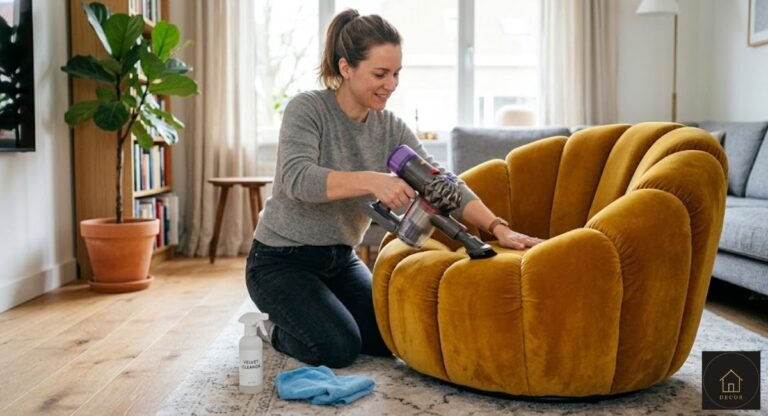
- Vacuum weekly with an upholstery attachment, going with the fabric’s grain.
- Blot spills immediately with a dry cloth don’t rub the fabric into itself.
- Spot-clean with a fabric-safe cleaner, testing on a hidden area first.
- Let it air dry fully before sitting on it again to avoid flattening damp fibers.
- Brush textured fabrics like boucle or velvet gently to restore pile after cleaning.
Which Is Better If You Have Pets or Kids?
Pets: Cat claws are the real test here. Faux leather can get punctured or scratched by a determined cat, and once it tears, it doesn’t self-repair.
Tightly woven fabrics like microsuede actually hold up better against claws than boucle or chenille, which snag easily. If you have a scratcher, skip loose-weave fabrics and either go faux leather with a throw blanket on top, or choose a tight microsuede.
Kids: Faux leather wins for pure mess control juice, crayon, and marker wipe off cleanly. Fabric needs faster reaction time on spills, but it’s also more forgiving on bumps and falls since it has more give and doesn’t feel cold or slippery to sit on.
Does Room Temperature Actually Change the Right Choice?
Yes, more than most buyers expect. A caterpillar sofa sits low to the ground, so it’s closer to whatever temperature your floor already is.
- Warm climates or rooms without AC: Fabric, especially corduroy or microsuede, breathes better against skin during long lounging sessions. Faux leather can feel sticky within half an hour of direct contact.
- Cooler climates or rooms with hardwood/tile floors: Faux leather can feel cold to sit on first thing in the morning; fabric holds warmth better and feels more inviting.
If your caterpillar sofa lives in a sunroom, converted garage, or any space with big temperature swings, that alone might decide the material for you.
What Do Real Dupe Brands Actually Offer?
Since our pillar guide covers full pricing across brands, here’s just a quick, checkable look at how material choice shows up in real listings:
- Pacific Nook’s Caterpillar Sofa Collection offers both faux leather and fabric options corduroy, microsuede, velvet, and matte cowhide-style leather in the same silhouette, so you can compare the identical shape in either material.
- Intuition Decor’s Maggis Caterpillar Sofa comes in corduroy or faux leather, with the faux leather version marketed specifically for a “sleek, sophisticated finish.”
- CurverK sells a faux leather-specific caterpillar sofa in fiber leather black, aimed at buyers who want the smooth look without shopping through fabric swatches.
These aren’t endorsements just a snapshot that the material split (faux leather vs multiple fabric types) is standard across the dupe market, not a gimmick from one brand.
So Which Should You Actually Buy?
Here’s the honest answer: if you’ve tested both in a showroom, you already know which one you reached for first that instinct usually holds up. But if you’re buying online, use this quick filter:
- Pick faux leather if: you want fast cleanup, have pets that shed but don’t claw furniture, or the sofa lives somewhere without much AC in summer.
- Pick fabric if: comfort against skin matters more than easy wipe-downs, your room runs cool, and you’re willing to vacuum weekly.
- Pick a tight microsuede specifically if: you have a cat that scratches it’s the rare fabric that resists claws almost as well as faux leather does.
I’ve sat on both versions of the same caterpillar sofa shape at a showroom, and the difference is immediate the second you sit down faux leather feels like a firm, cool surface, while fabric sinks in and feels warm within seconds. If you can, test both in person before deciding; online photos genuinely can’t convey the temperature difference.
FAQs
A: Faux leather is easier to clean and better for spills; fabric is more comfortable against skin and better in cooler rooms. There’s no universal winner it depends on your climate, pets, and how much upkeep you’re willing to do.
A: Lower-quality faux leather can crack or peel at fold points after 1-2 years of daily use. Higher-grade PU leather from established brands tends to hold up longer, but any faux leather will eventually show wear before real leather would.
A: Not hard, but it takes more steps weekly vacuuming and prompt spot-cleaning for spills. Tighter weaves like microsuede clean up faster than looped fabrics like boucle or chenille.
A: Tightly woven fabric (microsuede) resists claws better than faux leather, which can tear once punctured. For shedding without scratching, faux leather is easier to keep hair-free.
A: Yes, especially in rooms without air conditioning faux leather doesn’t breathe, so extended skin contact can feel sticky. Fabric options like corduroy or microsuede stay more comfortable in warm weather.
Conclusion
Faux leather and fabric caterpillar sofas solve different problems: one trades comfort for easy cleanup, the other trades upkeep for warmth and softness.
If quick wipe-downs matter most, go faux leather. If you want something that feels good to sink into every evening, fabric especially a tight microsuede if pets are in the picture is worth the extra vacuuming. Either way, check the specific fabric option (not just “faux leather vs fabric” as a category) before you buy, since that’s what actually determines how the sofa holds up in your home.

Hi, I’m Shahzad Ahmad welcome to Smart Decore Tips!
I write and research every guide on this site myself, focused on real, practical home decor advice for renters, first-time homeowners, and small-space living. Before publishing anything, I check actual product listings, current prices, and real customer reviews not just what other sites already say.
My goal is simple: help you make smarter, more affordable decor decisions without the guesswork or sales pitch.
4 Comments