
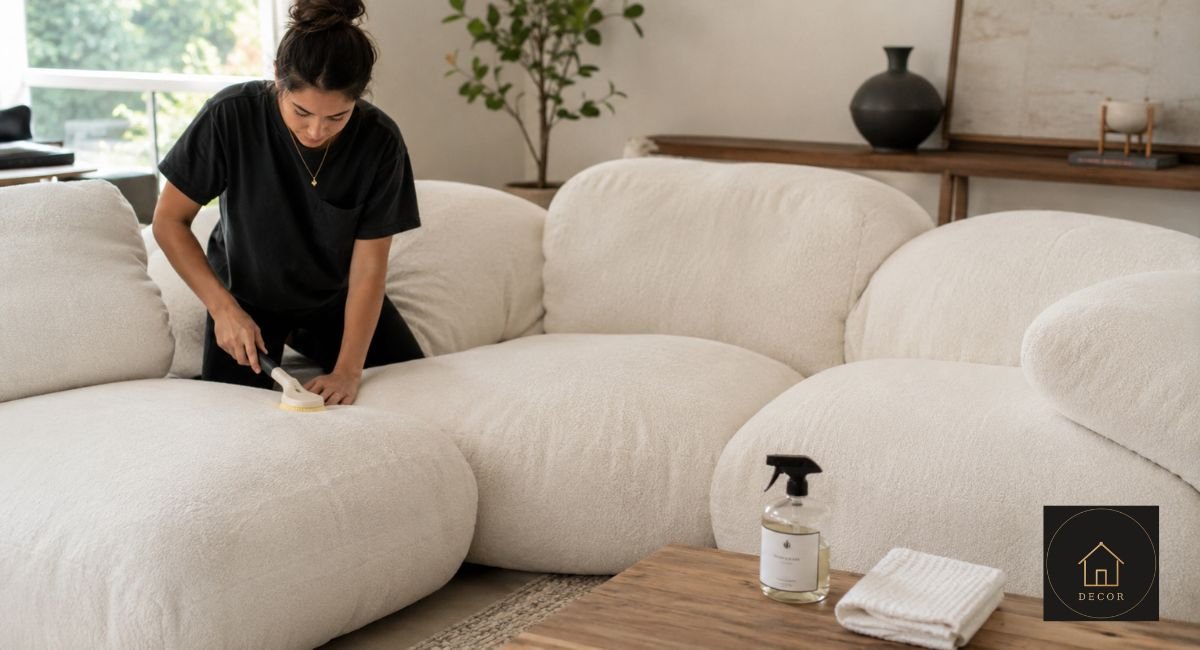
Cloud Couch Cleaning: Safe Steps for Every Fabric
A coffee spill on a cloud couch can look simple to fix. The problem is that the wrong cleaner can leave a larger mark than the original spill.
Good cloud couch cleaning starts with one thing: identifying the upholstery and reading its care label. Don’t assume a removable cover is washable. Don’t assume performance fabric can take any cleaner. And don’t copy a cleaning method from another sofa until you know your own fabric allows it.
If you’re still comparing sofa styles, start with our complete cloud couch guide. This guide focuses only on keeping one clean.
Featured snippet: Cloud couch cleaning means matching the cleaning method to the sofa’s care label before treating stains or washing covers. Vacuum loose debris first, blot fresh spills instead of rubbing, use only cleaners approved for the upholstery code, and machine-wash removable covers only when the manufacturer’s sewn-in care label specifically permits it.
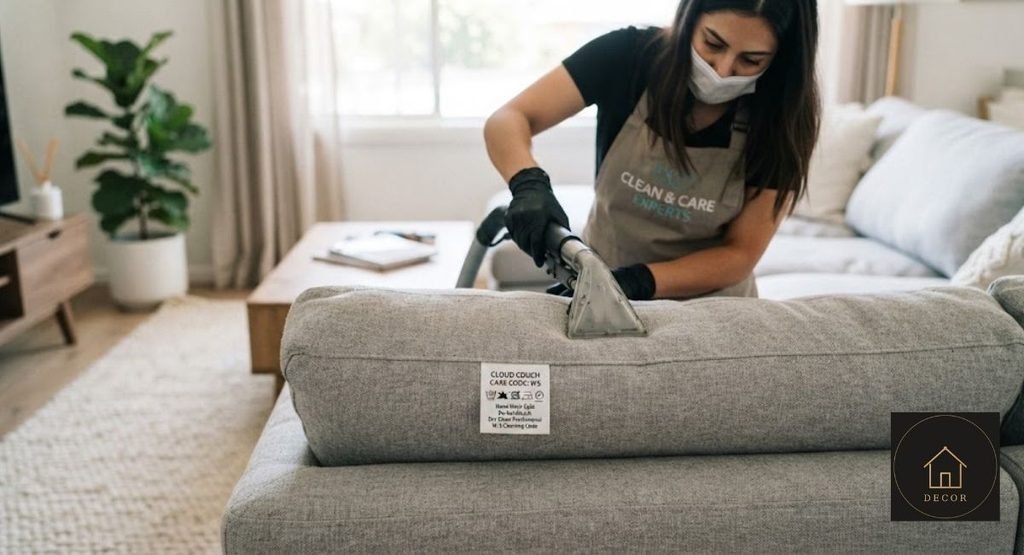
Cloud Couch Cleaning Starts With the Care Code
Check the label before putting water, detergent, solvent, steam, or stain remover on the upholstery.
Cleaning codes usually appear under a cushion, beneath the sofa, or on the upholstery label.
| Code | What it generally means | What to do |
| W | Water-based upholstery cleaner permitted | Spot clean with an approved water-based product |
| S | Water-free solvent method | Avoid water; follow the manufacturer’s solvent instructions |
| WS / SW | Water- or solvent-based spot cleaning permitted | Use an approved method and test first |
| X | Vacuum or brush only | Don’t apply water or solvent cleaners |
| WASH | Separate laundering instruction used by some manufacturers | Follow the exact wash and dry directions on the label |
Ashley Furniture’s published cleaning-code guide specifically says that its W upholstery should not automatically be removed and laundered. It lists “WASH” separately for fabrics designed for machine washing.
That’s an important distinction.
A W code means water-based cleaning is allowed. It does not, by itself, mean “throw the cover in the washing machine.”
What I noticed while checking current manufacturer pages is that “removable” and “machine washable” should never be treated as synonyms. Current GH2 models explicitly state both conditions, while other upholstery labels restrict cleaning even when a cushion casing can physically be unzipped. (GH2)
How Do You Clean a Cloud Couch Safely?
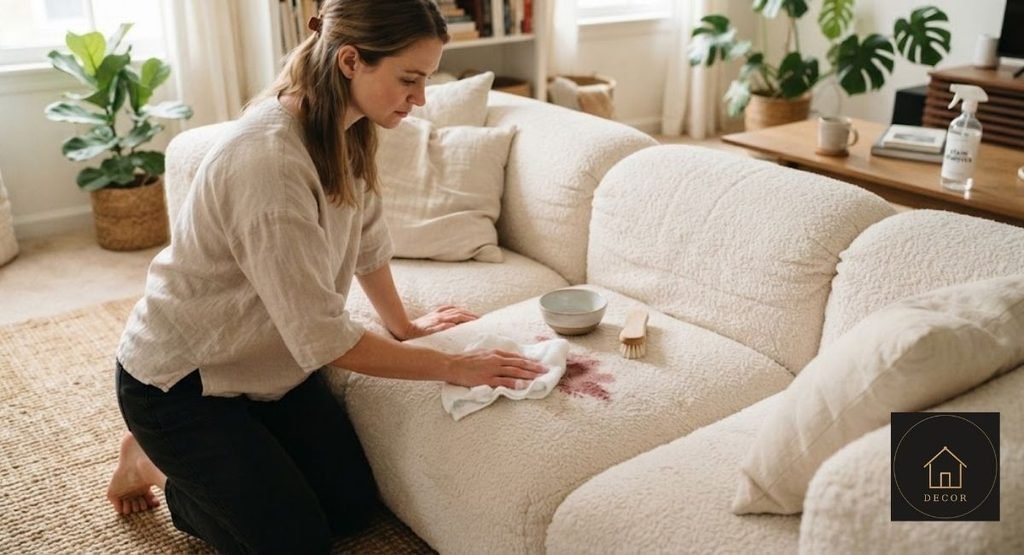
Start by vacuuming loose soil, then treat only the affected area using the method permitted by the care label. Blot liquid instead of rubbing it, and avoid saturating the cushion.
Here’s the safest general sequence.
1. Vacuum before adding moisture
Use your vacuum’s upholstery attachment.
Work across the seat, back cushions, arms, seams, and spaces between modules. Crumbs and grit can become harder to remove once moisture gets involved.
Loose-fill sofas also benefit from regular cushion reshaping. If your cushions constantly flatten, our cloud sofa fill guide explains why down, fiber, and foam behave differently.
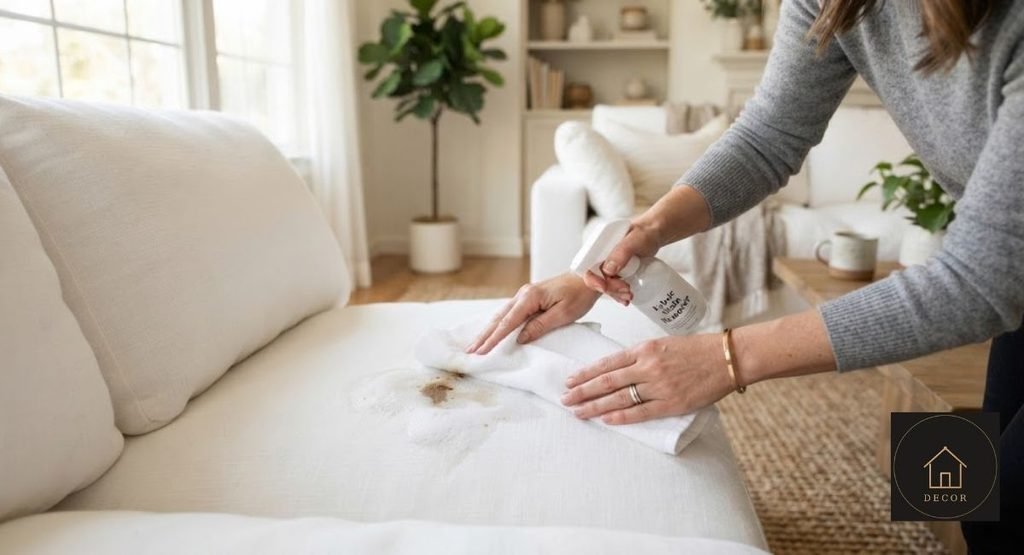
2. Blot a fresh spill
Use a clean, absorbent white cloth.
Press down and lift. Don’t scrub back and forth.
Sunbrella’s current upholstery instructions also tell owners to blot rather than rub liquid spills. (Sunbrella)
For thick food or mud, remove loose material first instead of grinding it into the weave.
3. Read the sofa’s label
Now determine whether you’re dealing with W, S, WS/SW, X, or a separate washing instruction.
Don’t choose a cleaner based only on the words “linen,” “chenille,” “bouclé,” or “performance fabric.”
The care code for your specific upholstery matters more.
4. Test the cleaner
Choose an inconspicuous area, such as the back or underside of a cushion.
Let the test area dry fully.
You’re checking for color change, rings, texture change, shrinkage, or damage to the pile.
5. Use as little moisture as necessary
More liquid doesn’t mean more cleaning power.
Over-wetting can push moisture through the upholstery into the cushion materials underneath.
For W or WS upholstery, follow the furniture or fabric manufacturer’s cleaner instructions rather than inventing a strong homemade mixture.
For example, Sunbrella currently recommends 1 teaspoon (4 ml) of dishwashing liquid per 1 cup (250 ml) of lukewarm water for its own upholstery fabric, followed by thorough rinsing and air drying. That recipe is Sunbrella-specific guidance, not a universal formula for every sofa.
6. Remove cleaner residue
Soap left in upholstery can attract new soil.
If your fabric’s instructions allow rinsing, use the manufacturer-recommended method to remove remaining cleaner.
7. Dry the area completely
Give air access to every damp surface.
A fan can help move air around the upholstery. Avoid sitting on a damp cushion.
EPA guidance for wet upholstered furniture stresses fast, complete drying because upholstered pieces can be difficult to dry once moisture gets deep inside. See EPA guidance on drying upholstered furniture (US EPA)
What Should You Do for Different Upholstery Types?
Use the care code first and the fiber type second. Two sofas that both look like linen can have different finishes, backings, blends, and cleaning instructions.
Performance upholstery
Performance fabric is designed around easier maintenance, but the brand’s own instructions still control the process.
Sunbrella, for example, tells owners to blot spills, use its approved mild soap method, rinse thoroughly, and air dry. It also says most of its upholstery fabrics can be machine washed, while advising owners to follow the furniture manufacturer’s instructions for removable casings.
That’s more useful than the blanket advice “performance fabric is washable.”
Linen and linen blends
Use less moisture, not more.
Linen-looking upholstery may contain polyester or other fibers, so don’t identify its cleaning method by appearance.
A natural-fiber cover may also react differently from a performance linen-look weave.
Your existing article was right to treat linen as a material where water marks deserve extra attention.
I learned this the hard way on a linen-blend cushion: hot water left a faint ring visible for weeks. That personal observation is worth keeping because it explains why checking the label first matters.
Velvet and chenille
Pile fabrics can show changes in direction or texture after cleaning.
Some manufacturer instructions note that pile fabrics may need gentle brushing after treatment. The correct cleaner still depends on the code. (Ashley Furniture Industries)
Avoid assuming every chenille sofa takes water or every velvet sofa requires solvent.
Bouclé and textured weaves
Vacuuming matters because debris collects around the loops.
Use an upholstery attachment gently enough that it doesn’t pull loose fibers.
If you own this texture, our bouclé sofa guide covers its broader durability and maintenance trade-offs.
Can You Machine Wash Cloud Couch Covers?
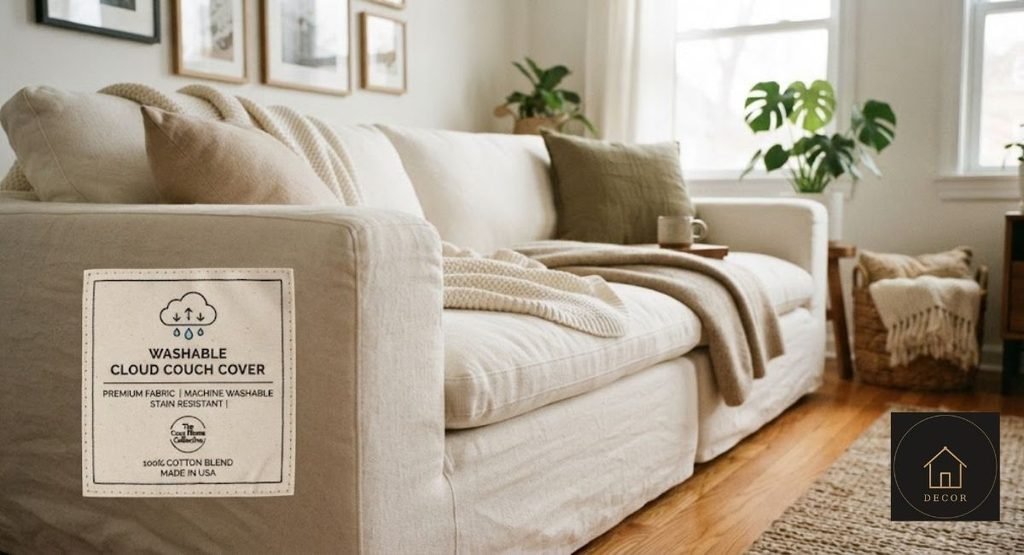
Yes, but only when the sewn-in care instructions or manufacturer explicitly say the covers are machine washable. A zipper alone isn’t permission to wash them.
This is one of the biggest differences between current cloud-style sofas.
For example, GH2 currently states that all covers on its Cloud, including the base covers, are removable and machine washable. Its instructions specify a cold, gentle cycle and air drying.
Sofatica also currently sells Cloud models with removable, machine-washable covers.
By contrast, a generic W upholstery code doesn’t automatically authorize laundering.
If washable covers are a major buying priority, compare that feature before purchase. Our cloud couch covers guide explains the fit and maintenance trade-offs.
Before washing any cover
Check:
- Is it explicitly labeled machine washable?
- What water temperature is specified?
- What cycle is specified?
- Does the label allow tumble drying?
- Should it air dry?
- Does the manufacturer prohibit bleach?
- Should zippers be closed first?
Follow those instructions instead of a generic internet washing routine.
How Should You Handle Common Spills?
The safest first response is surprisingly similar across many fabrics: remove excess material and blot quickly.
What comes next depends on the upholstery.
| Problem | First move | What not to do |
| Coffee or soft drink | Blot liquid immediately | Don’t scrub |
| Mud | Lift loose soil before wet cleaning | Don’t grind dirt into the weave |
| Grease or oily food | Follow the fabric maker’s oil-stain method | Don’t assume plain water will remove oil |
| Pet accident | Absorb liquid, then check approved treatment | Don’t soak the cushion core |
| Unknown old stain | Identify care code and spot-test | Don’t combine cleaners |
| X-coded upholstery | Vacuum/light brush only | Don’t add liquid |
Sunbrella specifically recommends an absorbent such as cornstarch for oil-based spills before continuing with its approved cleaning process. That method should only be extended to other fabrics if their maker allows it.
Can You Steam Clean a Cloud Couch?
Don’t decide this from W or WS alone. Check the sofa manufacturer’s instructions for steam or extraction cleaning.
This is an area where your old article was too permissive.
A W or WS code tells you which cleaning-agent category the face fabric can accept. It does not guarantee that the complete cushion construction tolerates steam, heat, or extraction.
Some published upholstery instructions explicitly say hot-water extraction or steam cleaning is not recommended, even for WS-coded upholstery. (Sofas and Sectionals Support)
If the label doesn’t specifically permit the machine or method you want to use, contact the manufacturer or use an upholstery professional.
How Do You Keep Pet Hair and Crumbs Under Control?
Start dry.
Vacuum seats, backs, seams, and the spaces between cushions before using any liquid product.
A soft pet-hair tool can help lift hair that an upholstery nozzle misses. Avoid aggressive tape or brushes on delicate loops and piles.
For washable-cover models, removable covers can simplify a larger cleanup. But wash them only according to their own label.
A modular sofa can also be easier to maintain because individual sections are accessible. See our modular cloud sofa guide if you’re comparing layouts.
Real Cloud Couch Brands Handle Cleaning Differently
There’s no single cleaning method shared by every couch carrying the “cloud” label.
RH Cloud Sofa: RH’s current Cloud product page shows multiple configurations and links directly to its own “Caring for the Cloud” resource. That’s a strong reason to identify your exact RH upholstery before copying third-party cleaning advice.
GH2 Cloud: current GH2 product information explicitly describes removable, machine-washable covers, including base covers, with cold gentle washing and air drying.
Sofatica Cloud Couch: current product pages advertise removable, machine-washable performance covers.
Sunbrella upholstery: the fabric company publishes its own detailed process, including a specific soap-to-water ratio, rinsing, and air drying.
The lesson isn’t that one brand has the “correct” routine.
It’s that manufacturer-specific care instructions beat generic sofa advice every time.
7 Cleaning Mistakes That Cause More Trouble
1. Washing every removable cover
A zipper tells you the cover can come off. It doesn’t tell you how it should be cleaned.
2. Assuming W means machine washable
It means water-based cleaning is permitted under that code. Laundering can be a separate instruction.
3. Scrubbing a spill
Blot first. Rubbing can spread contamination and disturb the fabric surface.
4. Saturating the cushion
Once moisture reaches the interior, drying becomes much harder.
5. Using steam because the fabric says WS
Check the complete furniture instructions first.
6. Copying another brand’s cleaning recipe
A method published by Sunbrella is safe guidance for Sunbrella fabric. It isn’t automatically safe for every polyester or “performance” sofa.
7. Mixing cleaning chemicals
Don’t mix household cleaners unless their labels explicitly tell you to.
The CDC specifically warns never to mix household bleach with other cleaners or disinfectants because dangerous vapors can be released.
When Should You Call a Professional?
Professional upholstery cleaning makes sense when:
- the fabric is X-coded and stained
- the manufacturer requires professional cleaning
- the care tag is missing and you can’t identify the upholstery
- dye transfers during a test
- the stain covers a large area
- the cushion has been heavily saturated
- odor remains after the approved cleaning process
- you’re dealing with delicate or expensive upholstery
It’s also the better choice when experimenting could permanently change the texture or color.
One honest trade-off with ultra-soft cloud sofas is that the materials producing the relaxed look can require more maintenance. If you want minimal upkeep, a sofa with clearly washable covers may suit you better than a delicate fixed upholstery.
FAQs
Check the care label first. Vacuum loose debris, blot spills, and use only the cleaning method allowed by the upholstery code. Never assume all cloud-style sofas use the same fabric.
Only when the manufacturer or sewn-in label explicitly says they are machine washable. A W cleaning code alone does not guarantee that laundering is safe.
It depends on the care code and manufacturer. W upholstery permits approved water-based cleaning, S requires the specified solvent method, WS allows either category, and X should not receive liquid cleaner.
Only if the manufacturer approves steam or extraction cleaning for that exact upholstery and cushion construction. Don’t rely on W or WS alone.
Blot the stain first, identify the care code, then use the approved treatment. Avoid experimenting with bleach or strong stain removers on an unidentified fabric.
Vacuuming frequency depends on use, pets, fabric, and manufacturer recommendations. A regularly used sofa benefits from routine dry soil removal before crumbs and hair become embedded.
Don’t assume so based on the Cloud name alone. RH offers the Cloud in different configurations and upholstery choices, so check the instructions for your exact fabric and RH’s current care guidance.
Avoid guessing with water, solvents, steam, or stain remover. Contact the furniture manufacturer with your model and fabric information or ask a professional upholstery cleaner to identify the appropriate method.
Conclusion
Your care label is more useful than any viral cleaning hack.
Vacuum first. Blot spills instead of scrubbing. Identify the cleaning code. Follow the manufacturer-specific method. Wash covers only when they’re explicitly washable, and dry them exactly as directed. That is the core of cloud couch cleaning without turning a small stain into a permanent repair.

Hi, I’m Shahzad Ahmad welcome to Smart Decore Tips!
I write and research every guide on this site myself, focused on real, practical home decor advice for renters, first-time homeowners, and small-space living. Before publishing anything, I check actual product listings, current prices, and real customer reviews not just what other sites already say.
My goal is simple: help you make smarter, more affordable decor decisions without the guesswork or sales pitch.



8 Comments