

What Is a Cloud Sofa? The Deep, Squishy Couch Everyone’s Talking About
Ever scrolled past a couch online that looks like a pile of marshmallows you could disappear into for a whole weekend? That’s a cloud sofa, and it’s just as comfortable as it looks — but it’s also a bigger commitment than a normal couch, and most articles don’t tell you that part.
It’s all over Pinterest, TikTok, and probably your neighbor’s living room right now, so let’s get into what it actually is, what it actually costs, and who it’s genuinely wrong for, before you buy one.
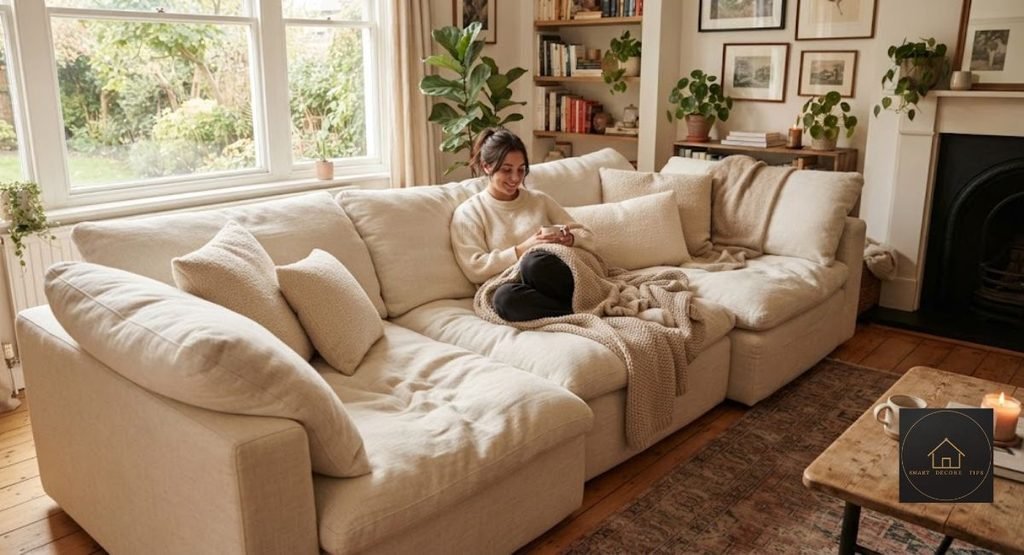
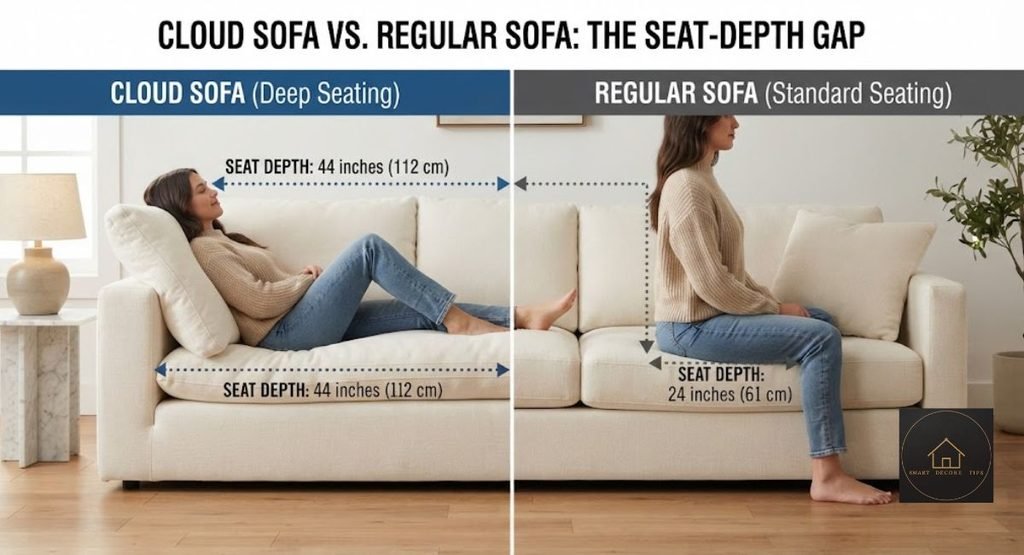
A cloud sofa is a low, deep-seated couch with oversized, overstuffed cushions built for sinking in rather than sitting upright, usually upholstered in plush fabric like chenille, boucle, or velvet. Seat depth typically runs 36 to 48 inches, compared with 20 to 23 inches on a standard couch, which is the main reason it feels so much roomier and so much harder to sit up straight on.
What Is a Cloud Couch, Exactly?
It isn’t a brand — it’s a style. Think low arms, a deep seat, and cushions that look almost overinflated, like clouds stacked on a frame.
Most pieces sold as a cloud couch share these traits:
- Seat depth of 36+ inches (a standard sofa usually runs 20–23 inches)
- Low profile, often under 30 inches at the back
- Down-blend or high-density foam cushions built for a soft, squishy look
- Soft-touch fabric — chenille, boucle, velvet, or a linen-look poly blend
I sat on one at a friend’s place earlier this year and genuinely didn’t want to get up afterward. That’s the entire point of the design — it’s built for lounging, not perching on the edge with your feet on the floor.
One thing worth knowing before you fall for the look: the phrase gets used two different ways online. Most furniture brands today mean the deep, low, overstuffed lounge style described above. But the term also has an older meaning in vintage and mid-century furniture circles, where it refers to a specific low-profile design by the designer Adrian Pearsall. If you’re shopping for the trendy version, stick to listings that mention seat depth and fill type, not just the word “cloud.”
Cloud Couch vs. Regular Sofa: The Real Numbers
The main difference between a cloud couch and a regular sofa is seat depth and cushion firmness — a cloud-style couch is deeper and softer, built for sprawling out, not sitting upright.
Here’s how the real numbers stack up, pulled from brand testing and product data rather than guesswork:
| Feature | Cloud Couch | Regular Sofa |
| Seat depth | 36–48 in (some brands go past 44 in) | 20–23 in |
| Seat height off floor | Roughly 14–19 in, brand-dependent | 17–19 in |
| Cushion feel | Soft, sinks in, needs regular fluffing | Firmer, holds shape longer |
| Best for | Lounging, movie nights, naps | Upright sitting, formal or dining-adjacent rooms |
| Cleanup | Harder with loose fill; easier with washable covers | Generally easier — structured foam holds shape |
If you sit up straight at a desk-height table often, or you have knee, hip, or back issues that make standing up from a low seat difficult, a firmer regular sofa will likely serve you better day to day.
Where Did the Cloud Couch Trend Come From?
The look traces back to Restoration Hardware’s Cloud Sofa, which built its reputation on an ultra-deep seat and an all-down fill that lets you sink in almost completely. Once the RH version went viral on social media in the early 2020s, dozens of other furniture brands started building their own deep-seat, low-profile versions — which is why the name is now used as a general style term across the furniture industry, not just for one brand’s product. Independent testing of the original RH Cloud found a usable seat depth of around 20.25 inches and a seat height near 19.1 inches, which is genuinely deep for a two-cushion couch, though smaller than some of the newer 40-inch-plus dupes now on the market.
Celebrity homes and design-influencer content pushed the look further into the mainstream through a broader, post-pandemic shift toward comfort-first interiors. That shift is a big part of why nearly every mid-range and budget furniture brand now carries some version of this couch, from a $500 slipcovered loveseat at a big-box retailer to a $10,000-plus custom sectional from a designer showroom. The core idea stays the same across every price point: prioritize how the seat feels over how upright it looks.
Is a Cloud Sectional Good for Small Spaces?
Yes, but only in the right size — a compact loveseat-style piece can work well in a small living room, while a full cloud sectional needs real floor space to avoid feeling cramped.
Most cloud loveseats run roughly 72 to 80 inches wide, which is the smallest true cloud-style couch you’ll find outside of a single accent chair.
Depth is the number that actually breaks a small-room layout, not width. Overall depth (seat plus back cushion) on most cloud-style sofas runs 48 to 52 inches — close to a foot deeper than a standard sofa’s 36 to 40 inches.
Tips if your space is tight:
- Measure your front door width first — delivery teams generally need the couch’s depth plus about 4 inches of clearance, and for many cloud couches that adds up to 50+ inches, wider than a standard 32-inch door.
- Check the hallway too — most delivery guidance calls for at least 36 inches of hallway width for a full sectional to turn a corner.
- Choose a modular design if your space is genuinely tight. Individual modular pieces are usually under 45 inches wide, so they clear standard doorways even when the assembled sectional wouldn’t.
- Leave at least 30 inches of walking space around the finished layout so the room doesn’t feel like an obstacle course.
For more on exact width, depth, and configuration ranges by piece count, see our cloud couch dimensions guide.
How Much Does a Cloud Couch Cost?
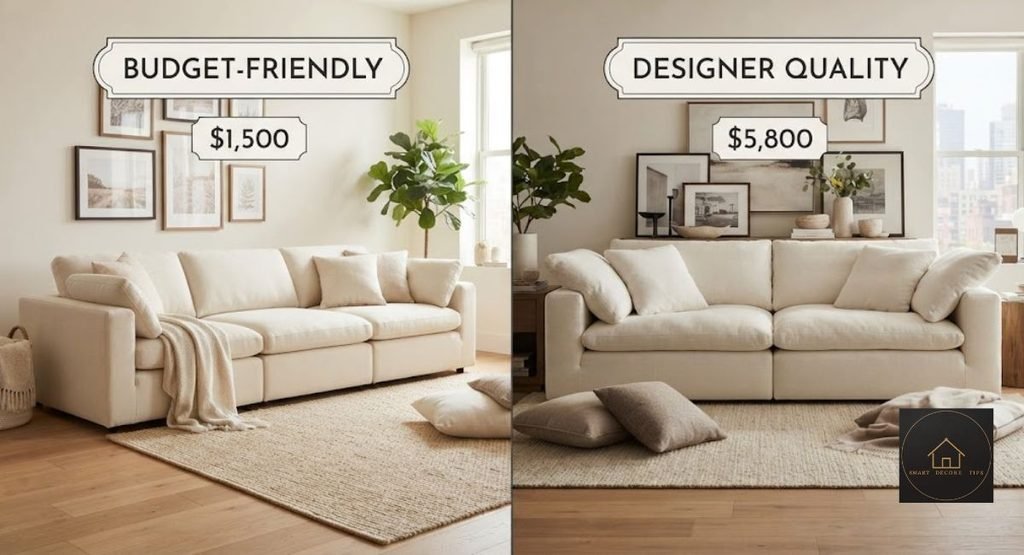
Cloud sofas typically range from around $600 for a budget loveseat to $3,000-plus for a designer sectional, with most mid-range options landing between $1,200 and $2,000.
Real examples currently on the market:
- West Elm Harmony Sofa — modular pieces start at $749 each, built on a kiln-dried wood frame with sinuous-spring support and available in 62 fabrics. It’s rated on the extra-soft end of West Elm’s own comfort scale, which tracks with the deep-sink cloud feel.
- Sixpenny Neva Sectional — priced around $3,154 for a comparable modular setup (approximate — confirm current pricing before publishing), built with layered loose fill over foam and breathable, removable natural-fiber covers.
- Pottery Barn Big Sur Sectional — independently tested at roughly 24 inches of usable seat depth and about 20.3 inches of seat height, giving a softer room feel without the full RH-level sink-in.
- IKEA SÖDERHAMN — not marketed as a “cloud” sofa, but its deep-seat, low-leg profile is the closest budget option to the look; check ikea.com for current pricing and depth by configuration, since it varies by section count.
Budget-friendly places to look beyond the big names: Target and HomeGoods for smaller cloud-style loveseats, Amazon for the widest range of price points including modular cloud sectionals, and Facebook Marketplace or thrift stores for secondhand designer pieces at a fraction of retail.
I’ve noticed the biggest price jump comes down to fill type — real down-blend cushions cost noticeably more than foam-and-fiber blends and need more frequent fluffing to stay looking full, so factor that into the sticker price before you decide a cheaper listing is the better deal.
How Long Does a Cloud Couch Actually Last?
This is the question price alone won’t answer for you, and it depends almost entirely on which price tier you buy into. A budget cloud-style couch built on thin foam and light framing tends to visibly slouch within 3 to 6 months of daily use. A mid-tier piece with a sturdier core usually holds its shape for 12 to 24 months before it needs a real fluffing intervention rather than a quick weekly pass. A premium couch with genuine down fill and a hardwood frame can hold shape for 3 to 5 years even with normal use, provided you keep up the weekly fluffing routine covered below.
Warranty coverage tells a similar story: frame warranties on cloud-style couches commonly run 5 to 25 years depending on the brand, while the fabric and fill are usually covered for only 1 to 5 years, because that’s the part that genuinely wears out first. Taken together, a well-built, well-maintained cloud couch realistically lasts 10 to 15 years — the frame typically outlasts the cushions by a wide margin, which is worth knowing before you assume a “lifetime” couch claim covers the whole piece.
Is a Cloud Couch Worth It? The Honest Trade-Offs
A cloud sofa is genuinely excellent for lounging but not always practical for everyday, long-term use — and that trade-off is the part most buying guides skip.
Good for:
- Movie nights and lazy weekends
- Renters who want a cozy statement piece without a long-term commitment
- Households without small kids or pets prone to chewing or clawing soft fabric
Real trade-offs to know before you buy:
- Loose-fill and down-blend cushions need regular fluffing or they flatten within months, not years.
- Light fabrics like boucle and chenille show stains more readily than performance-grade upholstery.
- Deep, low seats are genuinely hard to get out of for older adults or anyone with knee or hip issues — this is a real, underdiscussed problem, not a minor quirk. If parents or grandparents visit often, sit-test the exact model before buying.
- This style of couch is a rough fit for daily desk-style work. The deep seat that feels luxurious for a movie is genuinely uncomfortable for hours of upright laptop use — your lower back will let you know.
This setup works great for renters who move often and want comfort now. But if you own your home long-term and plan to keep the same couch for a decade, a sofa with a washable, performance-fabric cover and a firmer foam core is usually the smarter investment.
How Do You Clean and Care for a Cloud Couch?
Most cloud-style sofas need weekly cushion fluffing and a weekly vacuum to keep the shape full and the fabric free of dust.
Fluffing frequency actually matters more than most care guides admit: daily fluffing for the first 30 days trains new fill into shape, weekly upkeep after that keeps quality cushions looking full, and even a low-use guest-room couch benefits from monthly attention so the fill doesn’t permanently migrate to the edges.
Quick care checklist:
- Fluff and rotate cushions weekly (daily for the first month with a brand-new couch) so they don’t flatten unevenly.
- Vacuum with an upholstery attachment weekly to keep dust out of loose-fill cushions.
- Spot-clean spills immediately with a mild fabric cleaner — check the care tag for a W, S, or WS code first, since velvet and boucle often require dry cleaning rather than water.
- Keep the couch out of direct sunlight where possible; UV exposure fades velvet and chenille and dries out down fill faster than it does performance fabric.
- Expect to refill or replace cushion cores every 3 to 5 years on a well-used cloud couch, even with regular fluffing — this is normal wear, not a sign of a bad couch, and matches the fabric/fill warranty windows most brands offer.
Styling a Cloud Couch in Your Living Room
A cloud-style sofa works best as the room’s focal point, so keep everything else around it simple.
- Pair it with a low coffee table (16–18 inches high) so the table doesn’t compete visually with the sofa’s low profile.
- Add one or two textured throw pillows, not five — the couch itself is already the room’s soft statement.
- Neutral walls let a colorful cloud couch stand out; a neutral sofa pairs well with a bolder rug instead of competing patterns.
- If you went with a fabric that shows wear, like boucle or velvet, keep a washable throw over the most-used seat — it takes the daily impact so the actual upholstery doesn’t have to.
- Skip a rug that’s smaller than the couch itself. With a footprint this deep, a too-small rug just makes the whole seating area look like it’s floating, rather than anchoring the room the way a low-profile piece like this is supposed to.
Conclusion
A cloud sofa is really just a deep, plush, low-profile couch built for sinking in and staying a while. It’s not the most practical choice for every home — the getting-up problem, the fluffing routine, and the price jump for real down fill are all real costs, not fine print. But for cozy movie nights, lazy weekends, and renters who want comfort now, it’s genuinely hard to beat.
If comfort is your top priority and you’re okay with a regular fluffing routine, a cloud-style couch might be exactly the upgrade your living room needs. If you need a couch that works for daily upright sitting, older visitors, or a decade of hard use, look closely at seat depth and cushion core type before you commit, sit-test it in person if you can, and weigh that against a firmer alternative instead.
FAQs
Most cloud sofas use a wood or metal frame with high-density foam or down-blend cushions, wrapped in soft fabric like chenille, boucle, or velvet.
Not really — the deep, soft seat prioritizes lounging comfort over spinal support, so it’s not the best choice if you need firm upright back support.
A well-made cloud sofa with a solid frame and high-density foam typically lasts 10 to 15 years, while the cushion fill and cover usually need refreshing every 3 to 5 years, even with regular care.
No — “Cloud Couch” is Restoration Hardware’s specific product name, while “cloud sofa” is the general style term now used across dozens of furniture brands.
Most modular cloud sofas ship in individual pieces specifically so each one clears a standard 32-inch doorway, but always confirm the largest single piece’s dimensions before ordering.
They can, but a performance fabric holds up far better against claws and shedding than velvet or boucle, which snag and show wear more easily.
A cloud sofa is usually a single two- or three-seat piece, while a cloud sectional combines multiple modular pieces — like a chaise or ottoman — into an L- or U-shape.
Fluff cushions weekly (daily for the first month with a new sofa), rotate them regularly, and avoid sitting in the exact same spot every day so wear spreads evenly.

Hi, I’m Shahzad Ahmad welcome to Smart Decore Tips!
I write and research every guide on this site myself, focused on real, practical home decor advice for renters, first-time homeowners, and small-space living. Before publishing anything, I check actual product listings, current prices, and real customer reviews not just what other sites already say.
My goal is simple: help you make smarter, more affordable decor decisions without the guesswork or sales pitch.





One Comment