Modern Interior Styles: What Really Counts as Modern, and Which Branch to Pick
By Shahzad Ahmad | Last updated: October 6, 2026
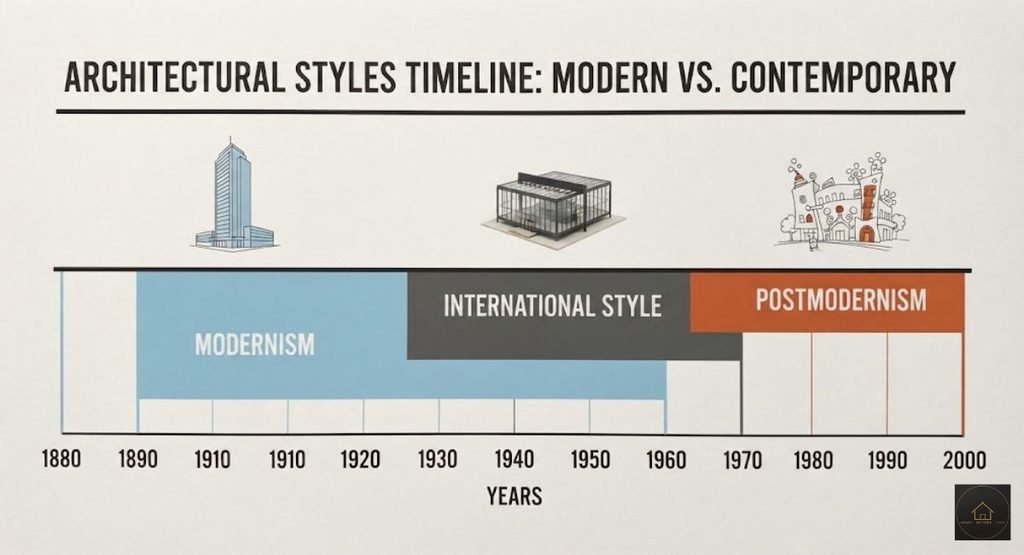
Most people who say they want a modern room are picturing a contemporary one. The two are not the same, and the mix-up sends a lot of shoppers toward the wrong sofa. Modern interior styles are the looks that grew out of the modernist movement of roughly 1890 to 1950: plain surfaces, little applied decoration, open rooms and function first.
This guide explains where that look came from, sorts the main branches, shows how to tell them apart, and names the one I would pick for most homes. If you want the wider map first, start with Home Decor Styles: Names, Examples & How to Decorate Each.
How this guide was made Checked on October 6, 2026. This guide compares five competitor guides (Decorilla, dated August 12, 2026; Planner5d, updated June 8, 2026; Fujioh, January 1, 2026; Airtasker, updated January 8, 2024; Robern, August 17, 2023) with design-history sources: Britannica’s entries on Modernism (updated September 16, 2026), the International Style, the Bauhaus, Charles Eames and Alvar Aalto; the V&A’s article “What was modernism?”; and a Philadelphia Museum of Art page on Scandinavian design.
Styling advice comes from Livingetc, Ideal Home and the furniture maker Stickley. Scoring method: a claim stays in only if a named source supports it, each branch below was checked against at least two sources, and anything resting on one secondary source is marked “Verify”. There was no hands-on testing, and there are no product reviews or prices here. Of the four competitor links supplied, only Decorilla could be read as an article, so the other four guides were found by search. Live rankings were not verified.
What is the modern style of interior design?
The modern style of interior design follows the modernist movement, which Britannica dates from about 1890 to about 1950. It favors straight lines, open space, honest materials and very little applied ornament.
The architecture that carried those ideas into homes and offices is called the International Style. Britannica says the name was first used in 1932 for a Museum of Modern Art exhibition, and that its buildings share rectilinear forms, surfaces stripped of decoration, open interiors and a glass-and-steel look. Walter Gropius’s Bauhaus building in Dessau (1925 to 1926) is one of its examples, and Britannica ties his work to a concern for uncluttered interior spaces.
Where the plain look came from
Modern rooms look plain on purpose, and the reason is partly a housing story. The V&A says modernism flourished between the two world wars, and that architects including Mies van der Rohe, Erich Mendelsohn and Gropius designed model housing estates built from steel, concrete and glass to make homes cheaper to produce. The same article says the idea that form should follow function reached everyday rooms. Its example is Margarete Schütte-Lihotzky’s Frankfurt Kitchen (1926 to 1927).
Livingetc makes a similar point from the decorating side: modern design was meant to be practical and affordable beyond wealthy buyers. So plainness was a goal, not a lack of ideas. Note that sources frame the dates differently. Britannica gives the wide range of about 1890 to 1950, while the V&A focuses on the years between the wars.
Modern vs contemporary: the label mix-up
Modern names a historical period. Contemporary means the style of right now, so it keeps changing. Decorilla’s guide draws the same line, and it explains why a search for “modern” can return rooms that have little to do with the movement.
| Label | What it means | Time frame | Typical look |
| Modern | The modernist movement | About 1890 to 1950 (Britannica, Modernism); International Style about 1920 to 1970 | Straight lines, no applied ornament, open rooms |
| Contemporary | Whatever is current | Shifts with trends | Mixed, often borrows from modern |
| Postmodern | A reaction against modernism | Prominent in the late 1970s and early 1980s (Britannica) | Freer shapes, decoration comes back |
Even guides blur this. Robern’s guide lists contemporary as one of four modern sub-styles, while Decorilla and Britannica treat them as separate. Some guides also fold postmodern into modern. Britannica describes it as a reaction against the glass-and-steel box, so it is safer to treat the two as separate when you shop.
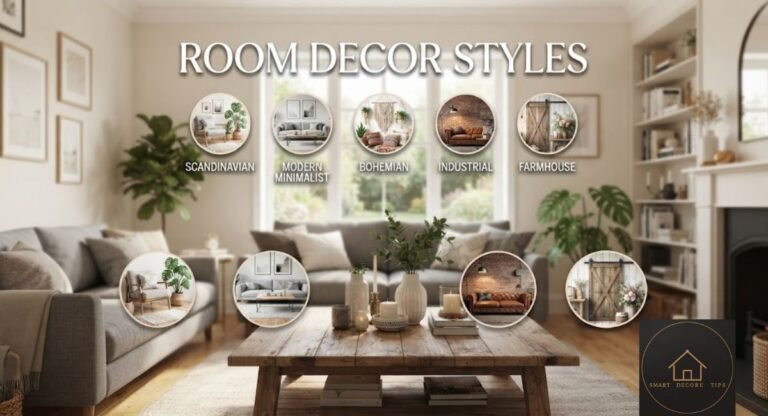
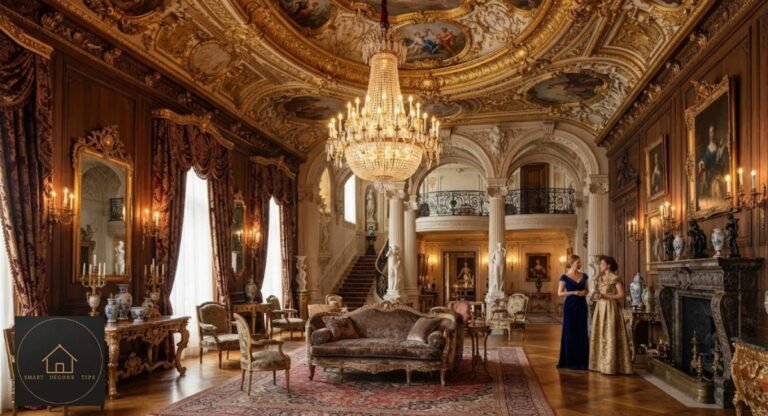
Two other labels often stand in for modern. Minimalist shares modern’s clean lines but makes “less is more” its whole point, according to Decorilla. Modern farmhouse starts from farmhouse and simplifies it, so its roots are rural, not modernist.
Four modern interior styles, sorted by where they came from
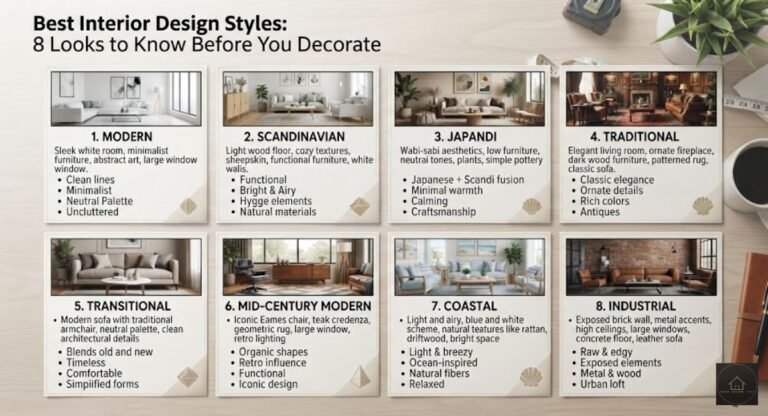
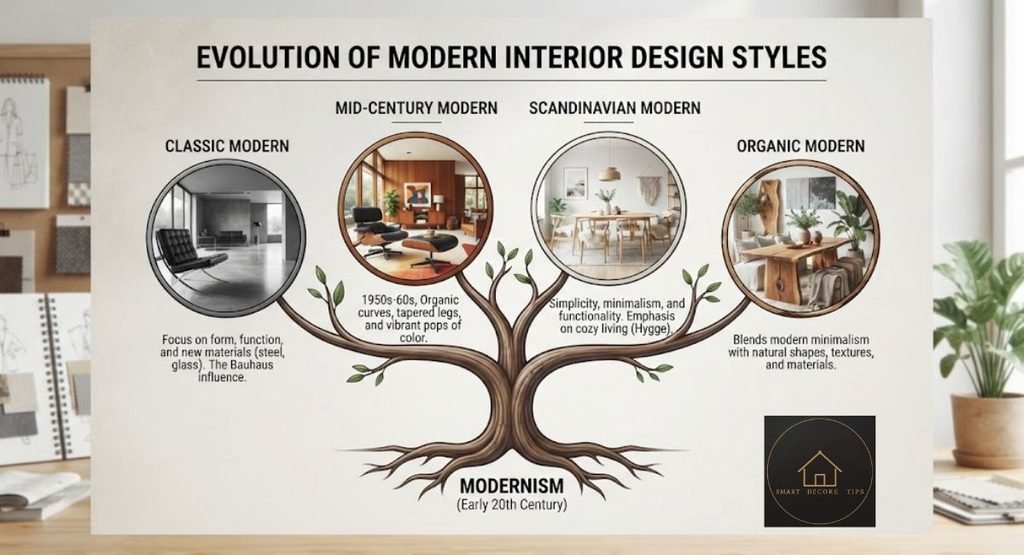
Think of a family tree. Each branch keeps modern’s straight lines and honest materials, then changes the mood. Other guides list more branches (Planner5d covers about eleven), but those extras, such as modern rustic or maximalist, are mostly modern mixed with another look. These four are the ones that trace straight back to the movement.
Classic modern
The strictest branch, tied to the International Style years and the Bauhaus. Britannica says Gropius founded the Bauhaus in 1919 and that it ran until 1933, with Dessau as its best-known base. It produced Marcel Breuer’s cantilevered chair, Anni Albers’s textiles and Marianne Brandt’s metalwork. Expect rectilinear furniture, bare surfaces and visible structure. It is also the look that critics in the 1970s called bare and formulaic, per Britannica.
Mid-century modern
Sources date its start slightly differently. Stickley says it emerged in the 1940s and peaked in the 1950s and ’60s, while Decorilla places its start in the 1950s and ’60s in post-war America. Both name wood as the signature material: teak, walnut, oak and cherry (Stickley) or teak, rosewood and walnut (Decorilla).
Accent colors are bold but used sparingly: orange, yellow and turquoise per Stickley, mustard, chartreuse and avocado per Decorilla. Britannica adds the furniture story. Charles and Ray Eames’s molded plywood work won recognition in 1941, and in 1946 the Museum of Modern Art featured their furniture just as Herman Miller began mass production.
Scandinavian modern
The Philadelphia Museum of Art says Design in Scandinavia, a touring show with a 1954 catalogue, reached 24 North American cities and about 660,000 visitors. The same page says Hans Wegner’s furniture shows the region’s reliance on traditional techniques and natural materials.
Britannica describes Alvar Aalto’s work as joining local building traditions and materials with modern technology. My reading: that history is one reason American modern so often feels warm instead of stark.
Organic modern
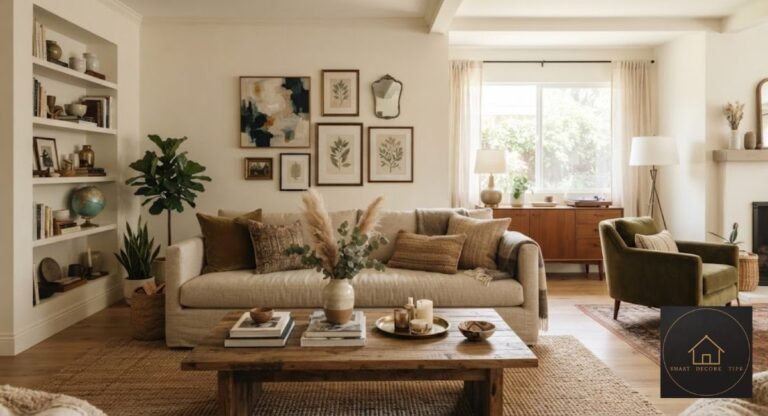
The newest branch. Decorilla describes it as modern minimalism warmed with natural materials: clean lines stay, hard edges soften, and the palette moves to cream, sand, clay and mushroom brown. Linen, oak, plaster and unglazed ceramic form the core mix, with rounded bouclé sofas and chunky travertine tables as typical pieces. Fujioh’s 2026 guide also lists it among its modern styles. Decorilla calls it one of the fastest-rising styles of the decade (Verify, since that label comes from one source).
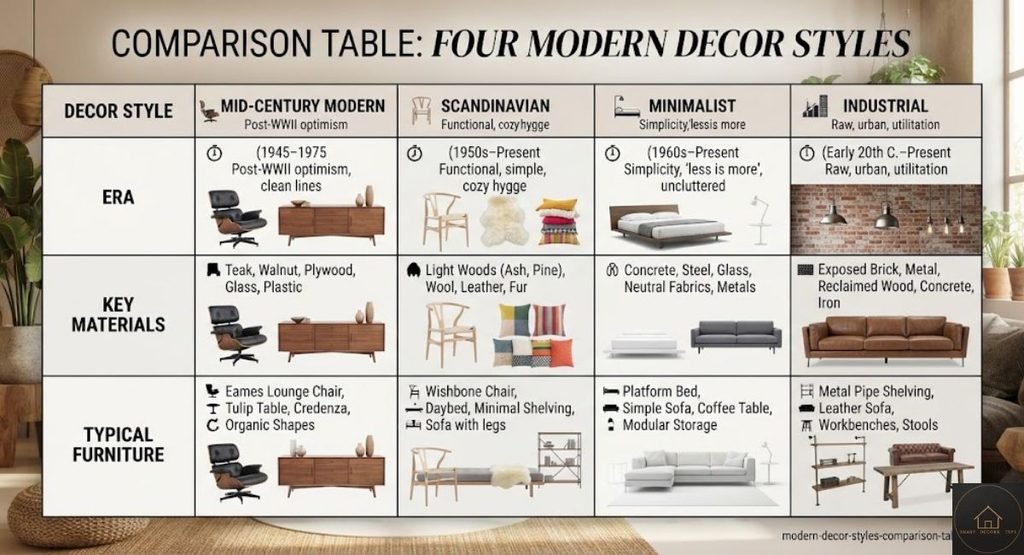
| Branch | Era | Materials the sources name | Pieces the sources name |
| Classic modern | About 1920 to 1970 (International Style) | Glass, steel, reinforced concrete | Breuer’s cantilevered chair |
| Mid-century modern | 1940s to 1960s | Teak, walnut, rosewood, oak, leather, glass | Eames molded plywood chairs, egg chair, wishbone chair |
| Scandinavian modern | Reached the US widely from 1954 | Natural materials, traditional craft techniques | Wegner armchairs, Aalto armchair, Jacobsen egg chair |
| Organic modern | Current | Linen, oak, plaster, travertine, unglazed ceramic | Bouclé sofa, travertine coffee table |
One overlap to know about: the egg chair appears in Decorilla’s mid-century list and in the Philadelphia Museum of Art’s Scandinavian show. Mid-century and Scandinavian modern share a lot, so a room can honestly belong to both.
Which of the modern interior styles would I pick?
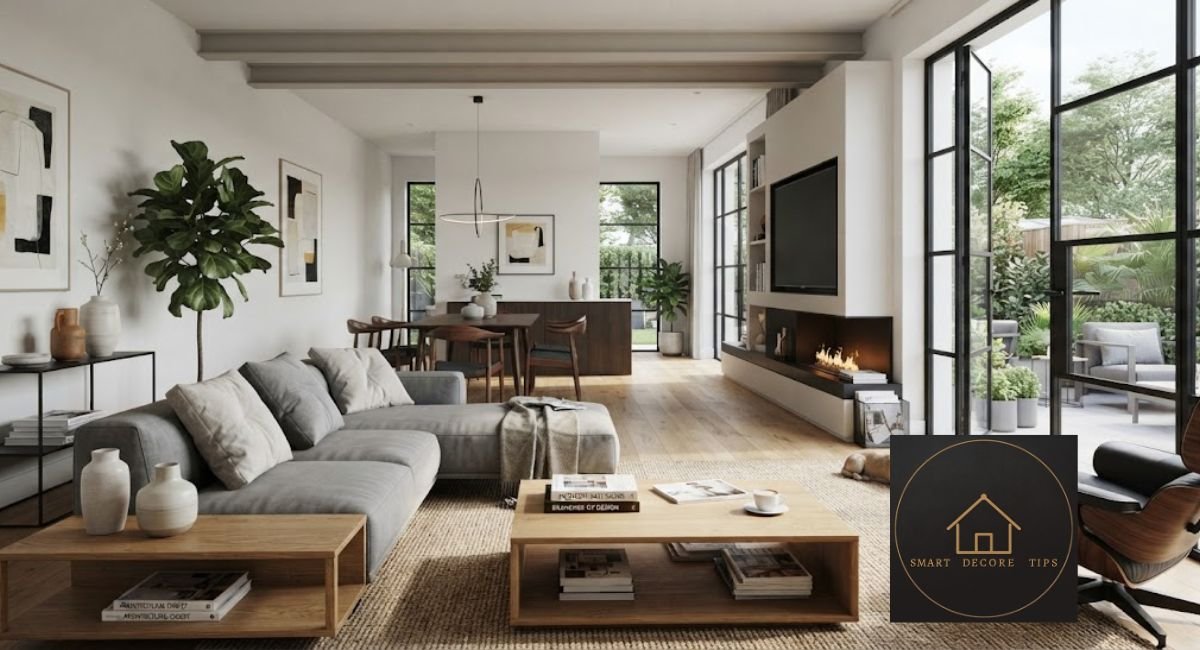
My pick for most family homes is Scandinavian-leaning mid-century modern. Warm wood, simple shapes and a short list of materials give you modern’s order without the bare look that Britannica says critics turned against by the 1970s.
Two honest trade-offs. It is wrong for anyone who wants a near-empty, stark room, because it leans on visible wood and texture. It is also wrong for people who dislike wood tones, since both Stickley and Decorilla list teak and walnut among the usual mid-century woods.
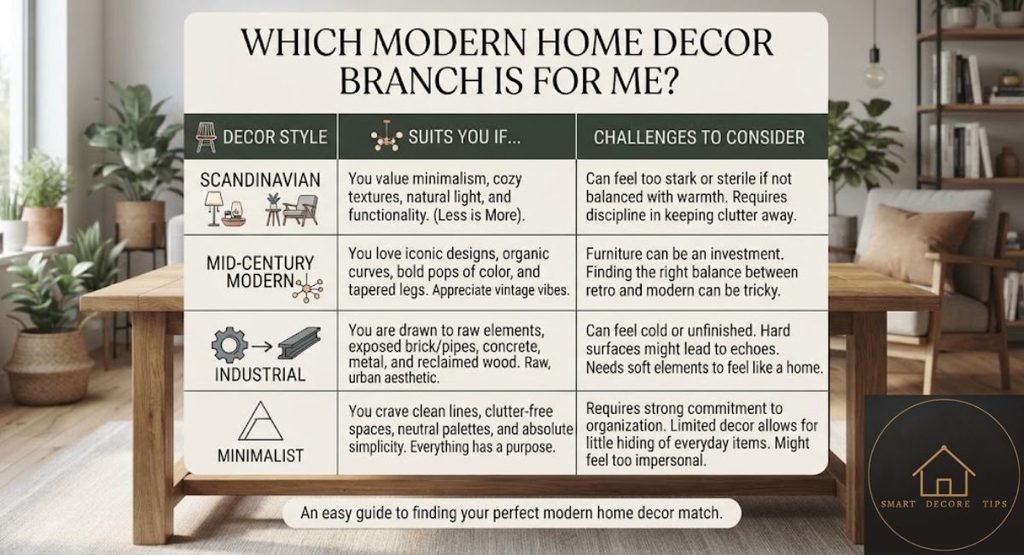
| If you want | Pick | Watch out for |
| A strict, ornament-free room | Classic modern | Can read as bare |
| Warm wood and famous chair shapes | Mid-century modern | Heavy use of rich wood tones |
| A light, calm, craft-led room | Scandinavian modern | Pale palettes depend on good daylight |
| Soft shapes and earthy neutrals | Organic modern | Newest branch, so more trend risk |
What interior design style is trending now?
Warm, textured modern is the safest short answer. Decorilla’s 2026 guide calls organic modern one of the fastest-rising styles of the decade, and a summary of Pinterest Predicts 2026 points to deep, warm colors and natural materials (Verify at the Pinterest source). Planner5d’s updated guide also covers curved furniture, biophilic touches and sustainable materials as current modern trends. Trend pages reset every year. The four branches above do not, so they make a steadier starting point than any trend list.
Does modern work in a small room?
It can, because the movement was built around function, open space and light. Stickley’s mid-century advice is to keep plenty of storage, protect open floor space and let in natural light. Decorilla’s minimalist section points to furniture with hidden storage, such as a coffee table that lifts to reveal space inside. Livingetc quotes a designer who recommends an open plan, plenty of light and simple, well-made, comfortable furniture.
None of the guides I checked gives room-size numbers or a budget, so treat these as principles, not measurements. That is also a gap in the competing guides: Robern has a budgeting heading but no ranges, and Planner5d offers little small-space detail beyond mirrors and neutral colors.
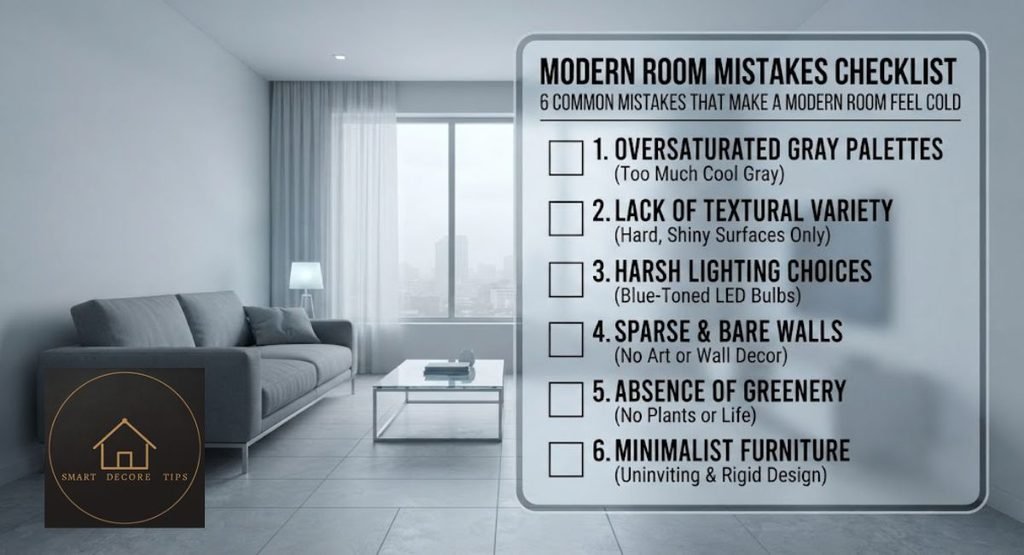
Six ways a modern room goes cold
- Bare is not the same as modern. Decorilla warns against confusing a minimal room with an empty one.
- Losing all character. Livingetc cautions against stripping out every bit of soul in the pursuit of minimalism.
- No repeating material. Decorilla’s tip is to choose one, such as walnut, brushed steel or travertine, and let it return across the room.
- No texture. Minimalist rooms drop pattern, so texture has to do the work, per Decorilla.
- Mixing branches with no rule. Blending is common, and Decorilla’s FAQ says harmony of palette, furniture and texture keeps it working.
- Buying the label, not the lines. A piece sold as “modern” may be contemporary or postmodern, so check the shape against the table above.
FAQs
It is a styling guideline for grouping objects in odd numbers, three, five or seven, on shelves, mantels and coffee tables, according to Livingetc and Ideal Home. It is not a style, so it works with any branch above. Livingetc adds that formal rooms such as dining rooms may suit symmetry better.
There is no official count. This guide uses four branches. Robern lists four modern sub-styles, Fujioh six and Planner5d about eleven, depending on whether they count farmhouse, rustic or industrial looks as modern.
No. The Bauhaus was a school that Britannica says ran from 1919 to 1933, and its ideas became one root of the wider modern movement. Classic modern is the branch closest to it.
Yes. Decorilla says mixing is common if palette, furniture and texture stay in harmony. Choose one main branch and one repeating material, then let the others show up in small pieces.
No. They share clean lines, but minimalism treats “less is more” as its main rule, per Decorilla, while modern is a historical movement with several branches.
Before you buy anything
Pick one branch from the table and one material to repeat, then write both on a note. Check every purchase against the note, and a sofa that fits neither goes back on the shelf. If you are still deciding between modern and other looks, compare eight popular looks next.

Hi, I’m Shahzad Ahmad welcome to Smart Decore Tips!
I write and research every guide on this site myself, focused on real, practical home decor advice for renters, first-time homeowners, and small-space living. Before publishing anything, I check actual product listings, current prices, and real customer reviews not just what other sites already say.
My goal is simple: help you make smarter, more affordable decor decisions without the guesswork or sales pitch.